
At WiseGEEK, we're committed to delivering accurate, trustworthy information. Our expert-authored content is rigorously fact-checked and sourced from credible authorities. Discover how we uphold the highest standards in providing you with reliable knowledge.
What Is a Coral Cut?
A coral cut is a physical injury sustained by coming into contact with the hard skeletons that make up the exterior of individual coral organisms, which make up coral reefs. Commonly, such a cut causes bleeding, pain, and swelling at the site. Cuts caused by coral can become infected and require medical care if they are not treated properly, especially if coral fragments, bacteria, proteins, or toxins from the organism remain in the wound. To avoid infection, an injured person should scrub the wound with soap and water immediately, then apply an antibiotic ointment and cover the wound with a bandage. It is important for individuals to seek immediate medical attention if they receive a severe cut, especially if the injury bleeds heavily, is to bone or other internal tissues, or develops into a festering ulcer or sore.
Coral and coral reefs are made up of thousands of tiny organisms called polyps. These polyps produce calcium carbonate, which hardens and forms the exterior skeleton. Coral reefs are mainly found in tropical and subtropical oceans and are popular destinations for swimmers, divers, and snorkelers. The surfaces and protrusions of these organisms are often sharp enough to cut skin and underlying tissue even if only brief contact occurs and even if a swimmer is wearing protective gear such as a wetsuit.

The most important thing after suffering a coral cut is for the injured person to make sure that the wound is cleaned thoroughly. Vigorous cleaning and scrubbing of the wound with a brush, soap, and water is recommended. Flushing the wound with plenty of fresh water also helps clean out any debris, and the person can also apply saline or an antiseptic solution to the injury. The application of acetic acid or isopropyl alcohol can help if there is a stinging sensation.

After thorough cleaning, the cut should be covered with a bandage. Rinsing the injury daily and applying antibacterial ointment three to four times a day can also help prevent infection. Over-the-counter pain medication, such as acetaminophen or ibuprofen, can be used for pain relief if needed. In some cases, coral cuts can lead to serious bacterial infections with increasing redness and tenderness around the wound. Oral antibiotics may be needed to treat the infection, and it is important for people who have signs of an infection to consult a healthcare professional to get the proper treatment.
AS FEATURED ON:
AS FEATURED ON:









-
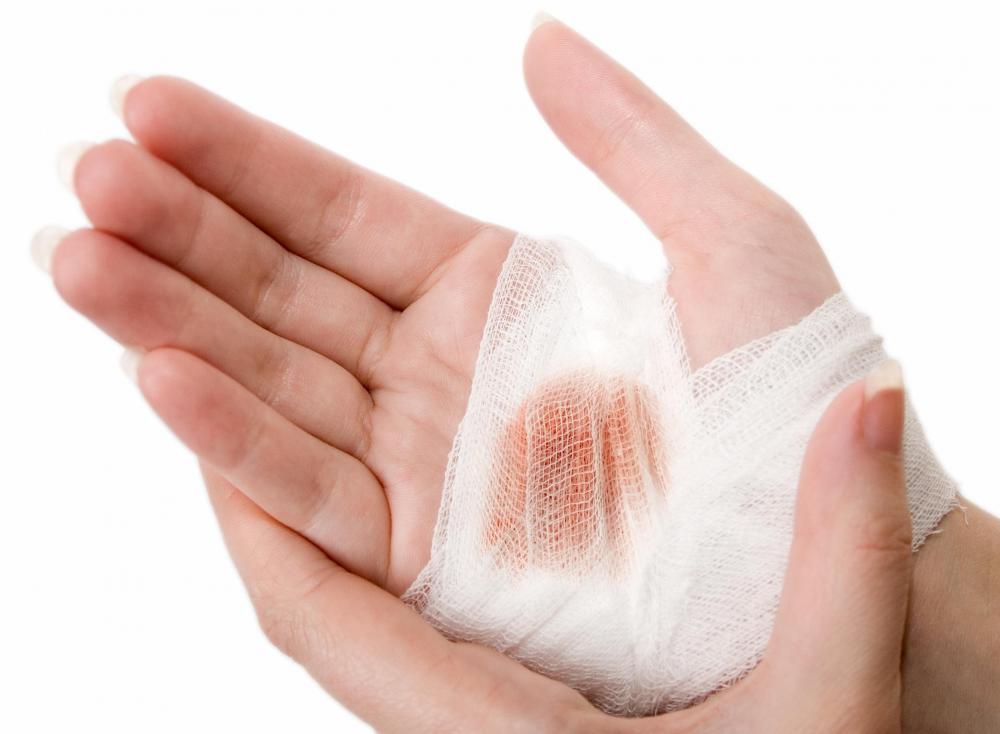
![The best way to treat a coral injury is to clean the wound and bandage it as soon as possible.]() By: DenisNataThe best way to treat a coral injury is to clean the wound and bandage it as soon as possible.
By: DenisNataThe best way to treat a coral injury is to clean the wound and bandage it as soon as possible. -
![Coral is the hardened skeletons of various organisms, and it can cause painful injuries.]()
Coral is the hardened skeletons of various organisms, and it can cause painful injuries. -
![Protective gear should be worn to protect divers from sharp coral.]() By: Richard CareyProtective gear should be worn to protect divers from sharp coral.
By: Richard CareyProtective gear should be worn to protect divers from sharp coral. -
![Isopropyl alcohol can help clean a coral wound and alleviate pain.]() By: Gordana SermekIsopropyl alcohol can help clean a coral wound and alleviate pain.
By: Gordana SermekIsopropyl alcohol can help clean a coral wound and alleviate pain. -
![Though some species of coral look like plants, they usually have sharp, stony exteriors.]() By: pirosaThough some species of coral look like plants, they usually have sharp, stony exteriors.
By: pirosaThough some species of coral look like plants, they usually have sharp, stony exteriors.


Discussion Comments
@whitesand - I used to wear heavy duty rubber gloves when handling corals but they were so thick I couldn't maneuver my marine life around. Now I just wear powder free exam gloves only because I don't want to exchange bacteria between my hands and their tiny stings.
What is the best way to handle live rock and marine coral when cleaning and performing routine maintenance in a saltwater tank? I don't want to get cut by the coral but I don't want to chip it either since it is very delicate. Thanks in advance for your tips and advise.
When I hear of a coral cut I'm reminded of the movie Castaway staring Tom Hanks. Do you remember towards the beginning of the movie when he was first marooned on the island and he was swimming in the reefs when the razor sharp coral nearly took his leg off? It still sends shivers up my spine when I think of the horrific pain one must feel from a cut by coral.
Post your comments