
At HomeQuestionsAnswered, we're committed to delivering accurate, trustworthy information. Our expert-authored content is rigorously fact-checked and sourced from credible authorities. Discover how we uphold the highest standards in providing you with reliable knowledge.
What is a Convection Oven?
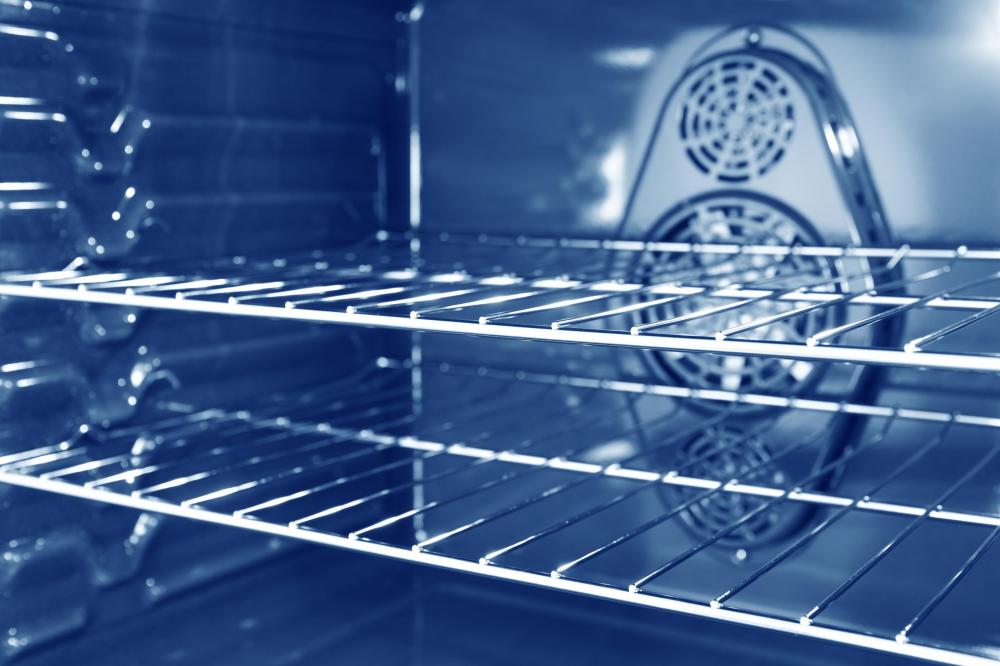
Rather than let hot air circulate randomly, a convection oven carefully creates a uniform temperature with internal fans that evenly circulate hot air. Convection ovens are often more expensive than standard, or radiant, ovens, but they cook food faster, at a lower temperature, and often with better results. Fans ensure that the same temperature reaches the top and bottom of foods, as well as foods at all rack levels. They are also called European, true, turbo or fan ovens.
Cooking Evenly

A frequent complaint of cooks with radiant ovens is that bottoms of foods get scorched, while tops are not browned evenly. This is because the temperature is not the same over the course of the cooking time, as well as over the volume of the oven cavity. A convection oven can correct this variation by using a fan that blows pre-heated air throughout the oven and around the food, rather than simply surrounding food with heated air. When air is blown onto food, it tends to cook more evenly than when it is surrounded by heated air.
Benefits of Cooking with a Convection Oven
- Saves time and energy: Because the heated air transfers heat more efficiently to cooking containers and exposed food surfaces, food will take less time to cook. Most recipes can be cooked for 25% shorter time, which ends up saving energy. The temperature at which food cooks may need to be lowered slightly on a trial and error basis.
- Retains flavor: A convection oven may also do a better job at sealing in the juices of meat so dishes taste more flavorful and moist.
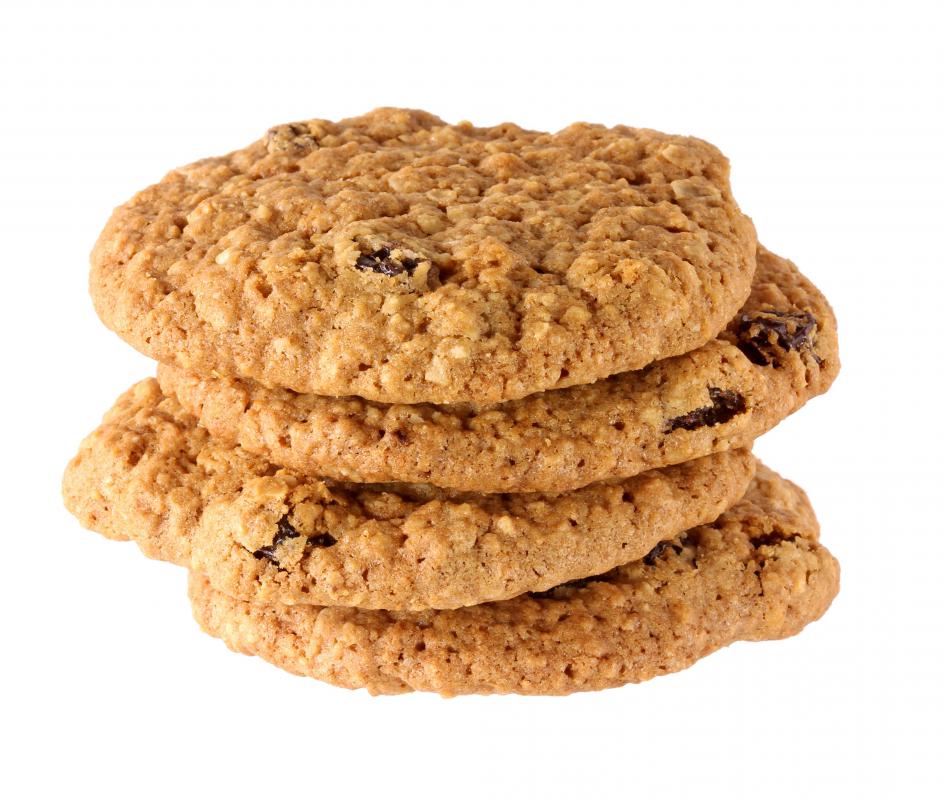
- Cooks evenly: Baked goods, such as pies or cookies, will be more evenly browned, even if placed them on different racks. Pastries often comes out better, too, because the heat doesn't fuse the flour and butter, but allows it to form flakes.
- Cooks more at once: When using multiple racks, the food itself won't interfere with the heat that reaches other foods.
- Works with broilers: Most convection ovens also have a broiler, allowing food to be exposed to high heat when required.

Cooking with a convection oven requires some adjustments, such as figuring out new cook times and temperatures. Trial-and-error is the most common method of learning how to use the fan oven efficiently. Many major hardware and electronic stores sell the ovens and they can also be purchased on the Internet.
AS FEATURED ON:
AS FEATURED ON:


-
![The fan inside a convection oven distributes hot air for better cooking.]() By: soupstockThe fan inside a convection oven distributes hot air for better cooking.
By: soupstockThe fan inside a convection oven distributes hot air for better cooking. -
![Cookies often bake more evenly in a convection oven.]() By: sassyphotosCookies often bake more evenly in a convection oven.
By: sassyphotosCookies often bake more evenly in a convection oven. -
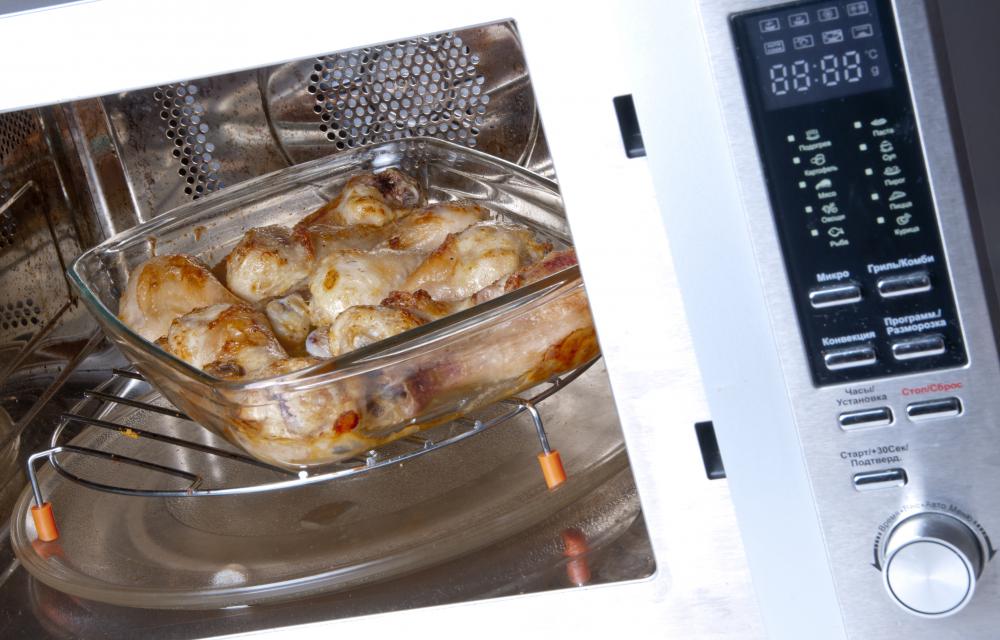
![It is usually necessary to shorten cooking times when baking with a convection oven.]() By: Evgeny KorshenkovIt is usually necessary to shorten cooking times when baking with a convection oven.
By: Evgeny KorshenkovIt is usually necessary to shorten cooking times when baking with a convection oven. -
![Convection ovens have a fan to distribute heat throughout the oven, contributing to more consistent and faster cooking.]() By: dmitrimarutaConvection ovens have a fan to distribute heat throughout the oven, contributing to more consistent and faster cooking.
By: dmitrimarutaConvection ovens have a fan to distribute heat throughout the oven, contributing to more consistent and faster cooking. -
![Temperatures should be reduced by about 25 degrees in a convection oven.]() By: 1506965Temperatures should be reduced by about 25 degrees in a convection oven.
By: 1506965Temperatures should be reduced by about 25 degrees in a convection oven.


Discussion Comments
@Anon 101492: That is exactly correct, a microwave is exactly that. Radiation. And no to the other Anon-- convection ovens do not produce radioactive energy. From a Registered Radiologic Technologist who has studied x-ray physics and magnetic resonance imaging.
Convection oven primarily concern the transfer of heat via movement of gas or liquid to process food. Braun multiquick 3 k650 Review discusses different notions about different kitchen tools.
just bought an older RV that has a convection oven, microwave. Have never used one and no book came along with it. can anyone tell me where i can find out how to use it.
preheating is a safe method of sterilizing. No other need for it. I place food right on the grate, but if you have a fresh dish, forget it. Some ovens only operate by preheating first.
Do you have to preheat a convection oven?
Motors go bad really fast when they get hot. I don't see any fans with the kit, and assume you attach the old blades. Can't have turbo if there is no fan. Gas/electric, now that's the way to go!
I just had my convection oven fan motor replaced because the fan stated making a loud noise when it was on. I noticed that when the technician took the old motor out (located at the back of oven) that it had a fan attached to the motor, there is a fan also inside the oven back wall.
Now, the new motor that he installed had no fan included and I pointed it out to him. He said that "must" be the new way with these motors. I'm not sure that I believe that. (I have a Kenmore Elite Dual Fuel slide in range - top being gas and oven being electric). The motor that he installed is an Electrolux convection fan motor kit no. 5304467898. Am I to believe him or should there be two fans in order for the convection part of oven to work as such? Help please.
All depends on the oven as to what it can do. They are not all the same. Look up the instructions.
I'm just now learning to use my new convection/microwave oven in our new RV. Can you make toast in the convection oven and if so how? --knnw
I looked up chicken in the microwave and don't see anything special. 15 minutes per pound, but watch the grease. 375 degrees.
How to grill chicken in a convectional oven?
anyone with experience baking cakes with a commercial convection oven? what is your opinion? Is convection commercial as good for cakes as it is with food dish items?
Does anyone know if you can microwave immediately after using the convection part of the microwave convection oven or do you have to wait for the oven to cool off? I question whether plastic can be put in the convection in order to microwave or if it will be too hot.
I've heard it all now. Radioactive particles from a microwave.
A really good Turbo oven would change the direction of the fan every minute or two. I do notice one side will tend to be cooked more. I would suggest rotating.
does a convection oven produce radioactive rays like microwave oven?
we have an oven that you can choose whether baking with convection or just plain old baking.
Convection ovens came on the market for the consumer in the late 70's to early 80's, and they were called Turbo Ovens. It was also usually bundled with a microwave oven/ duo. Turbo ovens are not all alike in function.
The material placed in an oven must withstand heat. The more mass it has, the less efficient at heating the food. Holes are also better.
What material are the pans made of that you use in a convection oven? Is there any glass that it OK, or can only aluminum and other metals be used?
when did convection ovens come on the market?
I just saw an ad for an induction oven. what's the difference between that and a convection oven?
i want to buy an oven? which one do you suggest to me? i want the best.
my mother just bought an electric convection wall oven and is frustrated. she said water drips from top of oven while she is baking!
Congratulations to JML. They now provide users with a recipe book for the halogen oven. Not too many recipes but enough to get off the mark. Well done JML. I can now start cooking.
I just bought an Oster convection and tried a cake. The top got way too brown. Does the top heating unit cycle on and off? I can't hear the fan.
Can I buy a recipe book for this type of cooker? If not how do I stop my baking burning or is it just a case of trial and error? --carole
What significant differences are there between convection ovens and Whirlpool Accu Bake models? Any preference or recommendation when it comes to basic overall oven use?
No cooking method can "seal in the juices of meat." This is 19th-century cooking lore that has been scientifically disproven in several experiments.
Shorter cooking might lead to less leaking/loss of juices, but there is no "sealing".
I guess halogen is just like a toaster over??
No good cooking microwave popcorn. Putting things in Corning ware is OK but is going to work best uncovered. Completely covered things are not going to work much better than using a conventional oven. I repeat, if the idea is "cooking fast" then having exposed radiating elements is the BEST way.
I have a halogen oven without recipes Is it possible to use convection recipes? Am I just wasting your time and mine.
Can you cook microwave popcorn in a convection oven?
Can you use glass dishes in the convection oven. Like Pyrex or Corning ware.
A true convection oven does not have any exposed heating elements. The problem most are having, is that they bought a glorified toaster oven with a fan in it. Been there, done that. They suck. They will burn food on one side, and leave it undercooked on the other. Fork out at least $800 to get a REAL convection oven.
A microwave generates heat by food friction from RF energy. The same energy being transmitted by radio and TV stations. A turbo/convection oven uses red glowing heating elements and a fan. With different modes the fan does not always come on, and some ovens need a special button or double click to run the fan. Some pizza modes do NOT turn on the fan for some odd reason. Most consumer small ovens are under powered in my opinion, except my very small one which can fully cook some hot dogs in 6-7 minutes from cold start. My large turbo/microwave takes a long time to preheat in turbo mode, and you have to use it that way, there is no choice. By the smaller ovens, they should work best. When I put a hoagie into the turbo its gets heated up like no other toaster oven can. The heat somehow gets inside without opening the hoagie up. My small oven has a basket, and when you grab the handle the whole thing comes out. great for throwing in fries and other food. Not burnt fingers here reaching in.
I first saw those ovens and were properly called Turbo Ovens over 28 years ago. Many want to call them convection ovens now for some reason. When they first came out they didn't catch on because there were no cheap models, Well they can still be expensive like my Sears turbo/ microwave combo. I think they were first brought out in the dual mode. Only one mode operates at a time even if in the dual mode. I have 3 turbo ovens. The smallest and best is a Toastmaster no longer available, By being small it heats up fast and the elements also play a major role in cooking. The removable basket is too small for pies. The combo model has NO red hot elements to help brown the food. This could be a disadvantage. My mid sized model does feature hot elements and turbo air. When you first put cold food into any oven, currents are automatically generated even without a fan. After the food starts to heat up, then the currents subside and you then need a fan.
I am planning to replace my microwave with a convection oven because of health concerns. Is a convection oven useful in warming things quickly? That's about all we use the micro for. I'm vegetarian and won't be cooking meats, which is what most of the reviews on convection ovens discuss.
I have a new Bajaj oven toaster grill 3400 TMC. The recipes which come in the manual tell me to place the cake tin on the drip tray. I have done so. My cakes come out burnt on the bottom and sides but not done in the middle. What is wrong? Does the fan not work?
Convection oven works great I have had my oven for over 18 years finally it broke down. I am going to get another real soon. And what they say about the product is positive true how it cooks...
Convection and microwave operation are completely different. They have nothing in common.
The heating mechanism for a convection oven is the same as a traditional electric oven's.
C
As a engineer I am not a cook. Yet Christmas being informed I would have to bake the pies or the family dinner would be a bit short on deserts I put my mind to work.
In brief I found through some research that utilizing different types ovens, or sometimes 'altitude above sea level' may show cause to lower or raise temperature slightly; while increasing or decreasing the cooking time.
Variations of recipe does not necessarily help. Though utilizing quality ingredients combined with a dash of common sense, regardless of oven type, will succeed with possible trial and error being the best assurance. Disappointing results at first will certainly bring years and years of delicious deserts. Remember, The devil is in the details. God is always in control. Little prayers make big results. Patiently enduring. GOOD LUCK! Happy Cooking.
The point of convection ovens is to cook and bake evenly and more quickly so it's strange to hear about uneven baking problems...but I have heard that the first convection ovens on the market did have this problem. I think this issue was corrected for in newer versions though. There are cookbooks out there that help figure out how to adjust recipes when baked in a convection oven, so maybe consulting on of those, or the one that may have come with the oven itself, may help. Also, I heard that different convection ovens require different cooking times, so consulting your convectino oven manufacturer might be of help too. Good luck!
For the second time in just over a week I've tried to make a pecan pie in my new convection oven. After the first failure (runny bottom layer) I thought perhaps I had left something out and tried again. Another failure! The pie looks beautiful, but the bottom layer is not solid like it should be. Is it because the convention oven cooks more evenly and the pecan pie really needs more heat coming from the bottom of the oven in order to cook the sugar layer?? Pecans are expensive, so please let me know what I'm doing wrong! I never had this problem in my regular oven.
I am so opposed to using microwave oven, as i believe long-term use is dangerous to our health and strip the nutritive value from our foods; however, I do miss their convenience. I've been considering a convection oven, but afraid they may share the same mechanisms of a Microwave. Are they totally different in the way of generating heat?
Okay, we have had a convection oven for about 9 months now. It seems to be baking things unevenly. My mom is a former baker, so she has worked with these things before. We can put three cakes in the oven, one on one shelf two on the other, one will come out burned, the other half baked and the last perfectly done. What are we doing wrong? There is a fan in the back, and a heating element in the bottom and on the top, it is an Ariston (European model, we live in Ukraine). Can you help?
Post your comments