
At TheHealthBoard, we're committed to delivering accurate, trustworthy information. Our expert-authored content is rigorously fact-checked and sourced from credible authorities. Discover how we uphold the highest standards in providing you with reliable knowledge.
What is a Contraindication?
 Mary McMahon
Mary McMahon
Mary McMahon
A contraindication is a situation in which the application of a particular drug or treatment is not advisable, because it may increase the risks to the patient. For example, when someone has a penicillin allergy, this is considered a contraindication for the administration of penicillin, because it will trigger an allergic reaction. They are among a large group of medical facts that are considered when embarking on a treatment plan for a patient.
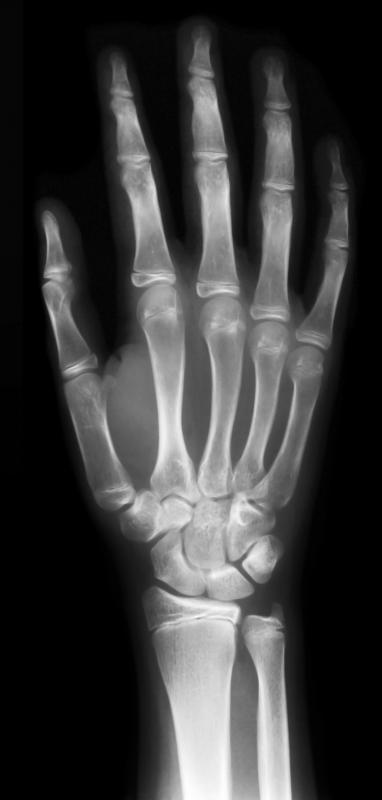
In the instance of a relative contraindication, the administration of a drug or treatment could increase the patient's risks, but medical professionals may decide to go ahead and administer the treatment anyway. For example, when a pregnant woman is involved in an accident that may have caused a broken limb, the limb will be X-rayed, although X-rays are generally contraindicated for pregnant women because of the risks of the fetus. In this instance, however, an untreated fracture could result in far more serious immediate medical complications, so the risk is considered to be acceptable.

An absolute contraindication, on the other hand, is one that cannot be ignored. The penicillin allergy above is one such example, and so are recommendations that indicate that it is not safe to feed honey to infants, due to the risk of botulism. In this case, the immediate risk is considered so severe that it is simply not worth it, and another avenue of treatment (or sweetener, in the case of honey) must be pursued.

Patients may sometimes hear that something is “not medically recommended,” and this is one way of saying that something is a contraindicated. For example, reflexology massage is not recommended for pregnant women, out of concern that the massage therapist could stimulate points on the feet that have been known to trigger early labor. In other cases, a medical treatment may make a patient's condition worse, rather than better, or it could compromise the patient's outcome, in which case it would not be recommended.

It is important for individuals to be aware of their own medical contraindications, especially any absolute ones, such as a nut allergy. Some people like to carry a medical information card with a list of allergies and other conditions, in the event that they cannot communicate with emergency personnel. By making sure that this information is known, the person can reduce the risk of being given a dangerous medical treatment, and it can speed up the decision-making process for emergency room doctors and staff. People should also never conceal such conditions from medical personnel, even if they are embarrassing, as this could treatment problems or even death.
Mary McMahon
Ever since she began contributing to the site several years ago, Mary has embraced the exciting challenge of being a TheHealthBoard researcher and writer. Mary has a liberal arts degree from Goddard College and spends her free time reading, cooking, and exploring the great outdoors.
Learn more...
Mary McMahon
Ever since she began contributing to the site several years ago, Mary has embraced the exciting challenge of being a TheHealthBoard researcher and writer. Mary has a liberal arts degree from Goddard College and spends her free time reading, cooking, and exploring the great outdoors.
Learn more...AS FEATURED ON:
AS FEATURED ON:


-
![Penicillin is contraindicated for those with an allergy to it.]() By: sherezPenicillin is contraindicated for those with an allergy to it.
By: sherezPenicillin is contraindicated for those with an allergy to it. -
![X-rays may be contraindicated for pregnant women.]()
X-rays may be contraindicated for pregnant women. -
![Pregnant women have many contraindications due to the potential harm that can be done to a fetus if a certain drug or treatment is administered.]() By: LanaKPregnant women have many contraindications due to the potential harm that can be done to a fetus if a certain drug or treatment is administered.
By: LanaKPregnant women have many contraindications due to the potential harm that can be done to a fetus if a certain drug or treatment is administered.


Discussion Comments
While some contraindications, such as allergies, are fairly avoidable with modern medicine- there are now other treatments options for patients allergic to penicillin, iodine, and other medications- there seems to be a growing number of contraindications with regards to drugs which can affect mood, causing depression and even suicide in patients. It is especially important to tell a doctor everything about mental health history and your current emotional and psychological states when being diagnosed with something and possibly prescribed with a new medication.
Post your comments