
At TheHealthBoard, we're committed to delivering accurate, trustworthy information. Our expert-authored content is rigorously fact-checked and sourced from credible authorities. Discover how we uphold the highest standards in providing you with reliable knowledge.
What is a Congenital Disorder?
 Mary McMahon
Mary McMahon
Mary McMahon
A congenital disorder is a medical condition which is present at birth. The severity of a congenital disorder varies, depending on its nature; for example, in some cases, the condition may not manifest until much later in life, if ever, and at other times, the disorder is incompatible with life. A variety of things can cause these conditions, with some specific activities on the part of the mother greatly increasing the risk of a congenital disorder.
Many congenital conditions are genetic in nature. Genetic disorders may be passed down from one or both of the parents, or they may be caused by errors in the duplication of chromosomes which cause spontaneous genetic mutations. The risk of genetic problems is obviously increased in families with a history of this disorder, and it is also elevated in older parents, as they are more likely to pass down imperfectly duplicated chromosomes. A congenital disorder can also be caused by problems with morphogensis, meaning that the problem arises during the development of the fetus. Exposure to toxins during pregnancy is a major risk factor for errors in fetal development.

When a congenital disorder causes an obvious physical problem, it may be known as an anomaly, or a malformation. Anomalies are abnormal, but not necessarily harmful; growing a sixth finger, for example, is an anomaly. Malformations, on the other hand, can cause problems. You may also hear congenital malformations referred to as birth defects.
Genetic disorders may manifest at birth, as in the case of conditions characterized by abnormal numbers of chromosomes. In other instances, genetic disorders may become apparent later in life; sometimes people live totally unaware of such disorders until they undergo routine testing for something else. It is also possible for a congenital problem to take the form of a metabolic condition or a disease.

Treatment options for congenital disorders vary. Anomalies and malformations can sometimes be corrected with surgery, while diseases and some genetic conditions are sometimes manageable with medication. Some patients may require life-long care for congenital conditions, some of which are associated with a very low life expectancy.
Parents should not necessarily blame themselves for congenital disorders, because many are spontaneous and unpredictable. If a family has a history of genetic problems, genetic testing to look for deleterious genes might be advisable. Pregnant mothers should also avoid obvious risk factors like chemical exposure and smoking during pregnancy, while eating a nutritious diet to promote healthy fetal development. Regular prenatal care is also highly recommended for expecting parents, to ensure that signs of any problems with the pregnancy are caught as quickly as possible.
Mary McMahon
Ever since she began contributing to the site several years ago, Mary has embraced the exciting challenge of being a TheHealthBoard researcher and writer. Mary has a liberal arts degree from Goddard College and spends her free time reading, cooking, and exploring the great outdoors.
Learn more...
Mary McMahon
Ever since she began contributing to the site several years ago, Mary has embraced the exciting challenge of being a TheHealthBoard researcher and writer. Mary has a liberal arts degree from Goddard College and spends her free time reading, cooking, and exploring the great outdoors.
Learn more...AS FEATURED ON:
AS FEATURED ON:


-
![If a family has a history of genetic problems, genetic tests to screen for deleterious genes might be advisable.]() By: lilyIf a family has a history of genetic problems, genetic tests to screen for deleterious genes might be advisable.
By: lilyIf a family has a history of genetic problems, genetic tests to screen for deleterious genes might be advisable. -
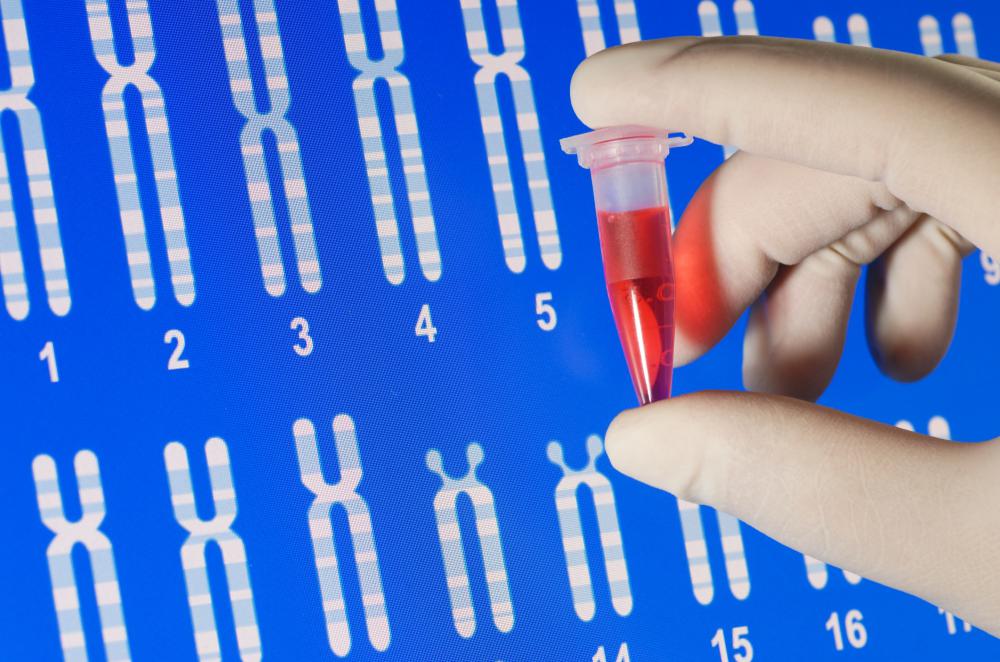
![Chromosomes are thread-like structures located inside the nucleus of animal and plant cells.]() By: He2Chromosomes are thread-like structures located inside the nucleus of animal and plant cells.
By: He2Chromosomes are thread-like structures located inside the nucleus of animal and plant cells. -
![Adequate prenatal care may help diagnose congenital disorder early.]() By: WavebreakMediaMicroAdequate prenatal care may help diagnose congenital disorder early.
By: WavebreakMediaMicroAdequate prenatal care may help diagnose congenital disorder early. -
![Some congenital anomalies are not readily apparent at birth.]() By: jamdesignSome congenital anomalies are not readily apparent at birth.
By: jamdesignSome congenital anomalies are not readily apparent at birth. -
![Treatment options for congenital disorders vary.]() By: Rafael Ben-AriTreatment options for congenital disorders vary.
By: Rafael Ben-AriTreatment options for congenital disorders vary. -
![Some genetic disorders may be passed down from one or both parents.]() By: Alexandr VasilyevSome genetic disorders may be passed down from one or both parents.
By: Alexandr VasilyevSome genetic disorders may be passed down from one or both parents. -
![Pregnant women should avoid smoking to reduce the risk of a congenital disorder.]() By: Serhiy KobyakovPregnant women should avoid smoking to reduce the risk of a congenital disorder.
By: Serhiy KobyakovPregnant women should avoid smoking to reduce the risk of a congenital disorder. -
![A congenital disorder may occur as a result of problems that arose during the development of the fetus.]() By: Adrin ShamsudinA congenital disorder may occur as a result of problems that arose during the development of the fetus.
By: Adrin ShamsudinA congenital disorder may occur as a result of problems that arose during the development of the fetus.





Discussion Comments
@rugbygirl - Yes, that would be considered a congenital disease. For instance, I have congenital toxoplasmosis.
Have you ever heard it said that a pregnant woman should not change a litter box? We actually only had outdoor cats when I was a kid, so my mother must have been exposes to cat feces while working in the garden or something like that. (In fact, cats that live exclusively indoors almost never get toxo, as cats generally pick it up from eating raw meat, as in critters that they hunt outside.)
She never even knew she was sick, but I have some minor eye problems that were first noticed when I was a teenager. I'm lucky, though - a lot of babies born with congenital toxoplasmosis are really, really sick.
Can congenital defects be caused by illness in the mother? Like if a pregnant woman gets rubella and her baby is born with birth defects, would that be considered a "congenital" problem, or does it have some other name?
(I tend to think about the rubella issue because my sister was tested for immunity to rubella when she was pregnant - and even though she had been vaccinated more than once, she had *no* immunity. She had to rely on herd immunity to protect herself and her baby since the vaccine did not work for her.)
Post your comments