
At WiseGEEK, we're committed to delivering accurate, trustworthy information. Our expert-authored content is rigorously fact-checked and sourced from credible authorities. Discover how we uphold the highest standards in providing you with reliable knowledge.
What is a Central Line Catheter?
A central line catheter, also known as a central venous catheter, is a thin, flexible tube that inserted into a vein and threaded to the heart or central vein of the chest. This device allows a medical professional to administer medications and blood transfusions as well as obtaining blood samples. A central venous catheter can also assist in monitoring and recording different types of blood pressure. This is normally a routine outpatient procedure. In an external central line catheter, the tubing exits through the skin, while an internal catheter does not have an exit point.
The decision to introduce a catheter can be driven by many different reasons and situations. If a patient routinely receives fluids, medications, and nutritional supplements intravenously, the patient's doctor might consider inserting a central line catheter. The placement of a central line eliminates or drastically reduces the amount of injections and intravenous catheters in the arm. This can preserve the health of the patient's veins and skin, since frequent needles and specialized medications can be damaging.

A doctor generally inserts a central venous catheter while the patient is in a hospital receiving anesthetic medication. The doctor makes a small incision, and threads the catheter into the body. An internal catheter is closed into the body at this point, while an external catheter requires a second incision for the exit site. The doctor secures the line with stitches and applies a sterile dressing to the location where the catheter exits the body.

External and internal central line catheters are selected for different reasons. An internal central line catheter requires a needle to deliver the medication through the skin and into the tubing; therefore, an external catheter is preferable if the patient will be using the line often. Since external lines exit the skin, however, the caregiver must be careful to keep them clean in order to prevent infection. An internal catheter, however, is enclosed in the body and does not require special dressings or extensive care.

One benefit of the central venous catheter is that is allows medications to be administered in the comfort of the patient's home. For an individual receiving frequent or routine medications and intravenous nourishment, constant trips to the hospital or inpatient hospital therapy can be difficult and uncomfortable. A central line catheter allows a caregiver or home health aide to easily administer medications outside of the hospital. The patient's caregiver must be well educated in the care and cleaning of a central line as well as prepared to contact a healthcare professional if there are any signs of a catheter infection or complication.
AS FEATURED ON:
AS FEATURED ON:









-
![A central line catheter allows for an easier administration of medications.]() By: tawesitA central line catheter allows for an easier administration of medications.
By: tawesitA central line catheter allows for an easier administration of medications. -
![A central line catheter will be threaded to the heart or central vein of the chest.]() By: F.C.G.A central line catheter will be threaded to the heart or central vein of the chest.
By: F.C.G.A central line catheter will be threaded to the heart or central vein of the chest. -
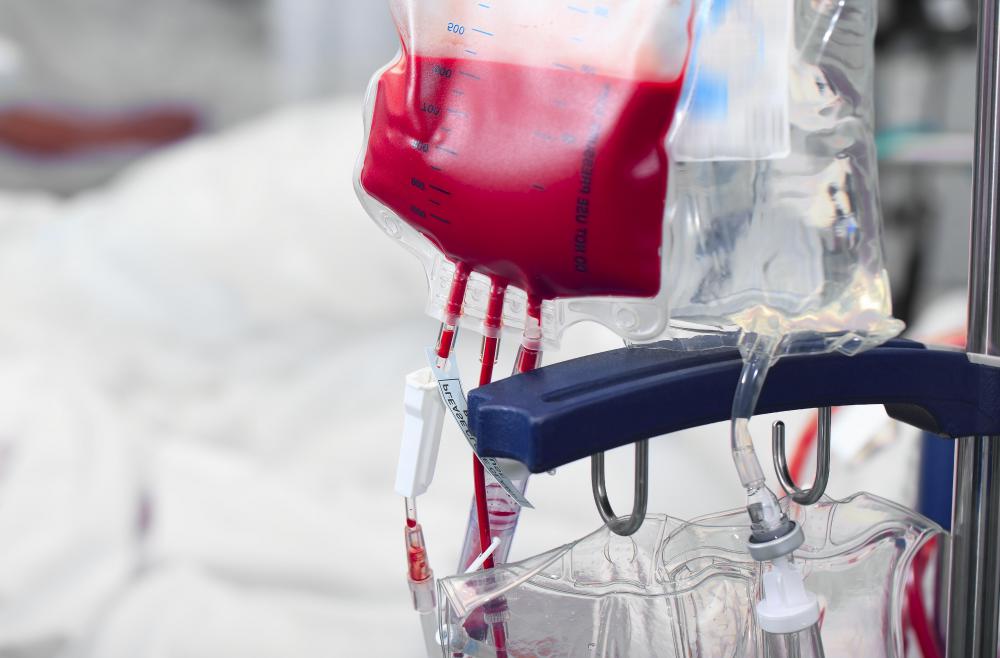
![A central line catheter will make it easy to administer blood transfusions.]() By: sudok1A central line catheter will make it easy to administer blood transfusions.
By: sudok1A central line catheter will make it easy to administer blood transfusions.


Discussion Comments
Having an IV placed is bad enough. I don't think I'd want to even try a central line or PICC line unless I was completely under. I'd be a basket case.
I know a PICC line is a totally different animal, but when I think about how sore my hand was when I had my wisdom teeth out and they placed the IV there, I know I wouldn't want a PICC line or central line unless they were absolutely necessary.
They do keep a person's veins from being terribly damaged by medication or constant access, but it just makes my arm ache to think about it!
A central line also has less chance of closing up or getting blocked, like a fistula line can do. That's usually for dialysis patients. They're much easier to care for, and since they're near the chest, are usually covered by clothing.
The only other central line that's as easy to maintain is a PICC line in the upper arm. A PICC line insertion is usually done under local anesthesia, although if a patient is having surgery, and the doctor knows the patient will need a PICC line placed, he or she may go ahead and do it while the patient is under anesthesia.
Post your comments