
At SmartCapitalMind, we're committed to delivering accurate, trustworthy information. Our expert-authored content is rigorously fact-checked and sourced from credible authorities. Discover how we uphold the highest standards in providing you with reliable knowledge.
What is a Capital Expenditure?
 Mary McMahon
Mary McMahon
Mary McMahon
A capital expenditure is an outlay of cash to acquire or upgrade a business asset. Common examples of a capital expenditure include the purchase of a new building, or the cost of significant upgrades to an existing facility. A capital expense is considered to be deductible, because it represents an improvement to the business, and it is deducted over the expected life of the item, rather than all at once as in the case of repair or maintenance expenditures.
A capital expenditure is also sometimes referred to as capital spending or a capital expense, and many publicly traded companies list their capital spending for the year in annual reports, so that stockholders can see how the company is using their money in long term planning. Most companies engage in capital spending yearly, in an attempt to constantly upgrade and improve facilities, vehicles, and equipment.

Sometimes it can be difficult to determine the difference between a capital expenditure and a routine expense. In general, if the expenditure improves the value of the asset, it is a capital expense, while if it simply keeps the asset in working condition, it is a routine expense. For example, installation of a new bathroom in a rental is a capital expense, because it increases the value of the rental. Repairing the stove, however, is a routine expense designed to keep the rental in operating condition.

Engaging in capital spending is a routine way to improve and expand a business, whether done on small or large scale. Large corporations may acquire additional companies, as in the case of an automotive giant which purchases another car manufacturer, while smaller businesses may consider the purchase of a new office printer to be a capital expenditure. In general, allowances are made in the budget of the company for capital spending, including unexpected ones involving the replacement of items which are no longer able to be repaired.

A capital expense is amortized over the length of the life of the investment, which may range from an expectation of five to 40 years, depending on the investment. This time period is known as a recovery period, and recovery periods for major assets are set out so that companies will know how to deduct capital expenses. The amortization means that the company cannot deduct the cost of the capital expenditure all at once, and must instead spread it out over the life of the investment. For example, someone who installs a 25,000 US Dollars (USD) fence which has a five year recovery period may deduct 5,000 USD each year for five years.
Mary McMahon
Ever since she began contributing to the site several years ago, Mary has embraced the exciting challenge of being a SmartCapitalMind researcher and writer. Mary has a liberal arts degree from Goddard College and spends her free time reading, cooking, and exploring the great outdoors.
Learn more...
Mary McMahon
Ever since she began contributing to the site several years ago, Mary has embraced the exciting challenge of being a SmartCapitalMind researcher and writer. Mary has a liberal arts degree from Goddard College and spends her free time reading, cooking, and exploring the great outdoors.
Learn more...AS FEATURED ON:
AS FEATURED ON:









-
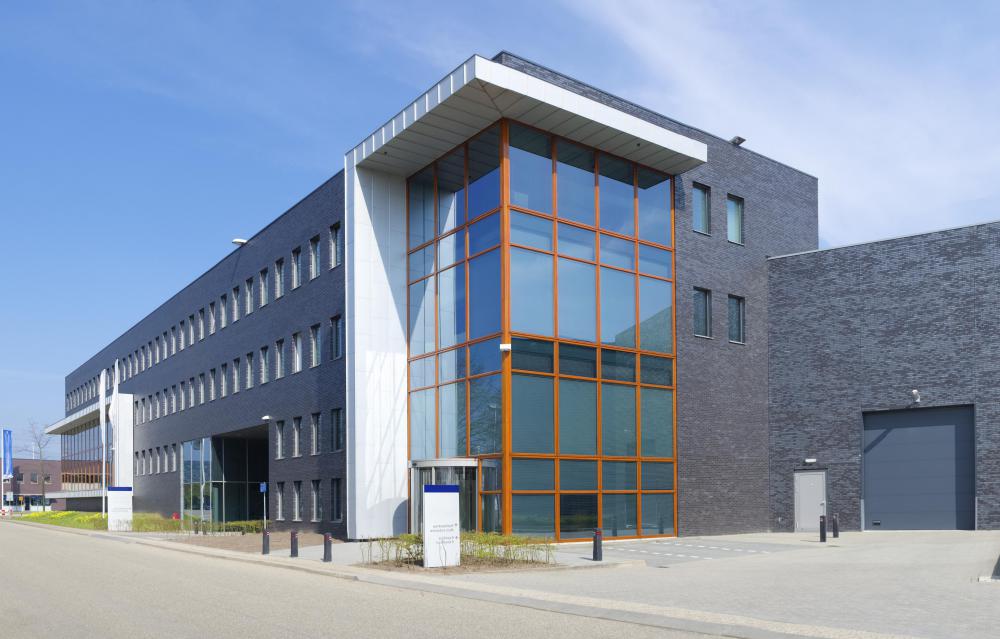
![Purchasing or constructing a new office building is a capital expenditure for a company.]() By: hansennPurchasing or constructing a new office building is a capital expenditure for a company.
By: hansennPurchasing or constructing a new office building is a capital expenditure for a company. -
![For hotel owners, installing a new swimming pool is a capital expenditure because it improves the facility.]() By: ViewApartFor hotel owners, installing a new swimming pool is a capital expenditure because it improves the facility.
By: ViewApartFor hotel owners, installing a new swimming pool is a capital expenditure because it improves the facility. -
![Capital expenditures of publicly traded companies are listed in an annual report.]() By: pandpstock001Capital expenditures of publicly traded companies are listed in an annual report.
By: pandpstock001Capital expenditures of publicly traded companies are listed in an annual report.


Discussion Comments
Is a salary survey an operational expense or capital expenditure?
Can the $21,000 expenditure be considered capital... ?
I would say no. The survey does not increase the value of the community nor does it enhance or encourage business growth. It is an operational cost, and one that, were I a member, I would question. This is something that can be discerned in a scheduled HOA meeting or through a mailer. Paying $21k for a survey makes it seem like someone on the board has a nephew who conducts surveys.
What must I do if I want to increase my business starting capital from 20K to 30K? I want my current business capital to be stated as 30K. What are the rule governing this changes?
How should I consider large capital expenditures in a free cash flow model?
The whole amount is deducted in the period it occurred, right? Because it's a cash flow, it cannot be spread over the life period of the asset, right?
It can also be said that routine expenses are also called revenue expenses since they are done not for the first time. Capital expenses are done for the first time to improve value in businesses likewise routine expenses but routine expenses is more concerned with repairs of damaged parts.
I want to understand the technical difference between Capital and Operational.
Our HOA Board is planning to spend over $21,000 from our general fund to do a survey of the homeowners. The big plan is to build a new fitness center and they want to find out if everyone in this senior community would be willing to pay big money.
The question: Can the $21,000 expenditure be considered capital since it is to improve the facilities/community and eventually sales? Thanks.
In reference to the above question, i would suggest that the contribution for the above survey it will not be a capital expenditure, because the fund using for not to repair an asset or related. so it will treat as routine expenses.
Are purchase of tires and overhaul of vehicle things that could be capitalized?
Is there somebody who can tell me "what is the difference between capital investment and capital expenditures with strong reference?
what are the major phases of capital expenditure planning and control?
What is considered a capital expenditure? a t.v?
a computer? a microwave?
what is an example of a company that has made a recent significant capital investment?
Do all capital expenditures necessarily involve fixed assets?
When a town home complex (HOA) is painted and minor carpentry needs are included in the paint prep is the cost a capital expense or just an expense. If capital what is the recovery period
What is the key motive for making capital expenditures?
what is the strategic decision based on capital expenditure?
do all capital expenditures involve fixed assets?
I understand the technical difference between Capital and Operational.
Our HOA Board is planning to spend over $21,000 from our General Fund to do a Survey of the homeowners. The big plan is to build a new fitness center and they want to find out if everyone in this Senior community would be willing to pay big $$$.
The question: Can the $21,000 expenditure be considered CAPITAL since it is to improve the facilities/community and eventually sales?? Thanks....
What are contribution of Capital Expenditure to Gross Domestic Product of a country?
Is the purchase of marketable securities by a company a capital or operating expense?
Post your comments