
At AllThingsNature, we're committed to delivering accurate, trustworthy information. Our expert-authored content is rigorously fact-checked and sourced from credible authorities. Discover how we uphold the highest standards in providing you with reliable knowledge.
What is a Camel Spider?
The camel spider, also called a wind scorpion, is an arachnid, but not a spider at all. It cannot weave a web and possesses no venom. Camel spiders are shade-seekers, called solpugids, which occupy desert regions worldwide.
Camel spiders grow to a length of about 5" (12.7cm) with legs outstretched, and are somewhat less daunting than their reputation.

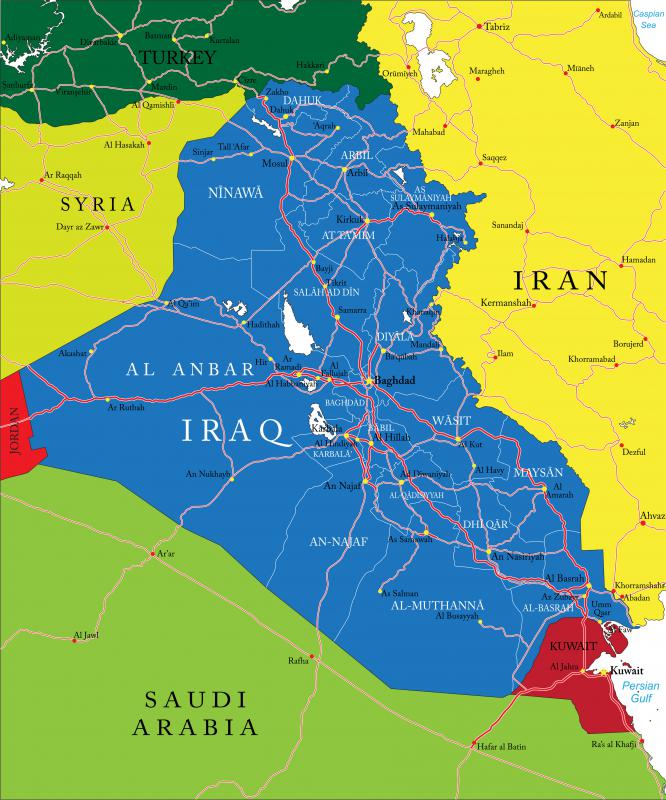
The folklore began in 1991 with U.S. soldiers during the Gulf War, and was picked up again in 2003 when the U.S. returned to Iraq. Soldiers reported the spiders would scurry across the sand directly at them as if attacking. In truth camel spiders run after shade and are seeking the shade created by the soldiers. Misinformation about camel spiders ran rampant with rumors of their ability to run 25 mph (40 km/hr), jump several feet into the air, lay eggs in a camel's stomach, and even inject sleeping soldiers with anesthetic venom to surreptitiously suck chunks of flesh.
Folklore over the camel spider is not confined to the Middle East. In Mexico the name for the camel spider, matevenados, translates to "deer killers."

Camel spiders can reach speeds of 10 mph (16 km/h), they do jump to modest heights, and are aggressive, though they are not the superspiders of myth. Camel spiders feed on invertebrates, insects and even small reptiles. They have enormous crushing jaws that must work quickly because they have no venom to subdue their prey. Finally, camel spiders are so-named, not because they feed on camels, but because they are found in the same desert-like climates as the camel.

It's no wonder the camel spider is the source of many exaggerated tales with its impressive speed, generous size, and enormous jutting jaws. The awesome camel spider brings to mind the stuff of movies like Starship Troopers, which pits mankind against worlds where giant arachnids rule. But at least for now, the camel spider remains a mere shade-seeker, scuttling through the sands for another meal that will likely have at least 4 legs, if not 6 or 8. And that's good news for us.
Frequently Asked Questions
What exactly is a camel spider?
A camel spider, also known as a wind scorpion or sun spider, is not a true spider but belongs to the order Solifugae. These arachnids are known for their large size, with some species reaching up to 6 inches in length, and their impressive speed, capable of moving up to 10 miles per hour. They are predominantly found in desert regions and are nocturnal creatures.
Do camel spiders bite humans, and is it dangerous?
Camel spiders may bite if they feel threatened, but they do not possess venom that is harmful to humans. Their bite can be painful due to their strong jaws and may lead to infection if not properly cleaned and cared for. However, they are not considered a significant threat to people.
What do camel spiders eat?
Camel spiders are carnivorous and primarily feed on various insects, lizards, and small rodents. They are opportunistic predators and have been known to consume other small animals they can overpower. Their diet plays a crucial role in controlling pest populations in their native desert habitats.
How do camel spiders reproduce?
Camel spiders engage in a mating ritual where the male deposits a spermatophore on the ground, which is then taken up by the female. Females lay their eggs in a burrow, and the young are independent upon hatching. The reproductive habits of camel spiders are not as well studied as those of other arachnids.
Are camel spiders venomous?
Contrary to popular myths, camel spiders are not venomous. They do not have venom glands or fangs to inject toxins. Instead, they rely on their powerful chelicerae, or jaw-like appendages, to crush and consume their prey. The lack of venom makes them less dangerous to humans than some other arachnids.
Where can you find camel spiders, and what is their habitat?
Camel spiders are primarily found in desert regions across the globe, including the Middle East, Africa, and parts of North America. They prefer arid environments and are well-adapted to hot, sandy conditions. During the day, they often seek shelter under rocks or in burrows to escape the heat.
AS FEATURED ON:
AS FEATURED ON:









-
![Camel spiders are actually not spiders at all.]() By: tomatito26Camel spiders are actually not spiders at all.
By: tomatito26Camel spiders are actually not spiders at all. -
![Camel spiders may be found in the desert terrain of the Middle East.]() By: bogdanserbanCamel spiders may be found in the desert terrain of the Middle East.
By: bogdanserbanCamel spiders may be found in the desert terrain of the Middle East. -
![Camel spiders occupy desert regions.]() By: george kunaCamel spiders occupy desert regions.
By: george kunaCamel spiders occupy desert regions.


Discussion Comments
Where for sure do camel spiders live? I don't want any camel spider to come in my house!
I have found four of these in my home in the past three weeks. I live in the Central Valley in California. I showed the insect to my son and he said he has killed four in the past year. How do I get rid of them as I have a toddler and do not want her to get bitten?
i live in California in a city called Hesperia. it used to be a desert. i was at school doing work when a kid called Austin saw a weird looking spider. i saw it and i was like gross, but he made a racket and got attention from all the boys. A kid called all the kids and thought it was dead so a boy named Jessie touched it with a pencil and the spider moved. My teacher got scared so the kids picked it up with a pencil and killed it. that's when Austin said ''it had venom'' even though it doesn't.
i found today a camel spider next to my sofa. i captured it in a glass. it got really aggressive, jumping to the walls of the glass with the jaws open, like attacking. Creepy. so i fed it some fried bacon, and it started to bite it with so much anger. I understand now that i creeped it out, with the glass and the noise. so they can get aggressive if annoyed.
Well I have found two in the past week in my house in Key West, FL so they must be in more areas then most people think.
i work in Oman in the desert and i saw a lot of camel spiders but i caught one. It's the largest one i have ever seen. actually i keep it as a pet and i feed him every day bugs and stuff. It's a cool creature and it's not as they say screaming while running and runs 25 mph. by the way, thanks for the info.
We live in Reno NV. and just found a camel spider. It was running fast though the house. Just like described. It seemed as though it wanted to attack us. It scared us.
I can understand your duress at such a large bug, but you would have been better served letting it go outside, away from the house. Insects like the camel spider help keep down the population of creepy crawlers, many of which do have venom and are actually more of a threat (like brown recluse spiders, hobo spiders, etc.).
We live in a coastal valley in central California. Last night my 14 year old daughter came running into my bedroom saying there was a huge bug on the wall next to her bed. She was really freaked out, but she always is by bugs. By the time I got there it was mostly hidden by the window shade, and didn't look very big. I started to give her a hard time about it, until it turned around and came back out! OMG! It was one scary looking bug! It was about 3" long and had a leg spread of about 5"! It looked similar to a Jerusalem Cricket in coloring, but more spider-like...or like a scorpion without a tail. I got a large cup and scraped it off the wall and threw it in the toilet, where we observed it for awhile before flushing the bugger. Since it was similar looking to a Jerusalem Cricket, that was where my internet search started. I now know that it was a Camel Spider, or Wind Scorpion. Still ugly and nasty...but not like all the myths out there. Thanks for information that is not all blown out of proportion by the myths.
Specifically, where do camel spider's live?
Post your comments