
At WiseGEEK, we're committed to delivering accurate, trustworthy information. Our expert-authored content is rigorously fact-checked and sourced from credible authorities. Discover how we uphold the highest standards in providing you with reliable knowledge.
What Is a Bruised Lung?
A bruised lung, medically referred to as a pulmonary contusion, is a serious medical condition that often develops after a traumatic injury. The blood vessels, cells, and tissues of the lung become damaged with this sort of injury, leading to internal bruising. Some side effects of a bruised lung may include pain, coughing up blood, and difficulty breathing. A bruised lung is a serious condition that may require hospitalization and supportive care in order to preserve the life of the patient.
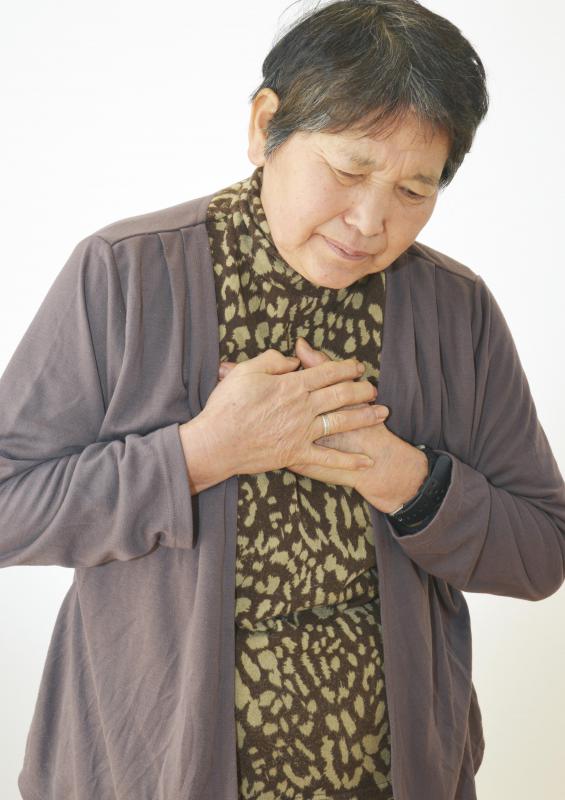
Pain is a common side effect of bruising in the lung. Chest pain can range from mild to severe and may become worse when breathing or during even mild physical activity. The risk of a heart attack is increased in those who have had a chest injury, so sudden or severe chest pain should be reported to a doctor immediately. Pain medications are often prescribed for those with a pulmonary contusion.

When the lung is bruised, a small about of blood may collect inside of the lung. This may lead to coughing or spitting up blood. This symptom should always be reported to a doctor right away, as internal bleeding can be potentially fatal. Difficulty breathing and cyanosis are also common with a bruised lung. Cyanosis is the medical term for a bluish tint to the skin.

Several diagnostic tests may be performed when a bruised lung is suspected in order to confirm the diagnosis and assess the extent of the damage. Some of the most common tests include blood work, x-rays, and ultrasound. In many cases, supportive care in a hospital setting is necessary until the patient becomes medically stable and able to return home. The medical staff will provide detailed instructions on self-care once the patient is released from the hospital.

After the pulmonary contusion has been diagnosed, a chest tube may be needed in order to pump blood, air, or fluid from the chest cavity. The patient may need to be connected to a ventilator for breathing assistance until breathing becomes easier and to help avoid organ damage as a result of a lack of oxygen to the various tissues of the body. This type of ventilation may include the use of a face mask or a tube that is inserted into the trachea. A special machine may be used to suction blood or other fluids from the lungs. Pain medications and oxygen therapy are frequently used when treating complications arising from the development of a bruised lung.
AS FEATURED ON:
AS FEATURED ON:









-
![Symptoms of a bruised lung may include chest pain.]() By: chuugoSymptoms of a bruised lung may include chest pain.
By: chuugoSymptoms of a bruised lung may include chest pain. -
![Coughing up blood may be a symptom of a bruised lung.]() By: AustralianDreamCoughing up blood may be a symptom of a bruised lung.
By: AustralianDreamCoughing up blood may be a symptom of a bruised lung. -
![An ultrasound may be conducted to diagnose a bruised lung.]() By: bartekwardziakAn ultrasound may be conducted to diagnose a bruised lung.
By: bartekwardziakAn ultrasound may be conducted to diagnose a bruised lung. -
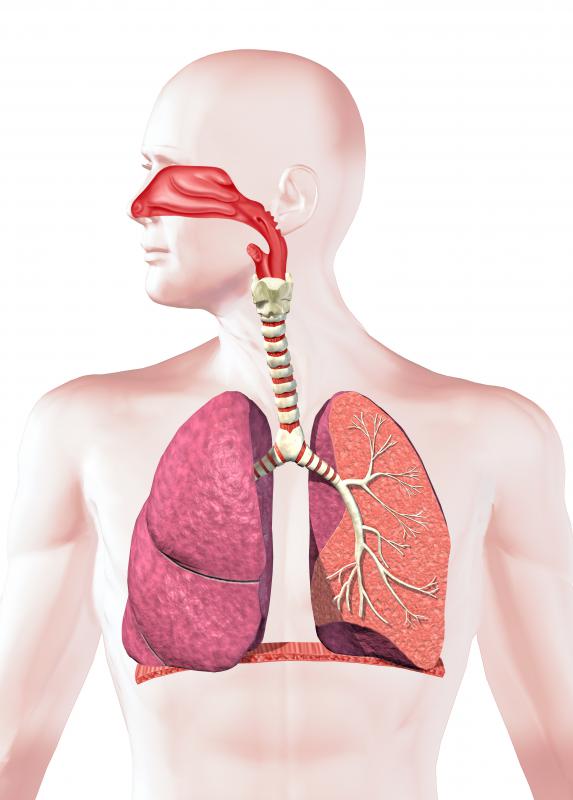
![A human respiratory system.]() By: pixelcaosA human respiratory system.
By: pixelcaosA human respiratory system. -
![Chest x-rays can be used to help diagnose a bruised lung.]() By: IvicaNSChest x-rays can be used to help diagnose a bruised lung.
By: IvicaNSChest x-rays can be used to help diagnose a bruised lung. -
![A bruised lung patient may need to be connected to a ventilator for breathing assistance until breathing becomes easier and to help avoid organ damage as a result of a lack of oxygen to the various tissues of the body.]() By: sudok1A bruised lung patient may need to be connected to a ventilator for breathing assistance until breathing becomes easier and to help avoid organ damage as a result of a lack of oxygen to the various tissues of the body.
By: sudok1A bruised lung patient may need to be connected to a ventilator for breathing assistance until breathing becomes easier and to help avoid organ damage as a result of a lack of oxygen to the various tissues of the body. -
![A ultrasound may be used to diagnose a bruised lung.]() By: nyulA ultrasound may be used to diagnose a bruised lung.
By: nyulA ultrasound may be used to diagnose a bruised lung. -
![Chest pain from a bruised lung can range from mild to severe, and may become worse when breathing or during mild physical activity.]() By: Lisa F. YoungChest pain from a bruised lung can range from mild to severe, and may become worse when breathing or during mild physical activity.
By: Lisa F. YoungChest pain from a bruised lung can range from mild to severe, and may become worse when breathing or during mild physical activity.




Discussion Comments
@ankara-- No, bruised lung is only caused by injury to the chest area.
If you're talking about chest pain or sore ribs after a long period of chronic coughing, that has to do with the chest muscles and is normal.
It has happened to me as well in the past. Once, I was sick for a month and coughed the entire time. It took several weeks for the chest pain to go away after my illness was over.
Bruised lung doesn't have anything to do with the muscles, it's a direct injury to the lungs and is a serious condition like the article said.
Is it possible to get bruised lung from asthma or chronic coughing? I have symptoms of bruised lung but I didn't suffer an injury.
My cousin has a bruised lung right now. He rides horses and fell off the horse during one of the rides and the horse stepped on his chest. He's very lucky though because it could have been a lot worse had he broken a rib.
He is experiencing some bruised lung symptoms like pain in his chest and difficulty breathing from time to time. He didn't have to be hospitalized but has strict orders from the doctor to just sit at home and not do anything. He's not even supposed to cough or sneeze a lot until his lung heals.
Post your comments