
At TheHealthBoard, we're committed to delivering accurate, trustworthy information. Our expert-authored content is rigorously fact-checked and sourced from credible authorities. Discover how we uphold the highest standards in providing you with reliable knowledge.
What is a Brain Stem Tumor?
 Mary McMahon
Mary McMahon
Mary McMahon
A brain stem tumor is a tumor that is located in the brain stem, which is the part of the brain that connects it to the spinal cord. Growths in this area can represent a serious medical threat, due to the fact that the brain stem is critical to healthy function. The prognosis is often very bleak, because these tumors are difficult to operate on and treat. For this reason, it is very important for individuals see a neurologist if they start to experience neurological symptoms, so that tumors in any part of the brain can be identified as early as possible.
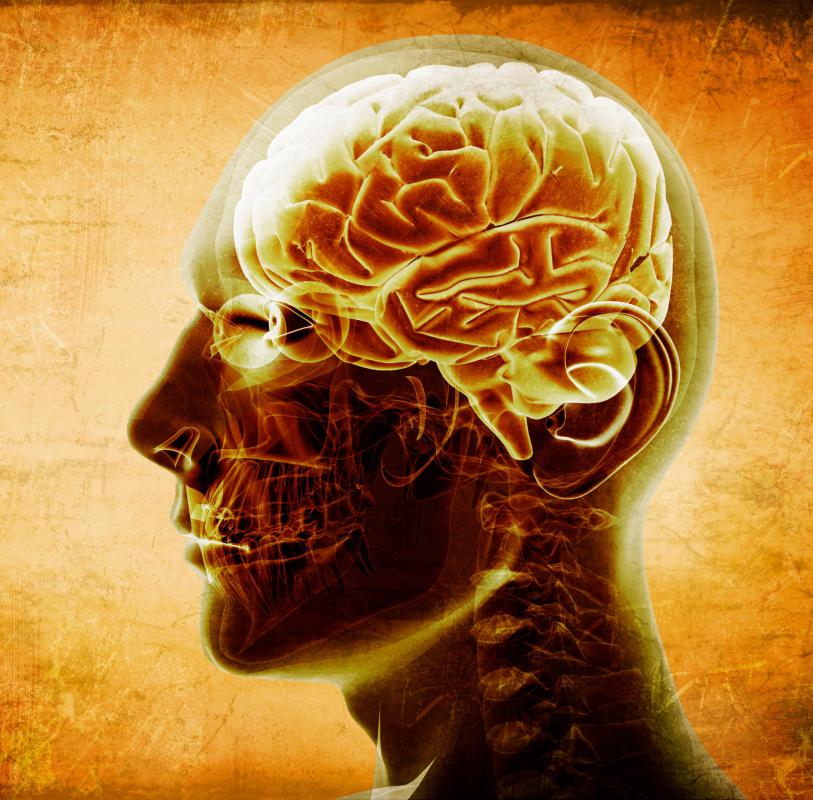
The brain stem includes the medulla oblangata, pons, and midbrain. This portion is the part in the back at the base of the brain, right where the brain and spinal cord intersect. It controls a number of physical functions including breathing, heart rate, muscle movements, and a variety of other involuntary tasks, such as digestion. Damage to the brain stem can interfere with the function of the brain stem and spinal cord, causing a variety of problems.

Brain stem tumors, also called brain stem gliomas, can arise anywhere in the brain stem. Some early signs can include problems with control of the facial muscles, such as twitching, crossed eyes, and difficulty chewing and swallowing. A glioma will also lead to weakened muscles and a clumsy gait. The patient may feel like he or she is losing control of the body, which is actually a very accurate description of what happens as a tumor invades the brain stem.

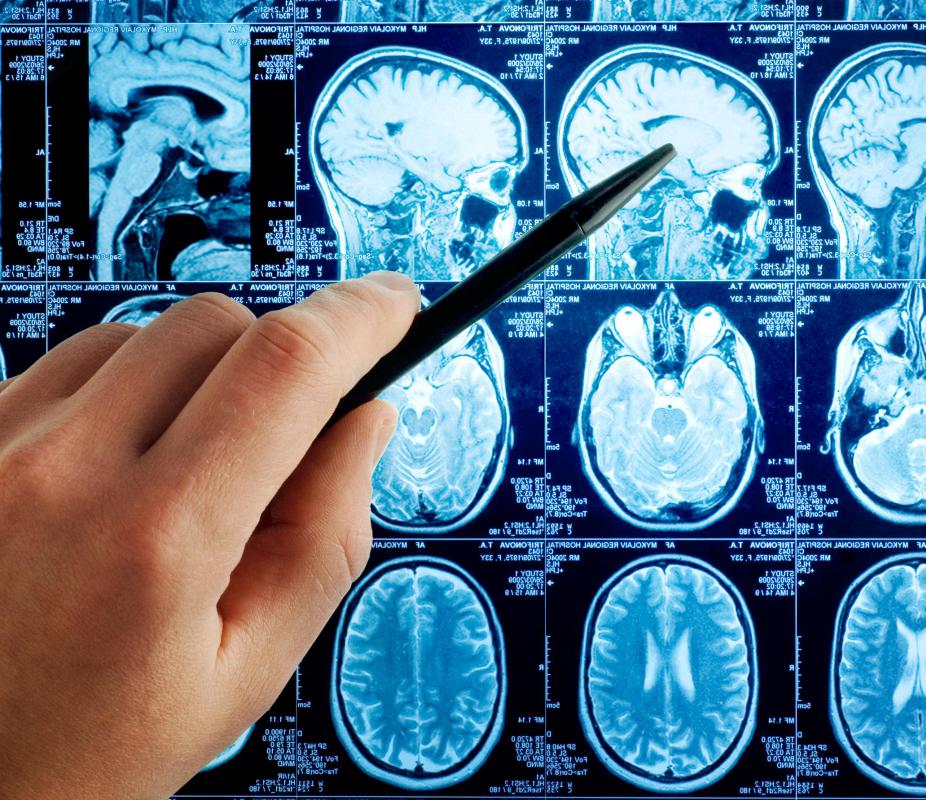
Medical professionals diagnose these tumors with the use of medical imaging studies that are used to look inside the area of interest without invasive surgery. If a patient presents with symptoms that seem to suggest a brain stem tumor, he or she may be asked to submit to an MRI or CT scan. X-rays, spinal taps, and other diagnostic tests may be used as well to learn more about the tumor and its location.

Once a tumor is diagnosed, the healthcare professional can discuss treatment options with the patient. Typically, surgical removal of tumors is not an option, because they are very difficult and often impossible to remove. As a result, radiation treatment in an attempt to shrink the tumor is usually the best choice for treatment. The patient may also be encouraged to use physical therapy to condition his or her body so that as function starts to decline, the patient will have better control. If the tumor does not respond to radiation, care is primarily palliative, aimed at keeping the patient comfortable.
Mary McMahon
Ever since she began contributing to the site several years ago, Mary has embraced the exciting challenge of being a TheHealthBoard researcher and writer. Mary has a liberal arts degree from Goddard College and spends her free time reading, cooking, and exploring the great outdoors.
Learn more...
Mary McMahon
Ever since she began contributing to the site several years ago, Mary has embraced the exciting challenge of being a TheHealthBoard researcher and writer. Mary has a liberal arts degree from Goddard College and spends her free time reading, cooking, and exploring the great outdoors.
Learn more...AS FEATURED ON:
AS FEATURED ON:


-
![Symptoms of a brain stem tumor include an abnormal gait and facial weakness.]() By: Konstantin SutyaginSymptoms of a brain stem tumor include an abnormal gait and facial weakness.
By: Konstantin SutyaginSymptoms of a brain stem tumor include an abnormal gait and facial weakness. -
![MRI and CT scanning are diagnostic imaging tests used to diagnose and evaluate brain stem tumors.]() By: adimasMRI and CT scanning are diagnostic imaging tests used to diagnose and evaluate brain stem tumors.
By: adimasMRI and CT scanning are diagnostic imaging tests used to diagnose and evaluate brain stem tumors. -
![An MRI may be used to confirm a diagnosis of a brain stem tumor.]() By: Mikhail KondrashovAn MRI may be used to confirm a diagnosis of a brain stem tumor.
By: Mikhail KondrashovAn MRI may be used to confirm a diagnosis of a brain stem tumor. -
![The brain stem includes the medulla oblangata, pons, and midbrain areas.]() By: TryfonovThe brain stem includes the medulla oblangata, pons, and midbrain areas.
By: TryfonovThe brain stem includes the medulla oblangata, pons, and midbrain areas. -
![The brain stem is located at the base of the brain and physically connects it with the spinal cord.]() By: WavebreakmediaMicroThe brain stem is located at the base of the brain and physically connects it with the spinal cord.
By: WavebreakmediaMicroThe brain stem is located at the base of the brain and physically connects it with the spinal cord.



Discussion Comments
My mom has this tumor. She went through radiation 12 years ago and was good since then. Until recently it started to grow again. We are praying she makes it through again.
My name is John-Michael and I know someone who has one of these tumors. I often wonder if medical doctors sometimes overlook simplicity, such as the fact that everything has a cause and effect. What if the people getting these tumors have weak immune systems due to a genetic issue, or a deficiency of some sort, which I firmly believe.
I'm nothing more than just a common person always looking for a way around complexity. In my studies of this type of tumor, I find that there has been success to reduce the size and completely get rid of it with (laetrile)Vitamin b17. I encourage everyone to do research for themselves and not to take a back seat to a doctor that says there is no hope. God is hope and knowledge is God's will for us to have hope!
I have been in the hospital with my daughter for over a month. There's still no diagnosis but we know she has got a tumor in her brain stem. We are waiting to find out the level and the name of tumor. I am scared and worried.
I was diagnosed with a hemorrhaging meningioma inside the brain stem that had grown into the spinal cord and hemorrhaged at age 22. I was rushed into surgery and told I most likely would not survive. I am 40 now. I'm very happy to be alive, walking and talking. I have a career. They were not able to get the all of the tumor out. I always have the thoughts that this will eventually take my life and live with neurological issues. I would love to know how long until this slow growing tumor threatens me again?
My niece passed away yesterday due to a brain stem glioma (she was 12 years old). She has been diagnosed with this type of disease since November last year (2012), yes the prognosis is very very poor and the doctors said she only have a chance less than six months. The treatment is not very effective with the radiation and medicine that not help at all. We spent nine months with her until her last breath. May God bless her soul. --Malaysia
@CopperPipe: You say your cousin had a benign brain stem tumor but is doing fine. What did they do for this? How did they get rid of the tumor? Did they shrink it? I think this is what my son has.
@tunaline -- Unfortunately, brain stem gliomas and meningioma tumors are often difficult to catch early, though luckily meningioma brain tumors grow slowly, so there's a little bit of wiggle room (not so with gliomas, by the way, they are one of the most aggressive forms of cancer).
However, there are a few things you can look for.
Though a meningioma can grow for years before symptoms become apparent, the initial symptoms will be much like that of any brain or head tumor.
Headaches that are worse in the morning and get better after vomiting, or progressively better during the day; seizures; loss of sensation and weakness in the limbs can all be signs of a meningioma.
If you experience any of these symptoms, do consult with your doctor. Chances are, if it's just headaches, he or she will tell you to wait, but if you have several of these symptoms for a long time, then your doctor will probably schedule tests to see what's going on.
What are some of the common brain stem tumor symptoms?
My doctor said that I am at risk for a malignant meningioma brain tumor, and I'd like to know what to look out for.
That is so scary. My cousin had a scare about having a glioma brain stem tumor about 5 years ago, so I had looked up all the information on brain stem tumor surgery and the brain stem tumor prognosis, and really, it's not very good.
Like the article said, brain stem tumor treatment is crazy difficult, if not impossible, because of the location.
Luckily my cousin ended up having a benign brain stem tumor, and he's doing fine, but it was really scary -- really opened my eyes to how serious a condition a brain tumor actually is.
Post your comments