
At HomeQuestionsAnswered, we're committed to delivering accurate, trustworthy information. Our expert-authored content is rigorously fact-checked and sourced from credible authorities. Discover how we uphold the highest standards in providing you with reliable knowledge.
What is a Bog Garden?
A bog garden is a type of marshy garden located in low-lying areas in a yard that are prone to be very wet. They are often located near a pond or contain an artificial pond. Bog gardens need very little care and are ideal for plants that require constantly wet ground.
Since a bog garden does not need much care, it should be disturbed as little as possible. Placing this garden in a low traffic area is ideal. A path is often constructed around the garden so people can view the plant life without damaging it. Bog gardens need sunlight and cannot be placed near trees or where leaves are likely to fall. It is also important to ensure that the larger bog plants do not give too much shade to the smaller ones.

Available space and specific plants, as well as the amount of water present, are all factors that may alter the creation of the garden. These gardens can be almost any size, the smallest fitting into a large garden pot. Full size gardens may be over 5 square feet (1.5 m2). If a natural pool is not present, a bog pool is often constructed in the center of the garden, though it is not required.

Bog gardens need to be placed on flat land. In the area selected for the garden, a shallow hole, usually about 12 inches (30 cm) deep, is normally dug out of the ground. Once completed, the hole is lined first with sand or gravel, and then with plastic or vinyl sheeting. Generally three parts peat and one part sand are used to cover the lining and fill the hole, but some plants may require a different peat-to-sand ratio. Bog gardens tend to spread, so several inches of the sheeting are usually left exposed.
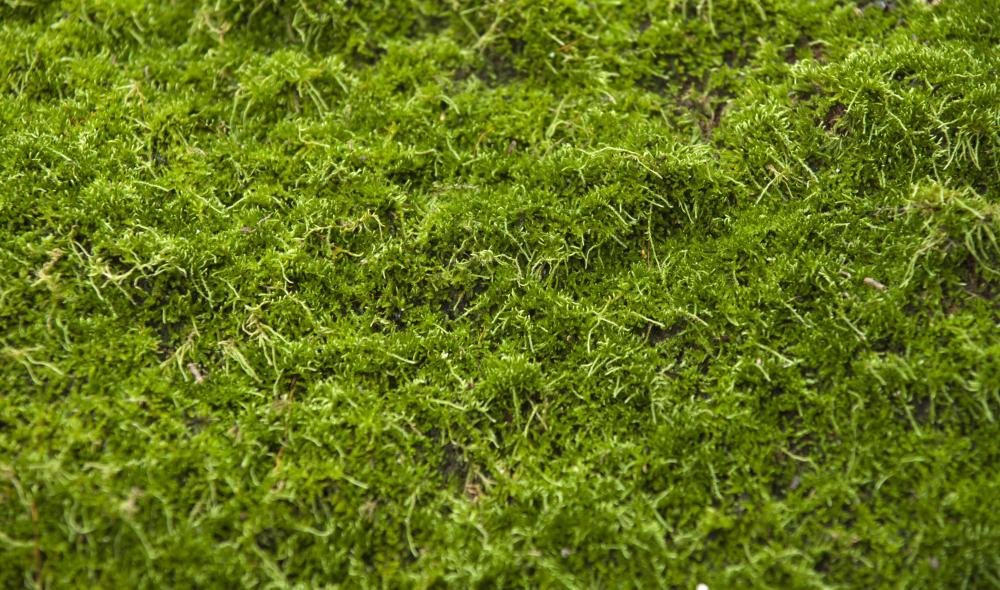
Many types of plants that attract birds and butterflies can be planted in a bog garden. These include, but are not limited to, cardinal flowers, seashore mallow, both swamp and common milkweed, elderberry, spicebush, and jewelweed. Some carnivorous plants, such as Venus flytraps and sundews also can be planted in bog gardens. Additionally, several types of mosses are often used as ground covering.
Bog gardens are designed to mimic natural bogs, so they should never be fertilized. Like natural bogs, they will make their own fertilizer. Pruning the garden once a year, normally in winter, maintaining an area free of overhanging tree branches, and ensuring the bog does not get dry are generally the only care a bog garden needs.
AS FEATURED ON:
AS FEATURED ON:


-
![Moss can be used as ground covering in a bog garden.]() By: k_kronMoss can be used as ground covering in a bog garden.
By: k_kronMoss can be used as ground covering in a bog garden. -
![A path provides access to a bog garden without disturbing its beauty.]() By: sonne flecklA path provides access to a bog garden without disturbing its beauty.
By: sonne flecklA path provides access to a bog garden without disturbing its beauty.

Discuss this Article
Post your comments