
At TheHealthBoard, we're committed to delivering accurate, trustworthy information. Our expert-authored content is rigorously fact-checked and sourced from credible authorities. Discover how we uphold the highest standards in providing you with reliable knowledge.
What Is a Bladder Neck Incision?
A bladder neck incision (BNI) is a surgical procedure performed on a male to widen the upper part of the bladder located next to the prostate. The bladder neck may become narrow as the prostate enlarges or if scar tissue has formed after prostate surgery. A condition called primary bladder neck obstruction (PBNO) may cause an inability to urinate properly, necessitating a bladder neck incision operation. Some sexual side effects are commonly reported after this minimally invasive bladder surgery.
The procedure for the bladder neck incision is done under general anesthesia or a regional spinal block. If the patient prefers to be unconscious during the surgery, the anesthesiologist will administer a series of medications through an intravenous (IV) line that will cause the patient to fall asleep and not feel any pain. The regional spinal block is given through a small catheter inserted into the space between the vertebrae in the spine; although the patient will remain awake during the procedure, he will be unable to feel any painful sensations.

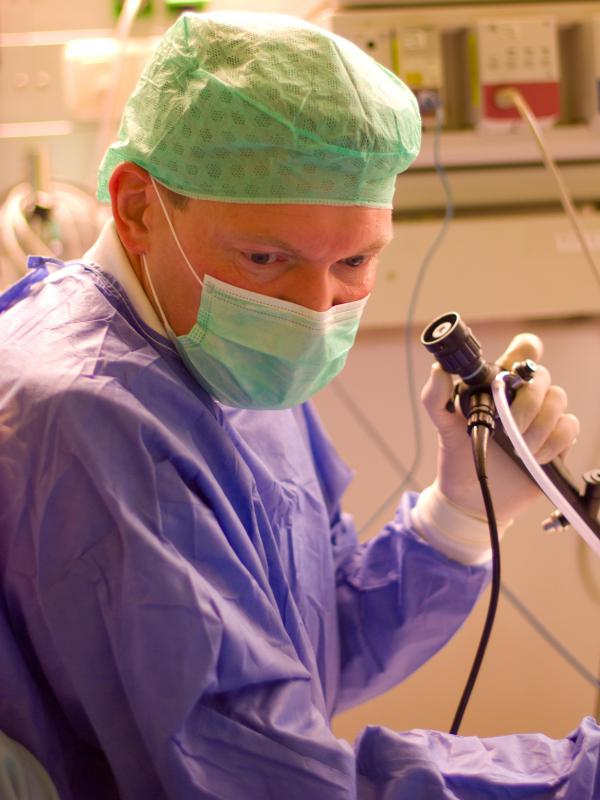
This bladder surgery is performed using an endoscopic surgical instrument. Images from the camera on the endoscope enable the surgeon to visualize the bladder neck during the operation. A long thin flexible endoscope is inserted into the urethra of the penis through the small opening at the tip of the organ. The endoscope is slowly moved forward through the urethra until the neck of the bladder is reached. Once the bladder located, the surgeon will make a cut in the neck of the bladder that will allow the free passage of urine.

After the BNI operation, the patient will have a catheter inserted into the penis to irrigate the bladder. When the bladder has stopped bleeding, the catheter will be removed. Nursing staff will observe the patient until he is able to pass urine successfully, and then he will be discharged.
The incision site in the bladder neck will take from six to twelve weeks to heal. An antibiotic, stool softener, and a medication used to numb the urinary tract will be prescribed for about ten days to two weeks after the procedure. Some doctors recommend taking an anticoagulant or an aspirin daily to reduce the risk of blood clots causing a heart attack or stroke during the healing period.

Sexual side effects are common after a bladder neck incision. Frequently, a condition called retrograde ejaculation will develop. This causes the sperm to leak into the bladder, causing an inability to ejaculate fluid during orgasm. A man may also have difficulty achieving and maintaining an erection. Infertility caused by the lack of ejaculate after the bladder neck incision, can be addressed by storing sperm cryogenically before the operation.
AS FEATURED ON:
AS FEATURED ON:


-
![The human urinary tract, including the bladder in pink at the bottom.]() By: 3drenderingsThe human urinary tract, including the bladder in pink at the bottom.
By: 3drenderingsThe human urinary tract, including the bladder in pink at the bottom. -
![A catheter may be inserted into the penis following a bladder neck incision operation.]() By: Dario Lo PrestiA catheter may be inserted into the penis following a bladder neck incision operation.
By: Dario Lo PrestiA catheter may be inserted into the penis following a bladder neck incision operation. -
![The doctor can view the bladder neck by using an endoscope fitted with a camera.]() By: Stephan MorroschThe doctor can view the bladder neck by using an endoscope fitted with a camera.
By: Stephan MorroschThe doctor can view the bladder neck by using an endoscope fitted with a camera.


Discuss this Article
Post your comments