
At TheHealthBoard, we're committed to delivering accurate, trustworthy information. Our expert-authored content is rigorously fact-checked and sourced from credible authorities. Discover how we uphold the highest standards in providing you with reliable knowledge.
What is a Bicornuate Uterus?
A bicornuate uterus is when the uterus is sectioned into two chambers, or horns, instead of one. Also referred to as a “heart-shaped” uterus, this organ shape forms during the embryonic stage of development. The Mullerian ducts, which become the ovaries and fallopian tubes, don’t fuse properly causing the bottom part of the uterus to appear normal while the upper part folds inward causing a malformed uterus shaped like a heart.
There are different severities of a bicornuate uterus from a partial bicornuate, where only part of the upper portion dips into the chamber, to a full bicornuate, where the entire upper portion folds down, creating two chambers.

Many women don’t even realize they have a bicornuate uterus until they try to get pregnant. Although not related definitely to infertility, this uterus shape can make getting pregnant challenging and put a women into a high-risk category if she does conceive. These women are often told they will have difficulty conceiving, if at all, and are at high risk for miscarriage (63%) as well as pre-term delivery (15-25%). Because a uterus with a two chambers has less room than a normally shaped uterus, the possibility a baby will be born breech increases in a partial bicornuate to 40 – 50%.
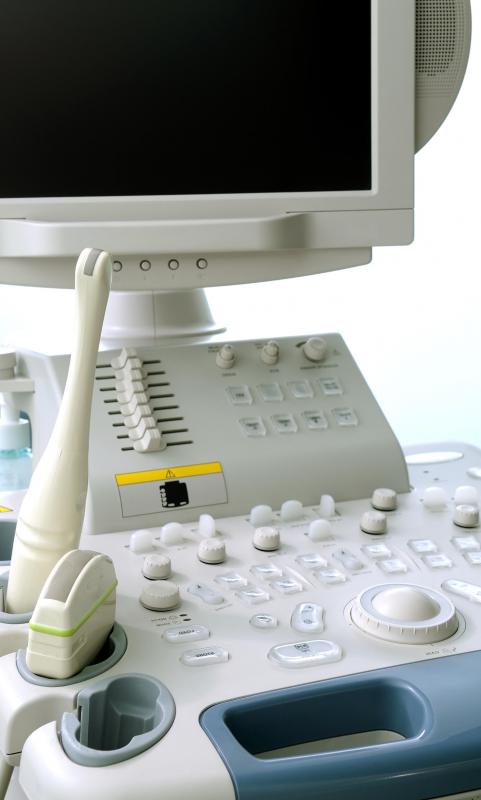
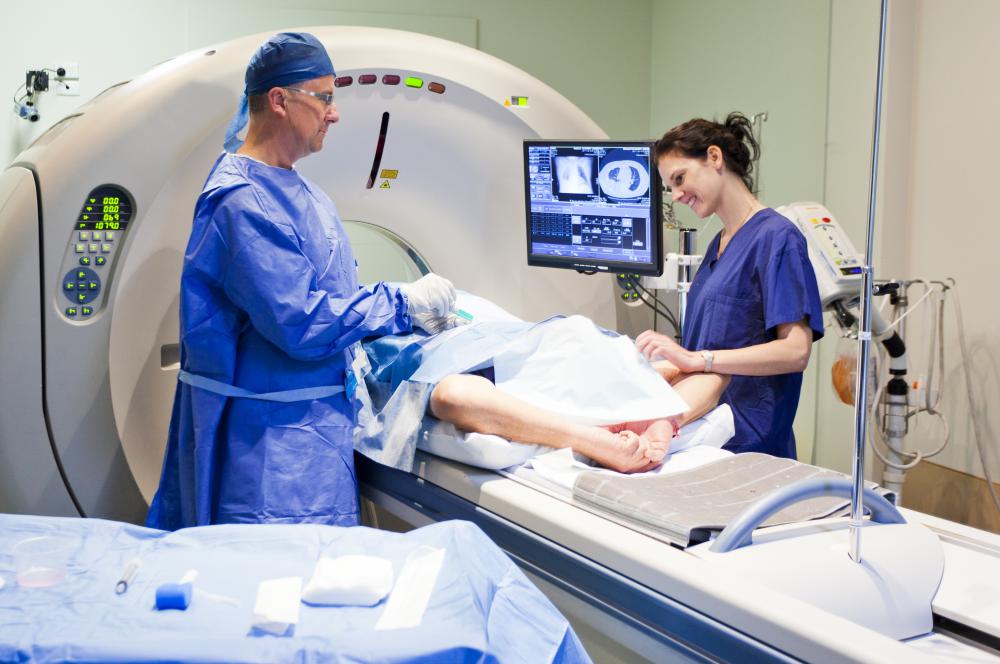
A bicornuate uterus is usually detected during an initial ultrasound during pregnancy, if it hadn’t been detected earlier. It can also be detected through an MRI.
Having a bicornuate uterus is estimated to occur in approximately in 0.1 – 05.% of women living in the United States. It should be noted this is likely an underestimate, as many cases go undetected.

Some symptoms experienced by women who have this type of uterus include abdominal pain, heavy or irregular menstrual periods, and painful ovulation. Women with these symptoms should advise their doctors and ask for an ultrasound to rule out the possibility of bicornuate uterus.
AS FEATURED ON:
AS FEATURED ON:


-
![Unlike a typical uterus, a bicornuate uterus is sectioned into two chambers.]() By: fixer00Unlike a typical uterus, a bicornuate uterus is sectioned into two chambers.
By: fixer00Unlike a typical uterus, a bicornuate uterus is sectioned into two chambers. -
![A bicornuate uterus can be detected during an ultrasound.]() By: Andrey ChmelyovA bicornuate uterus can be detected during an ultrasound.
By: Andrey ChmelyovA bicornuate uterus can be detected during an ultrasound. -
![An initial ultrasound during pregnancy will usually detect a bicornuate uterus.]() By: photographmdAn initial ultrasound during pregnancy will usually detect a bicornuate uterus.
By: photographmdAn initial ultrasound during pregnancy will usually detect a bicornuate uterus. -
![Some symptoms experienced by women who have a bicornuate uterus include abdominal pain, heavy or irregular menstrual periods, and painful ovulation.]() By: inesbazdarSome symptoms experienced by women who have a bicornuate uterus include abdominal pain, heavy or irregular menstrual periods, and painful ovulation.
By: inesbazdarSome symptoms experienced by women who have a bicornuate uterus include abdominal pain, heavy or irregular menstrual periods, and painful ovulation. -
![A bicornuate uterus could make it diffiicult for a woman to carry her pregnancy to full term.]() By: Radek SturgolewskiA bicornuate uterus could make it diffiicult for a woman to carry her pregnancy to full term.
By: Radek SturgolewskiA bicornuate uterus could make it diffiicult for a woman to carry her pregnancy to full term. -
![A bicornuate uterus may be detected through an MRI.]() By: EPSTOCKA bicornuate uterus may be detected through an MRI.
By: EPSTOCKA bicornuate uterus may be detected through an MRI. -
![Vaginal ultrasound probes may be inserted into the vagina to obtain an image of the uterus.]() By: zayacskVaginal ultrasound probes may be inserted into the vagina to obtain an image of the uterus.
By: zayacskVaginal ultrasound probes may be inserted into the vagina to obtain an image of the uterus. -
![A misshapen uterus may make having children difficult.]() By: ProMotionA misshapen uterus may make having children difficult.
By: ProMotionA misshapen uterus may make having children difficult. -
![Women with a bicornuate uterus have an increased risk of premature birth.]() By: Monkey BusinessWomen with a bicornuate uterus have an increased risk of premature birth.
By: Monkey BusinessWomen with a bicornuate uterus have an increased risk of premature birth.







Discussion Comments
@anon979408: I don't have this condition, but it sounds like you need to see an actual gynecologist and ask for birth control pills. I had killer periods when I was your age and the pill is the *only* thing that helped me. It helps regulate your hormone levels. Mine were seriously out of whack.
When I'd been on the pill a month, my periods went from going 8 days to four days, and I had mild cramps one day, with maybe two days of heavy flow. I can't guarantee you'll get the same results, but sounds like it's worth a try. Good luck.
I am just recently turned 18 and discovered a couple weeks later I have a bicornuate uterus. Ever since I started my periods around age 12 they have been super painful, long, and heavy. I've gone to several doctors before and even the hospital when the pain reached a unbearable point to just be turned away. They all said it was just my period.
Right before I turned 15, my periods changed from three weeks long to anywhere from 7-14 days. The unbearable pain was still there but now every time I start my period I throw up for three or four days straight, always starting within a hour of my period starting. My new doctor made the discovery, but is putting my hystosonogram off for three months. The pain is so unbearable and is making me miss school and I can barely even get out of bed. Help. What can I do for the pain?
I would like to know if a bicornuate uterus and spina bifida occulta commonly come together? (I have both) Thanks.
I have a bicornuate uterus. I discovered this at age 21 from an ultrasound with the pregnancy of my first child.
I have always had an irregular period and after discovering that I have a bicornuate uterus I was wondering if there was a connection.
Thank God everything went well with the pregnancy and delivery of my beautiful daughter. I did have a long labor of 35 hours but got an epidural after 24 hours which worked wonderfully.
Has anyone been told they may have or do have renal problems (kidneys) due to the defect?
I'm being told I may have this defect. I'm just about 40 and am just finding this out. I previously had an ovarian cystectomy to remove a cyst on my ovary due to endometriosis. I've had ultrasounds before and still am just finding out about this now. I went in for ablation surgery two weeks ago and it couldn't be performed due to the two cavities and the wall in between. I don't understand why after all this I'm just learning about this? Most on this site said theirs was discovered by ultrasound but mine was not and my doctor said it doesn't always show up on an ultrasound.
I have had heavy bleeding since my cystectomy surgery in 2008. I've always been regular however. I did not have bad pain or cramps but did have bad back pain during my cycle. I'm being told that I now only have two choices for this condition. (1) Taking a progesterone pill which is some form of hormone therapy. This would suppress my periods or (2) a partial hysterectomy. The second option is what I wanted in the first place. and my OB wouldn't do it for some reason. Ablation was a far as she'd let me go. I never intended to have children and have never been pregnant. My OB said if I had tried to get pregnant before I likely would have found this out earlier. But, after reading everyone's comments, I'm not so sure. I asked why it wasn't discovered during my cystectomy and she said it was because they were above my uterus and couldn't see from that point of view.
Anyway, I'm now on my way to starting the process of getting a hysterectomy. Finally, I will be done with all this!
I'm 34 and have recently learned that I have a bicornuate uterus. I have never been pregnant, but since my periods started when I was 14, they were extremely painful and would last two weeks. They'd also return after two weeks. I was so miserable. They first told me I had a retroverted uterus and that was why I had such painful back pain during my periods.
I was put on birth control on and off through my teens, and while it lessened the bleeding, I still had a lot of pain and was bleeding (somewhat lighter) in between periods. As I grew older, the time between periods grew to three or four weeks, but would last seven to nine days. They were both painful (I could hardly function, the pain was so bad). And the bleeding became even worse.
Recently, I found a doctor who actually took me seriously. She immediately saw something abnormal when she was trying to do my pelvic exam. She sent me for an ultrasound, which diagnosed my bicornuate uterus. And recent bloodwork has found me extremely anemic two and 1/2 weeks after my period. And I also have extremely painful ovulation and spotting in the middle of the month. I feel so miserable.
What I'd like is to get a hysterectomy and have the pain and problems over with. I never intended to have children of my own anyway. I always wanted to adopt. Will doctors even consider doing a hysterectomy for this condition and at my age? Is there anything else that can be done to lessen the pain and excessive bleeding? Between this and my Fibromyalgia and back surgeries over the years, I am always in a state of constant pain, but my periods just make things even worse.
I got diagnosed with a heart shaped uterus three years ago when I was 16 and suffering with terrible period pain. I had first been diagnosed with cysts on my uterus, then further scans revealed I had a heart-shaped uterus.
I got put on the cerazette pill since I only had the pain when I was on my period, and fortunately for me, this pill stops me having a period so I have no pain. I am worried when I decide to start a family it will be difficult, but using the cerazette pill is helping me cope with the problem at the present moment in time.
Before being given this pill, I was relying on codeine to help me do everyday activities, but I am now pleased to say as soon as I started taking cerazette I have not even opened the packet of codeine the doctor gave me one year ago.
Hopefully starting a family in the future won't be too difficult.
I have a heart-shaped uterus, but never had any problems with my periods. they were sometimes irregular but never any heavy bleeding and the for many years they have been very light periods. I had my first child 13 years ago and was never able to conceive until this year. I am 36 years old now.
I just found out about my uterus as I don't remember being told about it when I was pregnant before. I did have complications with my first pregnancy and the birth, but so far none with this one. I'm almost eight weeks along.
I'm 24 I have a bicornuate uterus. I only found out this when I found out I was pregnant at 21. My son is 3 now.
My pregnancy was very straightforward. I saw a consultant and went to the hospital more frequently only because I was more high risk than someone with a 'normal' uterus. Everything seemed to go along with no problems, only what any pregnant woman might have, e.g.,the softening of the pelvis was a little painful.
He was breech up until 36 weeks, when he decided he would turn himself around and get in the right place. I was offered a sweep at 38 weeks. The midwife was very sure that I would be in labor that night as the sweep was successful and he was all ready to come anyway. This must have been because there is apparently a little less room for the baby near the end of the pregnancy as there would be in a 'normal' womb.
I was in labor for 28 hours and delivered him naturally and was home a day or two later with no problems and a gorgeous, healthy baby boy. I have shared my experience to help others with information because when I found out I had a bicornuate uterus, I wasn't told much about it by anyone so I looked on the Internet and all I read was very sad and unfortunate stories, which puts extra stress and worry on people.
Although it is good to know all the aspects of this 'defect,' it's very comforting reading that it can be in fact 'normal' to have a bicornuate uterus, so to speak, and now I suppose I will have to investigate a second pregnancy, like how long it will take to happen, etc. Here we go.
I have a bicornuate uterus. I never had period problems or had any problems during pregnancy, so until I was giving birth to my son who is two now did I find it caused me any problems.
I was in labor 48 hours and asked for an epidural, which failed to work. I suffered a hemorrhage which left me in surgery and recovery for 10 hours and I was unable to bond with my baby.
Luckily I recovered in no time and was back on my feet within weeks, and me and my son are fine. Unfortunately, me and my partner are trying for another baby and have had two miscarriages. I had my last one a week ago and it wasn't a straightforward miscarriage. I hemorrhaged once again, leaving me in the hospital and away from my son again.
I can't help but feel this is due to me having a bicornuate uterus or two wombs, as I like to call it. I'm getting nowhere with my doctors or the hospital staff. They just keep saying I have given birth once to a healthy baby so there's no problem and I'm just unlucky to have had two miscarriages. I really don't think this is the case. What shall I do?
I am 16 years old and have a bicornuate uterus with continuous menstruation. What can I do?
I am 34 years old and have been pregnant nine times and have three living children who all were premature. I have had test after test done on me and multiple surgeries.
I have always had horrible periods as long as I can remember and they have been very irregular. Some months I would have a very heavy and painful cycle, and other months I wouldn't have anything -- just pains.
All my pregnancies have been high risk, resulting in bed rest and multiple medications and weekly -- sometimes twice weekly doctor visits.
During my last pregnancy, I ended up being admitted into the hospital at 22 weeks and luckily held out until he was 33 weeks. They ended up doing an emergency C-section and I had a tubal ligation done. I'm amazed that at that moment they didn't figure out I have a Bicornuate Uterus.
Things seemed OK for awhile but never 100 percent. A year after he was born, I went in and had a uterine ablation to help with my cycles. It has helped but not as well as it was supposed to. I still have a period but it only lasts two days now with heavy bleeding, but boy, when I ovulate that is just as bad.
Since my son was born being intimate with my husband has changed. It hurts a lot. I recently went in for a diagnostic procedure to see what's going on. The findings were some polyps and a bicornuate uterus. According to my doctor, it's really nothing to explain the pain that I have on a regular basis and the pain with intercourse.
My question is this: Can having a bicornuate uterus make intercourse very painful? I already know that it causes pain in general and when you ovulate. I am thinking about having a hysterectomy, but my doctor isn't sold on this yet. I'm desperate for some answers and relief. Again, can a bicornuate uterus cause pain with intercourse?
I have a bicornuate uterus, but no symptoms whatsoever. The only reason I found out was at an ultrasound. I menstruate pretty regularly, and the consistency is pretty regular. I guess I am lucky to not have to suffer. I just hope everything goes well in this pregnancy. I worry about all the women saying they gave birth or miscarried early on. I definitely would not be able to survive a loss so large.
I am almost sixty now, but I had problems with my periods and with miscarriages all my life. I started my periods at nine and they were beyond belief painful and debilitating. Back in the late sixties, early seventies they prescribed Emperin with codeine to combat the pain.
I did not find out that I had a septum until I went into labor. I could not deliver my daughter and ended up with a Cesarean section. After my daughter was born I never had another child. Maybe it is due to the OB trying to take the septum out after the delivery.
I had three D&C procedures for endometriosis and not until menopause have I found relief.
It is funny that you mention children with Spina Bifida. My daughter has Chiari I. I myself do not have spina bifida. I hope this helps someone.
anon249855: I’m 34 years old and have two children. I started my periods at 11. They were always heavy and painful. After having periods every two weeks lasting four to six days each and being in pain, my doctors put me on the pill (low dose since I was only 13). I was on and off the pill for three years, which helped to regulate the bleeding but not the pain. At 15 or 16, I was told that my cervix looked identical to that of a woman who had recently given birth and that I would never be able to have kids.
I unexpectedly got pregnant at age 20. I had no problems and the pregnancy went full term except for a "slow-leaky" uterus that was continuously undiagnosed by the doctors (I later learned that amniotic fluid replenishes itself every 24 hours). It was a miracle that I didn't become septic or lose my baby.
About three years later, I got pregnant again, and it was an uneventful pregnancy short of developing bilateral pneumonia twice, gestational diabetes in the second trimester, and during labor, multiple attempts at an epidural that ultimately didn't work, so I felt everything during the delivery and then the baby had meconium.
My periods remained painful and irregular for the four years following baby number two and I was only diagnosed with a bicornuate uterus due to having a hysterectomy because I could no longer take the pain and the every two week cycles. I also had adenomyosis, which my doc told me is a condition which typically affects women over the age of 50.
Anyway, I never post comments on articles and such, and I have no idea how old this post is, but when I read your comment on this subject, "I was wondering, does anyone know if spina bifida occulta is also known in people with our problem, along with heart murmurs? I have both of these problems, as well. My second child, a boy, has spina bifida occulta and heart murmur also," I knew I had to respond to let you know you're not alone. Aside from the bicornuate uterus, I was diagnosed with spina bifida occulta a few years ago and I also have a faint heart murmur. So maybe you're on to something with these conditions potentially being linked.
I’m 53 years old and have three adult children born in the late 80s. I started my periods at 16. They were always heavy and painful. After having periods every two weeks lasting seven days and being in pain, my doctors put me on the pill and gave me five iron injections because I was so anemic. The iron tablets didn’t work and I stayed on the pill for seven years, which helped with the bleeding but not the pain. The doctors said it was normal and when I had babies I wouldn’t have any more problems.
I got married at age 23 and got pregnant right away. I had no problems and the pregnancy went full term except I didn’t dilate. After 17 1/2 hours in labor, the baby in distress and me passing out, the doctor did an emergency C-section. The baby was OK and I bled heavily for seven weeks after the birth. About 2 1/2 years later, I got pregnant again. I had an easy pregnancy, but my labor was different. The doctor did a pelvic X-ray to see if my pelvis was large enough for a natural birth. Everything seemed OK, so I tried labor. After 11 hours, I only dilated to 1 1/2 cm, so the doctor said OK, do a C-section. For each of these births, the baby’s head was in the correct position, except my second baby had the cord wrapped around his neck, but he was fine. I had eight weeks again of severe bleeding.
About 2 1/2 years later, I got pregnant again, and it was an easy pregnancy, and I still didn’t know about my condition. The doctor told me this baby would not be born without a C-section, but never told me of my condition, or even if he even knew of it. So a week early, my daughter was born by C-section and an epidural that didn’t work, so I felt everything that was happening, plus I had pain in my diaphragm. I thought I was having a heart attack, but the doctor said it was a blood clot in my diaphragm.
While all this was happening, the doctor asked if I wanted my tubes tied. I told him no, just get out of there. Anyway, the baby and I were fine, except for 10 weeks of me bleeding profusely. My periods were gone during breast feeding, which was great, then back to periods. After weaning, I have periods every 23 to 28 days that last seven days. No pain, except on occasion I have ovarian cysts and also cysts in my cervix.
I was only diagnosed with a bicornuate uterus a few years ago due to pains in my right side. I thought it was appendicitis and still doctors didn’t explain what had been happening to my body. I am only just finding out now through these blogs and things are finally making sense now.
I think am going through menopause as my periods have been really erratic, slowing down, and I’m getting them less and after six months of no periods, now have them again extremely heavy and lasting 12 days so far. I am waiting on blood test results and pelvic ultrasound results.
I was wondering, does anyone know if spina bifida occulta is also known in people with our problem, along with heart murmurs? I have both of these problems, as well. My second child, a boy, has spina bifida occulta and heart murmur also.
I found out I have a heart shaped womb after a small bleed early on in pregnancy. I only have irregular periods and had no idea any thing was 'abnormal'.
I did go on to have a normal pregnancy and a labor lasting only 7 1/2 hours with no pain relief! Not out of choice, I hasten to add. I was told to wait in the day room as I was only in the very early stages and when the new midwife on duty checked me six hours later I was ready to push.
My hubby was gutted he didn't get a go on the gas and air. I did have to deliver with the aid of a ventouse but was home a day and a half later. I wanted to share this as after looking up this condition during pregnancy I started to worry as there seemed to be a lot of unfortunate tales and sad stories. I hope if I choose to have more kids it goes as smoothly again.
I am currently 28 years old and have been suffering for over ten years. I haven't been able to work in three years. I was forced to leave college after three years as a result of the constant pain. I filed bankruptcy at age 20 from all the doctor bills.
After dozens of ER visits, I was told I have a bicornuate uterus and ovarian cysts. I was told I may also have endometriosis. These entries sound just like me! Were you ever able to make the pain stop? I have no idea what to expect.
I am a 32 year old woman with a bicornuate uterus. I first realized I had the problem in my early 20s. I was admitted to the hospital with terrible pelvic pain and after a series of CT scans and MRIs they told me I have this. I had a septum growing in the middle of my uterus as well, making my pregnancy chances even lower.
The doctor did surgery to remove the septum and thought hopefully, with it removed I would be able to conceive. After a year I was pregnant, and even though I was high risk, my pregnancy went smoothly, and I delivered a healthy baby girl.
After my daughter was born I had extreme pelvic pain again, and I even went to a GI and was diagnosed with IBS. After I was on meds, my symptoms seemed to disappear, but sadly returned with a vengeance. I had extreme pain again and went back to my doctor. He finally told me now that I had health insurance which I did not have for awhile, and in that time could do nothing, to go and see an OBGYN.
I went to the same OB who did my surgery because I trusted her, even though I had not seen her in years. After her exam, she mentioned endometriosis. I cringed at the thought, for I knew others with this problem and it can be bad. My doctor said there was no way to tell this other than lapro surgery.
After this surgery, we found that I did have endometriosis, but it wasn't bad enough for all this pain. Needless to say, my doctor and I were not seeing eye to eye, and I felt as if no one believed a word I was saying. Due to some people taking total advantage of pain meds, the doctor assumed this was my situation as well, not believing for a minute that I was telling the truth.
My pain is bad and has not come to an end. After my cousin went through all the same things, she had an ER doctor do research and to our amazement, having a bicornuate uterus can cause extreme pelvic pain, and none of the doctors I saw ever told me this.
So, I send that ER doctor and WiseGeek.com all my thanks. After years, I feel like I might have an answer. I am in the process of looking for a new OB and when I find one, this is the article I am taking with me, along with all of the surgery photos. That way, there is no miscommunication. Thanks again, Shay
when i started my period at nine years old, i had extreme pain and bleeding. they were also very irregular, and stress made it worse.
by the time i was 14 i was on my period for sometimes three to four months straight and would be off for another three to four months. i ended up with a hemoglobin at 6 and had 6 pints of blood pumped into me at age of 14. I had extreme pain, so bad to where i could hardly move even to go to the bathroom. i would miss so much school it was a wonder i even passed.
The doctor would have to prescribe me pain meds after i turned 15, so i would be able to go to school and work after i turned 16. they put me in a wooden cylinder and spun me around, taking pictures. nothing was abnormal, they said.
well, i got pregnant at 22, in 2001, and they took all kinds of sonograms because i had a band of tissue in my placenta, but said nothing was abnormal. my daughter was born five weeks early, at only 4 lbs 3 ozs. then my periods finally started getting regular, but i still had extreme pain.
then i got pregnant again in 2004. imagine my surprise when i found out i had a bicornuate uterus! i was put on bed rest and my second baby girl was born on time. my third was in 2007, but she was seven weeks early, but fine otherwise.
Two things that need to happen: 1) all girls should get screened at birth for this defect. That way they know and are prepared for a lifetime of pain, suffering and anemia; 2) doctors should be allowed to prescribe pain meds to women like us. how are we supposed to work, clean house, and take care of kids when we are in so much pain we feel like a knife is stuck in our abdomen, like throwing up and feel dizzy? can we get on disability for this?
I have painful monthly periods due to a bicornuate uterus, and need treatment for this pain.
Post your comments