
At DelightedCooking, we're committed to delivering accurate, trustworthy information. Our expert-authored content is rigorously fact-checked and sourced from credible authorities. Discover how we uphold the highest standards in providing you with reliable knowledge.
What is a Beefsteak Tomato?
The beefsteak tomato is one of the largest tomato cultivars, with some varieties weighing in at over 2 pounds (0.9 kilograms) per tomato. This meaty tomato is grown in a rainbow of colors, from vibrant red to pale yellow to purple-black. Rather than maintaining a perfectly spherical shape as it develops, it takes on a decided kidney-bean shape, spreading out to the sides.
There are many compact seed cavities dispersed throughout the beefsteak tomato, and the core is practically nonexistent. Because of this internal structure, it holds together well when cut, and so is particularly well suited for slicing and eating raw. It is considered by many to be the ideal sandwich tomato.

Being an indeterminate variety, the vine will keep growing and producing fruit for the entire summer season. It is one of the slowest-maturing tomatoes, with the largest beefsteak cultivars taking up to 90 days to produce ripe fruit. Typically, the vine will continue to produce and set fruit until the first frost.
The beefsteak tomato can, if necessary, be picked from the vine while it is still green and then ripened on the counter, but for maximum flavor and texture, it should be allowed to ripen completely on the vine. A perfectly ripe tomato will be richly colored (the shade will variety according to the cultivar) and will give to gentle pressure. Under no circumstances should a fresh one be refrigerated — the perfect temperature for a tomato is room temperature, between 55° and 70°F (13° and 21°C).

The Big Beef is one of the most popular varieties, and it's prolific, flavorful, and consistent. The Brandywine originated in the American Amish community and has been in existence for over a century. It does not do well in areas of high humidity, however, and is somewhat soft, but the flavor is exceptional. This variety also comes in a yellow version. The Cherokee Purple, Black Krim, and Black Seaman bear striking purplish black fruit. The Basinga and Hazel Mae are yellow beefsteaks that are low in acid and mildly flavored. Some varieties, like Box Car Willie and Goliath, are resistant to disease. Others, like the Mortgage Lifter, are adapted to areas that do not receive a great deal of rainfall.

The best-quality beefsteak tomatoes are typically not available at major supermarkets. Shoppers should instead seek them out at farmers markets or grow them in the garden or in patio containers. In selecting one for purchase, consumers should choose one that is firm, unblemished, and that has unbroken skin. An underripe tomato is perfectly acceptable, however, and it can be left on the counter at room temperature to ripen.
Beefsteak tomatoes are good to use on sandwiches and hamburgers, in salads, diced in salsa, broiled or grilled, or stuffed. Perhaps the most classic way to sample the fruit is simply to serve juicy slices between two pieces of bread slathered with mayonnaise. Diners can sprinkle them with salt and pepper and enjoy. Cooks can also arrange alternating slices of tomato and fresh mozzarella on a chilled serving platter, drizzle them with extra-virgin olive oil, top the dish with a few shredded fresh basil leaves, and sprinkle it with freshly ground black pepper and sea salt to taste.
AS FEATURED ON:
AS FEATURED ON:


-
![Robust Mexican salsas are often made with diced beefsteak tomatoes.]() By: JJAVARobust Mexican salsas are often made with diced beefsteak tomatoes.
By: JJAVARobust Mexican salsas are often made with diced beefsteak tomatoes. -
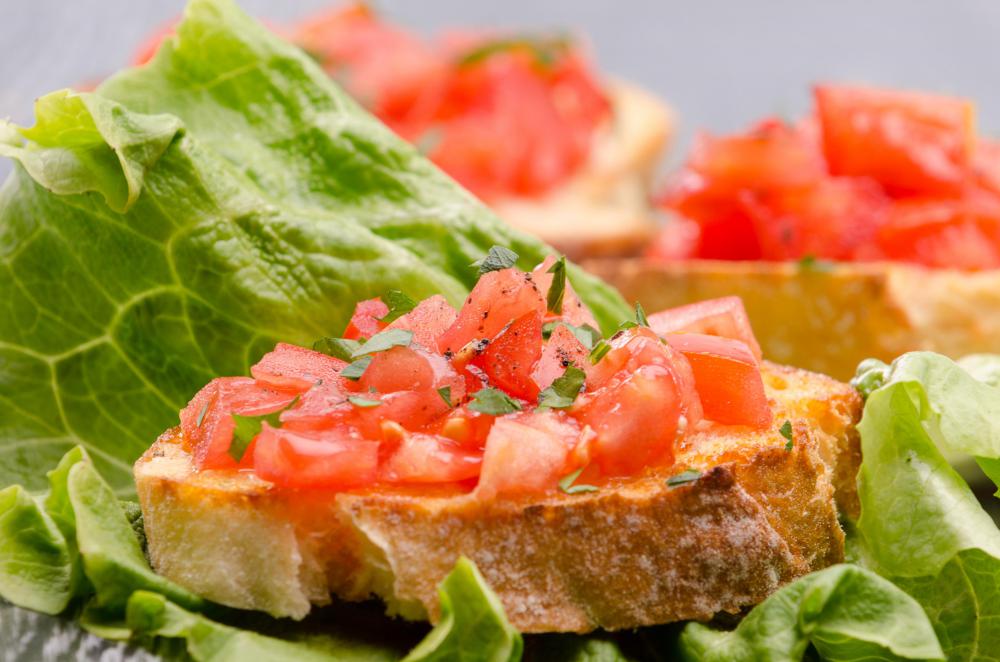
![Beefsteak tomatoes are suitable for eating raw, such as in bruschetta.]() By: skyfotostockBeefsteak tomatoes are suitable for eating raw, such as in bruschetta.
By: skyfotostockBeefsteak tomatoes are suitable for eating raw, such as in bruschetta. -
![Beefsteak tomatoes are recommended to be bought when bright red and firm.]() By: monticelllloBeefsteak tomatoes are recommended to be bought when bright red and firm.
By: monticelllloBeefsteak tomatoes are recommended to be bought when bright red and firm.


Discussion Comments
Can anyone tell me if it's possible to grow these types of tomatoes out of a grow bag, outdoors? I've had a plant for about two or three weeks and it looks like it's dying! I'd appreciate tips and advice. --Karm
i find putting a few drops of water in the crown while they sit on the counter makes them last longer.
Beefsteak tomatoes can look very pleasant and generally symmetrical as does the 'Trust' variety that we grow in our greenhouse. Great flavor and texture and they do well picked once color starts to show and do not need to stay on the vine till the end. The kitchen here actually asks us to bring them before they get fully red.
Jabuka- You have a point because this morning I visited my nearby farmer's market vendor who, sadly says, that though he champions the beafsteak tomato, the heirlooms are ugly but get all the play and generally are over-hyped.
It would be my guess why stores rarely carry beefsteak tomatoes and that is because of the way they look.
Beefsteak tomatoes have an odd shape, not as appealing to the eye, as another tomato variety might have.
Since the stores often focus on looks, the beefsteak tomato might be the looser in this competition.
I wonder what is it about the beefsteak tomato that it is not carried in the supermarkets -- a large community of shoppers will never experience the best tomato of them all!
i love to know about such info as this i am a food technologist. i am hearing for the first time that beefsteak tomato variety exists. i would like to receive such info in the future. i am from kashmir. Would these tomatoes grow here?
It is really strange for me. Am hearing for the first time about beefsteak tomatoes as they are not available in India.
You do a great job. Donald W. B.
I remember the beefsteak tomatoes from my childhood. I now live in Belize, Central America with high humidity. Any suggestions of a variety to grow here? --bigjerbze
Great article! My mouth is watering!
Beefsteak tomatoes are delicious, giant, juicy and meaty tomatoes that are easy to grow.
They are best kept at room temperature, not in refrigerator. They should be spread out with steams pointing up.
In refrigerator, their sugar will turn into starch and a lot of taste will be lost in the process.
Post your comments