
At HomeQuestionsAnswered, we're committed to delivering accurate, trustworthy information. Our expert-authored content is rigorously fact-checked and sourced from credible authorities. Discover how we uphold the highest standards in providing you with reliable knowledge.
What is a Barometer?
A barometer measures atmospheric pressure. The air in the atmosphere exerts a force called pressure that constantly changes due to moving weather systems. Therefore, in conjunction with other meteorological instruments, this device can be used to help predict clear or rainy weather.
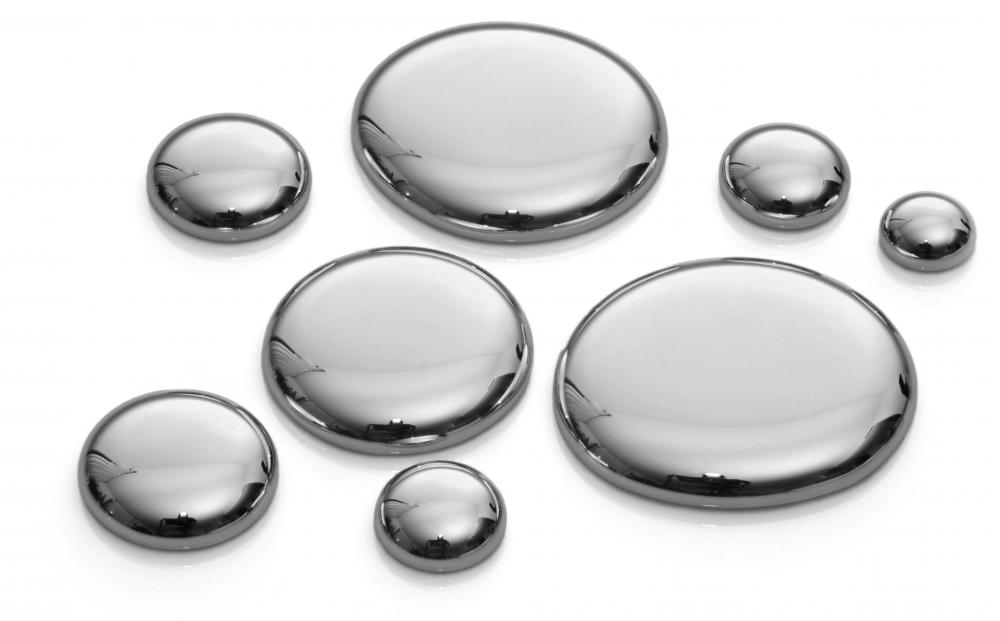
In 1643, Evangelista Torricelli invented the first barometer. He figured that if he had a vacuum, an airless space, he could compare the ever-present atmospheric pressure with zero. Torricelli placed a vacuum contained in a glass tube on top of a larger container of mercury. The air pressed down on the mercury's exposed surface and pushed it up into the tube. The higher the mercury level, the greater the air pressure, and originally, the units of air pressure were just millimeters of mercury. People could finally measure the force of air.

Since the advent of "Torricelli's tube," others developed the aneroid barometer that works without liquid. In this instrument, a flexible metal accordion box that resembles a bellows is partially squeezed to a medium pressure. Then, if air pressure rises, the bellows contract because the air inside takes up less volume. This tool is often connected to a recording device, together forming a barograph. A pen moves against a rotating cylinder whenever the bellows moves and creates a visual aid to the pattern of falling and rising air pressure. The barograph remains a basic instrument of modern meteorology.

Used in conjunction with a thermometer, this device can help make general weather predictions. While weather is very complex, storms more or less follow certain patterns of high and low pressure systems. In simplified terms, a rising barometer means wind, frost, or clear skies, while a falling one indicates coming storms. A steady reading might mean precipitation or sun. Weather forecasters look at the relative change at different places, taking into account how air pressure changes with elevation.

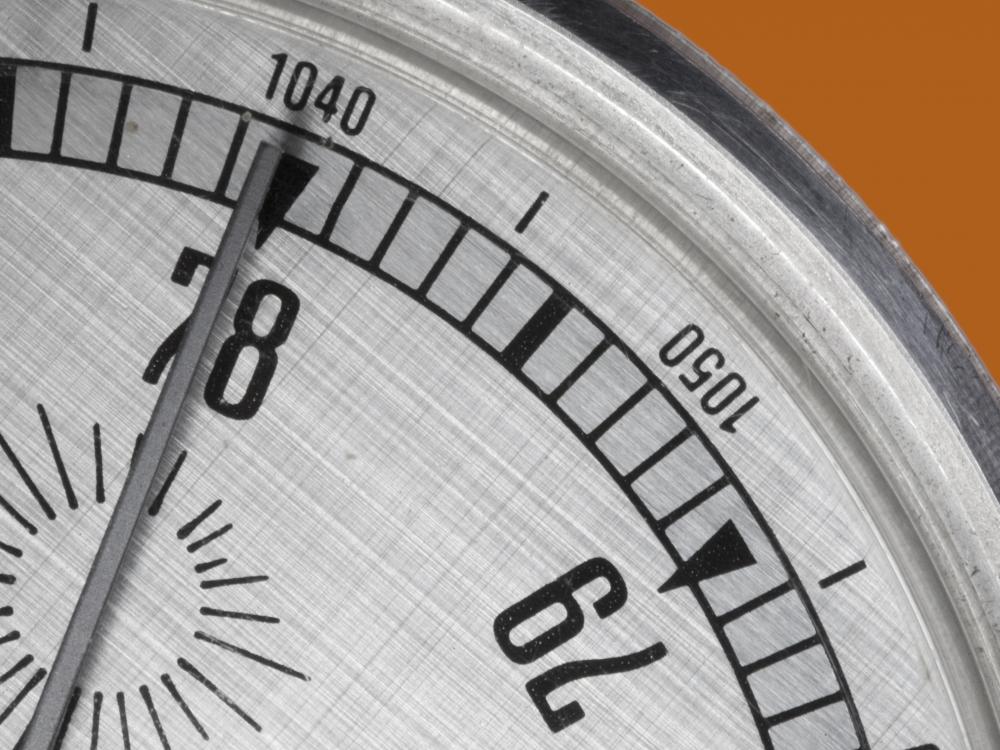
Some home devices still convert units to inches or millimeters of mercury, whether or not mercury is present. The International Meteorological Society has declared the universal unit of pressure to be the hectopascal. For example, 1016 hectopascals equals 30 inches of mercury (762.1 mm).
AS FEATURED ON:
AS FEATURED ON:


-
![Barometer showing a reading of 1012 hectopascals.]() By: Artur SynenkoBarometer showing a reading of 1012 hectopascals.
By: Artur SynenkoBarometer showing a reading of 1012 hectopascals. -
![A pocket barometer, which can be used to measure atmospheric pressure.]()
A pocket barometer, which can be used to measure atmospheric pressure. -
![Some barometers use liquid mercury.]() By: marcelSome barometers use liquid mercury.
By: marcelSome barometers use liquid mercury. -
![A rising barometer means wind, frost, or clear skies, while a falling one indicates coming storms.]() By: Christa EderA rising barometer means wind, frost, or clear skies, while a falling one indicates coming storms.
By: Christa EderA rising barometer means wind, frost, or clear skies, while a falling one indicates coming storms. -
![Clear and calm weather conditions are indicative of high atmospheric pressure areas.]() By: Iakov KalininClear and calm weather conditions are indicative of high atmospheric pressure areas.
By: Iakov KalininClear and calm weather conditions are indicative of high atmospheric pressure areas.



Discussion Comments
how does it get used?
how does a barometer affect the conditions in people with rheumatoid arthritis? i have heard this would help with knowing when there will be flare-ups.
how is the barometer used?
a friend and I both get very sick when the barometer drops. we both feel like we are ready to die. is there any way it could be something to do with when the barometric pressure drops so fast, that our bodies cannot get use to it? I know when I went though a tropical depression. I thought I was dying. What gives on this?
what is relative pressure on barometer? do you need to set it to the area that you live in due to the height of the area where you live?
what is the meter range for a barometer? Low vs high pressure means what?
how does a barometer help scientists determine weather patterns?
Post your comments