
At DelightedCooking, we're committed to delivering accurate, trustworthy information. Our expert-authored content is rigorously fact-checked and sourced from credible authorities. Discover how we uphold the highest standards in providing you with reliable knowledge.
What is a Baking Stone?
 Tricia Christensen
Tricia Christensen
Tricia Christensen
Long before metal oven racks were invented, many people would place the things that they wanted to bake onto stones to keep them from burning in ovens or even directly on heat. Traditional recipes for dishes like Native American flat bread employed a thick heavy stone onto which corn was spread. This was often set directly over a low fire to produce a tortilla like product that was a staple of certain Native American tribes. Today, the baking stone is associated most with cooking pizza, but there are actually many applications for its use in baking.
Typical baking stones can be made of a variety of materials, and tend to be either round or rectangular in shape. Clay stone is popular, but some people prefer marble. Some are glazed and others are not, so there’s a great deal of choice on the market. A few companies make stone cookie sheets, muffin tins, and others to widen the applications possible for stone bakeware.

Some people suggest that heading to the local kitchen supply store to purchase a baking stone is a waste of time and instead they purchase tiles from kitchen or gardening stores. The one disadvantage to this method is that most tiles manufactured for home or garden are not rated for safety in cooking. They may contain high amounts of lead and cooks would need to test them for presence of lead prior to using them to cook.

The baking stone method of cooking tends to produce more desirable qualities, especially in the production of pizza or bread. Bottom crusts are light and crunchy because the stone absorbs more moisture than does a cookie sheet. The stone is also praised for its ability to evenly heat the crust and lessen chances that a pizza or other bread will burn. There are differing opinions on whether the cook should construct a pizza on the stone and then transfer it to the oven, or place a prepared pizza directly on a heated stone in the oven. For the most even heating and quicker cooking, the second method tends to be most effective.

Artisan bakers use commercial sized baking stones, and sometimes stone ovens, in the preparation of bread. Cooks can frequently duplicate these results at home. Many experts advocate substituting stones for just about anything a cook can imagine putting in an oven, but bakers should think carefully before they begin baking everything on stone.
First, if a cook is thinking of substituting a baking stone for a cookie sheet, unless he buys a stone cookie sheet, he loses the lip that helps keep things from running off the flat surface into the oven. While cookies on large enough stones may not pose a problem, other foods that have a tendency to run, including pizza, might cause a lot of extra oven cleaning work. When a cook wants to use stones in a variety of applications, he should consider buying cooking sheet styles with the lip present, instead of the round or rectangular flat stone.

A few people also have trouble cleaning baking stones, especially those that are not glazed. Cooks can avoid cleaning problems by using non-stick spray on the stone, and by regularly seasoning it with oil. Unglazed stones should not be washed with soap, since most will absorb some of the soap flavor. Instead, cooks should use warm water, and try to work off any stuck pieces of food with a spatula or dull knife.
Tricia Christensen
Tricia has a Literature degree from Sonoma State University and has been a frequent DelightedCooking contributor for many years. She is especially passionate about reading and writing, although her other interests include medicine, art, film, history, politics, ethics, and religion. Tricia lives in Northern California and is currently working on her first novel.
Learn more...
Tricia Christensen
Tricia has a Literature degree from Sonoma State University and has been a frequent DelightedCooking contributor for many years. She is especially passionate about reading and writing, although her other interests include medicine, art, film, history, politics, ethics, and religion. Tricia lives in Northern California and is currently working on her first novel.
Learn more...AS FEATURED ON:
AS FEATURED ON:


-
![Chefs prepare pizza on a baking stone.]() By: Tyler OlsonChefs prepare pizza on a baking stone.
By: Tyler OlsonChefs prepare pizza on a baking stone. -
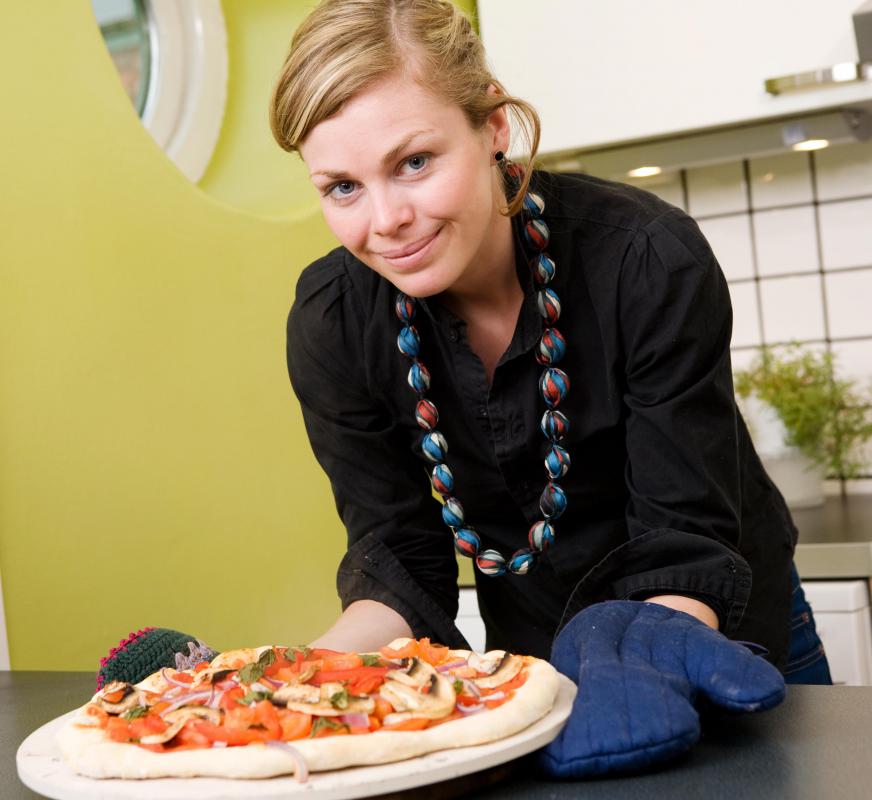
![Baking stones are used for baking pizzas and breads.]() By: likstudioBaking stones are used for baking pizzas and breads.
By: likstudioBaking stones are used for baking pizzas and breads. -
![Some restaurants cook pizza on flat bricks or stones in special ovens.]() By: sherstobitovSome restaurants cook pizza on flat bricks or stones in special ovens.
By: sherstobitovSome restaurants cook pizza on flat bricks or stones in special ovens. -
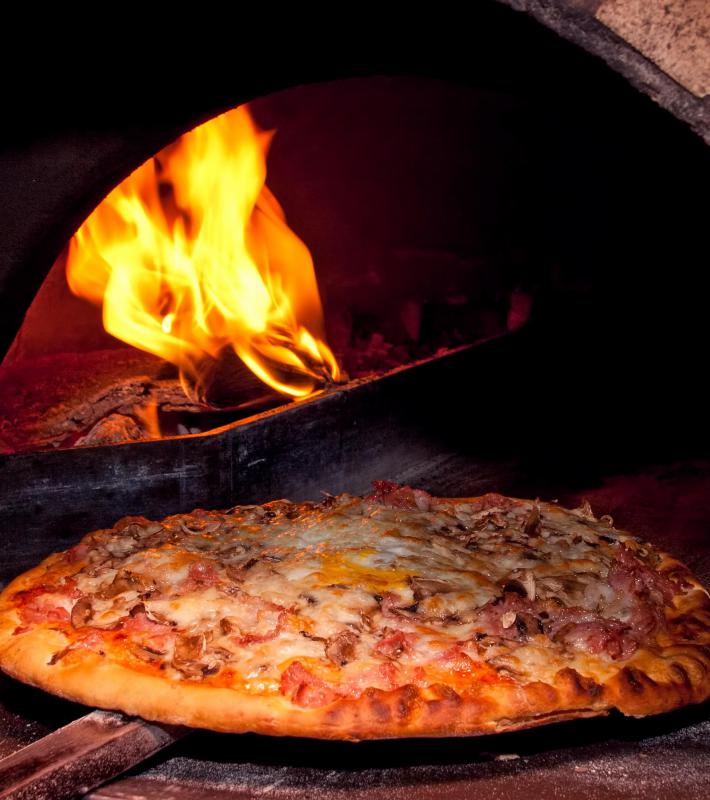
![Some pizzas are baked for a brief time in a very hot brick oven.]() By: emde71Some pizzas are baked for a brief time in a very hot brick oven.
By: emde71Some pizzas are baked for a brief time in a very hot brick oven.


Discussion Comments
I received a baking stone one year for Christmas, but have only used it a couple of times. It was a rectangular shaped stone and when I tried to bake cookies on it, some of them slid off and fell on the floor when I was taking it out of the oven.
Ever since that happened I have just gone back to using my regular cookie sheets. I have some friends who really love using a baking stone, and I should get mine out and give it another try.
There were some baking stone recipes that came with my stone which would give me some ideas of something new to try. I am sure there are a lot more uses than just using a stone to bake cookies.
I didn't really know if I would enjoy using stone bakeware since it is so heavy, but I love the way cookies and bread turn out when I use stone bakeware. The cookies have a slightly crunchy bottom yet they are soft on the inside.
The same is for the bread. I would get frustrated when I baked bread and the bottom of the bread would be soft and soggy. If I use stone bakeware, this doesn't happen and the bread tends to bake more evenly all the way around. Something as simple as using stone for my baking has made a big difference in how it turns out.
I bought a Pampered Chef baking stone which I use quite a bit. I had a choice of a round stone or a rectangular one. Since I wanted to use this for both pizza and cookies I went with the rectangular one.
I also have a metal holder that I can place the stone on once I remove it from the oven. I have found that I rarely use this, and just place the stone on hot pads on the counter.
One of my favorite ways to use my stone is to heat up leftover pizza. When you warm up pizza in the microwave, the crust is too soggy. If you warm it up in the oven on a stone, the crust is just as crisp as it was when you first ate the pizza.
@anon243652 -- I have an unglazed oven baking stone that I was told to never wash with soap. I clean it by rinsing it with water and have a small scraper that I use if something is stuck on the stone.
I have had my stone for many years and it is very discolored. I was also told the more you use it the darker it will become. Even though it doesn't look that great, it is actually OK because it is seasoned and that is actually what you want your stone to eventually look like.
It is not wise to wash them or use non stick spray as the article suggests. Washing often results in breakage as the porous stone will hold the moisture. Then when heated, the water expands and breaks the stone. Use a bit of cornmeal to prevent sticking and use a metal scraper to clean it once it has cooled.
I want to use a baking stone to bake bread. When the bread is done do you remove the whole stone with the loaves on it and cool or do you remove the loaves and let the stone cool slowly in the oven?
i am not sure if they should be used as a crumb catch, but they sure are heavy if you are trying to carry one someplace.
should a baking stone be stored in the oven and used as a crumb catch? What are the drawbacks besides clean up?
Yes, if you drop them, they break. Just be careful not to drop them.
Ah it absorbs moisture, OK, now I understand what the benefit of using a pizza baking stone is! All anyone could tell me was that it was the "traditional" way to bake bread/pizza's and that they would taste better, which equaled "silly waste of money" to me.
Being that it's clay, do they break easily?
Post your comments