
At WiseGEEK, we're committed to delivering accurate, trustworthy information. Our expert-authored content is rigorously fact-checked and sourced from credible authorities. Discover how we uphold the highest standards in providing you with reliable knowledge.
What Foods are High in Omega Oils?
 Mary McMahon
Mary McMahon
Mary McMahon
Omega oils are polyunsaturated essential fatty acids which have been determined through numerous studies to have health benefits. Omega oils, also called omega fatty acids, are among the family of essential fatty acids which the body needs to survive, but cannot produce on its own. As a result, these oils must be derived from food sources, and it has been shown that a diet high in omega oils results in healthier, longer lives. There are numerous dietary options for people seeking to increase their intake of omega oils.
Omega oils can lower blood pressure, decrease the risk of heart disease, increase the health of skin and nails, and have anti-inflammatory benefits. Some omega oils such as Omega-3 are also high in fiber and other nutrients to increase physical health. Another type of omega oil, Omega-6, is found in linoleic acid, an essential fatty acid that comes from plants.

Not only is getting enough omega oils important but the proper ratio of omega-6 to omega-3 fatty acids is important in terms of disease prevention. People typically have much too high a ratio. Medical professionals believe that ratio should be reduced to a four portions of Omega-6 to every portion of Omega-3; and a one to one ratio would be even better.

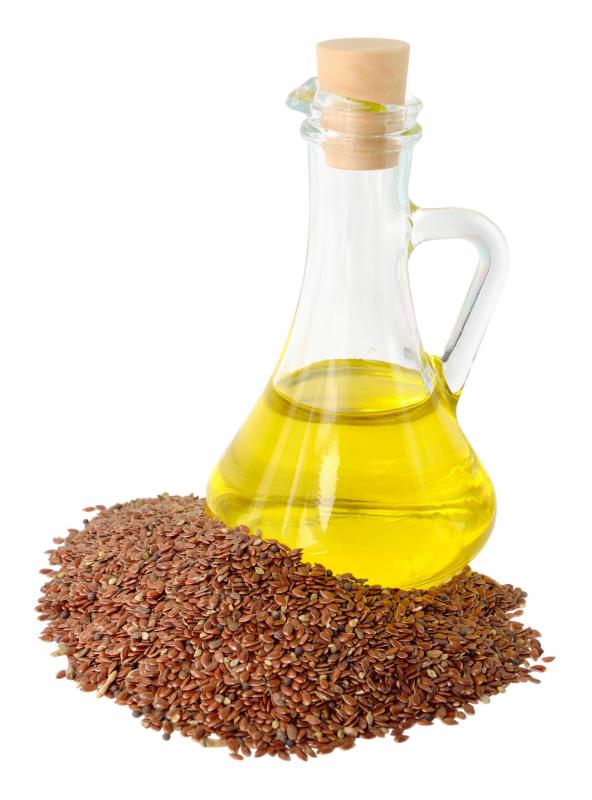
For plant sources of omega oils, flax seeds, canola, and walnuts are both high in Omega-3, as are soy and winter squash. These vegetable sources can be eaten straight or converted into dietary supplements such as flax seed oil. Omega oils can also be derived from spinach, blue-green algae, corn, wheat germ, and pumpkin. Although vegetarians may have heard otherwise, omega oils can readily be derived from plant sources and there is no need to take supplements such as fish oil.

Many types of fish are also high in omega oils, as well as many other vital nutrients for health. Approximately two servings of fatty fish per week will provide a healthy level of these essential fatty acids. Consumers should be aware that some species of fish have a high mercury content, and excessive consumption of fish such as shark, swordfish, and albacore should be limited.

Fish which are high in omega oils include salmon, halibut, snapper, scallops, and shrimp. These fish are readily available in most grocery stores in fresh, frozen, dried, and canned varieties. When eaten with a balanced plate of vegetables, fish can make a delicious and tasty dinner. For fish to be healthy, it should be steamed, baked, or broiled, rather than fried. Try serving fish with flax seed oil for an extra dose of flavor and omega oils.
Mary McMahon
Ever since she began contributing to the site several years ago, Mary has embraced the exciting challenge of being a WiseGEEK researcher and writer. Mary has a liberal arts degree from Goddard College and spends her free time reading, cooking, and exploring the great outdoors.
Learn more...
Mary McMahon
Ever since she began contributing to the site several years ago, Mary has embraced the exciting challenge of being a WiseGEEK researcher and writer. Mary has a liberal arts degree from Goddard College and spends her free time reading, cooking, and exploring the great outdoors.
Learn more...AS FEATURED ON:
AS FEATURED ON:









-
![Winter squash is high in omega-3 oils.]() By: zach123Winter squash is high in omega-3 oils.
By: zach123Winter squash is high in omega-3 oils. -
![Corn contains omega oils.]() By: rimglowCorn contains omega oils.
By: rimglowCorn contains omega oils. -
![Fish like salmon are high in omega oils.]() By: Witold KrasowskiFish like salmon are high in omega oils.
By: Witold KrasowskiFish like salmon are high in omega oils. -
![Flax seeds.]() By: ElenathewiseFlax seeds.
By: ElenathewiseFlax seeds. -
![Spinach contains omega oils.]() By: Alessio ColaSpinach contains omega oils.
By: Alessio ColaSpinach contains omega oils. -
![Walnuts are high in omega-3 fatty acids, a healthy type of fat.]() By: dinostockWalnuts are high in omega-3 fatty acids, a healthy type of fat.
By: dinostockWalnuts are high in omega-3 fatty acids, a healthy type of fat. -
![Salmon fillets are a good source of omega-3 fatty acids.]() By: dulsitaSalmon fillets are a good source of omega-3 fatty acids.
By: dulsitaSalmon fillets are a good source of omega-3 fatty acids. -
![Flax seed oil is high in omega 3 and omega 6 fatty acids.]() By: spline_xFlax seed oil is high in omega 3 and omega 6 fatty acids.
By: spline_xFlax seed oil is high in omega 3 and omega 6 fatty acids. -
![Distilled fish oil supplements rich in omega-3 can be purchased fairly inexpensively at grocery and drug stores.]() By: maronDistilled fish oil supplements rich in omega-3 can be purchased fairly inexpensively at grocery and drug stores.
By: maronDistilled fish oil supplements rich in omega-3 can be purchased fairly inexpensively at grocery and drug stores. -
![Shark is high in mercury and should not be eaten.]() By: Christopher BartlettShark is high in mercury and should not be eaten.
By: Christopher BartlettShark is high in mercury and should not be eaten. -
![Omega oils can help lower blood pressure.]() By: Paul MaguireOmega oils can help lower blood pressure.
By: Paul MaguireOmega oils can help lower blood pressure. -
![Widely viewed as one of the healthiest types of cooking oil, canola oil is high in monounsaturated fats.]() By: branexWidely viewed as one of the healthiest types of cooking oil, canola oil is high in monounsaturated fats.
By: branexWidely viewed as one of the healthiest types of cooking oil, canola oil is high in monounsaturated fats. -
![Fish oil supplements, including those made from cod liver, are rich in healthy fats, such as omega-3 fatty acids, eicosapentaenoic acid and docosahexaenoic acid, commonly called DHA.]() By: Stephen VanHornFish oil supplements, including those made from cod liver, are rich in healthy fats, such as omega-3 fatty acids, eicosapentaenoic acid and docosahexaenoic acid, commonly called DHA.
By: Stephen VanHornFish oil supplements, including those made from cod liver, are rich in healthy fats, such as omega-3 fatty acids, eicosapentaenoic acid and docosahexaenoic acid, commonly called DHA.







Discussion Comments
Take at least four Omega 3 fish oil supplements, or the recommended dose of a high quality fish oil daily, like Carlson's or Melrose (certified free of mercury) it is best if consumed with an antioxidant, such as an orange, or its freshly squeezed juice.
If vitamin E is added, it should be certified as being 100 percent from natural sources, or it may be synthetic: avoid it! Females may benefit by balancing the DHA, and EPA versions of Omega 3 in fish, or krill oil with ALA flaxseed oil Omega 3, or at least one heaped tablespoonful of ground flaxseed, daily.
Dr. Mercola rates "krill oil" much higher than fish oil, because it is far less easily oxidised, so you may want to check this out for yourself.
Vegetarians and vegans, look up Omega 3; algae; supplies and use it with flaxseed. Only around 10 percent of ALA omega 3 is converted in the body to the usable EPA and DHA forms, so I don't recommend it for males.
Apparently, for most of our existence, man ate an omega-6 to 3 ratio of 2 to 1. The National Institutes for Health says that Western diets typically have something like a 15 or 16 to 1 ratio of omega-6 to omega-3. And this unheathly ratio, apparently, promotes things like cardiovascular disease, cancer, and inflammatory and autoimmune diseases. NIH studies found that reducing that ratio to 4 to 1 was found to decrease mortality by a whopping 70%! To reduce it to a 2 to 1 omega-6 to omega-3 ratio would be even better!
Post your comments