
At TheHealthBoard, we're committed to delivering accurate, trustworthy information. Our expert-authored content is rigorously fact-checked and sourced from credible authorities. Discover how we uphold the highest standards in providing you with reliable knowledge.
What Does the Vagus Nerve Control?
The vagus nerve, which runs from the brainstem to the organs of the chest and abdomen, sends and receives messages to control the functioning of the digestive system, heart, lungs, and some glands. The longest nerve in the cranium, it has multiple branches that influence many organs. Sensory receptors relay vital information through this nerve from the organs and the ear to the brain. Nerve impulses from the brain control muscle contractions in the digestive organs, lungs, and heart as part of the autonomic nervous system. This nerve is also called cranial nerve X, as it is the tenth of the 12 pairs of cranial nerves.
Many aspects of digestion are controlled by the vagus nerve. It is first stimulated by the smell, sight, and taste of the food as it enters the mouth. This sets in motion the release of stomach acids and digestive juices. Branches of the nerve influence swallowing, while others control peristalsis, the contraction of muscles in the digestive system that move food along. Excretion of wastes is influenced by the branches of the nerve that reach the colon and kidneys.

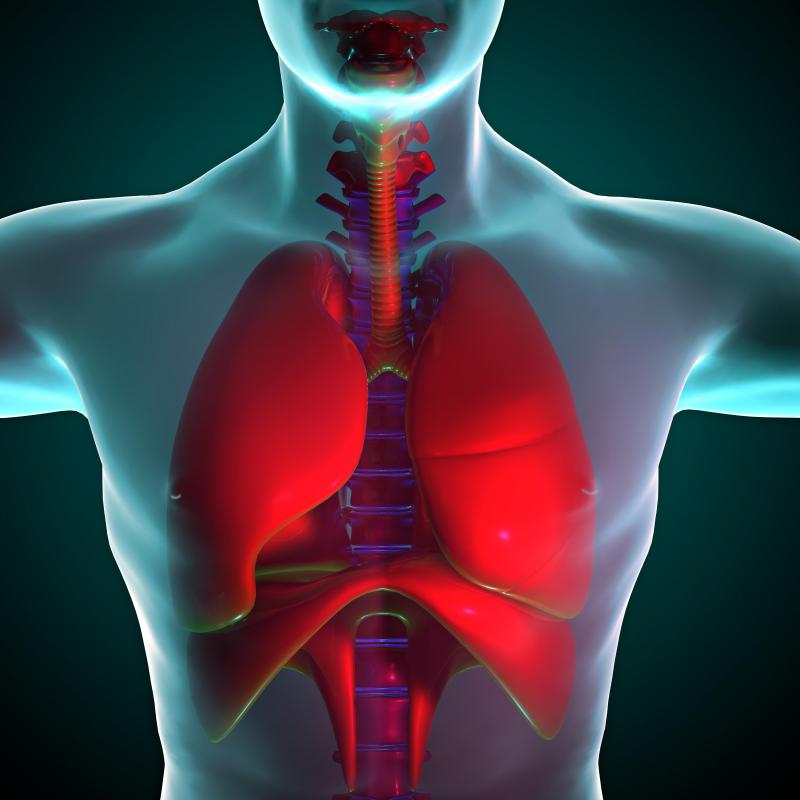
Heart rate and blood pressure are influenced by this nerve. As part of the parasympathetic nervous system, its effects are to lower both heart rate and blood pressure. In the lungs, the vagus nerve acts to constrict bronchi by causing the smooth muscles to tighten. A branch of the nerve controls the muscles that move the vocal folds inside the larynx, and damage to it can cause hoarseness or other voice changes.

Vagal nerve stimulation (VNS) is a treatment that has been approved in some countries for epileptic seizures. An implant sends electrical pulses to the brain through this nerve. Epilepsy patients who feel an impending seizure can activate the system in an attempt to stop it from happening. Although only a small percentage of patients experience no further seizures, vagal nerve stimulation decreases seizure frequency in approximately two-thirds of people who use it. Research indicates that the treatment may be useful in patients suffering from depression who don’t respond to medication, as well as in treating heart failure.

During times of extreme stress, the vagus nerve can be overactivated. This causes heart rate and blood pressure to drop enough that sufficient blood supply to the brain is interrupted. The result is vasovagal syncope — or fainting — caused by the sudden stimulation of the nerve. An affected person will feel hot, nauseated, and lightheaded before losing consciousness. Many things besides stress can trigger vasovagal syncope, including remaining stationary for long periods of time, seeing blood or medical procedures, or standing up too quickly.
AS FEATURED ON:
AS FEATURED ON:


-
![A diagram showing the vagus nerve.]() By: AlilaA diagram showing the vagus nerve.
By: AlilaA diagram showing the vagus nerve. -
![The vagus nerve being overactive can lead to fainting.]() By: Sanjay DevaThe vagus nerve being overactive can lead to fainting.
By: Sanjay DevaThe vagus nerve being overactive can lead to fainting. -
![In the lungs, the vagus nerve acts to constrict bronchi by causing the smooth muscles to tighten.]() By: NaeblysIn the lungs, the vagus nerve acts to constrict bronchi by causing the smooth muscles to tighten.
By: NaeblysIn the lungs, the vagus nerve acts to constrict bronchi by causing the smooth muscles to tighten. -
![Patients with oversensitive vagus nerves may faint at the sight of needles.]() By: Leah-Anne ThompsonPatients with oversensitive vagus nerves may faint at the sight of needles.
By: Leah-Anne ThompsonPatients with oversensitive vagus nerves may faint at the sight of needles. -
![The vagus nerve may be over-activated during times of stress.]() By: kmiragayaThe vagus nerve may be over-activated during times of stress.
By: kmiragayaThe vagus nerve may be over-activated during times of stress. -
![The vagus nerve is an important pathway in the nervous system because it carries signals from several areas of the body, including the larynx.]() By: stockshoppeThe vagus nerve is an important pathway in the nervous system because it carries signals from several areas of the body, including the larynx.
By: stockshoppeThe vagus nerve is an important pathway in the nervous system because it carries signals from several areas of the body, including the larynx. -
![In the lungs, the vagus nerve constricts bronchi by causing the smooth muscles to tighten.]() By: snapgalleriaIn the lungs, the vagus nerve constricts bronchi by causing the smooth muscles to tighten.
By: snapgalleriaIn the lungs, the vagus nerve constricts bronchi by causing the smooth muscles to tighten. -
![The vagus is the longest of the cranial nerves.]() By: 7activestudioThe vagus is the longest of the cranial nerves.
By: 7activestudioThe vagus is the longest of the cranial nerves. -
![The vagus nerve sends and receives messages to control the functioning of the heart.]() By: CLIPAREA.comThe vagus nerve sends and receives messages to control the functioning of the heart.
By: CLIPAREA.comThe vagus nerve sends and receives messages to control the functioning of the heart. -
![Standing up too quickly may lead to a sudden drop in blood pressure and trigger vasovagal syncope.]() By: Wellford TillerStanding up too quickly may lead to a sudden drop in blood pressure and trigger vasovagal syncope.
By: Wellford TillerStanding up too quickly may lead to a sudden drop in blood pressure and trigger vasovagal syncope.






Discussion Comments
I'd like to know if a rupture in the cervical area of the neck can cause issues with the vagus nerve?
Does the vagus control hiccups? My husband gets the hiccups and they last for days.
@OeKc05 – That's pretty cool! I have been on antidepressants for years, and I never knew anything like this existed.
I doubt that my doctor would suggest it for me, though. I have responded a little to my medications, though I haven't improved drastically, but I am only seventeen. Maybe in a few years, I will be eligible to get stimulation of my vagus nerve to see if it helps.
An implanted vagus nerve stimulator helped my dad recover from chronic depression. He had tried so many different medications and therapy, but nothing seemed to work.
His doctor told him about the implant, and he said that doctors had noticed that when epileptic people had it inserted, their moods often got better. So, the idea was born to use it for the clinically depressed.
The implant has a wire that connects to the left vagus nerve. The device generates signals that somehow work to elevate his mood.
I fainted when I saw a lot of blood once, but I had no idea that this was due to vagus nerve stimulation! I never would have guessed that the nerve that controlled my digestion was the one that made me fall to the ground when I was freaked out.
I went to the hospital to see my sister, who had been in a car accident. There was a pool of blood on the floor around her bed, and I saw it before I saw her. I got really queasy and lightheaded, and it only took a few seconds for me to lose consciousness.
In a way, I guess it makes sense. Large amounts of blood nauseate me, and since the vagus nerve is connected to the stomach, I might have passed out because of extreme nausea!
Post your comments