
At SmartCapitalMind, we're committed to delivering accurate, trustworthy information. Our expert-authored content is rigorously fact-checked and sourced from credible authorities. Discover how we uphold the highest standards in providing you with reliable knowledge.
What does "Licensed and Bonded" Mean?
In the US, companies often use the phrase “licensed and bonded” to show their legitimacy and trustworthiness. Being licensed means that the person or company has been properly trained in his field, while bonding indicates that he has money set aside to settle any claims against him. Both help safeguard against poor workmanship, theft, and illegal practices, and a client should also check for documented proof of bonds and licensure.
Being licensed ensures that a service provider has been trained in the proper practices and regulations concerning his service. This means the licensee is competent and capable of doing the work at hand. It also means that the worker is familiar with the laws and standards of his field in that particular area of governance and can be held accountable if the regulations are not followed. The service provider may lose its license to operate in that municipality, state, or the country if rules are not followed.

In many cases, a company may just be licensed, but it is important they are bonded as well. This means that a bonding company has set aside money that is controlled by the state and not the company to pay in the event that the client files a claim against the business. For example, if the client hires a plumbing company and a household good was broken or stolen in the course of the plumber’s work, a client might file a claim against the company. If the ensuing investigation found the plumbing company responsible, the client would be paid out of the bond. A company can also get bonds for employees who are working with very valuable property, which usually involves a thorough background check.

The method of becoming licensed and bonded varies depending on the type of business and the area the business is located in. To become licensed, professionals commonly have to pass competency tests, show evidence of experience, pass tests to show mastery of laws and regulations, have a clean criminal record, and have a surety bond. These requirements are common, but do not apply to all businesses in all locations. Some licenses do not require a bond, so it is important for consumers to make sure that, if a company isn't bonded, that it is at least licensed and insured. In this situation, the licensing requirements and insurance policy should be reviewed by the client.
Surety bonds are three party contracts between the principal, who performs the service; the obligee, or client; and the surety, who financially ensures that the principal will fulfill its contractual obligation. The principle pays a premium fee to the surety, who in turn pays the obligee if the principle defaults on its contract. An example of this might be if a client hired a licensed and bonded lawnmower and the lawnmower only mowed half the lawn. The surety will then reimburse the client for the original fee charged as well as any legal fees from the investigation. Bond companies sell bonds to businesses at competitive prices based on the risk of the service provided.
AS FEATURED ON:
AS FEATURED ON:









-
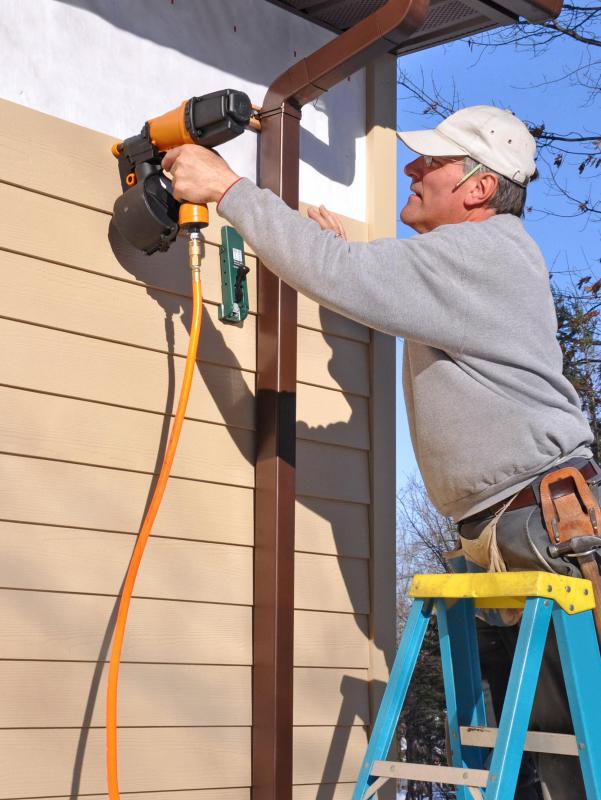
![Reputable contractors are licensed and bonded.]() By: Steve CukrovReputable contractors are licensed and bonded.
By: Steve CukrovReputable contractors are licensed and bonded. -
![Someone involved in a renovation project will want to make sure any contractors they hire are licensed and bonded.]() By: tinabelleSomeone involved in a renovation project will want to make sure any contractors they hire are licensed and bonded.
By: tinabelleSomeone involved in a renovation project will want to make sure any contractors they hire are licensed and bonded.

Discussion Comments
If a client needs to file a claim, they file it against the company's bond and not the company itself. As long as you know the name of the business and the name of the company providing the bond, you should be able to file a claim. As pointed out by the previous poster, it's a good idea to get a copy of the business's surety bond and insurance policy.
@post 8: Contact the state board of insurance about the company.
I am guessing you did not get and make a copy of their insurance policy and bond policy.
We have had a contract with a contractor to build a shop and several cabinets in our home. The work began in July. The shop is finished but the cabinets are not. They keep using the excuse that they are just too busy, yet you see them driving past my house a million times during the week.
They have re-measured a million times, but the cabinets are not being done the way they were supposed to be, height wise, nor are they the right color, the number of shelves is wrong, and they still don't have the doors.
For the last two months, the builder has said he will show up with the doors, but has yet to do so. He is licensed and bonded. In Texas, how do you file against someone's bond? Please help!
How does one verify a person's claim of being bonded?
say your property is damaged by a negligent plumber. how do you go about recouping expenses for said damage from the plumber. do you file a suit or go file claim with plumber insurance? how does the bond work here?
Being bonded and insured protects the business owner as well as the customer. Say, your employee breaks or steals something on the job, like @AZgirl32 mentioned. If the company is not bonded and insured, the owner would end up having to pay out of his/her own pocket. Being bonded and insured is really win/win for both the business owner and the customer.
Figuring out exactly how to get licensed bonded and insured in your area is a process. For a new business it is best to start at the local licensing office. They can direct you to what license you need, what qualifications you need to meet and what insurance offices also do bonding for your type of business, in your area. Check a few insurance and bonding offices before you decide upon one. The cost and coverage you get can vary. Talk to someone in your area who is already bonded and insured and ask if they are happy with who they use. A referral is always best in any business.
A well qualified contractor is licensed and bonded. To have a written contract without having a business license is against the law. It may be tempting to pay less and have someone unlicensed perform work; however the risk you are taking is great.
Say you hired a company who is not licensed or bonded. That means they are working illegally and not paying taxes. It also means if anything goes wrong they do not have the insurance coverage to protect themselves or your property. Any damages to your property become your financial obligation and you have no recourse except civil court.
Post your comments