
At TheHealthBoard, we're committed to delivering accurate, trustworthy information. Our expert-authored content is rigorously fact-checked and sourced from credible authorities. Discover how we uphold the highest standards in providing you with reliable knowledge.
What Does It Mean to Have Water in the Heart?
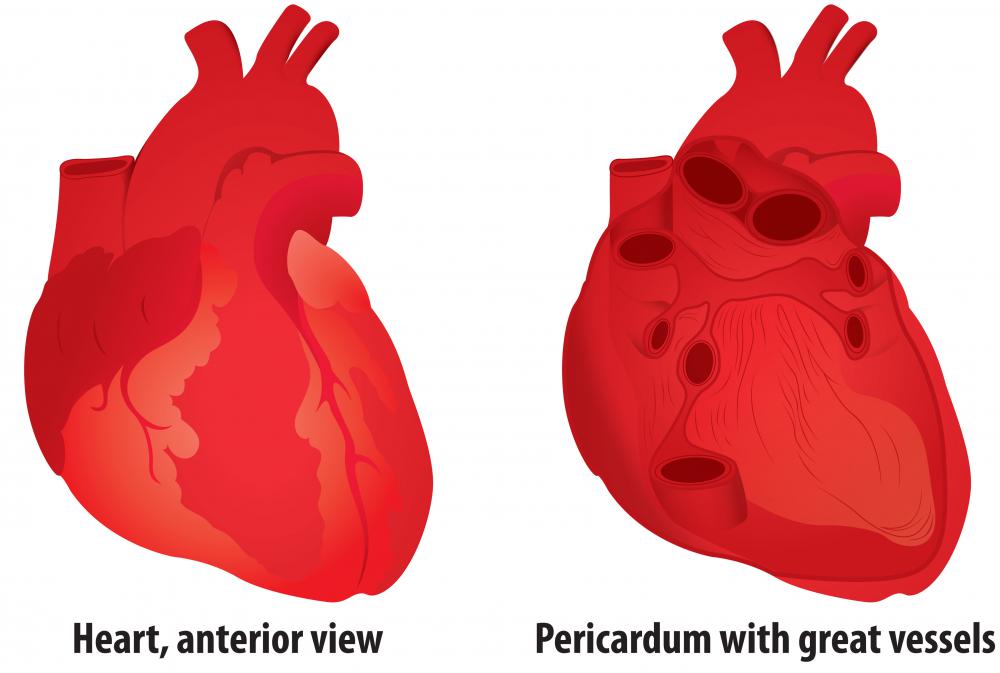
Water in the heart, or pericardial effusion, is a potentially life-threatening condition in which the heart’s ability to provide the body with sufficient blood is compromised. The heart is wrapped in a double-walled sac that is called the pericardium. In a healthy heart, the sac holds a small amount of water. In patients with pericardial effusion, there is too much liquid in this area.
The excess fluid around the heart can cause the pericardium to balloon inward. This can place dangerous pressure on the heart, affecting its ability to pump oxygenated blood out into the body. In some cases, areas of the organ may even collapse.

A range of causes can contribute to the development of water in the heart. An infection in the heart or other organ, the presence of an inflammatory disease, or kidney failure can result in the accumulation of pericardial fluids. Cancer treatments, such as chemotherapy and radiation, as well as metastasized cancerous masses can cause this problem as well. Even an accident that results in trauma to the heart or a nearby area can lead to pericardial effusion.

This condition has a number of symptoms, including a dry cough, dizziness, or trouble breathing. In some patients, well-known heart attack symptoms such as nausea or crushing chest pain are indicators. The severity of symptoms depends upon factors such as how long the fluid has been present, how much excess fluid is held in the pericardium, and the pain threshold of the particular patient.

In some patients, the increase of excess water in the pericardium happens over a long period of time. These patients may exhibit no symptoms at all and may not even be aware of the problem. Typically, such individuals have histories of cancer, lupus, Crohn’s disease, or another inflammatory disorder that has resulted in the asymptomatic condition.
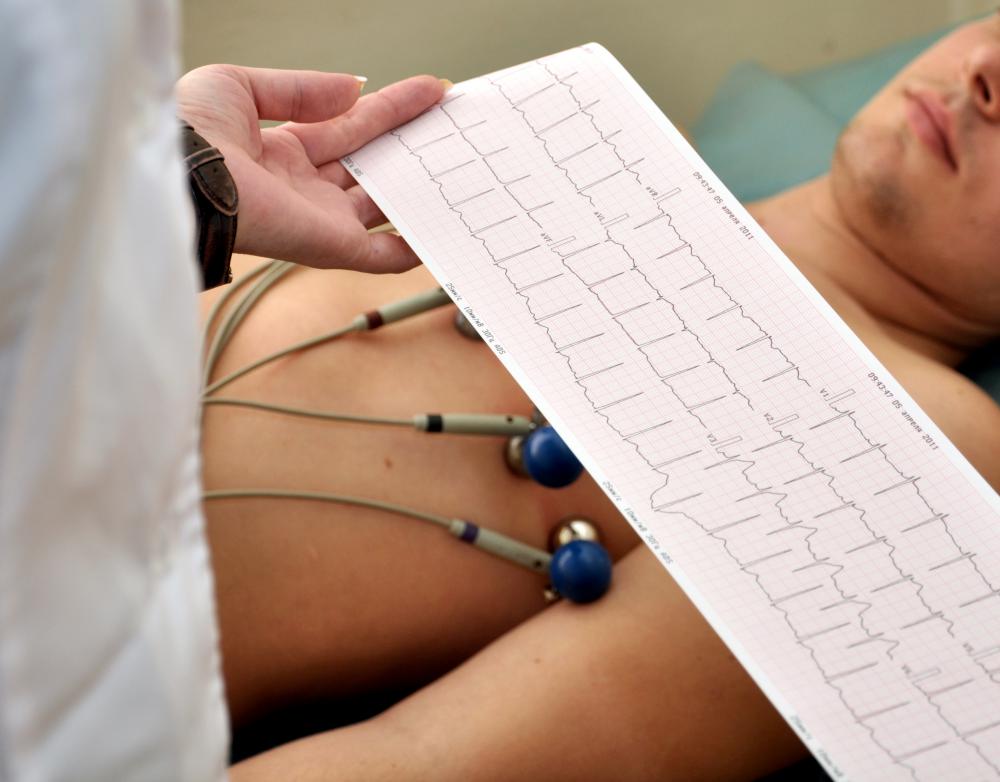
Water in the heart can be diagnosed in a number of ways. Tracking the heart’s electrical impulses using an electrocardiogram, or EKG, can uncover the disorder. Images obtained by means of either magnetic resonance imaging (MRI) or computerized tomography (CT) scans are also useful. If a medical professional suspects pericardial effusion, he or she is likely to order a chest X-ray in order to determine if the heart has enlarged due to an excessive amount of fluid and the subsequent stress that it causes.
AS FEATURED ON:
AS FEATURED ON:


-
![Water in the heart, or pericardial effusion, occurs when there is too much liquid in the pericardium.]() By: arcticsilenceWater in the heart, or pericardial effusion, occurs when there is too much liquid in the pericardium.
By: arcticsilenceWater in the heart, or pericardial effusion, occurs when there is too much liquid in the pericardium. -
![Chemotherapy treatments may cause water in the heart.]() By: Lisa F. YoungChemotherapy treatments may cause water in the heart.
By: Lisa F. YoungChemotherapy treatments may cause water in the heart. -
![Symptoms of a pericardial effusion may include coughing and chest pain.]() By: Photographee.euSymptoms of a pericardial effusion may include coughing and chest pain.
By: Photographee.euSymptoms of a pericardial effusion may include coughing and chest pain. -
![Water in the heart may be diagnosed by tracking the heart’s electrical impulses with an electrocardiogram.]() By: olegpchelovWater in the heart may be diagnosed by tracking the heart’s electrical impulses with an electrocardiogram.
By: olegpchelovWater in the heart may be diagnosed by tracking the heart’s electrical impulses with an electrocardiogram. -
![A doctor is likely to order a chest X-ray to determine if the heart has enlarged due to an excessive amount of fluid.]() By: citylightsA doctor is likely to order a chest X-ray to determine if the heart has enlarged due to an excessive amount of fluid.
By: citylightsA doctor is likely to order a chest X-ray to determine if the heart has enlarged due to an excessive amount of fluid.



Discussion Comments
Water in the heart is extremely painful and yet all that doctors do is put us on pain relievers.
@ddljohn-- Treatment depends on the extent of the fluid accumulation. If it's not a lot, pericardial effusion may just be treated with anti-inflammatory medications. Sometimes steroids are prescribed as well. The patient is expected to rest and get frequent checkups.
If there is a lot of fluid that is putting the heart at risk, then the fluid will be drained.
I have minor pericardial effusion as well and I'm on anti-inflammatory medications. More than the treatment, what troubles me is the cause. I don't have cancer, nor have I had a recent infection. My doctor doesn't know what caused the effusion. It's frustrating not to know what's causing this.
My aunt's husband had throat cancer and had to receive chemotherapy and radiation. Now, several years after being cancer-free, he has developed some of the symptoms mentioned here. He has a dry cough that wouldn't go away and tightness in his chest. The doctor said after an MRI that he has water in the heart. He has another appointment with his doctor next week.
What is the treatment for this condition? Will the water have to be drained?
Post your comments