
At TheHealthBoard, we're committed to delivering accurate, trustworthy information. Our expert-authored content is rigorously fact-checked and sourced from credible authorities. Discover how we uphold the highest standards in providing you with reliable knowledge.
What does It Mean to be Double Jointed?
Being double jointed means that you can bend your joints more than the average person. There are many misunderstandings when it comes to the meaning of being double jointed. In one case, the term itself implies that double jointed people have twice the number of joints than normal human beings. Some even assume that double joints allow for twice the usual amount of motion. However, these meanings are myths. All human beings have the same number of bones and joints, all of which have similar capacities for movement.
If you are double jointed, it means that your joints and their surrounding structures, known as ligaments and tendons, are unusually flexible, enabling you to bend or rotate them in ways that some people find impossible and painful. Furthermore, you are able to stretch your joints, ligaments and tendons to a greater extent than commonly experienced by people with average flexibility. For instance, there are circus performers who can bend their bodies to the back from the waist, locking their heads in between their legs. Other double jointed people can bend their thumbs the wrong way until the tips touch their hands.

From a medical viewpoint, being double jointed is also known as having hypermobility. Double jointed people are not overextending their joints, but are rather allowing them to function to their fullest capability. It just so happens that this capability is beyond the typical person's ability for movement.
How does it happen?
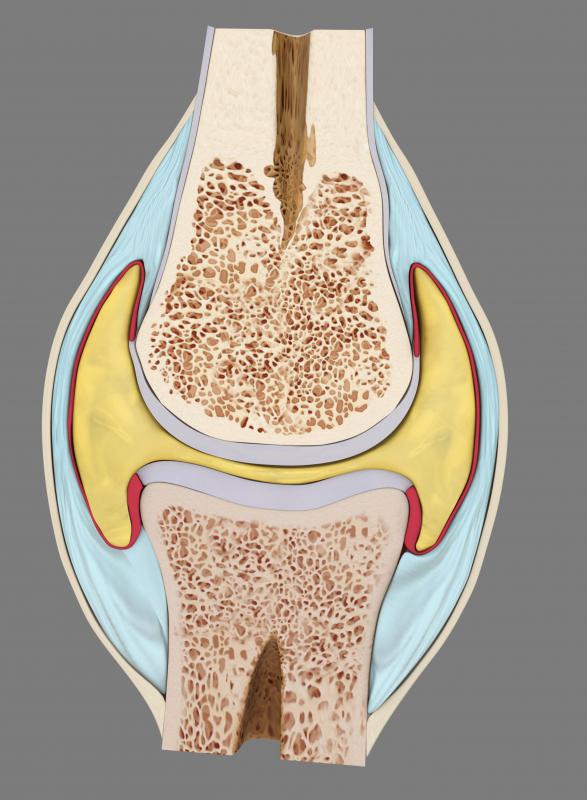
Joints are the hinges that connect two or more bones together, allowing motion and movement to occur naturally in a particular direction. Ball-and-socket joints, however, are joints in which the rounded end of a bone fits into the hollow of another, allowing rotary movement in every direction. The opening or hollow in which the bones sit is called a socket. The depth of a socket determines the flexibility of that joint. Cartilage, a firm fibrous tissue made up of a protein called collagen, cushions bones at joints and is another factor that affects joint pliancy.

Extreme flexibility in double jointed people can be caused by a combination of several factors. Double jointed people can have a very shallow socket, enabling more movement in both directions. Where ball-and-socket joints are concerned, some people with double joints can intentionally and painlessly dislocate the bone completely from its socket and then move it back into position again. Shallow sockets, combined with bone ends that are smoother than normal, also help joints slip and move easily in any direction. Ligaments and cartilage that stretch beyond the usual extent impact joint flexibility in the same way. For some people, being double jointed can be very painful and impose moderate to severe limitations in daily life.

We have all been double jointed at some point in our lives. A good example can be taken from our childhood, when we could bend from the waist and touch the tips of our fingers to the floor while keeping our legs straight. Typically as we age, our ligaments, cartilage and bones harden, losing their suppleness. There are syndromes associated with hypermobility that can cause pain and impact health and well-being.
AS FEATURED ON:
AS FEATURED ON:


-
![Double jointed people are able to bend themselves in ways that many people would find impossible.]() By: ShmelDouble jointed people are able to bend themselves in ways that many people would find impossible.
By: ShmelDouble jointed people are able to bend themselves in ways that many people would find impossible. -
![Double jointed people are able to stretch their joints, ligaments, and tendons to a degree that is considerably greater than people with average flexibility.]() By: Byelikova OksanaDouble jointed people are able to stretch their joints, ligaments, and tendons to a degree that is considerably greater than people with average flexibility.
By: Byelikova OksanaDouble jointed people are able to stretch their joints, ligaments, and tendons to a degree that is considerably greater than people with average flexibility. -
![Double-jointed people have unusually flexible joints, tendons, and ligaments.]() By: kekiDouble-jointed people have unusually flexible joints, tendons, and ligaments.
By: kekiDouble-jointed people have unusually flexible joints, tendons, and ligaments. -
![Cartilage cushions bones at joints and has an impact on joint pliancy.]() By: 7activestudioCartilage cushions bones at joints and has an impact on joint pliancy.
By: 7activestudioCartilage cushions bones at joints and has an impact on joint pliancy.



Discussion Comments
I have double jointed elbows, fingers, and I don't know about my thumb, I think it may count as being double jointed, but I am not sure. I can bend them back below where my my index finger begins at the joint. My cousin can bend her knees back really far, but I cannot, and she cannot do the things that I can with my elbows, fingers, and thumbs.
I'm double jointed in my wrists, arms, hips, shoulders and ankles. I didn't know what it was called until today.
The only problem I've found is I had to stop playing the flute. My fingers locked all the time. I'm almost 30 years old and I haven't worked out much in my life, so I don't know if its something you can become. I can even bend at my hips and reach my toes, without bending my legs. It's weird! I've heard there are a lot of problems this can make later in life.
There is actually no such "medical condition" by the name "double jojnted". The proper name is hyper flexible or hyper mobile. Look up "Ehlers-Danlos Syndrome" and read about Ehlers-Danlos Syndrome Hyper-Mobility type. If you suspect you have it, Join some of the Ehlers-Danlos Syndrome support groups.
Many members of my family have Ehlers-Danlos Syndrome. It is genetic, so check it out. There are a few facebook groups. Maybe start there where you can hear from the others who live with it.
I was double jointed as a young child, and now I am 15 and am more flexible than most people, but definitely not as much as I should be. Is it possible to not be double jointed if you don't stretch or anything! I want to be as flexible as I was when I was little.
I've always been able to put my feet behind my head and still can. @54: People always called it double-jointed, but my doctor said there was no such thing. I was never able to do the contortionist acts with my fingers or thumbs; they were normal.
One week ago, I started waking up with my right thumb out of joint. Today, all of the fingers on that hand are out of joint, as well as the thumb now on the left. This takes several hours to subside even when my fingers are immobilized. It is almost impossible to type now. Any clues?
Basically, I think I'm like double jointed on the left side of my body. My fingers are double jointed for sure. For exampled, when I'm bending it backward, it could go back a lot and if I straighten it, curving it up like you're looking at a ring, and then put it back to a relaxed hand position, there's that sound. The same goes for the wrist.
When I walk sometimes, it jolts backward like out of nowhere. I don't know if this is because I'm double joint or what, but when I was younger, I would feel like the joints of my leg are somehow dislocated and when I try to get up, it really hurts if I'm in sitting position or getting down, as if I were on my knees and then sitting down on them. I am sometimes afraid because my sister said that later on my fingers might be deformed.
I'm double-jointed in my fingers, thumbs, toes and very slightly in my elbows. I'm worried, though. My Dad has fibromyalgia and arthritis which are both caused by being double-jointed. I might end up the same way. And it makes my hands sore when writing. But I'm only 16. Shouldn't be worrying yet.
I am double jointed in my ankles, toes, my fingers (I can bend the top of my fingers in without touching them), my jaw, a little in both elbows and knees, thumbs (I can bend the top of my thumb outwards and bring the base of my thumb into my hand at the same time). I'm also double jointed in my shoulders, and I can twist my tongue all the way around. My mum tells me not to do this stuff but sometimes it happens on its own! Plus I'm only eight.
I have double jointed shoulders and shoulder blades, and my mom thinks my thumbs are too. I can do some little things with my knees, hips, and fingers, but I don't think that it really counts. I can dislocate my shoulder three different ways, and one aches. It looks like I have a hole in my shoulder.
My double joints weren't a problem until I started playing the violin.
I'm double jointed in my knees and ankles, and find myself falling pretty often when my ankles collapse out of nowhere, and my knees bend in a way that just feels completely wrong. I can also pull my thumb on my left hand, and some of my fingers out of their sockets and bend them backward(fun times at school).
I know of a few times where being double jointed has prevented me from spraining an ankle or causing some other injury to myself, but I know of just as many cases where I've been hurt when one of my joints went wrong at a bad time.
What really stinks about it is that my knees have started to go backward randomly while I walk, and my arms have started to come out of joint (with painful results) and I'm not even out of school yet. I wish I had my mom's joints instead of my dad's.
I am double jointed in my fingers, my big toes and my elbows. When I was younger, I used them to freak out my friends. Now (at age 21), my fingers sometimes hurt for no reason, my elbows also hurt when I'm at work and when I was around four through nine, my feet used to curl in on themselves and get stuck for an hour each time. My finger occasionally locks into place, but thankfully, it isn't that common anymore.
I saw some comments of people with double jointed arms who can flip them around backward and have no disadvantages. A year ago I would have agreed, until I took a weightlifting class at my school. I'm double jointed in my elbows and wrists, as well as partially in my shoulders. I sometimes have a problem where my arm refuses to function normally, such as when it's twisted to a certain degree, pressure can lock it in that position, and it refuses to return to a normal position.
I can't lift weights over my head behind my back, because when I lower them my arms flip halfway around and the joints lock in place, so I am unable to lift the weights again and they have to be picked up off my shoulders. This happens every time with more than 25 pounds. Other than that it's extremely useful, giving me above average range of motion.
I also can't effectively use a bow and arrow, because my elbow can bend backward and does when my arm is fully extended, gets in the way and knocks the arrow off course.
I am double jointed in my thumbs, ankles, toes, and back. I mostly just mess with my friends with it so that's fun. And it's nice to be able to do pushups on your back.
I can pull my arm all the way over my head. All my bones but my fingers are double jointed.
I have double joints in my elbows.
They bend backward very easily by about 30 degrees (I measured it!).
I don't find them inconvenient, just fun! I don't normally show them off in public, however, due to embarrassment.
They are quite useful, too! I can support myself for like half an hour without using any energy at all! I put my hand down on something to lean on, then just bend the arm backward and relax. The weight of my body supports me.
I don't know of any disadvantages, except that I sometimes get laughed at in public when I lean on my arms. I have had reactions of both amusement and dislike from others who have seen them.
It's not always good to be double jointed. I have recently found out I have Ehler Danlos Syndrome, which is why I could always do such weird things with my joints, but along with this came a lot of pain.
I now have to take a cocktail of drugs to function, but still manage to run my own company. I am now waiting for a second operation on my back which is caused by my EDS and have to have ultrasound each week on my knees.
If you have any pain with your ability to move your body in a weird way please go and see if you have EDS as you are doing damage to yourself that can't be repaired if you push the joints too far.
This is really weird.
O.K. I'm double jointed in the thumbs, wrists and shoulders. I can do neat tricks with my wrists and shoulders to scare friends or creep any possible bullies out. It's a useful tool for getting through school completely scot free without sucking up your dignity and pretending you like the same garbage they do.
But O.K. I've been rambling. The reason I did not repeat the word thumb earlier is that I find it tends to stick if I do it too often, but it's just so tempting to do it and get a table all to myself in the canteen.
You shouldn't pop your joints in and out. If you can, the socket will wear and you won't be able to pop them in anymore.
I've been double jointed since birth, and my knees were bowed out from running around too early (I never walked). My fingers used to all bend back and touch my hand, freaking schoolmates out!
I also used to sprain my ankles a lot because my foot would just "fall over" sideways and I'd be standing on my ankle. Ouch, that hurt.
I decided I liked gymnastics and in one week, I was doing all the splits, backflips and putting my feet on my head with no training or stretching.
My wrists also dislocate.
But now I'm 41 and the pain in my elbows is permanent. My knees lock and I to have twist to click them loose.
My chiropractor says that my tendons are starting fray, like string left in the sun too long. No more fun.
But I do think that being double jointed has prevented me breaking any bones after falling off horses, off motorbikes and my roller skates.
I'm wondering if I can find any info on this. I'm double jointed in my left thumb, and what it looks like is I am pushing the base joint of my thumb into my hand. My friend can pop her thumb out and her mom looked it up on google, she found out it was a birth defect, that the joint is up higher than normal. So is mine a birth defect, too?
I am double jointed in my shoulders and elbows. I found this out when I was in fifth grade. I'm in seventh grade now. I mostly do it to freak out my friends.
I'm double jointed in my knees. I can bend my leg backward at the knee cap. I haven't really read anyone talking about this and it's hard to find out about it on the web. There isn't much. I'm hoping it doesn't lead to problems.
I don't do it too much. I have shown people and walked with both knees back because it looks funny, but after reading some stuff on here, I don't think I'm going to purposely do it anymore.
I find myself standing or leaning sometimes at work and will bend my leg backward without knowing it because it's more comfortable to stand.
On another note, my legs from knee down kind of go outwards. I naturally have a duck stance and find it impossible to keep my feet straight when I try to do squats with weights without it hurting.
I am double jointed in my fingers, second, third and fourth toes, elbows and shoulders. So far I don't see any negative effects of it and it's all cool because I get to do those fun tricks to freak out my friends in parties. One trick I can't do but wish I could is putting my hands behind my back and bringing them to the front without disconnecting but I know other cool tricks too, that are fun to show off.
I'm 13 and I'm double jointed in my feet. I can bend them down until my toes touch the ground without bending my knees, so when I lie down I can have everything flat without my feet sticking up in the air.
I am double jointed in my wrists, my shoulders and both my index fingers. I cannot throw a ball far properly, I have always had problems with it. I have little accuracy and I often end up hurting myself.
I can pop my shoulder and wrist joints out and then just spring them back in. It's a hassle when I have to carry something heavy though because often my joints will just pop out suddenly, I have to put whatever I am carrying down and put them back in with my opposite hand if this happens. If I try to pop it back in while still carrying the weight then it is extremely painful and I find I cannot pop them back in.
I am double jointed in my elbows. I discovered this about a year ago in gym class. When I stretched out my arms, the elbow was kind of bending backward and it was freaking people out. It was funny though, and since then I bend them just for fun or to gross out my friends. I have no pain at all, luckily.
My one year old son sucks his thumb and has been regularly dislocating it. He doesn't seem too concerned other than asking me to fix it. He is being seen by specialists and participates in physio-therapy for Hypotonia. We have yet to have a firm diagnosis, and are continuing to search for one.
He has hypermobility in all of his joints. Many of the comments here have made me more concerned than I originally was. But I appreciate the comments from everyone. It helps to know what he may be experiencing and what may be an issue/problem in the future.
Being double jointed in all my finger joints and thumb stinks. Whenever I play an instrument, which is quite frequently, they will just pop out. It doesn't hurt but it's a nuisance.
i am double jointed on both my arms. i can seriously twist my arm 360 degrees.
Both of my pinky fingers are double jointed. I can make my pinky go through a clenched fist. I play piano and am unable to properly curve my pinkies. Also, my thumbs are very flexible. I can make the tip of my thumbs touch where a three-quarter-length sleeve would end at.
I'm 22 and have been double jointed as long as I can remember. My index finger bends back so far it can touch the back side of my hand, all of my fingers bend back to 90 degree angles. my thumbs, my shoulders dislocate very easily, my wrists dislocate and are very flexible, my knees and hips dislocate. None of my double jointedness is painful, though. My knees and elbows and hands ache sometimes but that's about the extent of it.
My question is: Is there any reason for me to see a doctor about my joints? I can see it being more of a problem when I get older.
I'm double-jointed in pretty much every way. All of my fingers, thumbs, toes, wrists, my knees (not much, thankfully), my shoulders, and my hips.
Like anon11047 said, it sucks to have it in the shoulders, because throwing is painful. (I play hockey, and so far I'm OK, but my older brother had some problems with his right arm from shooting and the socket being loose -- scared of that). I used to be able to throw very hard and far when I was little - albeit with no accuracy! - but it's quite painful now. I can pop my arms out just by leaning on them (I think I slept wrong last night and my left one hurts to lift right now), and sometimes they come out if I'm carrying something and un-flex my muscles for a moment.
I recently found out that this happens with my wrists as well, I knew that I could squeeze and my hands would lift off - didn't do this on purpose! It's scary - but I was just holding my stick and I turned a little and it came out. A while ago I also had some pain in them (not carpal tunnel sort of pain, in the actual wrist, felt like it was damaged) and I think it may have been related.
My hips are terrible, my cousin also has hips like mine, although hers pop loudly when she twists them out (she's not athletic, though, so no problems for her).
I can't do a lot of core exercises, mostly involving laying on my back and lifting my legs and going side to side, because a) they come out and b) it hurts a lot. I used to be flexible easily (could put both feet up on my knees), but now I can't even sit cross-legged as it hurts.
And sometimes, I can just be walking and I'll have pain in my hips, too. I also sometimes have this in my ankles, which sucks. I always walk it off, but it's really obnoxious because I have to slow down.
Thankfully, I have no problems with my fingers, toes, elbows, or knees! But the irony is that I have super tight calves and hamstrings, and charlie horses are not fun. And, I'm only 15.
I'm 31 and have only double jointed thumbs. One lady was freaking out at my thumb because it was bending back. She was saying, "Oh my God! You are a person not to be messed with!" I was like, "What are you on, lady? They're only double jointed."
She was saying with full meaning "That's not double jointed! They call that the muderer's thumb," and she was looking at me like I was going kill someone!
I told her was all bull crap and I don't believe in palm reading your hands and thumbs! i was totally offended. I'm a loving, caring person, so don't judge me on my double jointed thumbs, thank you very much!
I'm double jointed in my hands. It's great because I play Clarinet. When I met my instructor, we were a great fit because she has it too.
I hate being double jointed. whenever I am benching weights my elbow pops as I am lowering the weight, and afterward my elbow is sore. I play baseball and am 14. I don't want to wreck my elbow but I need to lift weights. what can help?
Well I am twenty one. When I was about sixteen, I found out that I can dislocate my left wrist. I had a habit of doing this quite often. Now any type of pressure to my wrist joint causes awful pain, which inhibits me from doing a lot of everyday activities. Just because double jointed people can dislocate joints like I can does not mean you should do it. Trust me: I have to go under the knife because I was careless.
I am double jointed all over my body. People laugh and say I'm triple jointed. My father was more hypermobile than me, which I can't fathom what more you can be. My body does sprain easier than most, but I also heal much faster and on my own without the doctors. I love it!
This is what made me for 15 years and to this day a good gymnast and martial artist, though I do have to say at 32 years old, I am experiencing some form of arthritis and normal pain killers don't work. But I've had a mild form or pain, which I also thought to be just feeling uncomfortable, till recently for years.
I'm 13 and I'm double jointed in all my fingers! it's so much fun freaking people out and making my best friend burst into laughter!
I'm double jointed in both of my thumbs, my wrists, all of my fingers, both of my big toes, shoulders, and I'm not even a teen yet.
I'm double jointed in my arms, wrist, legs, fingers, neck, eyes, ears, nose, lip/mouth, and pretty much a lot of other places. my brother is just the same and we're 11. we love freaking out our friends, family, and classmates. we're as pale as vampires and a lot of people think we're aliens. rock on double joints!
I am 36 going on 37. I am double jointed in my fingers, knees and my legs, for i can sit with one of my legs crossed and the heel up by my rear end and the other leg under that and it is not uncomfortable to me at all. In fact, I can even bend my fingers a certain way and it doesn't hurt them either.
I can also fold both of my legs and walk on my knees. You all are talking about arthritis when all you have to do is drink a lot of milk to keep calcium in your bones.
I'm double-jointed in my fingers, so whenever i do a thumbs up, people freak out because i bend my thumb in a weird way (not that i mind). yet it is fun to freak out people. And my sister is double jointed in the arms, so she never usually puts her arms out straight.
I have double-jointed shoulder blades and ankles. The former continues to rest in a gray area between convenience and pain while the latter causes my posture to suffer.
The former holds a trade-off between not feeling pain with having my arms pulled behind my back and massive amounts of pain when my shoulder blades force outwards when I perform some kind of physical activity, such as bench pressing.
Hypermobility seems to be a double-edged sword in the sense that it affords people additional mobility that they would not otherwise have, but it can also cause great amounts of pain.
I'm 13 and i'm double jointed in lots of different places. I like it very much. It helps me a lot, since I do lots of different sports. Also I go to a martial arts club and we learn a lot of things on how to hurt someone real bad by bending their body parts improperly. The best thing is that is that it does not hurt me at all!
In lessons like Geography I get bored and start playing about with my arms, bending them in different 'Gross,' as people say, ways. It's so fun. People just look at you in a weird way and think you are some person from another planet, but say, "That is so cool teach me!" and you tell them how to do it then they can't, and you just end up being the center of attention.
My 9 year old daughter is double jointed. She is amazing at gymnastics, but her wrist joints are so unstable that she is in agony trying to hold a pen still to write with. The school shouted at her for years until we recently figured out the problem.
Seeing this makes me feel normal. I am double jointed from my fingers and people have always told me that it's weird, but I like it. I like having something to do when am bored in class.
Never had problems with it and it doesn't hurt when I bend it in weird ways. Even though people think it's gross, I like being double jointed. I just hope it doesn't affect me when I get older.
I think this article is not very good at informing people of the negative affect hypermobility can have on people. If you have hypermobility and pain / dislocations / subluxations then it can be part of a more serious condition called Ehlers Danlos Syndrome. I have this and it affects me every day.
I am 26 years old and have limited mobility, dislocate regularly and suffer from chronic pain amongst other things. While I don't want to scare people, I do think people need to be made more aware of medical conditions related to hypermobility.
The article states that being double jointed doesn't mean you are over extending your joints it just means you are using them to the fullest capability. This is just plain wrong! Your ligaments are only designed to stretch so far, if you stretch them too far then they are likely to damage. I see a top specialist in London and he would be horrified if he read this article!
For all the others that have posted above, please don't overstretch your joints, it is not good and can result in damage. For those that are 'double jointed' and dislocate, please see your doctor!
I'm double jointed from my arms. I didn't notice it until a few months ago when my friend asked me what's wrong with my arms when i stretched them. Everyone gets creeped out when i twist them.
I'm double jointed in my legs, and all my friends think it's really nasty to see how far back my legs go.
Not all human beings have the same amount of muscles, bones, ligaments, or tendons. Anyone who is "double jointed" has an extra bone for every joint that holds the characteristic.
I recently shattered my wrist and my surgeon told me so. He even showed me an X-ray of my own wrist as well as one of a "normal" wrist and the extra bone was clearly visible. These extra bones are connected, just like any other bone would be. They simply allow for a slightly larger range of motion.
i am double jointed in my shoulders. i am 10 and i don't feel pain but it is cool to gross the boys in my class out.
I have weird muscles in my back. i can dislocate my shoulder blades very easily and they can sometimes dislocate at their own accord, but because of the way the muscles are in my back, i get a lot of muscle knots.
i can also twist my arms all the way around in a circle.
I'm double jointed in my fingers, toes, shoulders, ankles and wrists and I like it sometimes, but others are just a pain! Like, i swim a lot and one time i took a dive and popped my shoulder out (i mean i could hear it pop under water!).
So now it hurts sometimes if i overwork it and it just comes out on its own (it doesn't hurt anymore, thank God!) I also broke my thumb and i can actually extend it to be longer! but now it has some arthritis in it so it hurts sometimes. Just about any injury that i get in one of those joints doesn't hurt when i get them but the aftermath is typically bad! But on the up side I'm good at sports and i am unbeatable at thumb wrestling! Lol. and by they way, I'm 14!
i have double jointed thumbs, wrists, elbows and shoulders. it's a huge pain. whenever i try to bend my arm straight, my elbow 'locks' in and pops back out, extremely painfully. same with my wrists and thumbs. being on the swim team, i always overextend my shoulders, and once on a dive, my shoulder popped completely out and i had to have the coach shove it back in. Ow. double jointed is not cool.
I am double jointed so to say in every joint. I went to an Orthopedic when I messed up my shoulder and found my tendon in the front part is an inch too long! He then told me that I will just continue to have problems later in life, well I'm almost 19 and later in life is now. I am having issues in all my joints already.
I'm double jointed in my shoulders and elbows. Thank god they don't hurt. when i sleep my shoulders pop out though its a minor annoyance. I do MMA, and its very difficult to armbar me. I'm starting to drink lots of milk and other things to strengthen my bones because arthritis and being double jointed does run in my family.
Well, I've found being double-jointed to be a real pain in the neck. I'm constantly turning in bed and dislocating my feet, toes, etc. It hurts like crap and is almost impossible to correct! I also can't point my toes anymore to swim, dance, etc. or they pop out of place. It's horrible.
I'm double jointed and man does it hurt !!!!
being double jointed is fun when you're young, but I'm now 15 and bloody hate it! i can't sleep with my head flat on a pillow because if i do then my jaw will try to come out of its socket and so i have to sleep on the sofa sitting upright and i have a really bad back because of it. If i walk anywhere for too long, then my back will hurt. I can't do most of the things i could do when i was young and that makes me sad.
Please get yourself seen to, or believe me, you will never forgive yourselves. Thank you all for reading what i had to say. Take care, really.
my left elbow is double jointed. I can twist it and it looks broken. It makes my sister sick. It's so funny. But it really does look broken and weird. My right elbow can't do it just the left.
I am double jointed in my toes. I can walk on my toe knuckles and it doesn't hurt. I have been doing this ever since i could walk. i also have either TMJ or a double jointed jaw.
i am double jointed but i don't tell people that i can do a lot of stuff like connect my arms and like put it all around my body without me unlocking them. i can also flip my arms and legs and fingers and toes backward really far and i can turn both of my legs into a 360 without both of my legs lifting.
I have double jointed knees and i love the feeling of overstretching them. The thing is that now i have posture problems because of that and i feel like I'm having blood circulation problems in my legs.
I'm doing yoga and i have a really hard time with balance postures because my knees tend to shake.
I'm double jointed in my thumbs, and in all the joints in the fingers. My wrist I can dislocate and lock in place. My elbows are somewhat double jointed. My shoulders I can dislocate just from the muscle being used in them. my hips dislocate also and it's annoying sometimes.
I can twist my knees just from the muscles there, just like in my shoulders. I think my ankles are also, because they pop and crack all the time. Also my toes are like my fingers. Oh, and i can also dislocate my fingers. It freaks people out more than just bending them. lol.
I can connect my arms in front of me and rotate them all the way over my head in a complete 360 and touch my butt without disconnecting my hands. Double jointed? I think so.
I have double jointed fingers too! I feel so normal now that I know tons of other people can do this too. The only other person I know who can do this also is my older brother, but I can bend mine further than his. I'm starting to do yoga so that my whole body is flexible too!
I am double-jointed in the elbows, thumbs, fingers, and possibly kneecaps. I can bend my elbow back in the opposite way it is supposed to. i can also twist both my arms outwardly twice, which makes my inner elbow part stick out (i can only do it one arm at a time). and I've had a guy friend of mine twist around my arm inwardly to hurt my arm, but i felt nothing.
I can bend both of my thumbs at a 90 degree angle and i can have my fingers so that the whole finger is straight, except for the end part. My kneecaps can move around and they poke out at the far sides when my knee is straight and relaxed.
It's nice to see so many other double-jointed people, because I only know of one other double-jointed person at my school and I'm always asking my grandmother "is this normal?" when i do something. I have danced since i was five and I have always known my elbows were odd, but i discovered about a year ago that I am double-jointed.
I think I have a double jointed hip. if I lift my leg any higher than 45° it feels likes in an awkward position and it pops. as a dancer i am very flexible but when I kick, the pop is so distracting and gross- sounding. i also think I am double jointed in my back. I have been doing ballet for two years and i have a perfect combo pack and a stunning arabesque, but sometimes I feel like I'm going to snap in half. Is that normal? also I am double jointed in my thumb.
To a question asked earlier, I too as a small child was aware that my fingers were double jointed. Now, at 66 years of age, my fingers are swollen with arthritis, so yes, I would say people with double joints will be prone to arthritis.
I cannot understand why there is not an awareness/confirmation/warning of this. My recommendations? Keep moving, keep off the medication as long as possible, try alternative medication. It worked for me inasmuch as the pain is not too bad. It is just inconvenient not being able to do certain tasks, e.g. use scissors.
I found people like me! It's hard to find people who can be flexible like this. I'm double jointed in my elbow, shoulders, fingers, my whole upper body practically and my knees.
I'm able to dislocate the bone in my socket painlessly, bend my arm backward, pull fingers back, and bend my knees backward. I don't know if this is from double jointedness, but I'm also able to have something inside my hands start popping, almost as if it's boiling. Might be some sort of chain reaction with bones or something -- I don't know.
It feels as if every centimeter of my hand is cracking continuously. Greatest way to freak out people.
i play guitar so is annoying for me to play it.
I can turn my shoulder all the way upside down until my arm is above my head facing the wrong way. I'm not sure if this means I'm double jointed or not - maybe I'm just the creepy flexible person my friends suspect!
i'm double jointed in my fingers. it is so cool to be double jointed!
My elbows are double jointed. I can make them bend really far and stick out of my arm. My fingers are double jointed too and I can bend them almost all the way backward at the same time. My friends think it's creepy.
I am double jointed in my shoulders, arms, legs and thumbs. I can make a hole in my shoulder and can easily pop my thumb out of socket.
I'm double jointed in my thumbs and shoulders. I can bend my thumbs to touch the back of my hands. I can also nearly dislocate my arms from the socket of my shoulder. The sounds of the bones grinding against each other can be heard but it doesn't hurt at all. I love it!
Also, it runs in my family. My brother can move his shoulder blades out of his back and make what looks to be wings with them. I am double jointed in the shoulders but not as much as he is. And my sister is double jointed in her elbows.
I'm double-jointed in both elbows and i can turn my arm all the way around and my thumb can almost touch my wrist. i didn't even know till i was 10 (I'm 14). it doesn't cause problems with everyday life. i think it's awesome that i can do that.
my husband is double jointed. i think all these people need good moral support from their family and especially from their life partners.
I've been double jointed for as long as i can remember. my the bottom of my thumb pops out that's the only place so far. I've also learned that it can run in a family so i tried it out and everyone except my mom can do it.
I am double jointed in my elbows and it's cool to show people to kind of weird them out but I'm afraid that when I join cheer and I have to put out my arms straight people will make fun of me. Plus it does not look good when I stretch my arms in front of people.
I'm also double jointed. My elbows are my main issue, though -- they go out farther than a normal elbow. being a gymnast, it's tough to prevent myself from over extending my double jointed elbow when i do stunts that require my hands. i feel like I'm going to snap my elbow sometime. I've been doing gymnastics for nine years, and thankfully i haven't broken anything yet!
i'm just learning english but i have a question.
i think i'm double jointed and i never hear of someone that can bend the chest inside itself like me. Also i have some problems carrying heavy stuff because if i don`t grasp it with enough strength my shoulders and hands dislocate. i can dislocate my femur by pressing one leg with the other and pulling myself up.
my jaw also dislocates to any place.
my fingers also dislocate when puling them out, but everything is painless.
the only thing that worries me is the chest movement. If some one had any medical explanation or similar experience, please let me know.
2 re-re-responses
can't everyone move their knee caps around when your leg is straight out?
and i used to be double-joined in the bottom knuckle of both thumbs and then one day, i'm not double-jointed in my right thumb and it hurts to try to bend it back even a little.
P.S. My four year old son is double jointed in the bottom knuckle of his left thumb.
I have been reading up on this. The UK recognizes this as HMS and recommends pilates/yoga.
I am double jointed in the hips and since I am getting older I am now having pain in them when I push myself on the elliptical trainer, I will have to go to pilates. I think it is good not to fool around with this as it seems to make things worse.
All the best to all of you, get doing some exercise to strengthen. I have four young adults and they like mom to go spend time with them. I will have to get better so that I can. You can too.
I've just found out that my 3 1/2 year old daughter is double jointed and we had missed some earlier indicators. 1. She bottom shuffled. Crawling doesn't feel safe on wobbly elbows! 2. We had episodes of 'pulled elbows' despite being gentle with her. Recurrent pulled elbows are not always a symptom of abuse! I wish the doctor in A&E had been aware of this because he made us feel awful! 3. Lack of upper body strength. 4. Complaining about walking anywhere.
We have to get her strong now to make up for her weaknesses. There are even implications for handwriting! We also have to stop her sitting in her favorite way, which overextends her knees the wrong way and get her to sit cross legged.
If you suspect your child might be the same, get referred to a physio asap as you may have to do extra work to rectify problems!
I am 24 with double jointed hips and I cannot tell you the pain that this now causes me! I used to think it was a cool party trick to 'pop' them out of joint and freak people out - now i have constant pain in cold weather and sometimes they 'fall' out for no reason, often when I am walking down the stairs.
Kids - don't push your body too much! try and keep the ligaments as tight as possible!
I have double jointed shoulders, knees, and leg joints. It's always been a secret of mine because when i was a kid i would throw my arm over my head and walk around and people would look grossed out.
but after working out and gaining some muscle i can better work with my joints without them over extending themselves or randomly coming out of place. I'm still double jointed btw!
I do have one problem that hasn't been fixed: when I throw a punch with too much power I always throw it out of joint!
I'm double jointed and i found out last year when i was 8-9 and all my friends got so creeped out. there are probably lots of other places where I'm double jointed. i hope i find out.
Right now I'm double jointed on my hands on a place i can move my my knuckle of the the middle finger, and my right hand i can dislocate the bottom tip of my thumb.
I'm going to sign up on wisegeek and if i find more body parts where I'm double jointed I'll post another note telling where i found out.
Well i am also kind of young to find out and it's pretty insane and cool and fun to show my specialties and cool stuff that other people don't have.
My flexible joints, like all of you, were fun when I was a kid, but in the last 10 years (since turning 40), I've had surgery for tendon problems in my right wrist, elbow, and knee (twice); left ankle and both feet-left foot twice. The elbow, knee and ankle problems were all caused by injury. I've also developed trigger finger in my right hand and have carpal tunnel.
I am double jointed. I can extend my shoulder blades (very far out) so they look like wings.
I am double jointed and it rocks. i am double jointed all over and i love testing people's reactions.
because of this website i found more ways i was double jointed.
I'm double jointed almost everywhere except my elbows. I first found out when I could twist one arm over my head. Then, I found out I could do both arms. Later I found I was double jointd in my hands, hips, knees, and etc. It's cool and I love to see people's reactions.
I'm "double-jointed." i am 14 i have known it since i was eight. i can pop my thumb in and out of place and bend it back at a 90 degree angle.
I'm double jointed in my shoulder only. i think i got it form my mom; she is in her fingers.
i found out about a year ago in sixth grade when i dislocated my shoulders and one of my friends screamed for the teacher to call the 911 because she thought i was seriously hurt but then i but them back in my sockets, put on a confused look, then asked why she was screaming.
She told me that my shoulders should hurt from me dislocating them and i said i didn't feel anything, then the teacher said that i was double jointed. Since then, it's been fun messing with people but other times it's annoying when they just pop out randomly.
I am double-jointed in my knees and elbows. I can bend my elbows till they almost touch. I can move my knee caps up and down.
i am double jointed in my thumb. I am 11 and i just figured it out at 10. --ami
I am double jointed in my fingers, I can bend my fingers back at a 90 degree angle and they don't hurt. I didn't even know I was until my friend pointed it out and told me to stop doing it because I was freaking her out.
i have always been double jointed ever since i was young. i can pop both of my shoulders, knees, and hands out of place. my friends think it's amazing to put me in a "chicken wing" and watch as i pop my shoulders out of place and release myself from it. i am 6 feet tall and weigh 110 pounds. is my flexibility a result of my lack of fat or because i am double jointed?
i can dislocate my knees, my spine, my neck, my fingers, hips, wrists, jaw, thumbs -- everything.
i can turn my thumb 360 degrees.
i can "jump rope" with my arms, twist my arm completely around so that the elbow bends inward. i can do this thing where my arms are locked from behind and i lift and twist through them without letting go.
I can also lie on my stomach and touch my feet to my head, i can sit and place both legs behind my head, i can even stand up with one leg behind my head.
my hands are also double jointed and i can bend my thumb all the way back to touch my arm. i can also easily do a backbend, and place my whole fist in my mouth. also more.
the top joint in my thumb can bend back and touch the rest of my thumb i can do this in both thumbs. it is completely painless.this is really creepy and i have been able to do it for as long as i can remember. i agree showing it off can be fun but can get boring after all your friends have seen it. do you think this is double jointedness?
Is it even safe i can bend my thumb all the way backward. The left one has no pain but the right one has a little. my thumb can touch my arm when i bend it backward. My doctor told me to stop doing so i won't get arthritis. Is that true?
i have a double jointed elbow. i also play baseball. my arm tends to lock out at the end of my throwing motion. this tends to cause pain. does being double jointed have something to do with this? and if so are there any solutions?
It's cool to have people double jointed like me because I can bend the top part of my fingers at a 90 degree angle and I can bend my fingers back in a funny way, lol, and I can do other stuff too. But I wish I can discover other cool stuff though.
So i am the same as annon42219, i can pop my shoulder blades out, can anyone tell me why? i always figured i was double jointed but not sure...
I'm double jointed in both my elbows and knees and on top of that I'm pigeon toed. I've always felt like such an outcast because the combination of the three has made it difficult for me to do athletics correctly, however; since reading these posts I'm feeling a lot better.
I'm feeling reading comments to which i can relate to! I'm double jointed too, at both of my shoulders, thumbs and legs to some extent! I've always "used" this "skill" to fool around, especially for Halloween!:D
It does not hurt for me but i reckon this will come with age, but till then, I'm enjoying it!
Also on a lower note, i can open my jaw wide enough to fit my fist in it. Does anyone think that this might be double jointedness again?
I am just double jointed in my hands (but pretty flexible overall too, just not double jointed anywhere else). I can bend my fingers backward so with my palms touching flat my fingers stretch back about five inches apart at the top of the V (or 2-3 inches above a table with palms flat, and pull individual fingers backward so they almost touch the back of my hand. My thumbs go backward 90 degrees on their own.
I can also bend the middle joints backward and the top joint forward simultaneously.
I am double jointed in every joint in my body. It was especially rough as a child. My father was lifting me up my my hands and both shoulders popped out of socket. Even today just walking can cause my hip or knees to pop out, but i have become good at popping them back in on my own. The most interesting thing I've found is my shoulders can rotate 360 degrees over and over. Therefore I can effectively lock my hands together and jump rope with my arms with no pain. I was looking for some possible other reasons for being double jointed.
The only solutions I have been given is to work out and tighten the muscles surrounding the joints.
I'm DJ. It's funny. I can bend my thumb and little fingers all the way back. the other fingers i can make the bones near the middle pop out when i bend them backward.
i make my pinky go over my ring finger, and my ring finger go over my middle and my middle go over my pointer and my pointer go over my thumb. it's fun. :)
i can make my left thumb go all the way backward and forwards. i can't do anything with my right hand though. I'm a righty so it's funny.
I sort of feel normal after reading all these posts.
Anyway my arms are double jointed and I play golf. It's quite hard, as the most important thing you have to do is keep your arm straight, which is impossible for me to do.
My arms start twisting all sorts of ways when I swing.
I can do a weird thing with my thumb. i'm in fifth grade and found it out today. I can push my thumbs to the back of my hand, and make a right angle with them.
I have the same problem as anon 11047 and gremlin. I'm double jointed in my shoulders (I found out in third grade) and it never bothered me until I started marching band. All of the weird positions and body movements were easier for me because of my shoulders, but lately they've been hurting like crazy whenever I have practice or a competition. Also, carrying heavy items (even as much as a three-pound instrument) will pull them out of socket. I have no control over it anymore.
i can make my fingers and thumb go like all funny. and my fingers, the first tip of my finger goes bent while the rest is straight and in the middle then of the same fingers, when it's like that, it's a line in the middle
and i can move my knee caps. am i double jointed?
I too am double jointed. the only place that I am not is my toes,as I have had bunion surgery and in order for my toes not to grow back into place they had to snip my joints in my toes (yes it hurt) but my toes are going back now after three surgeries and the last one was three years ago. I am also a fast healer. does anyone else have that? for example, I can take my earrings out that I got some 25 years ago, and within three days without earrings my holes have closed. also as stated I'm double-jointed in my feet and I have a big problem with my feet itching in locations. foot cream, foot baths, salt and doctor's visits -- nothing works.
I'm double jointed in my back, as well as other places and although my extra flexible motions cause me no pain, sometimes i get back pains from running too much.
Yeah, i have a lot of the problems you guys have. Except i like to think of them as skills. you're right, it is very fun to show off to my friends, breaks the ice a bit. Whenever I get bored in class, I experiment to see what other creepy things i can do to amuse myself.
i am double jointed in all of my fingers and the top part of them bend forward almost looking like a alien hand lol. but also since I'm double jointed my fingers don't point straight; instead the middle one bends downwards.
also i can twist my thumb sideways so that it's under my knuckle. it's not painful. i tend to crack my fingers a lot so they don't cramp up.
From what I understand, everyone who has the double jointed thumbs are related as they all came from a single gene. I can also bend my thumbs back to my wrist and I can twist my fingers into some inhuman shapes.
my thumb can bend backward 90 degrees and forwards 90 degrees. i can also kind of pop it and make a popping noise. the top part of my thumb can go forwards 90 degrees too. lol i know, extra-flexible thumb. when i sit and 'pull" the seat of the chair upwards, they pop too.
We know that our daughter, three years old, is hypermobile since she was a crawler. She is very flexible and despite the fact that she has an arched foot, she has flat fleet. Her ankles drop inside and she therefore runs like a duck, poor little one. She runs and enjoys it, but with some style. She likes climbing but is always very careful and takes her time. She loves dancing and wants to do ballet. We are just not sure this would be the best for her; she might be teased or in pain. She really loves it and is very graceful despite her flat feet. She doesn't mind being on her tippy toes a lot. So, is anyone practicing ballet with this condition? Thanks for helping.
Have you guys considered Ehlers-Danlos Syndrome as a cause for your flexibility? It is a hypermobility disorder that occurs as a result of mutations in collagen genes. Some of the symptoms include hypermobility, stretchy soft skin, dislocating joints, and joint pain. I'm very flexible myself, and worry I might have this syndrome.
I can pop out my shoulder blades. Maybe my knees hurt because of being double jointed?
ooh, i belong. i can bend my fingers backward too, painlessly. i can even hang my legs on my shoulders.
I am double-jointed in my fingers, wrists, shoulders, knees, ankles, toes, jaw and my knuckles.
I can pull my fingers out of place, painlessly.
I can pull my thumb backward, touching the back of my wrist. I can also pull it the opposite way, forward. I can also pop my knuckles back and forth without touching them.
I can also pop my wrists out of place, painlessly without touching them.
I can pop my shoulder blades out of place, to where they pop. I can also pop my ankles out of place without touching them.
I can also make my knee caps move around, when my leg is straight out and my leg muscles are relaxed.
I can also pop my toes without touching them and I can do it while touching them as well.
I bet you're wondering how I can pop my jaw. I can make my jaw make a popping sound. I use to could do it so loud, the entire room could hear it. Now, it's kind of muzzled. My orthodontist also noticed this, with my strange overbite and sidebite... Weird I know... He said, once I get braces on and my bite is corrected, I shoudn't have that problem anymore... But who knows...
Most anything that's doublejointed I can pretty much do... I found out I could move my knee caps in 3rd. grade. In 2nd. grade I found out I could I could move my thumb in that weird position... In 4th. grade I could pop my jaw. When I was very little, I could pop my shoulder... I know I'm weird... But I find myself very unique:)
well i am only double jointed in my shoulders, i think, so if i were to be crawling on the floor my arms would be fully twisted in front of me totally facing the wrong direction. looks like i belong in a grudge movie.
lol anon25029 i do that too. i can take my thumb and put it behind my middle finger knuckle and can take my thumb and reach it all the way to my pinky without bending it. it's fun to show off what you can do if you're double jointed.
I have the same problem as anon11047.I believe I am double jointed in many places (I can body skip, do weird things with my arms, and bend both my thumbs inwards 180 degrees to lock them between my finger and thumb joint. no-one else can do that so far)
As a body-skipped, I have noticed my shoulders are more prone to dislocation and I too get pains when putting full force into my arms with my shoulders. When I throw over-arm, I sometimes jolt my shoulder slightly out of joint or always just move it in such a way that really hurts, so I'm not much of a good thrower.
I think my double jointedness has to do with my difficulty in putting power into my shoulder movements, but it doesn't concern me because most of my movements are in the fingers anyway (I use computers a lot)
I used to be double jointed as a child...being able to bend my thumbs backward at will. Now that I'm an adult, whenever I apply the slightest pressure on them, my thumbs will literally bend back and *hurt*. It's like weak bone that never healed.
I'm thinking of just loading up on calcium.
I am double jointed too.
I think its in my back, but I'm not sure.
We found out today when I went to the children's hospital to find out about my surgery for scoliosis. It's really good being double jointed, especially in my back for ballet. :D
I'm double jointed in my shoulders. It can get annoying how when I help carry in the groceries my arms leave their sockets. My dad tells me that if i keep letting them pull out of their sockets then I will have arthritis when I'm older. So now I try to keep control over it, but sometimes it's hard. I think my knuckles are double jointed, but I'm not sure. Whenever I pull my fingers they seem to leave my hand, like...it forms a gap-thing. Are my knuckles double jointed? Will I get arthritis when I'm older?
i'm double-jointed in my fingers, its really funny when people see me write because my fingers bend backward, i was wondering if being double-jointed has anything to do with why my knees and back hurt a lot, i'm only 15 so it seems kind of weird, could i be double jointed in my knees and is that why my legs hurt?
As a female child I loved to sit in contorted positions. Later on I went to Ukrainian dances and performed the Kozak dance on my haunches. Others couldn't do it. When I became a professional dancer in Las Vegas i was the one selected to do the Can Can splits. I spent my whole life dancing and today I judge and coach top salsa dancers. My joints hurt. I have fibromyalgia but I still dance. The secret is. Don't stop moving. You freeze up.
i am double jointed ! and it is great i can do lots of stuff with my body that my friends can't do i am always the show off.
I have many friends that are cheerleaders, gymnasts, dancers, etc. and only one of them has been able to duplicate my scorpion, or pulling my leg up backward so that my foot rests on my head. I have never been in any form of tumbling, gymnastics, dance, or cheerleading, and I don't know why I am so flexible. Another strange thing is that my twin sister is not flexible at all. In fact, our doctor told her she has tight hamstrings. Why is that?
i am double jointed in my left hand on my ring finger...i go up to people && say "Can you do this??" and they look at me like "freak." it doesn't hurt, it just looks funny when i do it. i am in 8th grade intermediate guitar && when im trying to make a chord with my ring finger and index finger, my ringer finger keeps collapsing after a little while of pressure. it doesn't hurt either, it just feels weird.
I have a double jointed thumb (i.e. the bottom part of my thumb, rather than top half) and recently started playing guitar. When i hold the neck of the guitar, it bends backward, and i have little control over that happening. After only a few weeks of playing, i started getting wrist pains (possibly repetitive strain injury), which hasn't happened to anyone else I know who has been playing for as short a time as i have. I suspect that it might be connected to my over-bendy thumb, and wondered if there was any way of building up the muscles around those joints to prevent it from bending as much, or at all?
I am double jointed in 13 places so far. That includes my legs and arms. Sometimes I even think I can move 3 separate things in my legs. so that would be 19. I am always experimenting what I can and can't move. I'm always finding new movements.
imm double jointed in my..hip, shoulders, thumbs, elbows, wrist, and knees I have never had pain i also have very flexible muscles i can put my legs behind my head and touch my thumb to my wrist i can make a complete twist with my wrist i can hold my hands together in the back and move it the the front without unconnecting my hands and a lot of other stuff.
I am double jointed in both elbows, knees, ankles, and thumbs. It doesn't hurt typically but I get stiffness and arthritis occasionally in my joints that can be tough to live with. It didn't give me any issues when I was younger but as I age, I worry about how much it will hurt me as I move toward my 40s and 50s.
I play tennis and I am double jointed in my right arm. I have a hard time hitting a correct forehand without pain. (I am a righty) My coach is always urging me to practice w. that new forehand but it hurts and I am wondering if it has anything to do w. double jointedness.
well i am double jointed in my shoulders or so... and i used to play volleyball and it was really helpful cause my serves and smashes were way more powerful because of it... however i had to stop playing volleyball (and any other sport that involved me using my shoulders to give power to my arms) because after a while it started to feel like my arm would just go out of its socket every time i put my full force into it...
so now i cannot play volleyball anymore and it even hurts like crazy when i try to throw something as hard/fast/far as i can... sure i can throw stuff (e.g. pitching a baseball) faster and farther than other people but it hurts like hell .. so i wish i wasn't double jointed like this :/
I know being double jointed in the elbows is generally helpful in playing volleyball. Basically, by being able to bend your arms a bit further out you are able to create a gapless, flat platform on which to pass or bump a volleyball.
Post your comments