
At AllThingsNature, we're committed to delivering accurate, trustworthy information. Our expert-authored content is rigorously fact-checked and sourced from credible authorities. Discover how we uphold the highest standards in providing you with reliable knowledge.
What does GMO Free Mean?
 Mary McMahon
Mary McMahon
Mary McMahon
Genetically modified organisms (GMOs) in food are concern for consumers who are worried about the impact that these organisms may have on their health. As a result, many companies in the late 1990s began to apply the "GMO free" label, indicating that their food does not contain genetically modified organisms. A number of nations legislate labeling, and in Europe, food must be labeled to indicate whether or not it contains GMOs. In the United States, however, labeling is purely voluntary and not regulated by any governmental body or organization.
Since it is not regulated, there has been some question about the validity of the GMO free label in the US. A number of organizations have pressured the Food and Drug Administration (FDA), as well as the United States Department of Agriculture (USDA), to enact legislation governing food labeling in regards to these ingredients. Many food activists want a label that is standardized, so that consumers who are concerned about this issue can be assured about the content of products they purchase.

Most US consumers have foods containing GMOs in their home. The majority of corn and soybeans grown in the US have been modified, as have several other crops. Some research indicates that many processed foods contain such ingredients, so for consumers who are concerned about this issue, labeling would be helpful.
For consumers who want to eat natural, organic foods, knowing that the products they buy are GMO free is often very important. Although there is no federal labeling program in the US, some organic farmers and natural food producers have chosen to start their own certification programs. Getting certified through such programs can be very difficult, but many producers believe consumers will be willing to pay extra for the verification.

The harmful nature of GMOs has been questioned, especially by commercial agriculture producers and seed providers. No scientific evidence has been found to suggest that genetic modification of crops is harmful to humans. Some consumers feel that it is important to be able to make conscious choices about what they eat, however, and want the ability to choose foods that have no genetically modified ingredients if they so desire.

Some studies suggest that genetic modification may be harmful to agriculture, with cloned species harming the overall biological diversity and modified genes finding their way into wild plants and non-modified crops. This is especially true in the case of corn, where contamination became a major issue in the 1990s. Other research, however, indicates that genetically modified crops can be of benefit to the environment. Plants designed to be resistant to herbicides and pesticides, for example, have been seen to reduce the amount of these chemicals used by farmers on both GM and non-modified crops.
Frequently Asked Questions
What does "GMO-Free" actually mean?

"GMO-Free" refers to products that do not contain genetically modified organisms. These organisms have had their DNA altered in a way that does not occur naturally, often to enhance certain traits like pest resistance or nutritional value. GMO-Free products are preferred by some consumers who are concerned about the long-term effects of GMOs on health and the environment.
Are GMO-Free products healthier than GMO products?

Whether GMO-Free products are healthier is a subject of debate. Some studies suggest that GMOs are safe and can even be beneficial due to enhanced nutritional profiles. However, consumers may choose GMO-Free products due to concerns over potential allergens, gene transfer, or the environmental impact of GMO cultivation. Personal preference and values often guide these choices.
How can I identify GMO-Free products when shopping?
To identify GMO-Free products, look for labels such as "Non-GMO Project Verified" or "USDA Organic," as organic standards prohibit the use of genetically modified ingredients. These certifications indicate that the product has been tested and meets specific standards for not containing GMOs.
Is there a difference between GMO-Free and organic?
Yes, there is a difference. While all organic products are GMO-Free, not all GMO-Free products are organic. Organic certification also includes additional requirements such as the avoidance of synthetic pesticides and fertilizers, whereas GMO-Free certification solely ensures the absence of genetically modified ingredients.
Why do some farmers and producers choose to grow and create GMO-Free products?
Farmers and producers may choose to grow and create GMO-Free products to meet consumer demand, preserve biodiversity, prevent potential cross-contamination with GMO crops, and support ecological farming practices. Additionally, some markets and export destinations have strict regulations against GMOs, making GMO-Free products more economically viable for certain markets.
What impact do GMO-Free products have on the environment?
GMO-Free products are often associated with more sustainable agricultural practices that can benefit the environment. For instance, they may promote crop diversity and reduce reliance on chemical inputs. However, it's important to note that some GMOs are designed to reduce pesticide use, so the environmental impact can vary depending on the specific practices of the GMO-Free farm.
Mary McMahon
Ever since she began contributing to the site several years ago, Mary has embraced the exciting challenge of being a AllThingsNature researcher and writer. Mary has a liberal arts degree from Goddard College and spends her free time reading, cooking, and exploring the great outdoors.
Learn more...
Mary McMahon
Ever since she began contributing to the site several years ago, Mary has embraced the exciting challenge of being a AllThingsNature researcher and writer. Mary has a liberal arts degree from Goddard College and spends her free time reading, cooking, and exploring the great outdoors.
Learn more...AS FEATURED ON:
AS FEATURED ON:









-
![The majority of corn grown in the U.S. has been genetically modified.]() By: igorThe majority of corn grown in the U.S. has been genetically modified.
By: igorThe majority of corn grown in the U.S. has been genetically modified. -
![The U.S. does not require labeling of genetically modified (GMO) food.]() By: Dzianis RakhubaThe U.S. does not require labeling of genetically modified (GMO) food.
By: Dzianis RakhubaThe U.S. does not require labeling of genetically modified (GMO) food. -
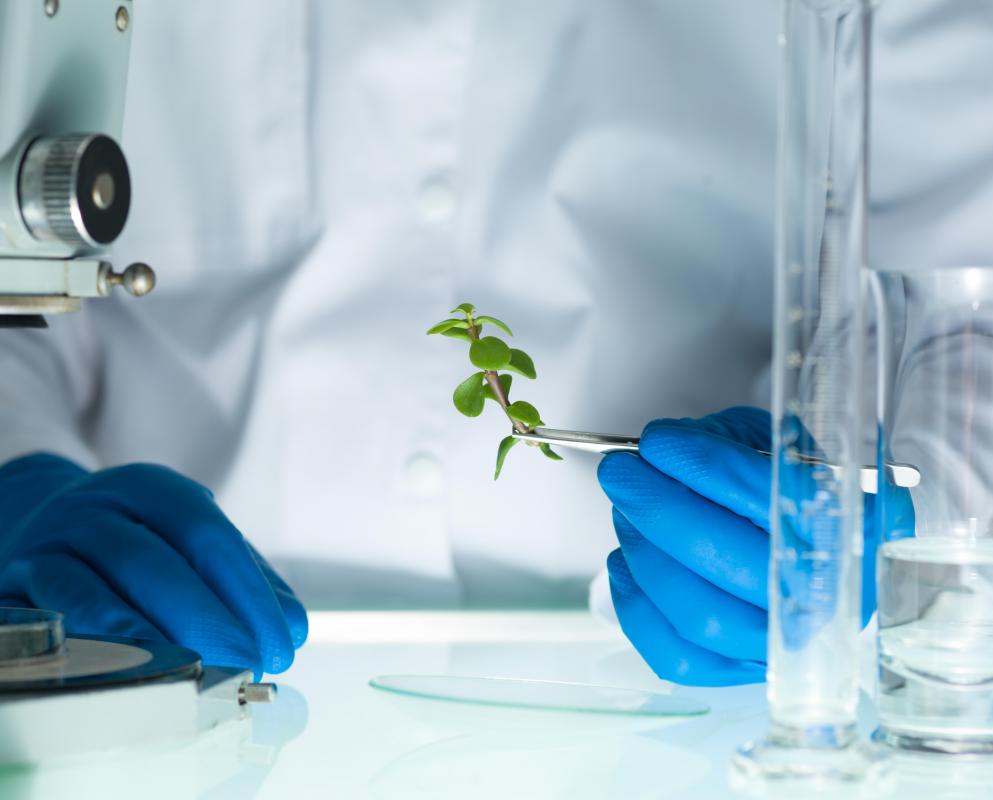
![The use of GMO food crops is a controversial issue.]() By: karichsThe use of GMO food crops is a controversial issue.
By: karichsThe use of GMO food crops is a controversial issue. -
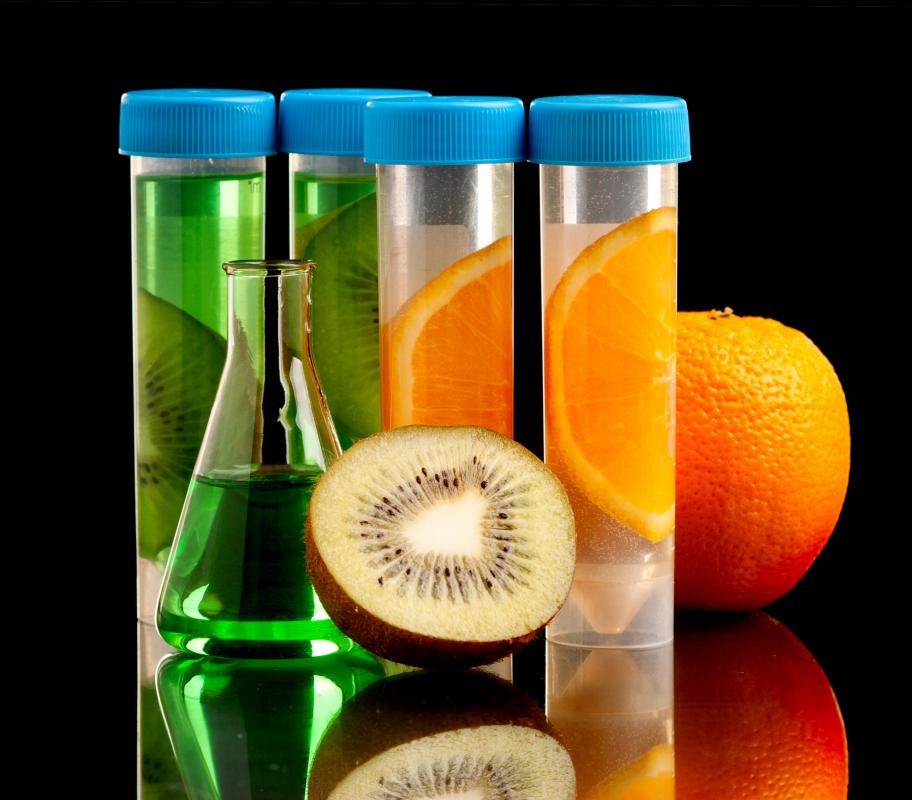
![GMO free means that a particular crop plant has not been genetically modified.]() By: shotsstudioGMO free means that a particular crop plant has not been genetically modified.
By: shotsstudioGMO free means that a particular crop plant has not been genetically modified. -
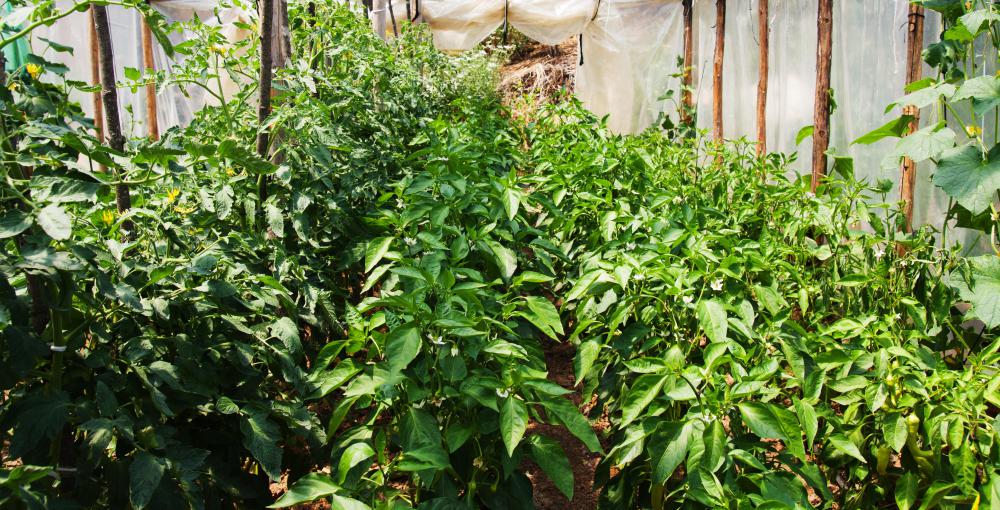
![Many conventional crops in the U.S. are subject to some form of genetic modification.]() By: simaMany conventional crops in the U.S. are subject to some form of genetic modification.
By: simaMany conventional crops in the U.S. are subject to some form of genetic modification.


Discussion Comments
I just researched new news that soy is even worse that was thought. It is related to destructive outcomes. It is documented by an underground, somewhat credible doctor. He says it causes neurodegeneration. Monsanto's gotta go. Shopping is really becoming a pain.
For those who don't believe GMO's are bad for you, research the countries that are banning them. There is a large difference between GMO's and hybrids.
Hybrids are cross bred plants. GMO's are genetically modified organisms using DNA from animals, bugs, or whatever they want to inject in there. GMO'S cannot occur in your garden or in nature! Hybrids helped feed the world. GMO's are being banned in the world. I can't understand why so many are embracing them!
Do your homework folks. That is not what the Mayo Clinic study said. It said that celiac disease is more prevalent now than it was 50 years ago because people are eating more wheat in their diet than the human body can incorporate.
GM wheat wasn't even introduced until last year and is not yet in widespread production, so it is impossible for it to be at the root of celiac disease (which is decades old). Also, there are no, none, zero peer reviewed scientific studies showing harmful effects of GM crops or food.
Jeffrey Smith is not a scientist and is not peer reviewed. He is an activist and a fear-monger. People are unhealthy in this country because they eat crap food and don't exercise enough. I am a six-time Ironman, two-time Boston marathon qualifier, and I have been working with, planting, harvesting and eating GM crops for more than 25 years. If you can find an actual study, post a link to it.
I have been reading a lot on this subject and all the evidence points to harmful effects from GMO foods period. There is no doubt at all! Just look around at all the sickness. Thanks to government. This is a free country, so if you believe in GMOs then you can eat them. Don't push them on us.
I have taken all GMO foods out of my life and I am seeing and feeling a big change in the way I feel and act. Stop buying them and they will go away.
anon231896 said that GMO concerns are a bunch of crap. He implies that GM plants have been around for quite a while and have made agriculture, as we know it, possible. I think he's confusing selective, cross-breading, which has created hybrids, with genetic modification. My dog is a mutt, so by anon's reasoning, he's a GM pooch.
What a load of crap. There is absolutely no evidence that genetic modification impacts on human health except that if there had never been any genetic modification of plants, the earth's population would be 7 million instead of billion and starvation would still be the number one cause of death.
How bloody typical that humans should attack the very thing that allows them to have such a fabulous standard of living and life expectancy. Get educated, and don't believe every catchy factoid that gets thrown around.
There are many scientific studies to suggest GMOs are harmful. You just have to listen to one of Jeffery Smith's testimonials online.
Lab studies have shown bleeding stomach linings, infertility, and anti-social behavior of rats, etc, etc, and these are only short term study results. No long term studies have been conducted at all. Once again we are forced to be the guinea pigs in yet another government-endorsed industry based experiment.
The very best of luck to Steve Marsh (organic farmer in WA) who has just had 70 percent of his farm contaminated by GM canola from a nearby conventional farm and has lost his organic farming license as a result! Our thoughts, prayers, and support are with you as you embark on your David and Goliath battle to save your farm and your livelihood!
It's false to say that there is no scientific evidence that GMO foods are harmful. Do more research. They are harmful.
Soy is mostly GMO contaminated as well. You would have trouble finding soy crops that have not been cross contaminated.
The scariest part of all this is the fact that around 60-70% of the American diet is soy and corn. Most processed meats contain soy as a filler. Most processed sweets contain corn syrup and many starchy foods contain some type of corn product. I would not be surprised if 85% of the American diet is genetically modified. It almost makes you wonder what some of the long-term effects of GMO products on humans will be.
Studies are being conducted on the effects of GMO crops on humans. A recent study conducted by the Mayo Clinic and the University of Minnesota has concluded that genetically modified wheat may play a role in the increase in Celiac disease over the last 50 years.
The wheat industry claimed that the increase in Celiac disease is only due to increased awareness, but the study was able to refute these claims. They used the stored DNA of US military personnel from the fifties to debunk these claims. The result of the study supports the viewpoint that wheat gluten allergies have been on the rise due to changes in diet, and in the wheat we consume. The researchers attribute these changes to genetic modification of our grain crops.
Post your comments