
At PracticalAdultInsights, we're committed to delivering accurate, trustworthy information. Our expert-authored content is rigorously fact-checked and sourced from credible authorities. Discover how we uphold the highest standards in providing you with reliable knowledge.
What does a Medical Technician do?
 Tricia Christensen
Tricia Christensen
Tricia Christensen
A medical technician can work in diverse fields, and often takes certification or training courses in a specialized field after completion of a secondary education institution. The term medical technician can apply to people who work in x-ray labs, people who work as dental hygienists, emergency medical response workers, helpers in surgery, pharmacy and veterinary assistants, and a plethora of other work environments. On-the-job responsibilities depend upon the career path and specialty of the technician, and most medical technicians are also called allied health professionals.
A list of the varied professions for the medical technician and basic responsibilities in each position includes the following:
- Cardiovascular technicians: There are actually three types of technicians that may work in this field, and some technicians may be trained to work proficiently in every aspect of this profession. A medical technician in cardiology may perform echocardiograms, or sonograms of the heart, directly on patients and on unborn children (called fetal echocardiograms). Some cardiovascular technicians specialize in vascular ultrasound, where they evaluate venous structures to look for blood clots and analyze blood flow, while another type of job in this field is assistance in cardiac catheterization. In all three fields, these techs may do preliminary scans of cardiac or venous structures, which are then reviewed by a physician.
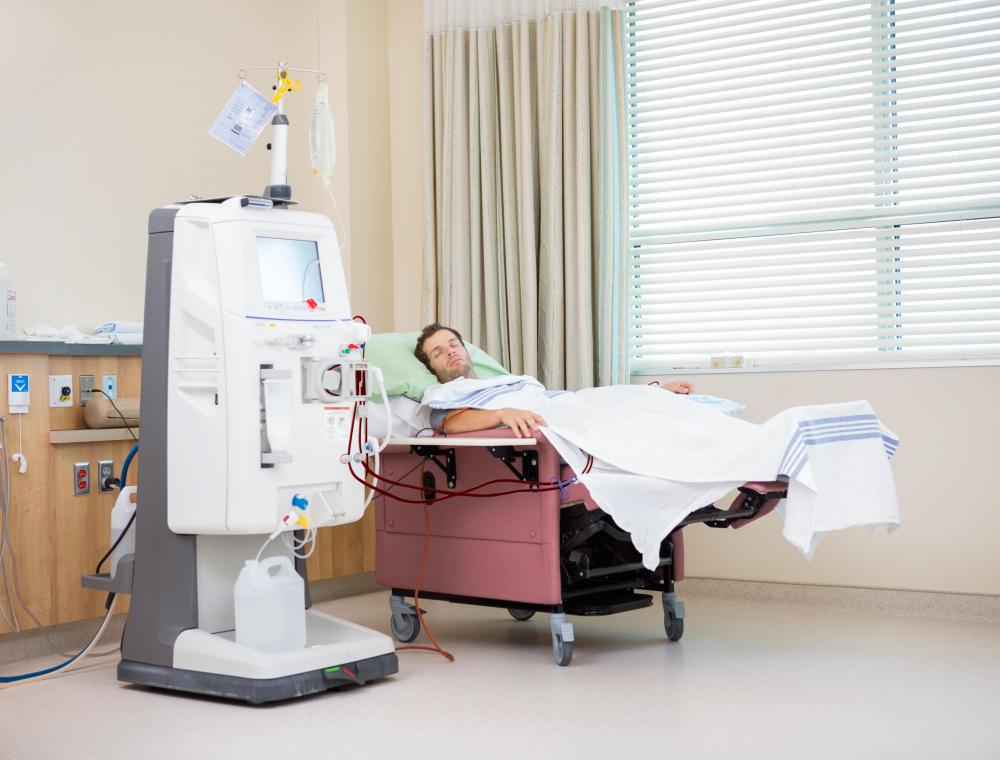
- Dialysis technicians: This type of medical technician is trained to operate equipment that performs dialysis — the removal of waste material in blood, which can sicken people with failing kidneys. They are trained to operate dialysis machinery and may additionally write reports after a dialysis treatment. Dialysis technicians often work in dialysis centers, though some work in hospital settings or in patients’ homes.
- Emergency medical technicians (EMTs): EMTs usually work with either fire departments or ambulance companies providing emergency health care. They are often responsible for transporting patients to hospitals, stabilizing patients with emergency health needs, and providing anything from first aid to medication and support for patients with severe medical conditions. There are various EMT levels, which depend on training and experience.
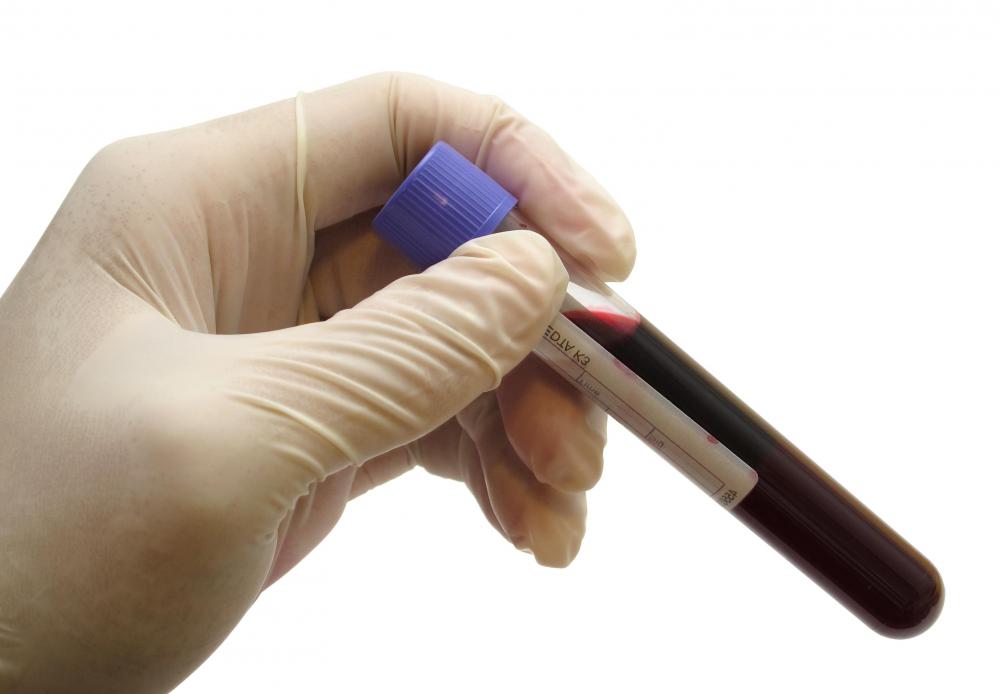
- Medical lab technicians: This type of technician is gifted at laboratory science and performs tests on blood, body fluids, or skin samples to check for the presence of disease. There are varied jobs in this profession, and highly trained lab technicians may be particularly skilled in one area — for example, the evaluation of skin samples to check for cancer. Lab technicians must be familiar with using equipment like microscopes and gas chromatographs, and they must further understand the application of various chemicals or agents in order to yield test results. A medical lab technician in a small lab may be trained in phlebotomy, the collection of blood, in addition to being trained in the analysis of various samples; some are strictly phlebotomists, merely trained in the collection of blood and the safe storage and transfer of any body fluid samples to testing labs.
- Radiology and ultrasound technicians: Though this type of medical technician may be called an x-ray technician, these workers don’t simply take x-rays. They may also work in labs performing CAT (computerized axial tomography) scans, or MRIs (magnetic resonance imaging). Some radiology techs specialize in performing ultrasounds, while others primarily work as x-ray technicians. Most of these professionals have been trained in a variety of areas, and all of them can expect a great deal of contact with patients.
- Surgical technicians: As part of the surgical team, a medical technician of this type may work to prepare operating room environments, prep patients for surgery, assist during actual surgery, and help with patient care or the transferring of patients after surgery.
Other Fields

Other field of medical technicians includes dental hygiene, where trained dental hygienists evaluate and clean gums and teeth during routine dental cleanings. Pharmacy support includes pharmacy technicians who may help prepare and package medications, and help to appropriately store drugs used in preparing medications. Veterinary technicians may participate in a variety of support activities in veterinary hospitals, vet offices, or clinics.
Technician versus Technologist

There is a continued debate over the difference between a medical technician and a medical technologist, and the difference lies in the professional's education level and responsibilities. Simply put, a technician works under a technologist, meaning a technologist's work load is generally more in-depth. In regards of education, a technologist generally has more education than a technician: specifically, a technologist usually holds at least a four year degree, while a technician usually earned a certificate or two year degree.
Tricia Christensen
Tricia has a Literature degree from Sonoma State University and has been a frequent PracticalAdultInsights contributor for many years. She is especially passionate about reading and writing, although her other interests include medicine, art, film, history, politics, ethics, and religion. Tricia lives in Northern California and is currently working on her first novel.
Learn more...
Tricia Christensen
Tricia has a Literature degree from Sonoma State University and has been a frequent PracticalAdultInsights contributor for many years. She is especially passionate about reading and writing, although her other interests include medicine, art, film, history, politics, ethics, and religion. Tricia lives in Northern California and is currently working on her first novel.
Learn more...AS FEATURED ON:
AS FEATURED ON:


-
![X-ray technicians, a type of medical technician, can take X-rays.]()
X-ray technicians, a type of medical technician, can take X-rays. -
![A medical technician may take blood samples.]() By: Eugene SimA medical technician may take blood samples.
By: Eugene SimA medical technician may take blood samples. -
![A medical lab technician is usually tasked with testing and store samples of bodily fluids.]() By: PhotorollerA medical lab technician is usually tasked with testing and store samples of bodily fluids.
By: PhotorollerA medical lab technician is usually tasked with testing and store samples of bodily fluids. -
![Medical technicians must be familiar with equipment such as microscopes.]() By: WavebreakMediaMicroMedical technicians must be familiar with equipment such as microscopes.
By: WavebreakMediaMicroMedical technicians must be familiar with equipment such as microscopes. -
![A medical technician may work as part of a surgical team, responsible for prepping operating rooms.]() By: uwimagesA medical technician may work as part of a surgical team, responsible for prepping operating rooms.
By: uwimagesA medical technician may work as part of a surgical team, responsible for prepping operating rooms. -
![A dental hygienist is a type of medical technician.]() By: xalanxA dental hygienist is a type of medical technician.
By: xalanxA dental hygienist is a type of medical technician. -
![Dialysis technicians specialize in operating dialysis equipment.]() By: Tyler OlsonDialysis technicians specialize in operating dialysis equipment.
By: Tyler OlsonDialysis technicians specialize in operating dialysis equipment. -
![There are several different levels of EMT, depending on training and experience.]() By: gwimagesThere are several different levels of EMT, depending on training and experience.
By: gwimagesThere are several different levels of EMT, depending on training and experience. -
![Medical technicians must be trained in the proper handling of biohazardous waste.]() By: Keith FrithMedical technicians must be trained in the proper handling of biohazardous waste.
By: Keith FrithMedical technicians must be trained in the proper handling of biohazardous waste. -
![Some medical laboratory technicians may be tasked with maintaining inventory and ordering supplies as needed.]() By: .shockSome medical laboratory technicians may be tasked with maintaining inventory and ordering supplies as needed.
By: .shockSome medical laboratory technicians may be tasked with maintaining inventory and ordering supplies as needed. -
![Some dental hygienists are also trained X-ray technicians.]() By: Robert KneschkeSome dental hygienists are also trained X-ray technicians.
By: Robert KneschkeSome dental hygienists are also trained X-ray technicians.





Discussion Comments
I am a EMT, and I work as a volunteer for my local fire department. It also helped me get my job as a Unit Secretary on the medical/surgical unit at the hospital. The hospital offers continuing education courses and they also do some technician and certification courses. They also will pay reimbursement up to 90 percent of any college courses that you take.
My suggestion is to try and get your foot in the door of a hospital and go from there.
What are the studies that have to be done to become a medical technologist?
Medical Assistants can draw blood, but do not specialize in it nor trained in full detail about blood. Phlebotomists are trained to draw blood specifically and know about blood completely.
Hope this helps anyone out. ~Regards, your neighborhood "Vampire"
I have been interested in the medical assistant field for quite awhile. Is there a difference between a medical assistant and a medical assistant technician? If so,whats the difference? I am looking into a school right now that offers a Associates in Medical Assisting and a Diploma in Medical Assistant Technician. Of course, I want to go for the program that has more open jobs right now.
My husband is a certified med tech and his responsibilities are to file forms, report blood pressure, and measure/give meds to residents at an assisted living facility. His title is Med Tech. I don't understand why there are so many different types of med techs. Where is info on the regular med tech job title?
I am a medical tech. in croatia, I went four years to school and had one more year of internship to get a degree and to be a registered med.tech (nurse). now i am attending three more years of education college to become a licensed med.tech. I went through all the wards in hospital(surgery, emergency, psychiatry, etc.) and believe me, drawing blood is least of the things you do.
Even a medical assistant can draw blood.
I'm a medical technician and I specialise in O2 and Nitrous/Anesthetics etc. It's not just about drawing blood, that's for sure!
I found a job after my certification as a medical assistant with a great corporation! The pay is great and benefits galore!
someone told me that medical technicians are direct care workers.
Wow I thought I was the only one who was having a hard time looking for job in the medical field. I graduated in Medical Assisting in 2009 with a degree and still can't find a job. I thought of taking a medical tech course, but now i don't know if I want to.
is there any specialization for medical technician? thanks.
emergency medical techs work ambulance hours(usually 24 on) and then time off. they can only draw blood when employed by a hospital as an emergency department tech. they cannot draw blood in the field or give medications.
Medical technicians are not considered doctors -- they just help. And i guess it should be a second degree. i mean you can't count on it to find a job. i am studying medicine hoping to be a heart surgeon and at the same time am taking courses in medical technician department of pathology. And with all this it's still hard to find a job in our country!
What are the hours that medical technicians work?
Do they learn how to draw blood??
Medical technologists are typically considered to be a different position, with more and more complex responsibilities, than a medical technician, though in some cases the jobs are largely the same.
Post your comments