
At PracticalAdultInsights, we're committed to delivering accurate, trustworthy information. Our expert-authored content is rigorously fact-checked and sourced from credible authorities. Discover how we uphold the highest standards in providing you with reliable knowledge.
What does a Waitress do?
 Michael Pollick
Michael Pollick
Michael Pollick
Waitresses, also called table servers, are restaurant or food service employees whose primary responsibility is to care for and assist patrons. The job often involves everything from managing seating and ensuring cleanliness to placing food orders, dealing with customer complaints and concerns, and handling payments and billing. Precise duties tend to vary by establishment, as different restaurants have different rules and structures. Customer service tends to be at the heart of the job no matter what, though.
Initial Customer Interaction

Waitresses are often some of the first people that customers interact with when they come into a restaurant. Larger establishments may have dedicated hosts who are charged with taking reservations and seating clientele. In smaller eateries, though, servers may take over this role — or clients may seat themselves.
One of the first things a waitress will do once clients have been seated is to present the menu and introduce any specials or promotions that may be going on. She will answer questions about items on the menu, including how certain foods are prepared — as such, it is important that she is familiar with all menu items, including common allergens and specific ingredients.

Beverage service also happens at this time. In some restaurants, it is common to provide patrons with a glass of water automatically, but in others water must be specifically requested. The waitress will go over the beverage options, and will usually fill those orders while customers decide on their food.
Placing and Processing Orders
Once customers make their decisions, it is the server’s job to be sure the kitchen gets the order. Most of the time, waitresses write down customer request on an order ticket. These are often quite specific, and can include such things as table location and individual seating as well as special requests like substitutions, sauces, or side dishes.

In some restaurants, the waitress will bring a copy of the order slip to someone in the kitchen; she may also enter it into a centralized computer so that it can be viewed by the cooks on duty. Once the kitchen receives the order, the waitress is free to move on to other jobs — at least for the moment.
Table Sweep
One of the most common tasks is known as table sweep, and involves visiting every occupied table in an assigned section to replenish beverages, answer questions, and ensure that all is going well in terms of customer comfort. During a table sweep, customers may also have specific needs, such as a change in their order or provisions for additional guests.

A waitress will often hover near her assigned section in order to anticipate customer requests. Once all of the tables have been swept and serviced, she may check on the status of food orders and will deliver any completed tickets from the kitchen's window to the customer's table. In most cases, though, she will want to be sure that food for all members of a party is ready to be delivered at the same time — for this reason, she must pay close attention to orders as they come up, and be vigilant about timing, food warmth, and other related things.
Food Delivery

For large groups, servers often need help bringing food orders out in a timely way. Waitresses often pitch in and help each other make table deliveries, or special kitchen servers may be on hand to perform this role. Once the food has been served, a waitress may be asked to bring additional condiments such as ketchup, mustard, mayonnaise or butter. At this point, she could also refill beverages and ask customers if their orders are correct and prepared properly. Any complaints that arise are the waitress’ responsibility, and she must work quickly and efficiently to address them.

At this point in the meal service, a waitress may only make a minimal number of table sweeps to allow customers enough privacy to enjoy their meals without interruption. She may use this time to clear dishes away from customers who have finished dining, or to bus and re-set vacant tables.
Side Work
During a restaurant's slow periods, servers often performs a number of duties known as side work. Typical side work includes folding napkins, rolling silverware, replenishing beverage stations, restocking service areas, and cleaning assigned sections. Some waitresses work an entire shift until relieved by another server, but others may be asked to clock out or do side work after a rush period is over. A waitress' schedule and work hours are often determined by customer demand or a manager's need to reduce labor costs.
Processing Payments and Settling Bills
When customers are ready to leave, a waitress will prepare a final ticket and place it on their table. If there is no dedicated cashier on duty, she will take payment and process it at a designated cash stand. The customer will usually receive a receipt for meal purchases made with a credit card, as well as any change from a cash transaction.
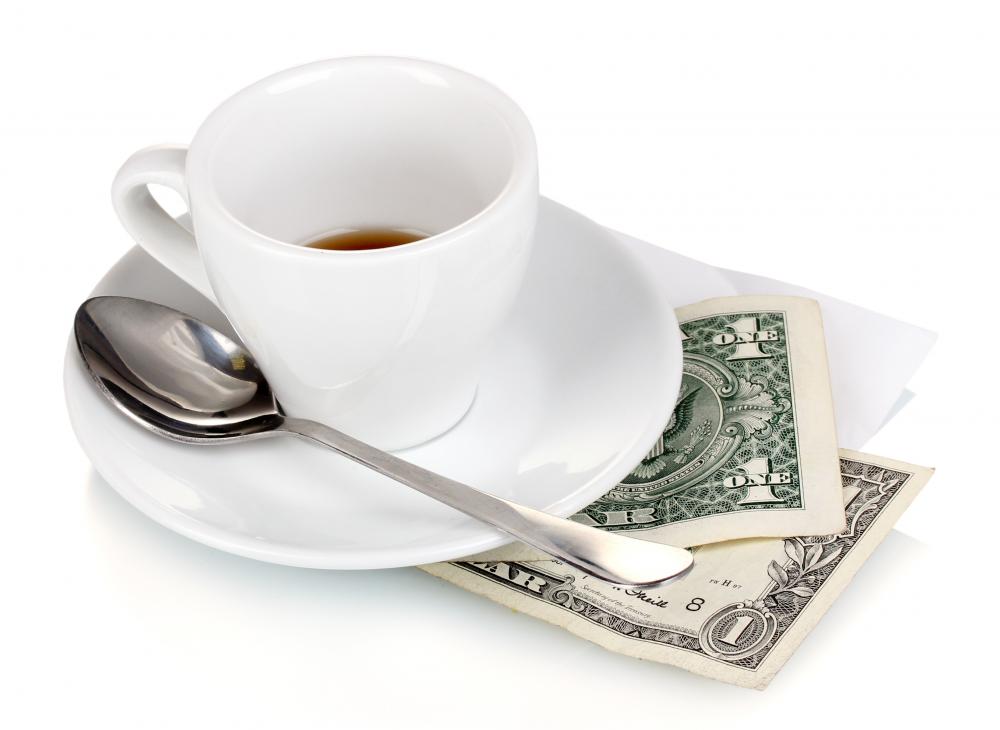
Tipping almost always happens at this time. Waitresses in most places are paid low base wages on the assumption that they will be collecting tips from the tables they serve. Tipping guidelines vary by geographic region and restaurant type, but are common in most parts of the world.
Job Requirements
In most cases, waitresses do not need any special training or education to succeed on the job. Many employers want their wait staff to have at least a high school education, but even this is not always necessary. Most of the time, personal skills are the most important. Servers need to be outgoing, cheerful, and friendly; they also usually need to be even-tempered and able to work under pressure.
Common Challenges
Many waitresses work for long hours at a time, and many must deal with unfriendly or easily aggravated clients. The job is often exhausting on both physical and mental levels. Servers in many places must also content with low pay and inflexible schedules, which can be aggravating.
Restaurant Hierarchy and Potential for Advancement
In larger restaurants, waitresses are usually somewhere in the middle of the larger wait staff hierarchy. At the top are “head” servers, who manage sections and assign waitress schedules; hosts and hostesses are often pulled from these ranks. Table bussers usually occupy the lower tiers. All personnel must usually work together, and in many cases actually share tips.
Most of the time, people are hired into one of the lower two tiers, then advance — either with time or demonstrated potential — into roles with more responsibility. Depending on the restaurant, a waitress’ base pay may increase the longer she has been on the job, as well.
Michael Pollick
A regular PracticalAdultInsights contributor, Michael enjoys doing research in order to satisfy his wide-ranging curiosity about a variety of arcane topics. Before becoming a professional writer, Michael worked as an English tutor, poet, voice-over artist, and DJ.
Learn more...
Michael Pollick
A regular PracticalAdultInsights contributor, Michael enjoys doing research in order to satisfy his wide-ranging curiosity about a variety of arcane topics. Before becoming a professional writer, Michael worked as an English tutor, poet, voice-over artist, and DJ.
Learn more...AS FEATURED ON:
AS FEATURED ON:


-
![A waitress delivers food to customers at a restaurant.]() By: Kablonk MicroA waitress delivers food to customers at a restaurant.
By: Kablonk MicroA waitress delivers food to customers at a restaurant. -
![A waitress takes orders from customers.]() By: CandyBox ImagesA waitress takes orders from customers.
By: CandyBox ImagesA waitress takes orders from customers. -
![Part of a waitress's income is derived from tips.]() By: Africa StudioPart of a waitress's income is derived from tips.
By: Africa StudioPart of a waitress's income is derived from tips. -
![A waitress must be able to carry heavy plates without dropping them.]() By: MNStudioA waitress must be able to carry heavy plates without dropping them.
By: MNStudioA waitress must be able to carry heavy plates without dropping them. -
![At a small cafe or restaurant, a waitress may not only serve customers but also operate the cash register.]() By: bst2012At a small cafe or restaurant, a waitress may not only serve customers but also operate the cash register.
By: bst2012At a small cafe or restaurant, a waitress may not only serve customers but also operate the cash register. -
![Waitresses may help monitor buffets to make sure there is plenty of food for customers.]() By: malexeumWaitresses may help monitor buffets to make sure there is plenty of food for customers.
By: malexeumWaitresses may help monitor buffets to make sure there is plenty of food for customers.




Discussion Comments
It really really really does matter what kind of restaurant you work in.
Stay away from corporate restaurants unless you are completely desperate!
I used to work at an Outback and a few other chain places and you would think they want you to starve. They way they are run it is practically impossible for a waitperson to make decent money.
I now work in a small privately owned restaurant and I make in one night what used to take a whole damn week in the other places. Of course, experience is usually required in a place where you are not constantly inquiring if the customer would like fries or a baked potato with their extra well done steak, fetching crayons for their screaming children or refilling the guy in the NASCAR T-shirt's Mountain Dew for the fourth or fifth time!! Good luck everybody!
I work at a fine dining establishment and a couple of you sound just like some of the entitled jerk customers who sit in my section. We laugh at you when you order ranch dressing to go with anything we serve you, which is probably why we "forget" it. You probably order ketchup for your filet too and get angry if we don't kiss up to you. It isn't a very hard job if you have been doing it for a long time, but any "idiot" could not handle opening up six bottles of wine and champagne for some big wig fancy pants while worrying about a side of ranch for some moron in the booth.
We do not really care about your wants and needs unless you are kind, and I can tell some of you are not. Just say please and thank you, and accept the apologies if your server makes a mistake. We constantly talk amongst ourselves about how humiliated we would be if our friends and colleagues treated a server the way we consistently get treated.
I get treated like crap daily. I am a great server. Some people just cannot be pleased and cannot have a good time at dinner and relax. It is like freakin' restaurant rage. Leave it in the car where no one can hear you. Then take your coupon to Mickey D's. If you can't afford to tip, you probably can't afford to eat out.
I still tip well, even when I get bad service. I may chuckle a bit at my server's expense, but is it really the end of the world? You probably will end up with a free dessert in the end or glass of wine, so forget it. Don't sweat the small stuff. I give free stuff away all the time, for fun. The only stipulation is you must be cool and able to leave the stick in your butt at home.
If you are going to drop a few thousand, then I may let you look down your nose at me and run me around a bit. Hey, I even lowered myself to a few butt grabs by a drunk doctor one night. Each time he did it, I told him it would cost him a hundred. Guess who made money that night? But for 50 bucks your attitude better hit the bricks. Your 8 bucks won't pay for my gas home!
Anon215067 : "But how do you, as a guest, know when that is the case?"
Sometimes if: Servers have admitted fault to our faces or, sometimes it's on our check rung up wrong.
Otherwise, we won't know, so then we assume it was the kitchen staff if we don't know.
2. "But again, the "shelfer" of the restaurant is the one mainly responsible for that."
No, the person delivering the food is responsible for that, period, unless it isn't your server and the order was put into the computer or written down (if it's a written ticket) incorrectly. Just as the mail man or mail lady is responsible for delivering the mail to the correct address, not the people or computer that sorted the mail.
The people mainly responsible are the people who are putting in the order and bringing out the order for these types of mistakes that don't have to be touched to notice it's right or wrong. The kitchen staff doesn't usually walk out with my food and bring it to my table. It usually has another set of eyes that goes onto it before it gets to me, or my server put in my order wrong to begin with why it has obvious errors.
3."It will probably take that server 30 seconds to get it for you."
First off, most of the time it takes two or three minutes, or even more. We have waited four or five minutes for condiments before.
Secondly, you don't care. How about your tip is not a big deal and I will stiff you to see how you feel? How about that one for you?
Thirdly, that's the only way I will want to eat any parts of my food, so it does no good to bring the food out without them.
Fourthly, regardless of who delivers the food, my server has the power to prevent this by my server bringing them out ahead of time.
Fifthly, you want us to give a care about your money, don't you? Well, if you don't care about us, we won't care as much about you. I should tell you. "Big freaking deal. You only make $2.13/hour." How do you feel about that? I treat my servers the exact way they treat me. If they don't care about me, I won't care much about them and their money. So you decide to care, then we will decide to care about you. Get it? I couldn't imagine treating another human being like that. We have feelings. You probably don't apologize when you forget those items, do you?
Sixthly, it is very important, not minor to the customer. That's how they will enjoy their food. It is a part of their order, so it's important, just as your tip money is important to you. Treat us as you'd like to get tipped.
"So, it's very easy to forget a mere side of ranch, or mayo."
If you didn't write it down, then how are you supposed to remember it? If five tables ask for things, you should be going down the lists that you hopefully wrote down, so that way you won't have to "remember" anything, except where you wrote it down. Sure, you can miss things even if you write them down, but it's not as often forgotten if you at least try to remember them by writing them down.
"And sure, the server could bring the condiments early on, but, what if they aren't able to?"
You are. It's called serving in a fair manner, that who ordered first ordered first, second, third, etc. If Joe Schmoe's table asks for some ranch with their food when they placed their order, then I just asked for a couple of refills, you should be getting Joe Schmoe's ranch, not worrying about my refills first since his party was first not ours. You always have time if you want to make the time. It's up to you.
"Again, you are not the only one in that restaurant,"
I know this, but my turn should be important too, not just your tip and not just everyone else's turn.
"and the world does not revolve around you."
The world doesn't revolve around just everyone else either, or the server's tip.
Everyone's stuff should be as correct as you possibly can get it to them. They aren't more important than me in other words nor am I more important than them, we are the same, therefore, we should get treated in that manner, meaning not any less than what a good, caring, and non-lazy server would do for all their customers, not just some.
"4. Refer to no. 2."
Refer to my no. 2's answer. If it's something obvious, unless the person bringing it out is not my server and the order was put in wrong by my server, then that would be on my server, but it wouldn't be on the kitchen staff for a wrong side dish for example as I said in no. 2.
"5. Same issue as 2 and 4.”
I have already said that the only way those things aren't, is if it's another server bringing out the food and the order was put in correctly, therefore, it's on the other server, but it's not ever on the kitchen staff unless one of those people left the kitchen with the seasoning on the fries or the bacon that looks limp, not crispy.
It is 100 percent the server's fault if they put in the order wrong or if the original server brought it out wrong in these cases which are if the fries have seasoning or salt or the bacon that isn't covered up by anything isn't crispy when ordered crispy. They aren't blind or illiterate.
7. No, there is only one person responsible unless your server is delivering the food with the order being put in correctly by the original server that took the order, because then it would be on the other server that delivered the food, or if a member of the kitchen staff left with the food with the original server putting in the order correctly (which is highly unlikely).
There aren't parties who brring obvious duh mistakes to the table that aren't covered up by anything.
8. "But again, that's a quick fix. So easily corrected."
No, if there's a pickle or pickles on the plate, the juices get on some of the food sometimes such as fries where that means that takes a while to cook some more, so no, it's not always an easy fix, plus it should have been fixed in the kitchen.
I agree that we all make mistakes, but was it a mistake that you truly compared the written order or ticket to the food or was it that you didn't even try? If you didn't try, it wasn't a mistake, was it?
"9. Refer to no. 5."
It's not a bunch of bull, because it was an open-faced burger when our waiter himself brought the food, so yes in this case, since our waiter brought out an open-faced burger with bleu cheese crumbles I could see without touching my own food even. Even if he put in the order correctly, it was his fault for delivering the bleu cheese crumbles since it was something I didn't have to touch to notice it was wrong since it did come from our own server, not someone else.
"As for the rest, your ratio of 9 times out of 10 is way off.” Sorry, but that's just not true.
Ask yourself who causes the issues to come to your table.
A. Overcharges: any overcharges of any kind are the server's fault. that includes wrong prices.
If the customer can notice $16.99 instead of $17.29 for example, so can the server. They are supposed to get a manager to fix it before it gets to your table, because if you want us to care about your money, you have to care about ours. Also, you can take it out of your own pocket if you would like as well. No one is making you not do that.
Extra items, wrongly rung up items can be noticed as well. Sure we all make mistakes, but a real question of did you verify the check before you just handed it over? Did you care about their money?
Giving back change. If you don't have it, give more rather than short the customer, because the customer may short you. What goes around, comes around. Maybe next time you should be more responsible with bringing enough change on you or not being so lazy as to not get change from the bar or your manager.
B. When you have no utensils past the time of getting your first set of drinks. Your server is responsible for that.
C. Refills or any requests like getting the check or getting a box, can take a long time sometimes these are due to the server not going in the order in which requests came in or they are chit chatting instead of doing their work.
D. Bringing out wrong bar drinks or with something not correct that's obvious, such as no salt on a rim of glass when the customer ordered their margarita with salt.
E. Forgetting to get bar drinks from the bar. Have had this happen a number of times from servers.
F. Forgetting to put in orders from the bar. I have had this happen a number of times from servers.
G. Forgetting condiments of any sort is the server that took the order's fault 100 percent of the time and it's never, ever, ever anyone else's fault except the server's fault, because you earn your own tip, not anyone else for something that needs no cooking or much prepare time. It doesn't take 25 minutes for example to get mayo, mustard, and ranch, for example, or five minutes even to get a side of ranch added to an appetizer.
H. Sometimes servers have the time to bring out non-bar drinks beforehand in restaurants that have soda stations (which most do) before bar drinks are done, but are too lazy to make separate trips.
I. Assuming things that end up being wrong such as it's check time you think, but the customer doesn't want their check yet, they would like to order something else just because they asked for a box you assumed they were full for example, which has happened to us before. Just basically assuming anything wrong.
J. Servers have to come back to ask a detail again on an order is mostly due to those servers that were too lazy to write down the order in the first place.
K. Not knowing the menu is always on the server, period!
L. Not bringing out a full side of a condiment. If the customer asks for it, even if the manager says not to have them filled, I would put into the computer too, and I'd get two half-filled sides so the customer has exactly the amount they ordered.
M. When servers don't apologize for mistakes, yes, that is the fault of the server why they aren't going to be as forgiven more than likely when tip time comes.
N. Taking things off the table that the customer is still using if they don't ask first is definitely the server's fault if they are the server that is the original server of that table.
O. Servers who don't give you straws or napkins, unless the manager says not to, then we can truly blame the manager.
P. Forgetting to get food orders. (As I said before, have had this happen before a number of times).
Q. Forget to put in food orders. (As I said before, have had this happen before a bunch of times.).
R. Giving opinions when not asked. I could care less if that's your favorite if I don't know you. Your job is to take my order, not for you to tell me how you like the item, unless I specifically ask you for your opinion. Delaying my food from getting to me is your fault when you waste time telling me your opinion when it's not asked for.
S. Taking a long time to ring up a check, unless there's a real reason such as it's really, really busy or that there's a problem with the computer system for example, otherwise, there shouldn't be a 10-minute or more wait to get your check or to ring it up.
Okay, anon144584. Let me tell you something.
1. Yes, waiting takes no education or experience, if you start out in a low end restaurant, or, if the restaurant has a great training program. And no, not just anyone can do it. Some people are suited for it, and others just aren't. If you do the job well, it does take great skill. It is a mentally, physically, and sometimes, emotionally, exhausting job.
2. If you have a full time job and serve on the side to make a few extra bucks, then sure, why complain about a 15 percent or lower tip? It's all just extra anyway. But think about the full time servers. Tips are their income! It's not extra for them. It's all they get. You can't really count the mere $2.13/hour they receive as income, since all that gets gobbled up by taxes. I have had checks where I actually owed money. That's always fun.
Most full time servers are usually college students trying to pay their way through school, but you also have those who are trying to provide for a family. And you never know whether they chose to pursue a "career" in serving, or if they were forced to. Never assume anything! And no, servers should never feel they are owed 20 percent or more in tips, but unfortunately, they have bills too! And I'm pretty sure that $2.13/hour isn't going to cover those!
3. You say, "It's greedy Americans wanting to get paid big bucks for very little work." That sentence caused me to highly doubt that you ever waited tables. Anyone who has ever waited tables at a decent restaurant knows that it is anything but little work. People who have never waited tables don't realize just how much servers do.
Servers do the best they can to make sure that guests are taken care of and made to feel special. But they are having to do that for multiple tables at one time. The higher quality the restaurant, the more the work that is involved. I know this because I have worked in a sit-down restaurant that was barely a step above fast food. And now I work in a restaurant that is in a step above casual dining, and one step below fine dining. The pressure to perform well and to sell, sell, sell that is put on servers is just added stress. And if the server doesn't sell what they want them to, the server gets in trouble. It is a highly stressful job. Servers have to deal with all sorts of people, some of whom are just rude and condescending. But they also have to deal with upset managers if they aren't selling as much as they should. Servers have a lot of duties, and on top of that, they have to deal with people! So, even if they work at a lower end restaurant that doesn't call for as much "work" as higher end restaurants do, they still have to deal with a high-stress job, hoping and praying that their guests will have the good graces to tip them well.
As for Springs1, I will go in the order of your "complaints."
1. I agree that, obviously, if a server rings an order into the computer wrong, that it is their fault. But how do you, as a guest, know when that is the case? Sometimes, it is the kitchen's fault, and I don't know if you realize that restaurants have employees that specifically have the job of garnishing all the food and making sure it is all prepared exactly as seen on the ticket. At my restaurant, we call that person the "shelfer." But for an example of when it is the kitchen's fault. I have rung in a CFS (chicken fried steak), and the kitchen read the ticket wrong and made a chicken fried chicken. Now when you smother cream gravy all over those, it can be difficult to tell one from the other. But it wasn't my fault. And usually, if a mistake like that is made, it is so easy to correct the situation. So why get all huffy puffy over it
2. Yes, if this occurs, the situation should be corrected before the food is brought to your table. But again, the "shelfer" of the restaurant is the one mainly responsible for that. At the restaurant where I work, we always check the tickets and the food on the trays before running them out.
3. Really? Is it that big of a deal? It's a freaking side of ranch. It will probably take that server 30 seconds to get it for you. Servers have a lot of duties, and other tables, that they have to look out for. In the grand scheme of things, your side of ranch is at the bottom of the totem pole as far as what their priorities are. Servers have to have a fast-working mind, and to really be able to multi-task. They have to have great memories too. Which can be hard when you have five tables telling you what they need all at once. So, it's very easy to forget a mere side of ranch, or mayo. So, if you have asked them for it and they forgot, just kindly remind them, and I promise they will be much more apt to get it for you. And sure, the server could bring the condiments early on, but, what if they aren't able to? Again, you are not the only one in that restaurant, and the world does not revolve around you. The server has other tables that they also have to take care of and make sure they feel special too.
4. Refer to no. 2.
5. Same issue as 2 and 4. I will repeat it again. This could be the server's fault, but it could also not be. So you saying that these things are 100 percent the server's fault is a bunch of bull.
6. Refer to no. 5.
7. You worded that question very strangely. I had to read over and over again to finally understand what you were trying to say. But, servers aren't supposed to touch any food so the question is invalid. But I understand what you are saying, and again, there are three parties responsible. The kitchen, the shelfer, then the server who runs the food, who may or may not be your server.
8. Yes sometimes the "shelfer" and/or the server may not check the tickets and the food before running them out and they should not do that. But again, that's a quick fix. So easily corrected. Give the server a chance to fix mistakes. How the server deals with the mistake should be the determining factor of how to tip them. If they are rude or give you attitude about it, then sure, deduct that from the tip. But at the same time, don't be rude to the server because of a mistake. They are only human, and mistakes are inevitable. Plus, they will already have to hear about it from their managers and possibly be punished for it.
9. Refer to no. 5.
10. That is a server's worst nightmare. "Pocketing an order." And yet, it is so easy to do on a busy night when the restaurant is on a wait. Nights like that for servers are full of chaos and mental exhaustion. After taking an order from a table, it can be so easy to be distracted. People are waving them down and asking for extra sides of this and extra sides of that, and refills for iced teas and cokes, and diet cokes, etc., and hot food that needs to be ran and cold drinks from the bar. Oh! And you just got a customer in your section again, so you better greet them so they aren't unhappy. It's a lot to take in.
I'm not excusing servers who do "pocket an order," but at least try to be somewhat understanding if the restaurant is busy. Again, the server is going to have to hear about it from their manager. But, forgetting to run the food out altogether? That's just ridiculous, and I'm sorry that that happened to you. But most servers are not like that.
As for the rest, your ratio of 9 times out of 10 is way off. Most of the problems are not caused by the server. I believe it is of equal responsibility for all the staff in the restaurant. And I can't admit someone is right when I know them to be wrong.
And yes, I'm a server.
I have been a server for over 10 years and it is great money for a high school graduate. In the midwest I make about 17 dollars an hour on average. The problem is if a new restaurant opens it can slow business. Weather is also a problem with making money. So there are those times when it hurts my pocketbook.
On top of all that, non tippers really stink. If I gave bad service I would expect to get stiffed, but when everything's just right and customers don't tip, it's a shame and hurts my feelings.
Food serving takes no education or experience. Any idiot can do it. It's not a big money making career. It was and always will be a way to make a few extra bucks. Get over yourselves thinking 20 percent-plus is owed to you for average service.
I waitressed a number of years ago. It was a side job to make a few extra bucks and I appreciated what I made in tips. Waitressing for me was easy and fun.
I loved socializing with the the customers and getting a free or discounted meal. Keep up the whine you bunch of spoiled cry babies and ruin the food industry too. No wonder all our jobs are disappearing or being outsourced. It's greedy Americans wanting to get paid big bucks for doing very little work.
Smile1 sounds like an angry person, one I hope I never wait on. First of all, I have been waitressing for 20-plus years and have never worked with people who wouldn't be quick to admit: we all make mistakes. God knows I have made some whoppers.
Are there some terrible waitresses out there? Of course there are. There are also some terrible doctors, lawyers, politicians, etc. It's a tough job and not made for everyone.
To make any real money you have to work weekends, nights, holidays. You have to smile and be nice to people who are outwardly rude and condescending. Sometimes just that extra dollar on a couple of checks makes all the difference to the server.
@anon142766: "It's not my fault their food was messed up."
May I ask for some examples of what you think is not your fault? If you are my server that took my order and actually brought my food to my table, these are some of the things that are 100 percent your fault:
1. Ringing up the order wrong into the computer.
2. Bringing out wrong food that isn't covered up by anything such as mac n' cheese when I ordered a baked potato.
3. Forgetting a side or bottle of a condiment such as ranch or mayo.
4. Bringing food that is obviously wrongly prepared, such as if I asked for bbq sauce to be on the side and none on the ribs, but you bring me the ribs with some bbq sauce on them.
5. Bringing me fries that have seasoning of some sort if I ordered them with no seasoning.
6. Bringing me bacon that I ordered extra crispy, that appears limp, soggy, and/or you can see white fat on the bacon even.
7. Did you forget a side dish or any part of my food that would be something you don't have to touch to notice it's not there?
8. Another incorrectly prepared thing would be asking for no pickles, but then on my plate are pickles. I have had this happen many times before. The stupid servers are too lazy to read their written order or if it's another server, the tickets and compare them to the food.
9. I have been brought a burger I specifically substituted cheddar cheese for bleu cheese and I could notice this without touching the open-faced burger within two seconds of it being on my table.
10. My husband and I have had servers forget to put orders into the computer as well as forget to get them.
If another server runs the food to the customer, as long as the order was put in correctly by the original server, they can notice wrong side dishes, wrong entrées, missing items that wouldn't be covered up, or anything wrongly prepared that the server doesn't have to touch the food to notice the mistake, because they have a ticket to compare the food to.
Basically, my point is, most of the time, why the problem gets to our table is due to the server or another server not trying to prevent it from getting here.
The biggest problem I have in all restaurants is condiments. The original server that takes the order can offer to bring those out ahead of time to avoid forgetting them or another server forgetting them. I cannot count the number of times my ranch is not with the food that I ordered with the food. It is not the kitchen staff's fault that you left the kitchen without the ranch or if another server brings me the food. It's not my fault my server didn't offer to bring the condiments out ahead and the other server most likely didn't compare the ticket to the food. So it's not anybody's fault in the kitchen my ranch didn't get to my table with my food.
"Blame the damn kitchen." Only if they are at fault, and nine times out of 10, they aren't at fault.
My server can prevent the problem from getting to my table. For example, let's say I ordered mashed potatoes if you were my server, but the expo plated a baked potato, well, you have a set of eyes that can compare the written order to the food, notice this and tell the kitchen staff to fix the problem before you waste my time bringing me a duh! mistake!
Most of the problems are caused by the server, not the kitchen staff! Anyone with some common sense, knows this is the God's truth! Why can't you just admit, yes, I am right, huh?
I work for Applebee's and they say that we have to pay for the food that we sold. For example, a 40 dollar check, we have to pay at least half, if not more. I deal with stubborn people and they take it out on me daily. It's not my fault their food was messed up. Blame the damn kitchen, not the innocent server that brought it out; especially one that's only been working there full time for a damn week.
i read something earlier about "the quality restaurant you're at." That doesn't matter. A waitress is a waitress just like a waiter is a waiter, no matter if you're at denny's or the melting pot (a very high end restaurant).
i work hard for my money. i only get paid 2.13 an hour so if i work six hours. That's roughly 13 dollars if it's a slow night. i may only walk out with 25-40 dollars and then you figure in tip out, which is normally about 10-20 dollars a night and my 25-40 just became 15-20 a night? Damn, i got bills too!
I, as a waitress, run the food bar, run drinks, greet customers, do side work and cash tables out and get things taken off your check because the kitchen screwed up (not me but the kitchen) and then my tip suffers. New flash: i don't cook the food. The tips people think are good? Two dollars at lunch is not good, not even if i have 10 tables. Do the math. Two times ten is only $20. Who can pay their light bill with 20 dollars? not I.
People need to realize to tip their servers! It can be horrible, i get it, but 99 percent of the food problems are not your server's fault. We don't cook it; we just put it in the computer the rest is them. And anyone who thinks differently is ignorant.
If they're good, show them. For example, on a 45 dollar tab, I'd say at least a ten dollar tip, especially if you took up my table for a period of time. A server should never get less than a five dollar tip, not even for lunch.
It's not right. We work hard for our money and show you the utmost respect and we get a slap in the face with a $2 tip? Really, 2 dollars? What do you think i can pay with 2 dollars? Keep your bleeping money. obviously, you need it more. Tip your server!
Post your comments