
At PracticalAdultInsights, we're committed to delivering accurate, trustworthy information. Our expert-authored content is rigorously fact-checked and sourced from credible authorities. Discover how we uphold the highest standards in providing you with reliable knowledge.
What does a Stock Clerk do?
A stock clerk’s main job is to sort and organize merchandise in a store, factory, or warehouse. The job usually involves a combination of receiving, inventorying, and ordering. Most of these kinds of workers do their jobs outside of the public eye, usually in back rooms or after hours, but their job is very important. Without them, stores would have a hard time keeping things on shelves and warehouse managers would be hard-pressed to fulfill orders and make timely deliveries.
Types of Work

There are several different kinds of stock clerk, and the specific tasks of each vary somewhat depending on the employer’s needs. People who work in grocery stores, for instance, spend time stocking and sorting produce, which is nowhere in the job description of someone working at high-end clothing retailer or in a factory warehouse. Despite the immediate differences, though, most of these jobs are very similar at their core. Clerks are typically in charge of managing shipments, keeping track of goods once they have arrived, and placing orders when supplies are running low.
Processing and Inspecting Shipments

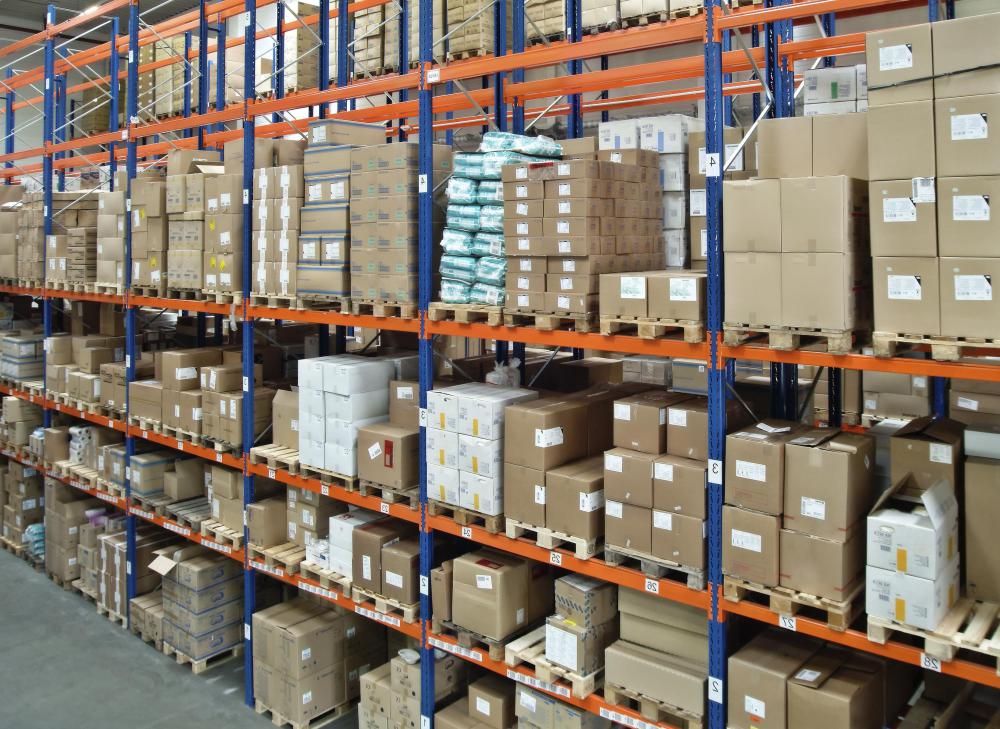
Most retailers receive their merchandise on trucks or in other large shipments. Clerks are usually the people responsible for unloading things once they arrive, which involves signing off on shipments, organizing the goods, and unwrapping and inspecting them for quality. The work often requires heavy lifting, and sometimes also the use of forklifts or other machinery designed to move pallets of goods from one place to another.
Managing Inventory

Once merchandise has arrived and has been unloaded, clerks must organize it and move it to the sales floor. A manager or other store supervisor will usually decide where certain items should go, but from there is it up to the clerks to actually arrange and set up displays in the correct place.
Stocking shelves is usually a lot harder than just putting things away, as workers must usually pay attention to how things are arranged and ordered. Clothing must be grouped by size, for instance, and perishable foods are normally displayed by expiration date.

Managers may also ask clerks to rearrange displays even if there are no new items to add. Shifting store layouts tends to keep customers moving, which can encourage more sales. Stock clerks do not have any say in these decisions, though managers may sometimes ask for their input or advice.
Placing Orders
Clerks are usually some of the first people to notice when certain supplies are running low, and they are often heavily involved in the process of ordering replacements. Different companies have different policies for the reorder process, but most places have electronic systems in place. Orders are automated and sales are processed over the Internet through streamlined purchasing systems. Clerks are typically responsible for scanning in the needed inventory, but most of the time only managers can approve final orders.
Working With Other Employees

Clerks tend to work in teams, which makes completing tasks more efficient. Success requires good interpersonal skills and an ability to pick up slack and take direction when needed. In small establishments, stock clerks may double as sales clerks or customer service representatives, answering questions and interacting with customers on the sales floor. They may also work with floor managers to keep the salesroom or storefront presentable and tidy.
Required Skills and Availability

Becoming a stock clerk is not particularly difficult in most places. Education is not usually required; in fact, many places will hire high school students. In stores where clerks perform cashiering and customer service duties, employees may be required to have some experience in business management. Math skills and previous experience in retail or warehouse settings are desirable so that companies do not have to spend a great deal of time and resources training new employees, but a lot of this depends on the specific company.

One of the biggest requirements for stock clerks is availability. The hours associated with this job are not usually regular, as a lot of stocking and merchandise rearranging happens overnight or in the early morning before customers arrive. Workers usually need to be relatively flexible in terms of when they report for duty.
Possibility for Promotion
Experienced clerks often have significant room for advancement. Many people become supervisors or managers after demonstrating proficiency in the stockroom. People with this sort of experience may also choose transfer to other departments within a business, such as human resources. Many people also work as clerks to learn about the workings of a store or warehouse in hopes of one day opening a businesses of their own.
AS FEATURED ON:
AS FEATURED ON:


-
![A stock clerk is responsible for keeping track of a company's inventory.]() By: EisenhansA stock clerk is responsible for keeping track of a company's inventory.
By: EisenhansA stock clerk is responsible for keeping track of a company's inventory. -
![Grocery stock clerks spend their time stocking shelves with canned goods and other food items.]() By: simmittorokGrocery stock clerks spend their time stocking shelves with canned goods and other food items.
By: simmittorokGrocery stock clerks spend their time stocking shelves with canned goods and other food items. -
![Stock clerks are often required to do near-constant heavy lifting.]() By: Monkey BusinessStock clerks are often required to do near-constant heavy lifting.
By: Monkey BusinessStock clerks are often required to do near-constant heavy lifting. -
![Stock clerks may be responsible for making sure items are properly marked.]() By: Robert KneschkeStock clerks may be responsible for making sure items are properly marked.
By: Robert KneschkeStock clerks may be responsible for making sure items are properly marked. -
![Stock clerks are responsible for replacing old inventory with new products.]() By: WavebreakmediaMicroStock clerks are responsible for replacing old inventory with new products.
By: WavebreakmediaMicroStock clerks are responsible for replacing old inventory with new products. -
![Stock clerks may sometimes be asked to also serve in customer service positions.]() By: Tyler OlsonStock clerks may sometimes be asked to also serve in customer service positions.
By: Tyler OlsonStock clerks may sometimes be asked to also serve in customer service positions. -
![A stock clerk may assist in tracking sales in order to determine supply and demand in a retail setting.]() By: KenishirotieA stock clerk may assist in tracking sales in order to determine supply and demand in a retail setting.
By: KenishirotieA stock clerk may assist in tracking sales in order to determine supply and demand in a retail setting.



Discussion Comments
I just got a job at as a stock clerk and I am getting $11 an hour.
Most stock clerks do not make $10-$15 an hour. Most of them make minimum wage.
Oasis11-I had to work with the night crew stock clerk years ago when I worked in retail management. We had to do overnights for every new season. We had to do this at night so that we would disturb the customers. I remember being so tired the next day, but we usually had that day off so it was not so bad. Most retailers especially the big box retailers hire overnight stock personnel during the holiday season because of the large volume of sales. Usually this is the time of year that those in retail work the most hours. It is not unheard of for stock personnel and managers to work seventeen hour days a few weeks before Christmas. This is especially true of speciality retailers like Toy R Us.
Latte31-A stock clerk salary is modest and often about $10 to 15 per hour. However, this job does offer a lot of upward mobility as the opportunity to move up the ladder are great.
Some off hour’s stock clerks work overnight shifts when the stores are generally closed. This allows the stock clerk the opportunity to perform large floor moves that would otherwise be impossible during the day.
The stock clerks have to follow written instructions or maps called plan-o-grams that let them know specifically where to put everything.
Store often change their merchandise around so that customers are forced to go all over the store to find what they need and will generally spend more time in the store.
This usually results in increased revenue for the store which is why the stores do it. This tends to lead to more impulse buys.
Stock clerk jobs involve stocking shelves with available merchandise and adhering to merchandising standards of the particular retailer. Often these jobs require early morning hours in order to receive merchandise from receiving trucks and adequately accounting for every piece of merchandise.
This is usually done with a scanner in order to maintain proper inventory records. A stock clerk also orders merchandise for his or her prospective area.
Many stock clerks begin at this level and get promoted into management. For example, at Publix Supermarkets, in order to be promoted to any grocery manager position, you have to have worked every aisle in the store as a stock clerk.
The store feels that this gives the stock person the breath of knowledge necessary to help other stock personnel as a manager.
Post your comments