
At PracticalAdultInsights, we're committed to delivering accurate, trustworthy information. Our expert-authored content is rigorously fact-checked and sourced from credible authorities. Discover how we uphold the highest standards in providing you with reliable knowledge.
What does a Social Worker do?
 Tricia Christensen
Tricia Christensen
Tricia Christensen
What a social worker does each day depends on where he or she works and his or her level of education. The services they provide vary widely. Direct-service social workers generally help address everyday problems from finding work or applying for government aid, whereas clinical social workers (licensed clinical social workers) generally help address mental health problems. Because their services are rather wide-ranging, they may be employed in a variety of settings including government agencies, nonprofits, schools, and hospitals.
Direct-Service and Clinical Social Workers

The different types of social workers often do very different things each day. Although all work to help people improve their lives in some way, the services they can provide often differ. The title held by a social worker can vary in different countries and even among states in the US, but two of the most common types are direct-service social workers and licensed clinical social workers (LCSWs).

Direct-service social workers help people deal with the challenges in their day-to-day lives. The exact services that they provide depends on where they work, but this professional often works to find a client's strengths and weaknesses and develop a plan to achieve his or her goals. This can involve helping someone deal with a financial crisis, a housing emergency, or an expected medical diagnosis. They often work with people in crisis situations, and then follow up with them to make sure that the situation has improved.

Licensed clinical social workers are specially trained to provide mental health services to clients. They work with clients to diagnose and treat mental or emotional problems, and often provide one-on-one, family, and group therapy. An LCSW may provide referrals for other services, such as counselors who specialize in particular types of treatment or social programs that can help the client in other parts of his or her life. This professional must usually have a master's degree and several years of clinical experience before he or she can be licensed.
Helping People Find and Apply for Social Services

Some social workers are employed to help people navigate the social services available to them. They do this both by giving advice and by helping people find resources to improve their lives. This type of social worker has access to information about job training programs, job counseling services, and daycare opportunities, all of which can help a client get and keep a job. He or she can also help the client get access to personal counseling or drug and alcohol rehabilitation programs if needed. People who are having trouble making ends meet may be directed to reduced price or low income housing and food assistance programs.

These workers often work as a motivating force to help people become emotionally and financially stable so they can support themselves. They may tell their clients what programs they are eligible for, guide them through the application process, and keep them moving forward to improve their lives. A social worker might work with an unemployed single parent to apply for food assistance, for example, then set up job training so that he or she has a better chance of finding a job, and help the parent find subsidize child care while he or she is at work.
Protecting and Helping Children

In other settings, a social worker might work for an organization that protects children, often through a school or a government agency like Child Protective Services in the US. He or she may be required to observe children in their home setting and regularly monitor those who are facing difficult family situations. This could lead to a recommendation for family counseling or, in dangerous or abusive homes, that children be removed. The social worker may need to find foster care placement for children removed from their homes. Social workers can also help reunify families once the dangerous conditions have been addressed.

Social workers may also give testimony in court about their work. They may be required to testify about dangerous or unsafe conditions that would allow for the removal of children, for example, or that a parent who has lost his or her children due to abuse or neglect has now made sufficient progress to be reunified with a child.
Often, at least one social worker is employed in a school district. He or she may counsel children, assess the needs of impoverished families, help bridge the gap between parents who are non-native speakers of English and the school system, or make suggestions regarding individualized education plans (IEPs) for children with disabilities. The social worker may also conduct preliminarily investigations into allegations of parental abuse, as well as any claims of teacher or administrative abuse of children.
Health Care Assistance
A social worker can also be a valuable part of a patient's health care team; hospital social workers work directly with patients or families to help them address certain needs. For instance, if a child is born with a severe and disabling illness, a social worker can find temporary housing so parents can stay with the child, and work with the family to make sure they understand the nature of care required when the child comes home. He or she can help the parents apply for any programs that may help them to care for the child, such as special insurance or Social Security in the US. They take some of the burden off the parents in a situation like this, so parents can focus on care of their child. Similarly, social workers who work with the elderly in hospital settings may counsel patients or their children on resources available for long-term care as needed.
Public Policy
Social workers can also be a valuable part of creating social policy and laws. They participate in think tanks to help find solutions to societal problems, including issues with the homeless, poverty, child abuse, or sexual abuse. They can help create or lobby for new laws, and advise governments on ways to better the lives of all people.
Education
Most social workers have at least a bachelor's degree, and many have master's degrees in social work and have gone through additional training to become licensed. There are a variety of certifications and licenses that a social worker may earn, and these often depend on where the person is living; in the US, most states require a license or other certification. A licensed clinical social worker, for example, must be trained in mental health therapy and crisis intervention, among other treatments, and may perform one-on-one counseling with clients. A direct-service social worker, on the other hand, is not trained to provide mental health therapy.
Finding a Social Worker
People who need assistance can usually find a social worker by asking at a government social services department or an organization that specializes in the particular problem the person is having. If a person needs help deciding on the next steps for an aging parent, for example, most hospitals have a social work department that can help. Many communities have nonprofit organizations dedicated to specific causes, and one of these groups may have a social worker on staff or be able to direct a person in need to the right place. These organizations often have websites as well, where they may list LCSWs and other resources in a local area.
In some cases, a social worker may contact a person directly, particularly for issues related to children. If a child is having behavioral problems at school, for example, the school's social worker may contact the child's parent or guardian so that they can work together to help the student. In a hospital, someone from the social work department may approach a patient or his family to help them deal with a difficult diagnosis.
Advantages and Disadvantages
Many jobs are available to a social worker, depending on the areas in which he or she is trained. It is important to understand that this work can be very demanding and emotionally challenging, however. Many social workers complain of caseloads that are impossible to handle appropriately, a lack of resources for people in need of them, and fairly low pay. This is especially true for those employed by government agencies, where need for these employees often exceeds funding.
The most successful social workers often have a true desire to help others; otherwise, the pressures of the job may be too much to handle. Social work can be a difficult and stressful career field, as it usually means working with people who are struggling in some part of their lives. Many people do find it to be a rewarding career, however, especially those who have a genuine longing to do good in their communities, who have a strong work ethic, and who are willing to stay up to date on laws, trends, and research in the field.
Tricia Christensen
Tricia has a Literature degree from Sonoma State University and has been a frequent PracticalAdultInsights contributor for many years. She is especially passionate about reading and writing, although her other interests include medicine, art, film, history, politics, ethics, and religion. Tricia lives in Northern California and is currently working on her first novel.
Learn more...
Tricia Christensen
Tricia has a Literature degree from Sonoma State University and has been a frequent PracticalAdultInsights contributor for many years. She is especially passionate about reading and writing, although her other interests include medicine, art, film, history, politics, ethics, and religion. Tricia lives in Northern California and is currently working on her first novel.
Learn more...AS FEATURED ON:
AS FEATURED ON:


-
![Social workers are often employed by school districts to provide counseling and other services to students and their parents.]() By: Lisa F. YoungSocial workers are often employed by school districts to provide counseling and other services to students and their parents.
By: Lisa F. YoungSocial workers are often employed by school districts to provide counseling and other services to students and their parents. -
![One duty of a social worker is to testify about dangerous or unsafe conditions that would allow for the removal of children.]() By: Stephen CoburnOne duty of a social worker is to testify about dangerous or unsafe conditions that would allow for the removal of children.
By: Stephen CoburnOne duty of a social worker is to testify about dangerous or unsafe conditions that would allow for the removal of children. -
![Social workers may try to help those who are homeless.]() By: CreativaSocial workers may try to help those who are homeless.
By: CreativaSocial workers may try to help those who are homeless. -
![Social workers may inspect daycare facilities to make sure children are being well taken care of.]() By: shootingankaufSocial workers may inspect daycare facilities to make sure children are being well taken care of.
By: shootingankaufSocial workers may inspect daycare facilities to make sure children are being well taken care of. -
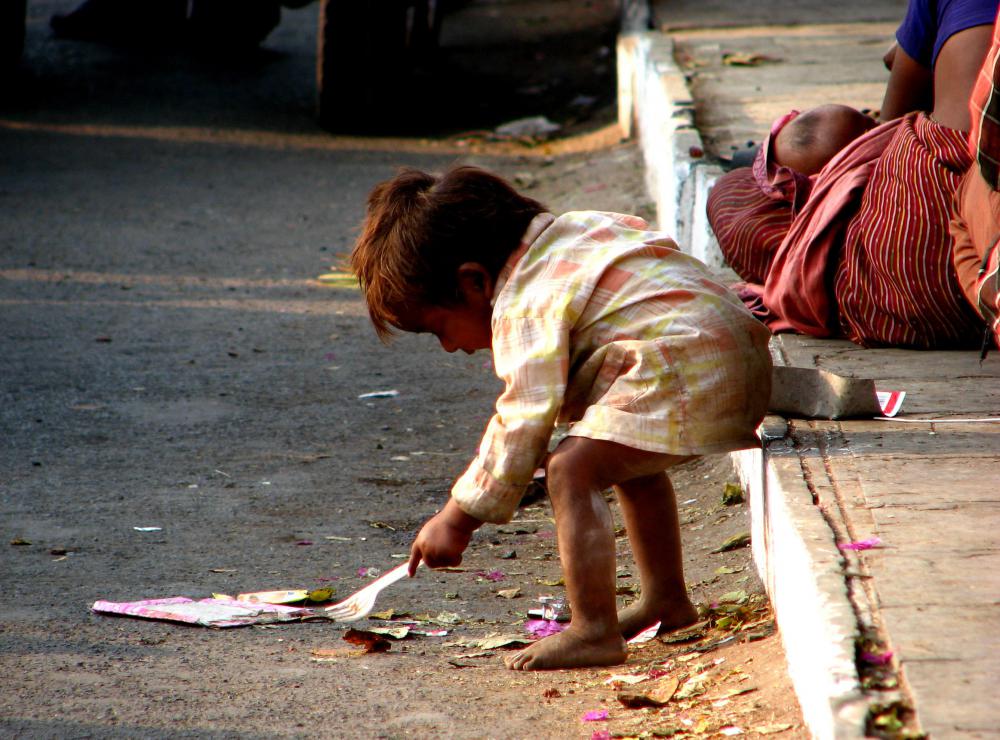
![Social workers may help children living in poverty.]() By: TheFinalMiracleSocial workers may help children living in poverty.
By: TheFinalMiracleSocial workers may help children living in poverty. -
![A social worker may help single parents find parenting and financial assistance.]() By: RidoA social worker may help single parents find parenting and financial assistance.
By: RidoA social worker may help single parents find parenting and financial assistance. -
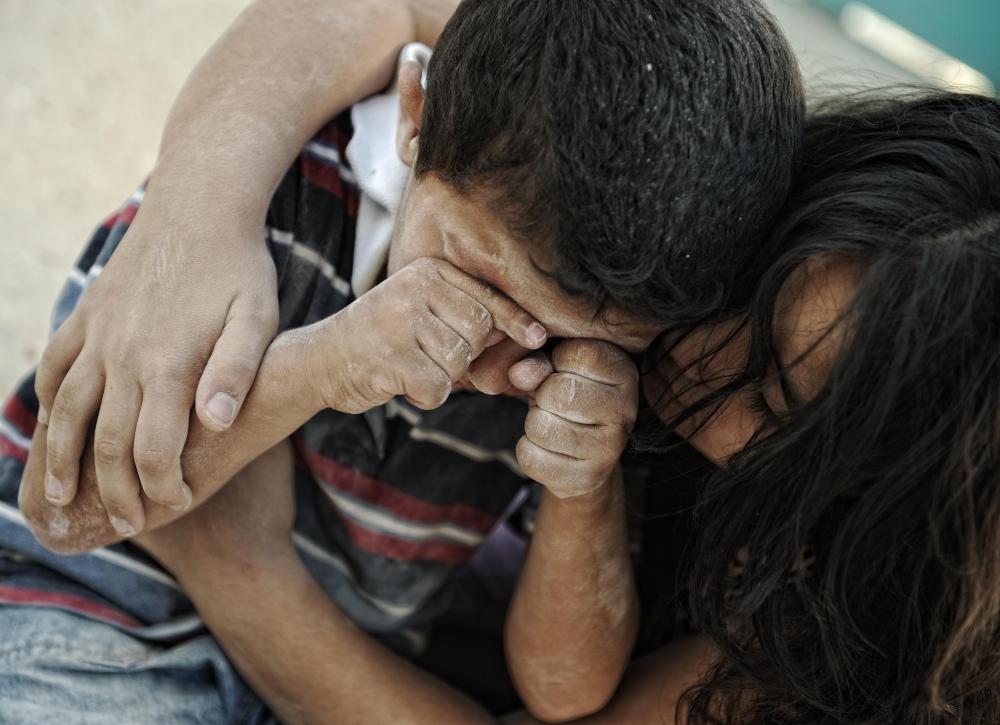
![Social workers may offer support and assistance for homeless families.]() By: Jasmin MerdanSocial workers may offer support and assistance for homeless families.
By: Jasmin MerdanSocial workers may offer support and assistance for homeless families.





Discussion Comments
It seems social workers have a wide array of classes for social impact - they should be doing case management but don't have a giant folder of services to help anyone find anything. They don't know how little they know about mental health counseling, and yet do therapy with people.
Social workers are like a monkey wrench in the works. We don't need social workers in mental health because they are not mental health workers, hence the name social work, as in case management. The social worker lobby needs to stop pushing themselves into areas they know nothing about.
Social workers are not mental health experts, because you don't have enough training. Your professional association and lobby is lying to you and lying to the government as your profession is attempting to be relevant. Please be case managers and get your stuff in order to be able to send people to places to get help for transportation, housing, jobs. Go advocate for people in the community. I've met some wonderful social workers, but I've also met many narcissistic social workers with extremely high opinions of their profession, with really no idea what they do or what mental health counseling really is.
Social workers are underpaid, but they do a lot of wok in almost every organization.
How much is their pay in the state of Kentucky?
In my experiences as a special education teacher in a couple of school districts, a *school* social worker's job consists primarily of avoiding any sort of work. They occasionally play a board game with a kid, give out a "prize" or sit in a meeting and claim to be doing work that they aren't. Pretty lame that there is such little accountability for related service providers in education, even less than for teachers and administrators.
I have been told that I have a mental illness that now requires me to be further drugged, starting tomorrow, because my nurse reported to my doctor that I have been getting worse over this past month. She writes abusively about me, distorts the truth, and backs her up by telling more lies. Now a social worker there wants to meet with me on a regular basis.
I have physical disabilities and other medical appointments. They are putting too many things on me and are making too many demands. I believe how people relate to how abusive the workers are, and believe that they want too much from me.
How do social workers gather clients' information?
In other states such as Texas, the title "social worker," is only given to those people who have a bachelor's degree in social work, and/or are licensed at a bachelor level (LSW, they have to pass a state exam). However, in California, that is not the case. People who take human service jobs and call themselves social workers in some cases misrepresent the profession. A lot of times those people don't even have any college training. Someone with a bachelor's degree in social work, a master's degree or a PhD in social work must abide by a code of ethics when working with people (you can look up the NASW Code of Ethics). If someone is in violation of the code, they may be reported to the National Association of Social Workers.
If the state offers title protection of "social worker," a person violating the code of ethics may be reported to the state, and in the worst case they won't be allowed to work as social workers. All of the above is meant to protect the public.
In most cases when I've learned about people's rights being violated by a person working in a social service job who calls themselves a "social worker", I've found that they are not trained in social work, psychology, or any field related to the helping professions.
Even pulling up media articles about so called "bad social workers," can reveal that culprit is not what the National Association of Social Workers would call a social worker. I'm not indicating that all trained social workers are good professionals, but there are fewer instances of abuse to the public when they are guided by the code of ethics.
It's a damn shame that people here want to become clinical social workers. (Anti)Social workers intrude upon your home, tell you what's best for you, act smug, and order you into "mental help" which consists of being drugged and reporting if you want to off yourself. Please, if you want to do something helpful, get a real job like being a pediatrician or be a child advocate.
Something's wrong with social workers because they act like they don't give a damn. I guess after a while people get desensitized.
Social work is a profession and at the same time, a vocation. Social workers have a genuine interest in helping people help themselves through empowerment.
It is very true that many social workers d not have enough life experience and can unfortunately do more harm than good. I have heard of three young mothers who committed suicide after reading the reports social workers had written about them. Words can hurt and pages of dramatic negativity can have a devastating effect. The way these reports are written should be up for review. Onward with recovery for distressed families.
Still seeking help after six years in the system!
I have needed the help and assistance of a social worker as I am a recovering drug addict and due to emotional and mental type problems.
Over the years (seven years), I have had two female and three male social workers. All have been pleasant people but totally unhelpful to me. I gather they are all overworked with large caseloads. They also seem to move on from the career after only a short time.
I have been desperate at many of these times over this period but none of these trained people offered any comfort, direction or help. They have all been far too young and lacked life skills. I hope one day to find help before it is too late for my recovery back to society, etc. -- new zealand
I'm only in 5th grade but we are working on a project of what our career will be. I've always dreamed of being a social worker. My life goal is to go to a four year college and earn my bachelors degree or my masters degree to become a social worker.
To me, pursuing the career of a social worker helps people with everyday problems or children with disabilities, whatever the cause may be.
This website was so so useful. I've learned lots of information on being a social worker.
How does a social worker apply the knowledge of social and community psychology in the field of internship?
I want my career to be a social worker when I graduate high school in three years. I know a little bit about it, but I would like to go deeper and see it first hand. I want to help place children in homes that are suitable for them. I want to help children get back into the real world.
I've been studying a little bit about it and I would love to become a part of the society. I enjoy working with kids and I can usually reach their level to make them understand where I'm coming from when I tell them, 'You can be the best person in this world and a person who could someday make a change. It's up to you. If you want to change, don't do it for anyone else, but for you.' I feel like all these kids need is a little push and we could all make a change for the better. That's the reason I want to be a social worker: to reach out to those in need.
Can social workers help work with missing persons cases?
I am shewaye from Ethiopia. I am now at Addis Ababa University to complete my bachelors degree in social work. I am in the graduating class now and I want to continue my masters to scale up my knowledge by international scholarship. Then I strongly have a desire to work with vulnerable groups and engage in volunteer work to empower women, families, children and disabled persons.
Don't become a social worker unless you actually want to help people. We already have enough of them who are not nice people.
Well, I have lately been doing a lot of thinking on what career would be best for me. I want to be involved with children and I want to get rid of all those bad social workers who don't really do the correct work and mess up the lives of people just for their own gratification. Social workers seem not to make a lot of money but maybe I can work part time and do other jobs as well.
Becoming a social worker requires a lot of education and internship hours. It is a very rewarding field, but it requires one to put in a lot of hard work. Therefore it is important to recognize those who have actually put in the hours and time in the field of study to be considered to work in social work.
One cannot refer to themselves as a social worker until they have received their license. This is important to the trade to receive respect for its workers and quality care for society.
I have been working as a social worker in NJ for over 15 years, with only a BA degree. As you can imagine i am not making much, as i work for a non-profit. I am considering trying to obtain my MSW. What is the average salary now for a MSW? And, do i need to be licensed to be able to work, or can i find a job with only the MSW?
Thank you to anyone who can offer some direction to me.
There are many areas of social work practice. I have been a social worker for 11 years and have worked with all ages, starting with child protective services, then in a nursing facility, and now with hospice.
A nice word to use for a social worker is advocate. A social worker is the voice for those who may not be heard.
The work is hard, demanding, and the pay is low unless you work in the health care setting.
The work is very rewarding. You, as a social worker, will have to make decisions that may change a life forever.
We are not baby snatchers, and in all fairness, it is very rare for a child to be taken into custody. In most instances, the child stays with the family and you as the social worker create a treatment plan with interventions and work with the family as a whole, to advance parenting skills and help make positive changes in their lives.
The longest war America has been in still has not been won, and that is the war on poverty, and the social worker is on the front lines of that battle.
With the elderly, a social worker assists in getting them medicaid, or glasses, dentures, mental health services, hearing devices, transportation to and from doctor appointments, assistance with placement in nursing facilities, or assisted living, or even services that can allow them to stay at home and be safe.
I work in Hospice Care, and help support families and patients with coping, help in funeral arrangements, assist in end of life decisions such as advanced directives, living wills, powers of attorney, and last wishes.
I love my job, and yes, some of the classes for the degree are difficult but the work is very rewarding. Heaven has a special place set aside for social workers.
OK so like i am in grade 11 and i want to be a social worker. is it hard because i am an IEP student?
and also do need a law course, world religion, human development, family resources? etc.
i have no idea and i want to go to college for two years than to uni for three years. is it going to be easy or a hard thing to do?
My name is kanu, and I'm in university right now and this is my fifth year now in nigeria but i intend to do my masters in any international country of my choice to add more knowledge and help most especially our youths who are going insane. they are too lazy to engage in skills to help our society.
I have learned basic skills when i was posted to a teaching hospital for field work practice. how do i apply for my masters over there? thank you.
If you are considering a career in social work, you should look for a school that is CSWE accredited. You can find accredited schools in your area by going to the CSWE web site. CSWE is the Council on Social Work Education.
A two-year degree is not accredited, but could qualify you for working as a social service technician. With a bachelor's degree (four years), you can do things like work in foster care, with older people, and do case management, etc.
A master's degree in social work will generally allow you to do clinical work, such as therapy. A license will also allow you to do more types of work, or work independently, but license requirements vary from state to state.
For an advanced standing master's program (get a master's degree in one year) you generally have to have a BSW from a CSWE accredited university and have work or volunteer experience in the field.
what does it take to become a social worker?
What do the social services do for the elderly? Can someone please give me some information?
What are the job opportunities for a social worker?
I am Kwikiriza Wilson. I am now at Uganda Christian University in second year doing a bachelor's degree in social work. I chose this career when I was still in high school and I have never regretted it. I am now ready to work in any social work related field. I feel this is enough for me.
Social workers do not hand out job applications because one needs to eat and have proper nourishment in order to find a job, which is often times by way of bus or walking.
According to Maslow's hierarchy of human needs, if one is hungry and is starving, they can't think straight. If one is malnourished, they don't have the strength or ability to focus. If one is cold and homeless with no clothes, how can they obtain and keep a job?
All humans have dignity and worth, so to say that "they just need to get a job" is so much more easier said than done, and any one of us could be in that position, and that way maybe be more compassionate and considerate of others we may not understand. If you haven't walked in those shoes, you may not be able to even begin to fathom the hardships of others.
how do l become a social worker in Nigeria?
how does a social worker use his knowledge to help people?
What are the average days in weeks. And expected travel?
What do social workers need to do about their own behavior and attitudes in order to be effective in their work?
i want to help the youth. how would i be dong that by doing social work?
In response to those who think social workers should hand out job applications instead of food stamps.
Social workers have a responsibility to give every individual self determination. Social workers are not people who force others into making the "right" decisions but help them along the way.
Furthermore, one needs to look at Maslow's hierarchy of needs. One needs to be able to eat, have a place to lay their head and clothes to put on their back before they can work on any other problem in their life.
i think its quite obvious how bad the economy is. right, smart guy.
I'm curious about the whole social worker career. Seem what caught my attention was helping children with foster care, abuse, homelessness, etc. i feel like this isn't enough info for me. help me please?
why in Gods name are you handing out food stamps to adults who can work? Why don't you keep a list of job applications at your desk for them to apply at? Because they would run out the door this is costing me and mine! Do your job and investigate deeper before you ruin us all!
i am planning on being a social worker when i graduate high school. is this a good choice for me?
I suggest going to get a bachelors degree in social work and in some universities. If you have a BSW it only takes you one year to get a Masters degree in social work. That would make it a total of five years full time in college versus six years.
I have a masters degree in social work and am a licensed Clinical Social Worker (LCSW). With the LCSW you get paid the most as a social worker. I started with a BSW 13 years ago at $26,000 and with a LCSW I make $85,000.
People don't usually get into social work for the money. I have worked for agencies and schools with the state and now I work for the federal government.
I am presently a child and family therapist. I hope that answers your questions! Good luck. --Kelena LCSW
how many years do you go to college to become a social worker?
if you're a social worker can you tell me how you can go day to day hurting people's families be cause that's what they did to mine.
I am a grade nine student and have been thinking of choosing the right career. I just love my community and feel that there is lack of social workers in my small town. I think that it would be a good job to attend and it is the right job for me. What classes do I need to take the most when I hit grade 10? ~ Kaleena
My name is Mai. I finished my high school but I haven't started attending any universities yet. However, I want to get a job like social work after I finish my school because I am more interested about social work than before, after I read a lot of about social work and also my community really needs more social workers in its area. Wish someone will help me for social work information. Thanks. rock&roll
I'm in university right now but the thing is i want to change this course and do social work, so i want to know how many years do you have to go to college? What is the average salary? If anyone could give me *any* information that would be great! Thanks
hey my name is dina. i want to be a social worker. I am still in high school. 2010 will be my last year in high school. i just want to know the steps to being a social worker. i know you have to be in school for like eight years or so. i want to talk to students about their relationships with one another. also i want to work with married people. thank you.
I'm a senior in high school, and I was thinking about becoming a social worker. How many years do you have to go to college? What is the average salary? If anyone could give me *any* information that would be great! Thanks
It is the same here in Iowa. You have to have a LBSW to be a social worker. But, I have a backelor's degree in human services and a minor in psychology and I am working as a social worker in a care center. Now I want to get my LBSW but I am only 6 classes away from getting it. Do I do it or not? Anybody comment back. I don't know what to do.
I am a University of Texas-in Arlington, graduate student of social work. I agree with the person who made reference to License. You must be licensed with the state board in Texas to call yourself a social worker. LBSW's do not participate in therapy, that is an LMSW or a LCSW.
is a social worker supposed to ask someone to write a journal? if so, are they supposed to read it with you and try to counsel you as therapy? if that question is yes. then is this information privileged information or is it up for there discussions with other people?
how does a social worker use his knowledge to help people?
In other states such as Texas, the title "Social Worker," is only given to those people who have a bachelor's degree in social work, and or are licensed at a bachelor level (LSW, they have to pass a state exam). However, in California that is not the case. People who take human service jobs and call themselves social workers in some cases misrepresent the profession, a lot of times those people don't even have any college training. Someone with a bachelor's degree in social work, a master's degree or a PhD in social work must abide by a code of ethics when working with people (you can Keyword: NASW Code of Ethics). If someone is in violation of the code they may be reported to the National Association of Social Workers. If the state offers title protection of "Social Worker," a person violating the code of ethics may be reported to the state, and in the worst case they won't be allowed to work as social workers. All of the above is meant to protect the public. In most cases when I've learned about people's rights being violated by a person working in a social service job who calls themselves a "Social Worker", I've found that they are NOT trained in social work, psychology, or any field related to the helping professions. Even pulling up media articles about so called "bad social workers," can reveal that culprit is not what the National Association of Social Workers would call a Social Worker. I'm not indicating that all trained social workers are good professionals, but there are less instances of abuse to the public when they are guided by the code of ethics.
Post your comments