
At TheHealthBoard, we're committed to delivering accurate, trustworthy information. Our expert-authored content is rigorously fact-checked and sourced from credible authorities. Discover how we uphold the highest standards in providing you with reliable knowledge.
What does a Primary Care Physician do?
A primary care physician is a general practice doctor who treats basic medical conditions. Primary care doctors administer physicals and required vaccinations. They can help diagnose health problems and either provide care or refer patients to specialists if the condition requires. They are often the first doctor most patients see when they have a health concern.
In the United States, many health insurance plans require a referral from a primary care physician before a patient can see a specialist. The same is true in many European countries; for example, in Norway every patient is registered with a primary care doctor who is their first point of contact. In England and Canada, both of which offer health care as part of a government sponsored plan, patients are also encouraged to see primary care physicians first.

There are many reasons for requiring patients to see a primary healthcare provider first. Cost containment is one reason, since primary care doctors are often less expensive then specialists. Proper diagnosis and referral to the correct specialist is another factor. Patients may be unaware of the cause of their symptoms, and a primary care physician can help identify the underlying medical reasons.

Primary care physicians do more than just refer patients to specialists; they also provide basic medical services and treatment. Most diagnose and treat common medical conditions, from strep throat to bacterial infections and simple viruses. These physicians can also read and interpret x-rays, blood tests, and urine tests. They can also help manage the treatment of chronic conditions, including diabetes and high blood pressure.

Primary care physicians also specialize in preventative medicine. One of their primary functions is to help patients learn to be healthy and maintain proper habits to promote overall health. This includes patient education on diet, smoking, and other lifestyle choices. Studies have shown that patients under the care of a primary physician tend to receive more frequent vaccinations and to be better screened for dangerous illnesses, including cancer.
In the United States, primary care physicians attend medical school and do their residency in primary care facilities. In Europe, primary healthcare providers have a similar educational track, also attending school and attaining clinical experience as a primary care physician. Residency for these physicians is usually shorter than residency for other specialties.
AS FEATURED ON:
AS FEATURED ON:


-
![A primary care physician serves as a family doctor, treating a range of basic medical conditions.]() By: Monkey BusinessA primary care physician serves as a family doctor, treating a range of basic medical conditions.
By: Monkey BusinessA primary care physician serves as a family doctor, treating a range of basic medical conditions. -
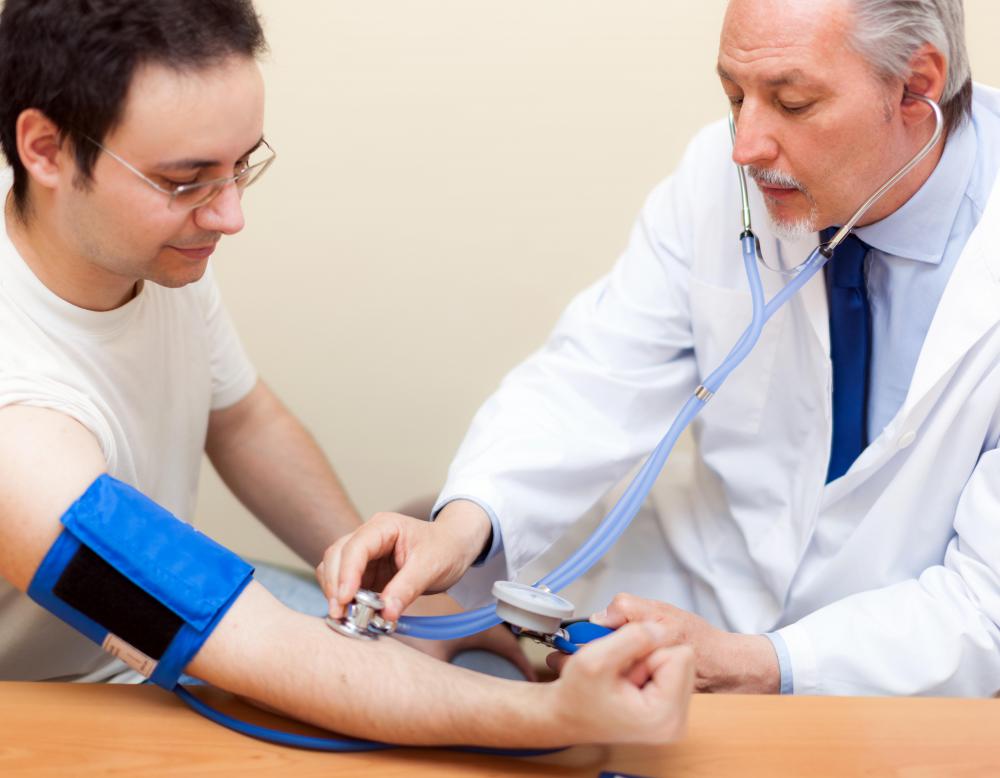
![Primary care physicians help manage the treatment of chronic conditions including high blood pressure.]() By: Minerva StudioPrimary care physicians help manage the treatment of chronic conditions including high blood pressure.
By: Minerva StudioPrimary care physicians help manage the treatment of chronic conditions including high blood pressure. -
![A primary care physician may see children as well as adults.]() By: Cheryl CaseyA primary care physician may see children as well as adults.
By: Cheryl CaseyA primary care physician may see children as well as adults.


Discussion Comments
Comfyshoes - I agree with you and it will be harder to find a doctor with this Obamacare bill.
I also think that there has to be tort reform in order to keep the costs of practicing medicine down so that it will be worthwhile.
Malpractice insurance is so costly that many doctors either go without insurance or quit the profession altogether.
If we don’t address the primary care physician shortage we will be waiting a long to time to see a doctor.
Being able to find a physician will be so hard that many us will have to be treated by nurse practitioners that will soon take the place of practicing doctors.
However, as good as these nurses may be they are not doctors.
I know that there is a current primary care physician shortage and the problem is going to grow with the Obamacare bill.
About 40% of physicians said they would retire or leave the profession because of bill.
This bill cuts their Medicare reimbursements by 25%. As it is a primary care physician's salaries average only about $150,000 to $200,000. If you figure the amount of malpractice insurance that they have to take on as well as the sheer about of schooling and educational costs, I can truly understand why there is a shortage.
People that go into this profession make huge sacrifices in order to do so and their compensation should reflect it.
I also think that students interested in becoming doctors should be given some form of loan forgiveness if they practice in a city hospital for the first few years out of their residency.
This way the doctor will give back and not have the burden of huge medical school bills.
Post your comments