
At PracticalAdultInsights, we're committed to delivering accurate, trustworthy information. Our expert-authored content is rigorously fact-checked and sourced from credible authorities. Discover how we uphold the highest standards in providing you with reliable knowledge.
What does a Physiatrist do?
Also known as a rehabilitation doctor, a physiatrist is a type of physician who treats individuals suffering from both minor and serious physical injuries. Like other medical doctors, a physiatrist generally completes four years of medical school, three years of residency, and a one year internship. The core of a physiatrist's training focuses primarily on nerve, muscle, and bone injuries as well as illnesses that can affect these areas. In addition, he or she also learns how to provide pain relief for these types of conditions without resorting to surgical procedures.
Although they are specifically trained in physical rehabilitation and have the authority to write prescriptions, physiatrists do not perform surgeries. In fact, most view surgery as a last resort, and recommend it only to those patients who have exhausted all other options. Instead, physiatrists focus on preventative care and rehabilitation, often using assistive devices such as braces and artificial limbs, as well as less traditional methods such as electrotherapy, massage, and heat therapy.

Physiatrists treat a variety of patients, from those suffering from serious health conditions like cancer to individuals who have suffered minor injuries in sports-related or automobile accidents. Most physiatrists treat a broad range of conditions; however, many others focus on specific areas such as sports medicine, brain injuries, or pediatric physiatry. In addition, while many physiatrists choose to practice on their own, they may also treat patients in settings such as hospitals, rehabilitation centers, and retirement homes.

Regardless of the type of practice, the patient's age, or the extent of the patient's pain, it is the responsibility of the physiatrist to provide personalized recovery options to all individuals under his or her care. To do this, the physiatrist creates a personalized treatment plan for each patient. He or she will suggest therapeutic treatments, as well as specific lifestyle changes that can help prevent future injuries.

Rather than limiting treatment to one specific area, a physiatrist focuses on treating the person as a whole. Oftentimes, this requires not just medical treatment, but also vocational, emotional, and social counseling. Unlike most short-term medical treatments, a physiatrist's treatment plan usually requires lifelong changes. In many cases, the patient's treatment plan will require treatment from other physicians or social workers, psychologists, and counselors. Although the exact plan for treatment is different for each patient, the goal of a physiatrist remains the same: to relieve the patient's pain and help improve the quality of his or her life through the use of non-surgical methods.
AS FEATURED ON:
AS FEATURED ON:


-
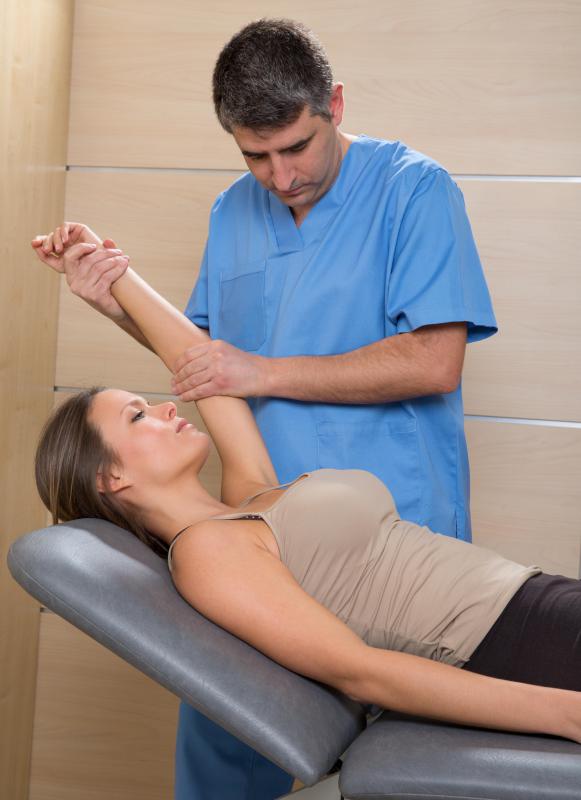
![Physiatrists can help with physical therapy programs.]() By: nyulPhysiatrists can help with physical therapy programs.
By: nyulPhysiatrists can help with physical therapy programs. -
![Physiatrists treat a variety of patients, suffering from an illness such as cancer, or recovering from an injury.]() By: michaeljungPhysiatrists treat a variety of patients, suffering from an illness such as cancer, or recovering from an injury.
By: michaeljungPhysiatrists treat a variety of patients, suffering from an illness such as cancer, or recovering from an injury. -
![Physiatrists treat a variety of patients, including children.]() By: bst2012Physiatrists treat a variety of patients, including children.
By: bst2012Physiatrists treat a variety of patients, including children. -
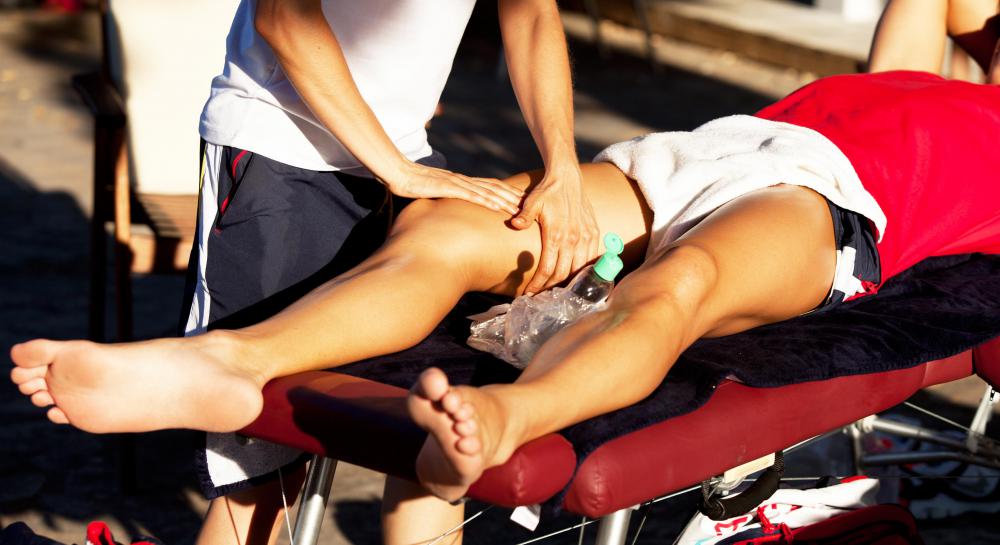
![Some physiatrists focus primarily on sports medicine.]() By: wellphotoSome physiatrists focus primarily on sports medicine.
By: wellphotoSome physiatrists focus primarily on sports medicine. -
![A physiatrist might use a heat pad to treat muscle pain.]() By: nitoA physiatrist might use a heat pad to treat muscle pain.
By: nitoA physiatrist might use a heat pad to treat muscle pain. -
![In addition to treating physical injuries, a physiatrist may offer social and emotional counseling as well.]() By: saap585In addition to treating physical injuries, a physiatrist may offer social and emotional counseling as well.
By: saap585In addition to treating physical injuries, a physiatrist may offer social and emotional counseling as well. -
![Physiatrists may focus on strengthening certain parts of a person's body following an injury.]() By: lunamarinaPhysiatrists may focus on strengthening certain parts of a person's body following an injury.
By: lunamarinaPhysiatrists may focus on strengthening certain parts of a person's body following an injury.




Discussion Comments
Yes, particularly in China, India, Malaysia, Indonesia and around the underdeveloped regions. The training of the useless rehabilitation doctors adds a burden to the healthcare delivery system, taxes the patients' finances unnecessarily, and undermines the morale of the suppressed health disciplines.
It is not at all a waste of money (taxpayers don't pay for my doctor, I do). I can personally testify that it is not ineffective, and not redundant. They oversee all of your care, coordinate where needed and exclude services where it is not, and provide some of the care themselves. What is redundant is not having someone coordinating all of the care and repeating services or going through unnecessary or unhelpful services and treatment.
We thoroughly agree! The medical subspecialties have generated many real specialists such as the rheumatologist, oncology orthopedic surgeons, ankle and foot surgeon, hand surgeons, peds neurologist etc etc etc. It is ridiculous that these highly narrowed fields do not consider collaborating with the medical therapists for rehabilitation issue.
The rehabilitation doctors failed to look at the demand of a globalised world which calls for professional autonomy and progress in profession. In developing countries, these young rehabilitation doctors act like mafia, bullying and ordering the medical therapists around, and insisting they are in charge of the therapists and demanding a supervisory role over the curriculum of the various health professional education, and feels that they should be the director of all these fields. These youngsters continue to oppress and demoralize the entire workforce.
In an era of human rights, these perpetrators, the deans of such medical schools and VC of these universities should be tried for slavery and oppression! They behave like they are still in the 1930s.
The rehabilitation doctor was a discipline relevant during world war II era, when the rehabilitation therapists were grossly lacking. In the 21st century and in line with cost effective care and needs for highly trained and specialised physio, audio, occupational, chiro and counsellors, the rehab doctor is redundant. Thus its a waste of tax payers' money to be churned out on this ineffective discipline.
Post your comments