
At PracticalAdultInsights, we're committed to delivering accurate, trustworthy information. Our expert-authored content is rigorously fact-checked and sourced from credible authorities. Discover how we uphold the highest standards in providing you with reliable knowledge.
What does a Palliative Care Nurse do?
A palliative care nurse is a health care professional who provides treatment and counsel to patients who are dying of incurable illnesses. Nurses work with physicians and other medical professionals to diagnose, treat, and care for individuals with progressive terminal conditions. They help patients and their family members cope with very difficult circumstances by providing information, counseling, and support. An experienced palliative care nurse may also conduct research about terminal diseases and advanced care practices, develop new policies regarding patient care, advocate public awareness, and teach nursing courses at hospitals and colleges.
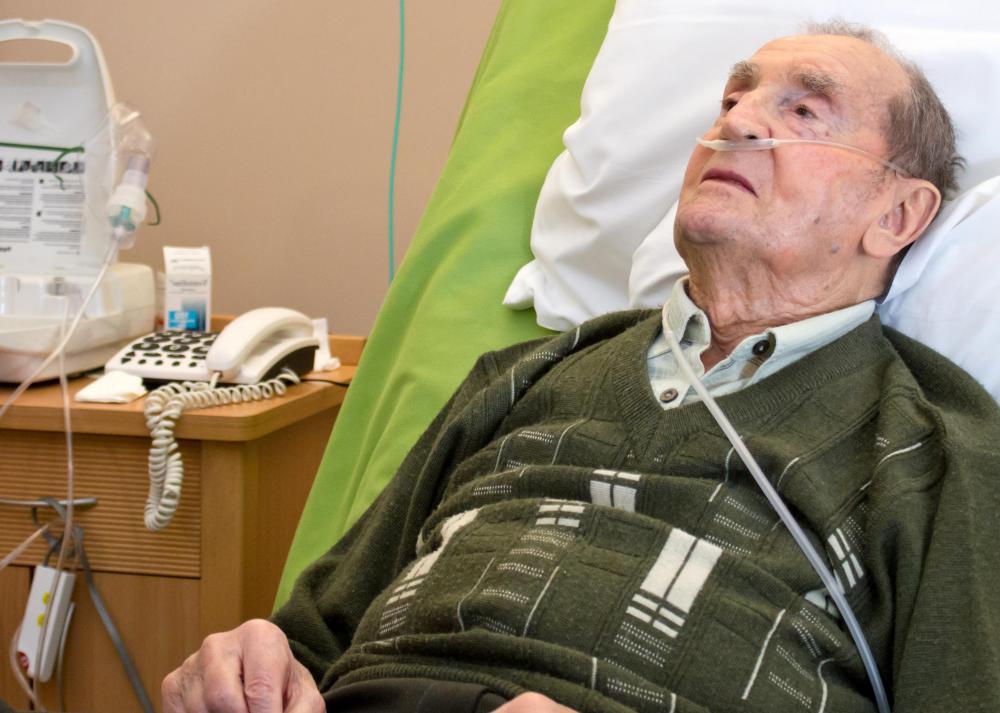
Patients who are diagnosed with incurable diseases often struggle to find the strength and hope to enjoy their last moments. It is the duty of a palliative care nurse to ensure that such patients receive the best possible treatments to relieve their pain and symptoms. Professionals often become close companions with their patients, providing counsel, empathy, and friendship when they need it the most. The nature of the job can be very physically and emotionally demanding, and nurses must be capable of dealing with loss and tragedy on a regular basis.

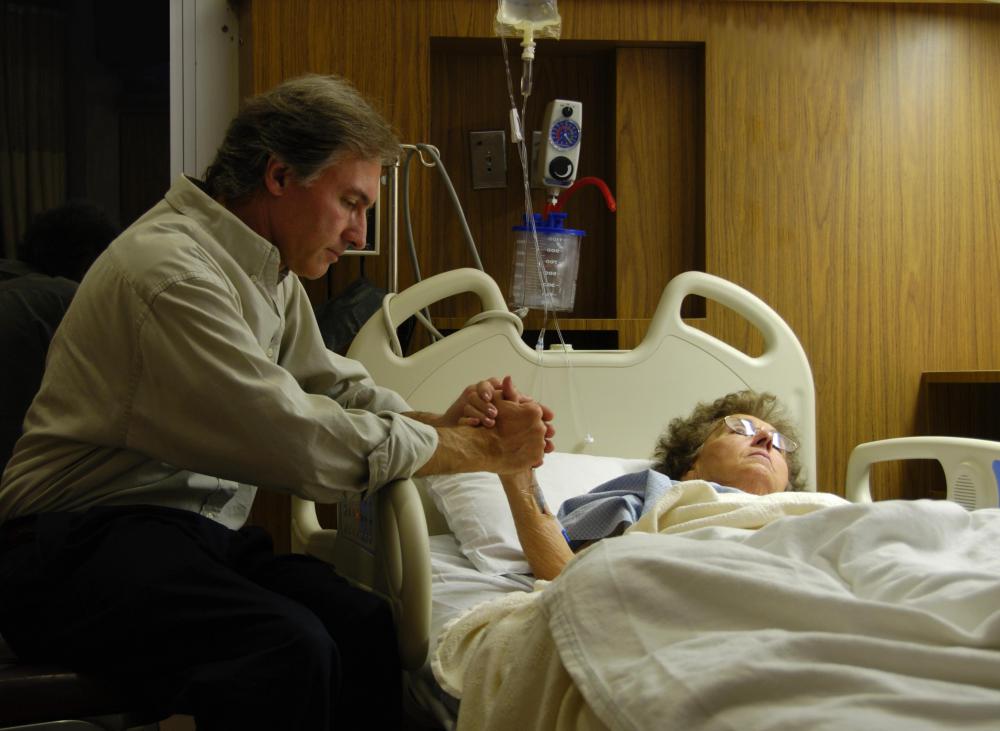
Besides administering direct care to patients, palliative care nurses frequently meet with friends and family members to help them cope with the situation and discuss the options for end-of-life treatment. Many nurses engage in research to develop new public policies and determine the best methods for administering palliative care. Professionals often take part in hospital or community discussions to present their findings and suggest ways to improve procedures.

A prospective palliative care nurse is usually required to complete a four-year bachelor's degree program in nursing as well as a two-year master's program to gain nurse practitioner credentials. Most new nurses intern for at least one year in an emergency room or hospital setting to gain practical experience and prepare for their eventual careers in palliative care. Individuals are usually required to pass extensive written examinations administered by a nationally recognized organization to become certified palliative care nurses. In the United States, certification is available through the Hospice and Palliative Nurses Association (HPNA). Most other countries rely on organizations similar to the HPNA to ensure that individuals are sufficiently prepared for the job.

Most palliative care nurses work about 40 hours a week, though their schedules are rarely regular. The times and days a palliative care nurse works depends on the condition of his or her patients. A nurse may be required to work weekend, overnight, or double shifts when a patient nears the end of life in order to provide constant care. Many nurses continue to meet with family members after the passing of a loved one in order to provide encouragement and emotional support.
AS FEATURED ON:
AS FEATURED ON:


-
![A palliative care nurse may provide counsel to terminally ill patients.]() By: ChantalSA palliative care nurse may provide counsel to terminally ill patients.
By: ChantalSA palliative care nurse may provide counsel to terminally ill patients. -
![Most new nurses begin their careers in a hospital or an emergency room.]() By: SeanPavonePhotoMost new nurses begin their careers in a hospital or an emergency room.
By: SeanPavonePhotoMost new nurses begin their careers in a hospital or an emergency room. -
![Palliative care nurses ensure that their patients are given adequate pain relief.]() By: auremarPalliative care nurses ensure that their patients are given adequate pain relief.
By: auremarPalliative care nurses ensure that their patients are given adequate pain relief. -
![Palliative care nurses often assist the relatives of patients through emotional support.]() By: Claudio's PicsPalliative care nurses often assist the relatives of patients through emotional support.
By: Claudio's PicsPalliative care nurses often assist the relatives of patients through emotional support. -
![The times and days that a palliative care nurse works depends on the condition of her or his patients.]() By: Andres RodriguezThe times and days that a palliative care nurse works depends on the condition of her or his patients.
By: Andres RodriguezThe times and days that a palliative care nurse works depends on the condition of her or his patients. -
![Palliative care nurses must be kind and compassionate.]() By: mario beauregardPalliative care nurses must be kind and compassionate.
By: mario beauregardPalliative care nurses must be kind and compassionate. -
![Family members may frequently meet with the medical team to discuss their loved one's condition and care options.]() By: Monkey BusinessFamily members may frequently meet with the medical team to discuss their loved one's condition and care options.
By: Monkey BusinessFamily members may frequently meet with the medical team to discuss their loved one's condition and care options. -
![Working as a palliative care nurse can be physically and emotionally demanding.]() By: Tyler OlsonWorking as a palliative care nurse can be physically and emotionally demanding.
By: Tyler OlsonWorking as a palliative care nurse can be physically and emotionally demanding.




Discussion Comments
I'm thinking of studying to be a palliative care nurse. I have been researching a lot about what the job involves and I'm not sure if it may be too emotional?
I'm a senior care assistant at present and have to deal with supporting individuals and families with death so I have a slight understanding of what the job would involve.
My only worry is be that I have a young child and am thinking about having another one. I know the training takes years to complete but if the job is going to effect my children then perhaps the job isn't for me.
Any comments or suggestions for me would be welcome.
My grandmother lived with a terminal illness for many years, and I bless the nurse who provided this service for her. I don't know what exactly is written in a nurses job description, but she went above and beyond, and made my gran truly live her last years to the fullest.
@CaithnessCC - Speaking as someone who is just about to finish up a palliative care nurse practitioner program I can give you a little first hand insight into your problem.
The job is not easy, but it's mostly more emotionally draining than depressing. It isn't something that you really want to come home and talk about though. This is partly out of respect for your patient, partly to shield your partner from endless tales of lives ending.
Part of my nurse education in this field covered the need for a neutral person to be sought out and be there for you to offload onto. I know I will have this structured into my week, but the person who provides this outlet is a counselor.
It sounds as if your girlfriend may not have this option, or may not be using it. She could also be burning out, and need to take a break. You could try talking to her about her feelings, and suggest she needs someone to talk to. Hope it works out for you.
I've recently started dating a wonderful woman who is a palliative care nurse practitioner. Even though it's early days in our relationship I can see it becoming more serious. The problem is that I don't know how best to support her.
There's no issue for me if she has to work long hours or cancel dates because of work. I know a job in nursing isn't ever going to be about working social hours. I guess I'm struggling with the emotional side of it.
She seems unwilling to talk about work and let her feelings out, so more and more we're spending time in silence. I have no idea what to say and her mind seems to be elsewhere. Should I push her to speak to me?
Post your comments