
At WiseGEEK, we're committed to delivering accurate, trustworthy information. Our expert-authored content is rigorously fact-checked and sourced from credible authorities. Discover how we uphold the highest standards in providing you with reliable knowledge.
What does a Maintenance Mechanic do?
A maintenance mechanic is responsible for the management and operation of large production machines. These units are found in factories and are very big and complex. A maintenance mechanic is also known as a production mechanic or journeyman mechanic. These terms are to distinguish this specialty type of mechanic from automobile or small engine mechanics.
There are three main tasks of a maintenance mechanic: scheduled maintenance, emergency repairs, and system set-up. In order to become a maintenance mechanic, you must complete a post-secondary training program, available from a wide range of community and career colleges. Admission requirements include high school credits in English, math, and technology. Many schools require candidates to complete a mechanical aptitude test before granting admissions.

Scheduled maintenance of a production machine is during off-peak hours. The mechanic is responsible for coordinating the maintenance with the production scheduler or line manager. It is part of the mechanic's responsibilities to notice if the scheduled maintenance needs to be accelerated and inform the line manager.
Once the machine is available, the mechanic must clean the machine of all product and remove, clean, lubricate, and reinstall all moving parts. Any parts that are broken, damaged, or showing signs of wear must be replaced. Additional inspections of non-moving parts should be completed as well.

In addition to scheduled maintenance, the mechanic is responsible for emergency repairs. In a production environment, any down time costs the company money. The role of the mechanic is to minimize down time and have the machine up and running as soon as possible.
When a new product is being added, the maintenance mechanic meets with the product manager or plant engineer. They discuss the modifications required to produce the new item. The mechanic is responsible for making the necessary changes and having test runs. Only when the product manager accepts the quality, can the new set-up be added to the production schedule.

The mechanic usually reports to the plant mechanic or maintenance manager. The number of people in this position depends on the size of the factory and the type of operation. A 24-hour operation typically has three full-time maintenance mechanics, so that there is coverage and overlap of shifts. People who report the greatest satisfaction as a maintenance mechanic are mechanically inclined, enjoy problem solving, and are good team players, but can work independently. Good communication skills are as important as mechanical skills in this job, as everything the mechanic does has an impact on other areas of the operation.
AS FEATURED ON:
AS FEATURED ON:









-
![Maintenance mechanics are responsible for maintaining factory equipment.]() By: TsuboyaMaintenance mechanics are responsible for maintaining factory equipment.
By: TsuboyaMaintenance mechanics are responsible for maintaining factory equipment. -
![In some cases, a maintenance mechanic may play a key role in designing and equipping a facility before it is opened.]() By: KadmyIn some cases, a maintenance mechanic may play a key role in designing and equipping a facility before it is opened.
By: KadmyIn some cases, a maintenance mechanic may play a key role in designing and equipping a facility before it is opened. -
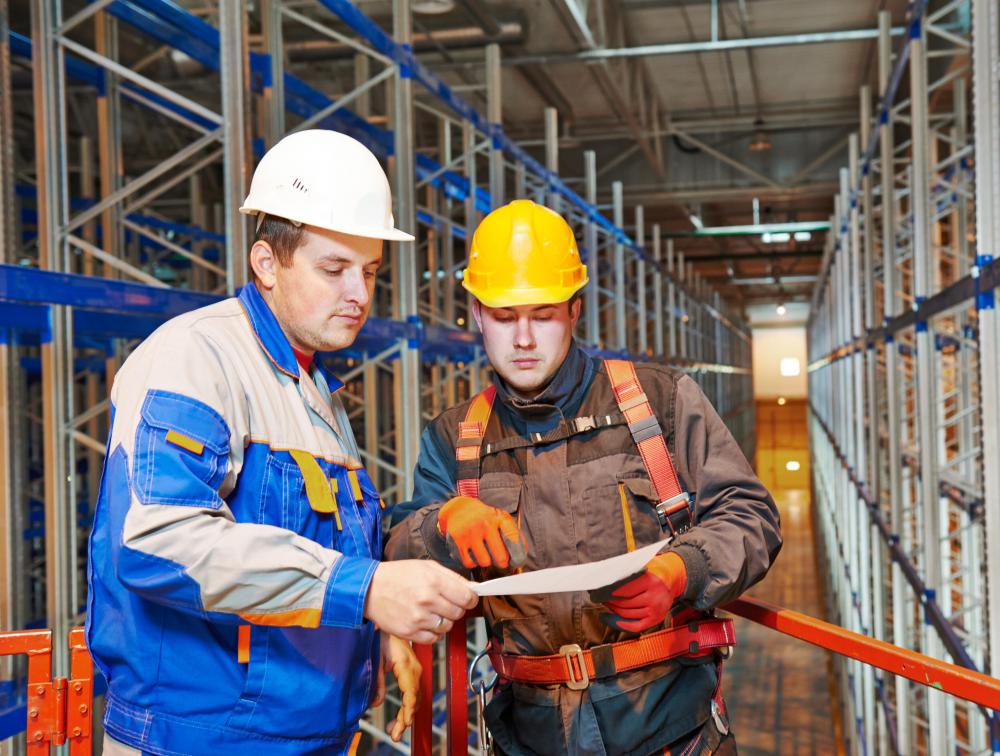
![A maintenance mechanic must regularly check to ensure all systems are operating properly.]() By: uwimagesA maintenance mechanic must regularly check to ensure all systems are operating properly.
By: uwimagesA maintenance mechanic must regularly check to ensure all systems are operating properly. -
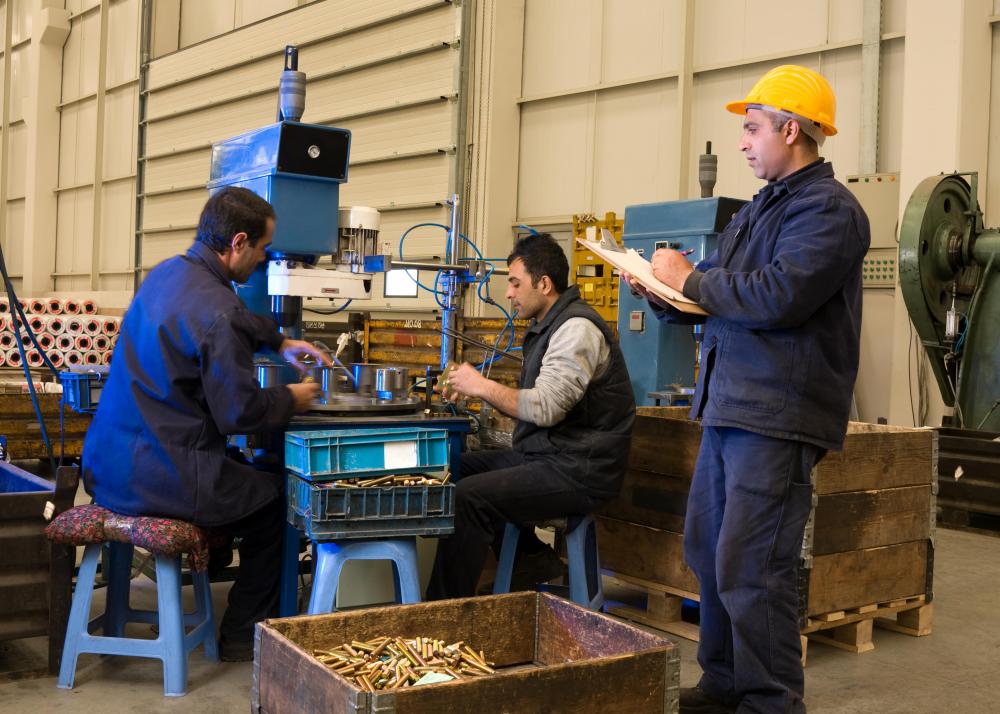
![A maintenance mechanic keeps a production line running.]() By: gemenacomA maintenance mechanic keeps a production line running.
By: gemenacomA maintenance mechanic keeps a production line running. -
![Maintenance mechanics may be tasked with servicing and troubleshooting industrial machinery that relies on computer numerical control.]() By: Maurizio TarghettaMaintenance mechanics may be tasked with servicing and troubleshooting industrial machinery that relies on computer numerical control.
By: Maurizio TarghettaMaintenance mechanics may be tasked with servicing and troubleshooting industrial machinery that relies on computer numerical control.



Discussion Comments
It's an 8 month course that involves working with pumps, seals, electrical, welding, hydraulics and lubrication.
How much risk is invovled in being a maintenance mechanic? I know for potentially dangerous pieces of equipment there is something called the lock and tag out procedure that makes sure the machine can't accidentally start up.
I'm wondering more about just dealing with huge pieces of machinery. Even something that had a saw blade or cutting device could be sharp and dangerous if it wasn't moving. You would have the risk of just taking apart pieces of equipment, too.
What is the normal maintenance mechanic salary? Are there chances for advancement or leadership positions if you have been at a company for a while?
Can you also have maintenance mechanics that aren't stationed in a factory?
I work in a lab where we have a machine that is able to perform stress tests on a variety of objects. It is very intricate and needs to have a lot of precision. It is something that we couldn't fix if it broke.
Once a year, someone from the company comes by and calibrates the machine and computer interface to make sure things are working okay. If we have any maintenance issues, they send someone, too. Would this fall under the maintenance mechanic job description?
@Emilski - That's a good point, every machine would be different. I'm sure mechanics spend a lot of time, especially when they are new, looking at schematics and diagrams showing how machines work. I'm sure even when they have been on the job for a while, they have to use guides for fixing some problems.
One of the other common things I think you would find in a lot of factories are conveyor belt systems. For industries that work in machining metal, you would have to know about hydraulics and lubrication.
The more I think about it, the more I think that the maintenance mechanic test probably wouldn't be very easy. I know I would definitely have trouble with it.
At least to me, it sounds like this would be more enjoyable than being a car mechanic. I think it would be neat to get to take apart the different machines and be able to fix them.
What all goes into maintenance mechanic training? The machines a mechanic would be interacting with would be different depending on the job. It wouldn't be like a car where they are all basically the same. The machines at a car plant would be different than the ones at an electronics manufacturer.
Are there basic systems that you can learn that apply to most machines? I'm sure there would be classes about engine repair, since I'm sure that would come up a lot. There would probably also have to be some electronics courses. I'm not sure what else besides that would carry over to lots of machines.
Post your comments