
At PracticalAdultInsights, we're committed to delivering accurate, trustworthy information. Our expert-authored content is rigorously fact-checked and sourced from credible authorities. Discover how we uphold the highest standards in providing you with reliable knowledge.
What does a Line Cook do?
 Michael Pollick
Michael Pollick
Michael Pollick
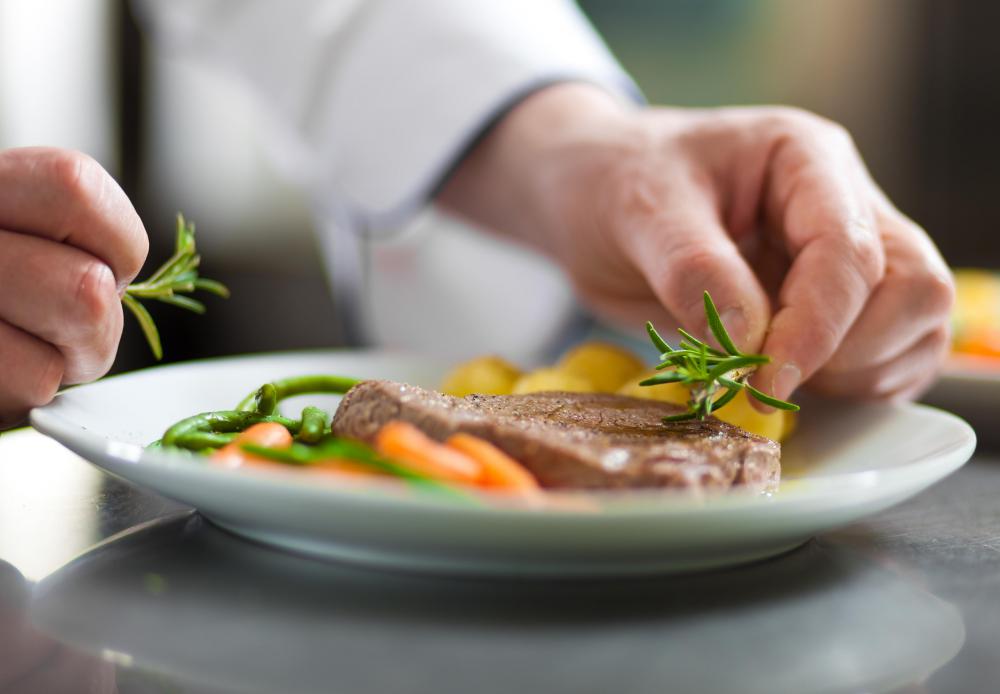
A line cook is a mid-level chef who assumes primary responsibility for preparing certain dishes in a busy, usually commercial kitchen. In most cases, this sort of cook — sometimes known as a station cook or chef de partie — puts dishes together from start to finish in compliance with set instructions or recipes. The job is not one that involves a lot of creativity, though culinary skill is essential. Speed and precision also factor into the work, as line cooks are usually required to turn out many identical versions of a single dish each day.
Place in the Kitchen Hierarchy

Most commercial kitchens are structured according to a sort of hierarchy amongst the cooking staff. An executive or head chef is usually at the top. This person sets a menu, innovates with specialty dishes, and is generally the “boss” of the kitchen. A sous chef is usually next in terms of authority, followed closely by line cooks. Line cooks answer directly to the sous chef in charge, though they may also have the authority to command and instruct lower-level cooks or culinary assistants.

A line cook’s place near the center of chain of command says a lot about his or her main duties. This cook is often seen as the heart of the kitchen, and is usually the person actually doing the brunt of the assembly work for each dish made. The higher-ups are mostly supervising, else handling more special-order meals. Nearly every standard dish comes through “the line.”
Primary Responsibilities

Each kitchen works a bit differently, but in most cases line cooks are assigned to specific “stations” where they prepare designated entrees or pieces of a meal. Kitchens often have separate stations for each dish on the menu — one for poultry, for instance, and one for salads; one for lobster tail and another for pasta.
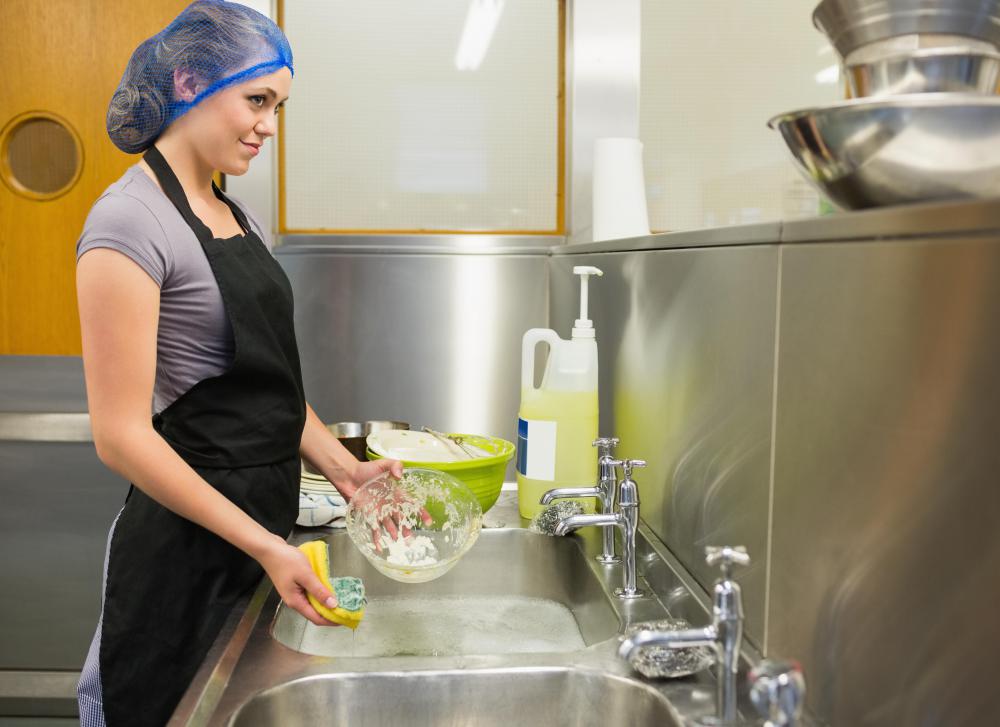
Assembly is usually the bulk of the line cook’s work, but a bit of organization is also required. Cooks must usually prep their areas at the beginning of each rotation and are responsible for ensuring that they have enough supplies to meet the anticipated demand. As orders come pouring in, the line cooks must work quickly and efficiently to turn the dishes out. Clean-up and station resetting is also usually part of the job.

In especially large kitchens, line chefs may have the authority to hire and supervise subordinates. Assistants help things run more smoothly and can also ease the workload when things become especially rushed. In most cases, though, line cooks are personally responsible for their assistants’ work — a flawed dish or plate missing essential elements is almost always faulted to the cook in charge of the station, no matter who was actually to blame.
Importance of Versatility

Line cooks are often required to rotate through different stations in the kitchen depending on the head chef’s needs on a particular day. This means that they must generally have a wide-ranging skill-set, such that they can be assigned to do nearly any kitchen task without hesitation. A big part of the job is flexibility.
Job Challenges
Working as a line cook is often demanding both physically and mentally. The environment is usually fast-paced and frantic, requiring long hours of standing and often constant criticism. Customer complaints about how dishes have been prepared often come directly back to the line. These professionals may also face internal criticism from head and sous chefs.
Training Requirements and Advancement Potential

Most line cooks have formal culinary training, and many of the top kitchens have strict educational and experience requirements. In some cases, though, cooks can learn most of what they need to know on the job, usually under the instruction of a dedicated sous chef.
Being a line cook is often a career in and of itself, and the pay is often highly competitive. Still, there is usually at least some possibility of advancement for those with exceptional skills. Cooks can often move from the line to the position of sous or even head chef, either within their same kitchen when openings arise or in other, often competing establishments. Those who are interested in infusing their work with more creativity and innovation often look to advance, while those who like the challenge and pace of constant assembly often choose to stay where they are.
Michael Pollick
A regular PracticalAdultInsights contributor, Michael enjoys doing research in order to satisfy his wide-ranging curiosity about a variety of arcane topics. Before becoming a professional writer, Michael worked as an English tutor, poet, voice-over artist, and DJ.
Learn more...
Michael Pollick
A regular PracticalAdultInsights contributor, Michael enjoys doing research in order to satisfy his wide-ranging curiosity about a variety of arcane topics. Before becoming a professional writer, Michael worked as an English tutor, poet, voice-over artist, and DJ.
Learn more...AS FEATURED ON:
AS FEATURED ON:


-
![Line cooks are often responsible for cleanup and station re-setting.]() By: WavebreakmediaMicroLine cooks are often responsible for cleanup and station re-setting.
By: WavebreakmediaMicroLine cooks are often responsible for cleanup and station re-setting. -
![The head chef is at the top of the kitchen hierarchy.]() By: ollyThe head chef is at the top of the kitchen hierarchy.
By: ollyThe head chef is at the top of the kitchen hierarchy. -
![A line cook is considered a mid-level chef.]() By: Mat HaywardA line cook is considered a mid-level chef.
By: Mat HaywardA line cook is considered a mid-level chef. -
![A large kitchen may have more than one chef de partie.]() By: tecnofotocrA large kitchen may have more than one chef de partie.
By: tecnofotocrA large kitchen may have more than one chef de partie. -
![As food handlers, line cooks must wash their hands often.]() By: mast3rAs food handlers, line cooks must wash their hands often.
By: mast3rAs food handlers, line cooks must wash their hands often. -
![Line cooks are usually required to turn out many identical versions of the same dish each day.]() By: Minerva StudioLine cooks are usually required to turn out many identical versions of the same dish each day.
By: Minerva StudioLine cooks are usually required to turn out many identical versions of the same dish each day. -
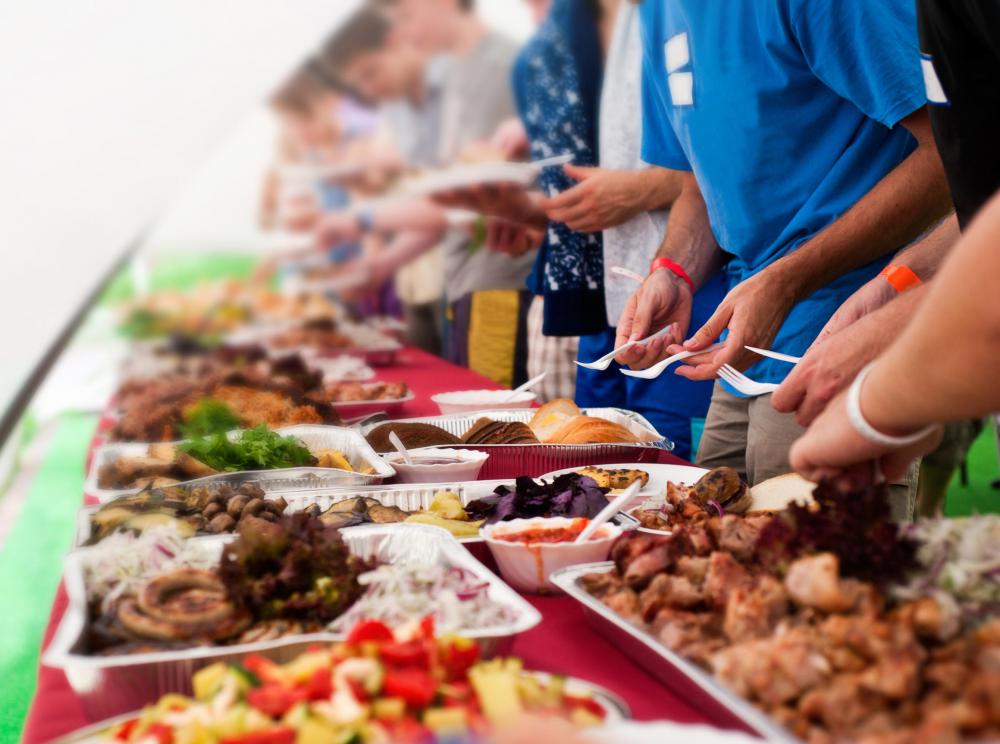
![A line cook may be responsible for preparing dishes to replenish a buffet.]() By: malexeumA line cook may be responsible for preparing dishes to replenish a buffet.
By: malexeumA line cook may be responsible for preparing dishes to replenish a buffet.



Discussion Comments
Starting as a line cook soon. Good article. It's all about that six hour grind, day in and day out.
@ Georgesplane- You’re absolutely right that a poorly run kitchen can make someone quit the industry. Although the article said promotions are infrequent, this is not always the case. Cooking is such a demanding job that people will burn out or move on. This opens up opportunities for everyone in a kitchen.
From my personal experience, line cooks become career chefs, working their way up to executive or owner of their own restaurant, or they look for a career change. The stress, late nights, and physical abuse of the job can take its toll on your body, relationships, and habits.
In my case, I decided that I should change careers. Health was an issue, and I began to hate kitchen politics.
What a great article! I worked as a chef for about nine years. I have worked every position on a line, worked as a sous chef, and worked as a general manager for a small family restaurant.
The role of a line cook can vary greatly. In some instances, a line cook might be responsible for one station, say working the grill. In other situations, a line cook may have multiple duties.
A line may only have two or three line cooks who manage multiple duties, or there may be an army of trained chefs. There are almost always one or more prep cooks on staff to support the line, regardless of the size of the operation.
When examined closely, you will see that a well run kitchen is a beautiful thing. Just the same, a poorly run kitchen can make anyone quit the industry.
Post your comments