
At PracticalAdultInsights, we're committed to delivering accurate, trustworthy information. Our expert-authored content is rigorously fact-checked and sourced from credible authorities. Discover how we uphold the highest standards in providing you with reliable knowledge.
What does a Home Inspector do?
 Malcolm Tatum
Malcolm Tatum
Malcolm Tatum
Home inspectors are charged with the responsibility of identifying whether a home has any defects. This typically means that he or she must be fully aware of relevant local ordinances, such as frame construction, the electrical and plumbing systems, heating and cooling systems, and the condition of any other structures that are found on the property. The inspector is often called upon to conduct a real estate inspection when a home is up for sale. It is important to note that a home inspector is different than a building inspector, or code inspector, who is charged with checking whether a particular property is in compliance with all governing housing codes. While a home inspector should be, and probably is, familiar with governing codes, he or she is not responsible for checking compliance with all applicable codes — this is within the purview of the building inspector.
Conducting a home inspection, whether for private clients or real estate inspections for a realty agency, involves a thorough analysis of just about every element of the home that is considered a permanent feature. Depending on the size of the home, a home inspector may spend anywhere from a couple of hours all the way through to the better part of a day on one home. The focus is not only getting home inspections done quickly, but in making sure no aspect of the property is overlooked.

One of the first aspects that a home inspector will address is the condition of the core structure. This means checking the foundation of the home for any weakened areas of support. Basements and crawl spaces are examined for any signs of cracks in the walls or flooring, as well as any signs of seepage or mold. If the basic structure appears to be sound, then the inspector can move on to the major systems that provide utilities to the home.

The next phase of the inspection will often be the heating and cooling systems for the home, as well as the electrical wiring and plumbing system. Gas lines are checked for leaks and proper installation. The wiring is often of especial interest to the home inspector, as electricity drives so many of the household systems and major appliances. Plumbing also is expected to be installed according to local codes, and show no signs of immediate breakdown. If fireplaces or wood stoves are present, both are inspected to ensure the devices are in proper working order and are vented properly.

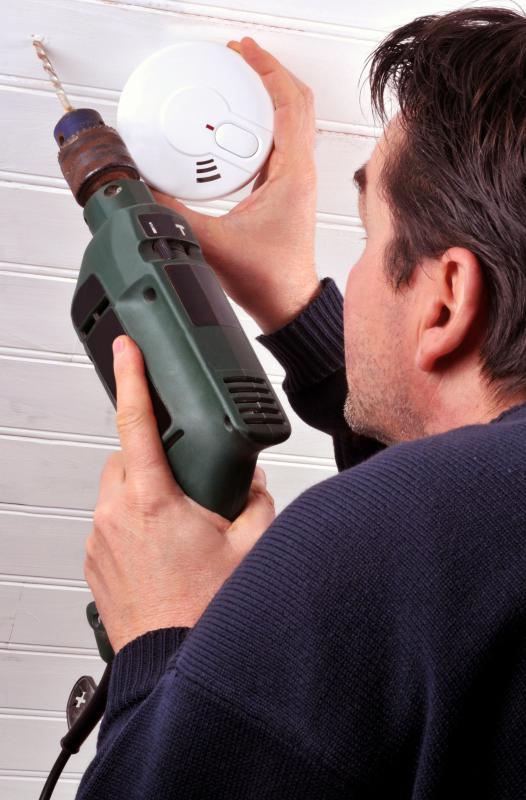
The inspector then often turns his or her attention to the interior structures in the home. This means checking the condition of interior walls and door frames, to make sure there are no signs of a weakened infrastructure. Ceilings are also inspected to ensure they are in good condition. Throughout the space, the home inspector will look for the presence of safety devices, such as smoke detectors. Attic spaces, closets, and the condition of the windows round out the interior inspection.

Outside, the inspector will pay attention to the condition of the roof, look for proper flashing and drainage via gutters and downspouts, and ensure that any attached elements such as porches or decks are stable and safe. Other buildings on the property, such as garages or storage houses also are inspected and must be approved before the home inspector can consider the job to be complete.
Malcolm Tatum
After many years in the teleconferencing industry, Michael decided to embrace his passion for trivia, research, and writing by becoming a full-time freelance writer. Since then, he has contributed articles to a variety of print and online publications, including PracticalAdultInsights, and his work has also appeared in poetry collections, devotional anthologies, and several newspapers. Malcolm’s other interests include collecting vinyl records, minor league baseball, and cycling.
Learn more...
Malcolm Tatum
After many years in the teleconferencing industry, Michael decided to embrace his passion for trivia, research, and writing by becoming a full-time freelance writer. Since then, he has contributed articles to a variety of print and online publications, including PracticalAdultInsights, and his work has also appeared in poetry collections, devotional anthologies, and several newspapers. Malcolm’s other interests include collecting vinyl records, minor league baseball, and cycling.
Learn more...AS FEATURED ON:
AS FEATURED ON:


-
![A home inspector evaluates the safety of a house's heating equipment, which may include wood stoves and fireplaces.]() By: Paul MaguireA home inspector evaluates the safety of a house's heating equipment, which may include wood stoves and fireplaces.
By: Paul MaguireA home inspector evaluates the safety of a house's heating equipment, which may include wood stoves and fireplaces. -
![Home inspectors will conduct a real estate inspection on a property for sale.]() By: Andy DeanHome inspectors will conduct a real estate inspection on a property for sale.
By: Andy DeanHome inspectors will conduct a real estate inspection on a property for sale. -
![Home inspectors will check for the presence of smoke detectors.]() By: Richard VillalonHome inspectors will check for the presence of smoke detectors.
By: Richard VillalonHome inspectors will check for the presence of smoke detectors. -
![Home inspectors will check for proper drainage elements of a house, including downspouts.]() By: Amy WaltersHome inspectors will check for proper drainage elements of a house, including downspouts.
By: Amy WaltersHome inspectors will check for proper drainage elements of a house, including downspouts. -
![A home inspector is familiar with all aspects of home construction.]() By: leekrisA home inspector is familiar with all aspects of home construction.
By: leekrisA home inspector is familiar with all aspects of home construction. -
![Home inspectors will check to make sure safety devices like smoke detectors are in place.]() By: shadowchaserHome inspectors will check to make sure safety devices like smoke detectors are in place.
By: shadowchaserHome inspectors will check to make sure safety devices like smoke detectors are in place. -
![A home inspector will address the structural condition of the house.]() By: zimmytwsA home inspector will address the structural condition of the house.
By: zimmytwsA home inspector will address the structural condition of the house.




Discussion Comments
very very attractive post. Thanks for sharing this awesome topic with us. We definitely appreciate you for this good job.
That is not necessarily true in countries other than the USA. Elsewhere in the world, home inspectors may function as "code" inspectors.
Home inspectors are *not* code inspectors. Local codes are constantly changing and are always up for interpretation by local officials. Home inspectors should be trained in standard building practices and comply with standards of practice with organizations such as ASHI (American Society of Home Inspectors) and/or NACHI (National Association of Certified Home Inspectors).
Post your comments