
At TheHealthBoard, we're committed to delivering accurate, trustworthy information. Our expert-authored content is rigorously fact-checked and sourced from credible authorities. Discover how we uphold the highest standards in providing you with reliable knowledge.
What does a GI Specialist do?
A GI specialist is a doctor who specializes in diseases of the gastrointestinal tract. This may include diseases and disorders that affect the stomach, esophagus, liver, gallbladder, small intestine, colon, pancreas and rectum. A specialist in this branch of medicine may go by several different names, such as GI doctor, gastrointestinal specialist or doctor, or a gastroenterologist. To become a gastrointestinal specialist, a person will need to obtain an undergraduate degree, complete medical school and a residency, and obtain a license to practice medicine.
Most people will see a GI specialist after suffering a problem of the digestive tract. The complaint may range in severity from a recurring upset stomach, indigestion, ongoing diarrhea, an onset of constipation or rectal bleeding. Frequently, a person will seek help from a specialist when symptoms such as these start to interfere with his or her normal daily activities. In most cases, the patient will be seen by a general healthcare provider first. The provider may run some generic tests to search for an answer of gastrointestinal complaints and if none are found, the patient may be referred to a specialist.

The gastroenterologist may begin with a new patient by taking a complete medical history. The doctor may spend a great amount of time interviewing the patient about previous illnesses that may or may not be related to the gastrointestinal tract. He or she may draw blood and perform a complete physical examination. The doctor is likely to pay special attention to the abdomen, by checking it for tender spots, masses, or lumps. Frequently, he or she may order diagnostic tests to make a clear diagnosis of a GI condition or disease or to rule one out.

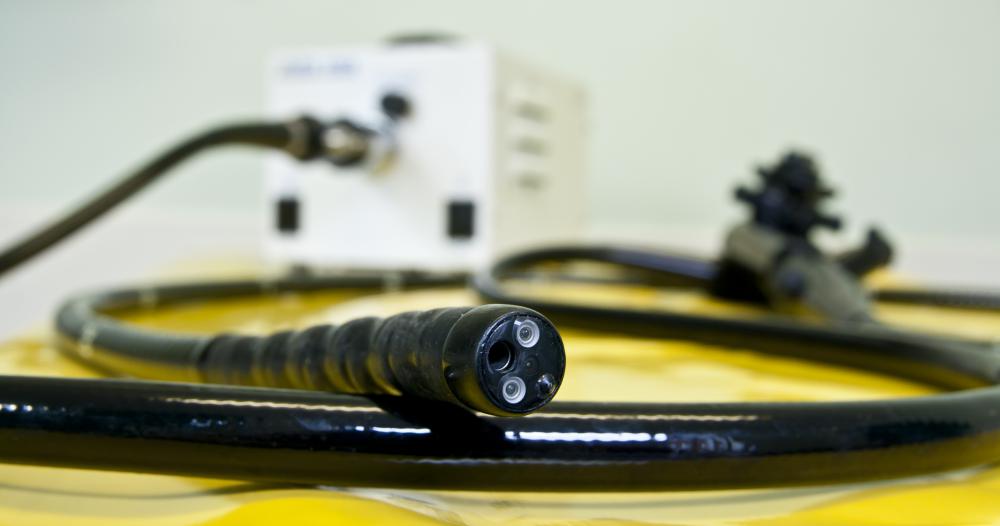
In many cases, a GI specialist will perform many of these diagnostic tests. A colonoscopy is a minimally invasive test used to examine the colon or the large intestine and the rectum for abnormalities. In most cases, the specialist will perform this test in a hospital or outpatient clinic. The test involves using a colonscope, which is a flexible tube with a camera at the end, which allows the doctor an in-depth view of the inside of the colon. A colonoscopy may be used to diagnose diseases and conditions such as colon cancer and colon polyps; often, the specialist will remove suspicious polyps and tissues during the procedure.

A gastrointestinal specialist may also perform endoscopies. An endoscopy uses an endoscope, which, like a colonscope, is a small flexible tube with an attached camera. Unlike a colonscope, which is passed through the rectum, a specialist will pass an endoscope through the mouth to gain access to the upper digestive system. The doctor will use this diagnostic test to diagnose ailments of the stomach, gallbladder, esophagus, and other upper gastrointestinal organs. He or she can use the results of the diagnostic test to come up with an effective treatment plan for a patient.

Sometimes, a gastrointestinal abnormality may only be corrected through surgery. In these cases, the specialist will typically refer a patient to a surgeon to perform the necessary procedure. He or she may present a list of qualified surgeons to the patient to choose from or recommend just one surgeon in particular. Prior to seeing a surgeon, the specialist may explain the recommended surgery to the patient, including its benefits and risks. After the surgery is completed, the patient may return to the gastrointestinal specialist to determine if ongoing treatment will be needed.
AS FEATURED ON:
AS FEATURED ON:


-
![A GI specialist focuses on diseases of the gastrointestinal tract.]() By: JackFA GI specialist focuses on diseases of the gastrointestinal tract.
By: JackFA GI specialist focuses on diseases of the gastrointestinal tract. -
![A GI specialist may perform a colonoscopy, using a camera to view the colon.]() By: ChrispoA GI specialist may perform a colonoscopy, using a camera to view the colon.
By: ChrispoA GI specialist may perform a colonoscopy, using a camera to view the colon. -
![A GI specialist may perform a endoscopy, during which a camera is inserted into a patient's mouth in order to view their upper digestive system.]() By: JackFA GI specialist may perform a endoscopy, during which a camera is inserted into a patient's mouth in order to view their upper digestive system.
By: JackFA GI specialist may perform a endoscopy, during which a camera is inserted into a patient's mouth in order to view their upper digestive system. -
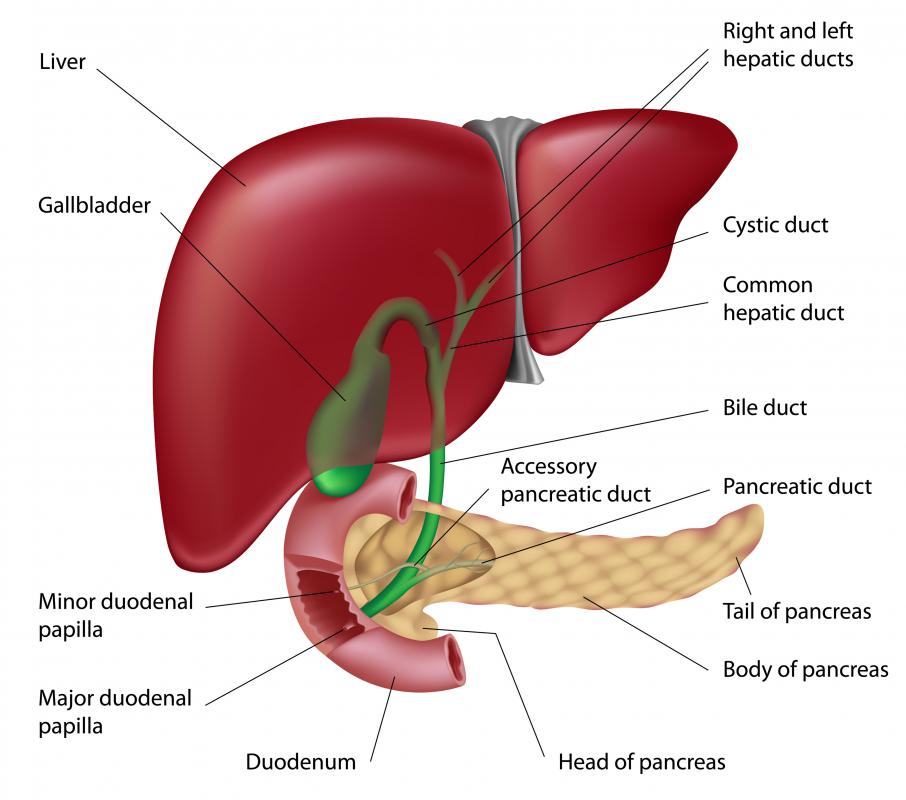
![Several abdominal organs, including the pancreas, liver, and gallbladder.]()
Several abdominal organs, including the pancreas, liver, and gallbladder. -
![GI specialists are doctors who specialize in disease of the gastrointestinal tract.]() By: Sebastian KaulitzkiGI specialists are doctors who specialize in disease of the gastrointestinal tract.
By: Sebastian KaulitzkiGI specialists are doctors who specialize in disease of the gastrointestinal tract. -
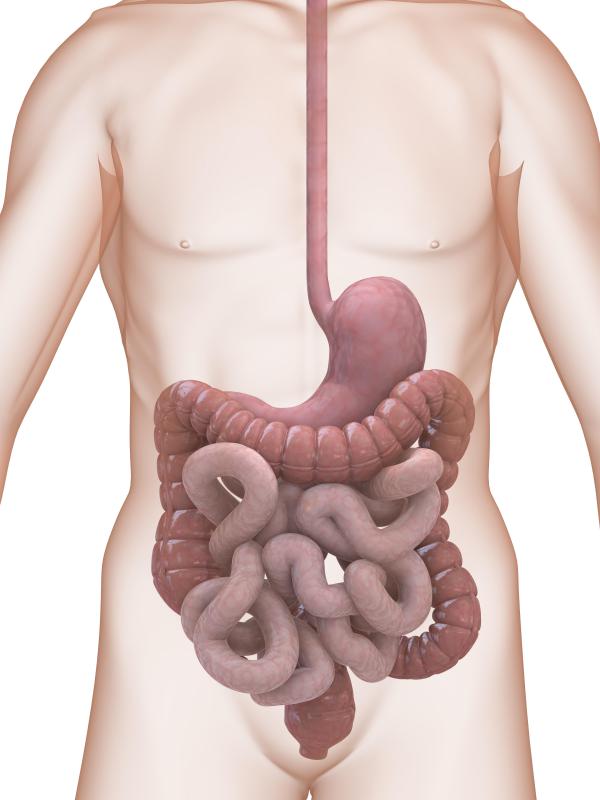
![The gastrointestinal tract is the soft tissue tube that begins at the mouth and ends with the anus and includes all the digestive organs in between.]() By: maya2008The gastrointestinal tract is the soft tissue tube that begins at the mouth and ends with the anus and includes all the digestive organs in between.
By: maya2008The gastrointestinal tract is the soft tissue tube that begins at the mouth and ends with the anus and includes all the digestive organs in between.



Discussion Comments
I saw two GI doctors, the only two I could see within two weeks. One pooh-poohed my symptoms and told me I had food poisoning (for three weeks!), wanted to set me up for a colonoscopy and told me to see the colorectal surgeon that he recommended, but would not tell me why he wanted me to see a surgeon prior to a colonoscopy, even though I asked. Huh?
The other doctor also immediately set me up for a colonoscopy in three weeks, but did not recommend a surgeon. I still have bad, but not excruciating symptoms and plan to see another doctor, who hopefully, will be better than these two.
can a GI doctor help with H. pylori?
@stolaf23 - I hate when doctors ask me things and it seems clear that he or she did not look at the files I so attentively had sent from previous doctors. I had the same trouble trying to get a stomach problem and some other issues diagnosed, and it makes the who process way more frustrating.
I went to see a GI specialist once, because it was recommended I see one to ensure I had irritable bowel syndrome. Hopefully, he was not an example of all gastroenterologists. He asked me a lot of questions that made no sense and he could have found out by looking at my files, suggested a barium test, and left. I didn't get the test, and decided to just go with the treatment my regular doctor had recommended instead.
Post your comments