
At PracticalAdultInsights, we're committed to delivering accurate, trustworthy information. Our expert-authored content is rigorously fact-checked and sourced from credible authorities. Discover how we uphold the highest standards in providing you with reliable knowledge.
What does a Geologist do?
 Mary McMahon
Mary McMahon
Mary McMahon
A geologist is someone who studies the Earth and the processes which shape it. This field, as one might imagine, is incredibly varied, and geologists can be found working in a large number of subsets within the larger field of geology. People who like the sciences and enjoy being outdoors may find geology an interesting and rewarding career, especially if they are willing to apply themselves to a sometimes extensive field of study. Employment prospects in this field vary, depending on the qualifications and interests of a geologist.
Geology is an incredibly large field. Geologists look at all of the materials which make up the Earth, studying the ways in which they are formed and altered. The field often requires the mingling of scientific disciplines, so a geologist may also be familiar with chemistry, mathematics, physics, geography, engineering, hydrology, environmental studies, urban planning, paleontology, biology, and mineralogy. In the course of his or her work, a geologist learns more about the Earth and the ways in which it can be safely and effectively utilized by humans.

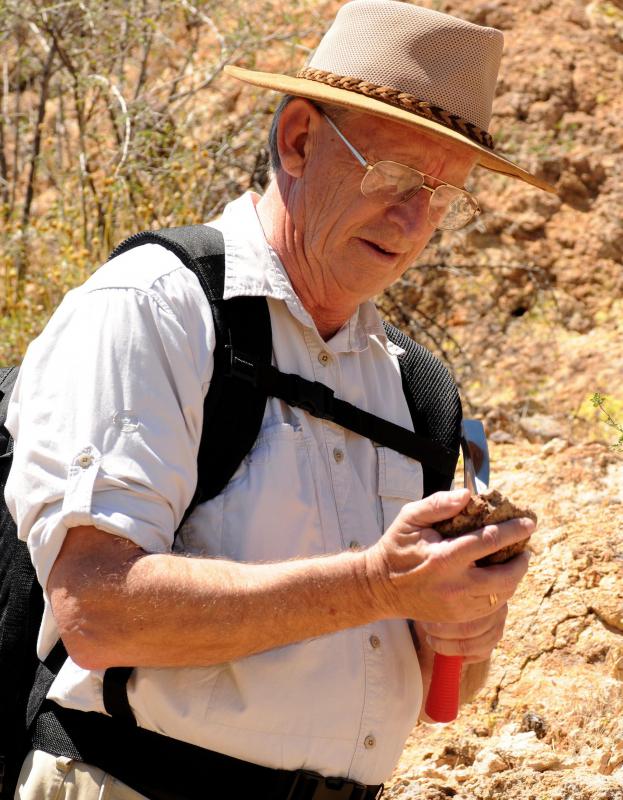
Many geologists find employment in fields which are focused on extracting useful resources from the Earth. Geologists are often sent to various sites around the world to assess their contents, determining whether or not they can be productively mined for valuable substances ranging from garnets to coal. They also work in the petroleum industry, assessing potential oil sites and assisting with their maintenance.

Other geologists are focused on the history of the Earth, using the geologic record to determine how the Earth was formed and how it continues to be shaped. These geologists look at a wide range of things from marine sediments to volcanoes to learn more about the processes of the Earth, and they can also be found working on archaeological sites, filling in the fossil record in the hopes of learning more about life on Earth.

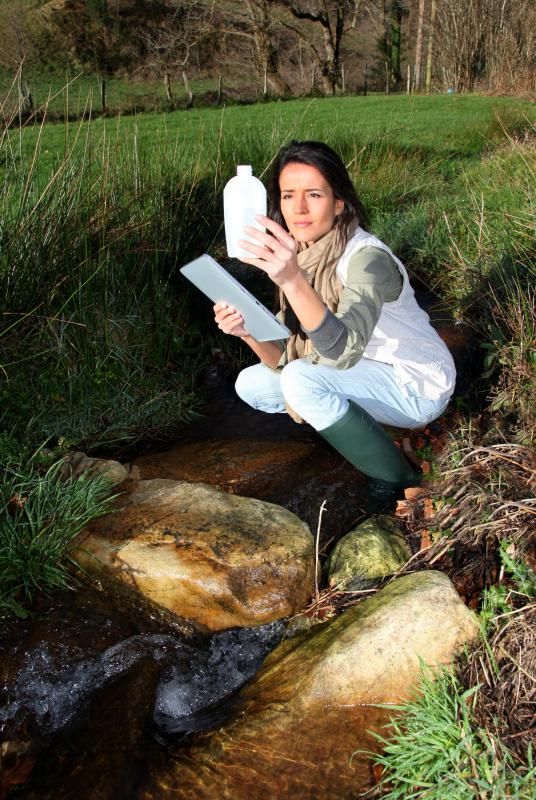
Specialists in this field can also do things like assessing land to determine whether or not it can be safely built on. A geologist may also look at the environmental repercussions of major construction or human activity on a piece of land, and geologists are often called in when major geologic events like earthquakes occur, to learn more about the event and ways in which future events could possibly be predicted.

A geologist doesn't just have to work on Earth. Planetary geologists study the geology of other planets and materials throughout the universe, hoping to learn more about how the universe was created and perhaps discovering evidence of other life forms along the way. The study of planetary geology also includes a healthy dose of things like physics and astronomy, and it can be a particularly interesting field.
Mary McMahon
Ever since she began contributing to the site several years ago, Mary has embraced the exciting challenge of being a PracticalAdultInsights researcher and writer. Mary has a liberal arts degree from Goddard College and spends her free time reading, cooking, and exploring the great outdoors.
Learn more...
Mary McMahon
Ever since she began contributing to the site several years ago, Mary has embraced the exciting challenge of being a PracticalAdultInsights researcher and writer. Mary has a liberal arts degree from Goddard College and spends her free time reading, cooking, and exploring the great outdoors.
Learn more...AS FEATURED ON:
AS FEATURED ON:


-
![A geologist is familiar with other areas, such as paleontology, biology, and fossil life.]() By: mjlp4337A geologist is familiar with other areas, such as paleontology, biology, and fossil life.
By: mjlp4337A geologist is familiar with other areas, such as paleontology, biology, and fossil life. -
![Geologists may study the formation of volcanoes.]() By: ID1974Geologists may study the formation of volcanoes.
By: ID1974Geologists may study the formation of volcanoes. -
![Most geologists are knowledgable about related fields, including ecology and environmental studies.]() By: eliaskordelakosMost geologists are knowledgable about related fields, including ecology and environmental studies.
By: eliaskordelakosMost geologists are knowledgable about related fields, including ecology and environmental studies. -
![Field geologists generally spend a considerable amount of time outdoors.]() By: goodluzField geologists generally spend a considerable amount of time outdoors.
By: goodluzField geologists generally spend a considerable amount of time outdoors. -
![A geologist collects rock samples to analyze to determine the value of a mining operation.]() By: Paul MooreA geologist collects rock samples to analyze to determine the value of a mining operation.
By: Paul MooreA geologist collects rock samples to analyze to determine the value of a mining operation. -
![Geology is a large field that includes many disciplines, such as mineralogy.]() By: jonnysekGeology is a large field that includes many disciplines, such as mineralogy.
By: jonnysekGeology is a large field that includes many disciplines, such as mineralogy. -
![Some geologists focus on the history of Earth and use the geologic record to determine how the Earth was formed and shaped.]() By: Stanisa MartinovicSome geologists focus on the history of Earth and use the geologic record to determine how the Earth was formed and shaped.
By: Stanisa MartinovicSome geologists focus on the history of Earth and use the geologic record to determine how the Earth was formed and shaped.




Discussion Comments
Probably one of the most important geologist jobs is that of the hydrologist. Hydrologists study surface and ground water resources, a field that is becoming ever more important in a world with an ever increasing population. I read a statistic somewhere that almost one sixth of the planets population does not have access to clean water resources, so figuring out better ways to manage water resources is an important global challenge.
@ Aplenty- I grew up in Hawai'i so when I was a kid I wanted to be a volcanologist. There was a small museum near where I lived, and they used to have an exhibit that included all the geologist tools a volcanologist used.
To me, being a volcanologist was the closest thing to being an astronaut without leaving the atmosphere. Volcanologists study volcanic activity and volcanic phenomenon, things that very few people will ever do. Volcanologists also wear shiny suits and work in very dangerous environments. I am currently a physical sciences major so in a sense I have followed my childhood dreams.
The article is definitely right that there are many different disciplines within the field of geology. I was surprised that the article did not mention paleontologists. This is one of the most iconic scientists that there are.
Every kid loves dinosaurs, and when you ask grade school age children what they want to be when they grow up, paleontologist is often one of the most popular answers (at least when I was a kid). Paleontology is one of the fields of science that the public has the most contact with. Paleontologists are the exploration geologists that fill the natural history museums that we all love.
Post your comments