
At WiseGEEK, we're committed to delivering accurate, trustworthy information. Our expert-authored content is rigorously fact-checked and sourced from credible authorities. Discover how we uphold the highest standards in providing you with reliable knowledge.
What does a Geographer do?
 Mary McMahon
Mary McMahon
Mary McMahon
A geographer studies locations and spaces to learn more about the world. While many people associate geography with maps, thanks to school lessons, it's actually a very broad field of study, and while it can involve the production of maps, it also involves many more topics. People often broadly divide the field into physical and human geography, and there are a number of subspecialties within these broad categories.
A physical geographer studies the surface of the Earth and natural phenomena. He or she looks at topics like terrain, the distribution of water, climate patterns, ecosystems, and the relationships between living organisms. This person might be interested, for example, in the role of seasonal weather patterns on the natural environment, or how animals have adapted to live in particularly harsh or unique terrain. These professionals are sometimes confused with geologists, but their scope of interest is wider, and they are usually less concerned with what is underneath the Earth's surface than with what's on top.

The relationship between people and places is studied by human geographers. They can study things like the urban environment, the distribution of medical services, and the impact of environment on human activities. This can include everything from why it was so challenging for Hannibal to cross the Alps to how humans can live near a wetland without causing environmental damage. Professionals in this field are very interested in human cultures and societies and the role that geography plays in human activities.

Geographers often work for government organizations. They can be involved in tasks like intelligence gathering for security agencies, epidemiology studies for departments of health, and disaster recovery in areas that have been damaged by natural or man-made disasters. Others work for private companies and organizations. A company interested in promoting the spread of electricity to rural areas in developing nations might use a geographer, for example, to map the terrain, explore distribution possibilities, and identify potential challenges.

Working in this field can be tremendously interesting, and the work is very diverse. Professionals usually hold a master's degree or higher, which allows them to develop general geography skills before selecting an area of specialty. The job requires a number of skills, including the ability to make precise observations, collect data, interpret and analyze data, and work with scientists from a wide variety of fields, from anthropology to zoology.
Mary McMahon
Ever since she began contributing to the site several years ago, Mary has embraced the exciting challenge of being a WiseGEEK researcher and writer. Mary has a liberal arts degree from Goddard College and spends her free time reading, cooking, and exploring the great outdoors.
Learn more...
Mary McMahon
Ever since she began contributing to the site several years ago, Mary has embraced the exciting challenge of being a WiseGEEK researcher and writer. Mary has a liberal arts degree from Goddard College and spends her free time reading, cooking, and exploring the great outdoors.
Learn more...AS FEATURED ON:
AS FEATURED ON:









-
![A physical geographer might investigate why the ancient general Hannibal had a difficult type moving through Alpine passes.]() By: rupbilderA physical geographer might investigate why the ancient general Hannibal had a difficult type moving through Alpine passes.
By: rupbilderA physical geographer might investigate why the ancient general Hannibal had a difficult type moving through Alpine passes. -
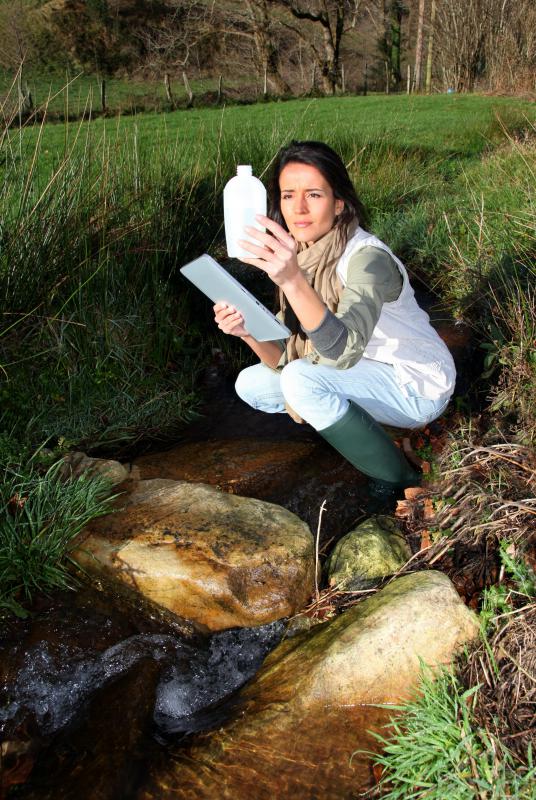
![Geographers might combine information on natural fauna with topographic data to create a report about an endangered wetland.]() By: goodluzGeographers might combine information on natural fauna with topographic data to create a report about an endangered wetland.
By: goodluzGeographers might combine information on natural fauna with topographic data to create a report about an endangered wetland. -
![A human geographer might study how a city's population is affected by its subway network.]() By: Pink BadgerA human geographer might study how a city's population is affected by its subway network.
By: Pink BadgerA human geographer might study how a city's population is affected by its subway network. -
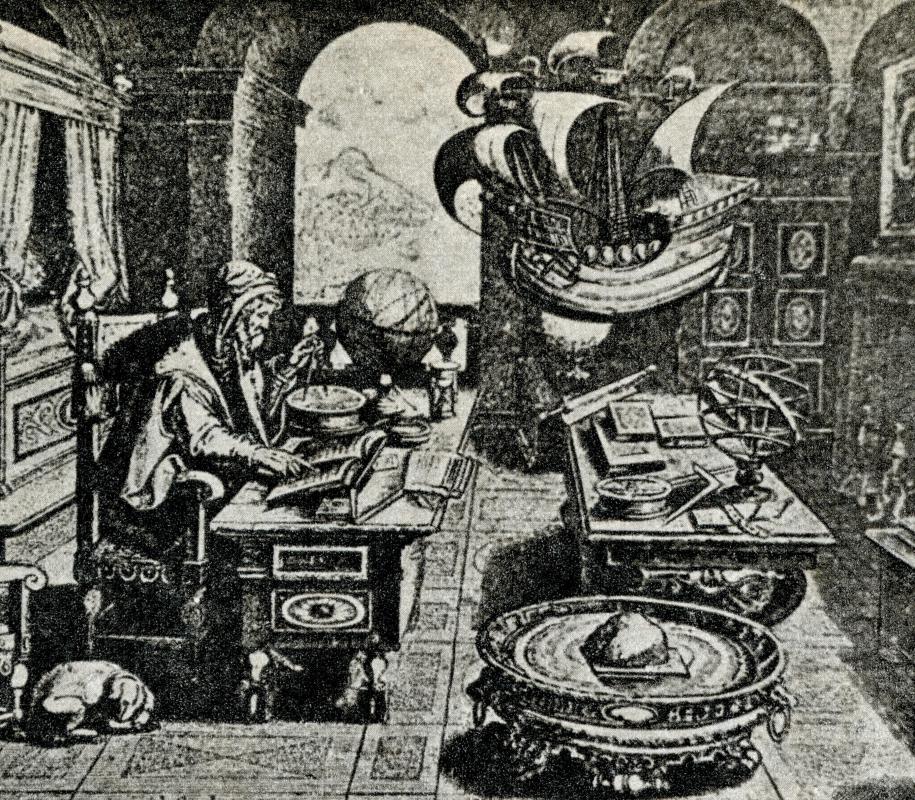
![Early geographers used reports from mariners to determine the nature of the world's human populations and physical features.]() By: JuulijsEarly geographers used reports from mariners to determine the nature of the world's human populations and physical features.
By: JuulijsEarly geographers used reports from mariners to determine the nature of the world's human populations and physical features.


Discussion Comments
Thank you, this really helped me!
They can associate us with maps. We're the ones that have to make them for one reason or another. Otherwise, great article. --Toni N.
@anon201021 - Personally I think God is intelligent enough to make creatures that are capable of adapting. I actually think of him as being the original geographer. It wouldn't be very interesting to study a world where everything remained exactly the same all the time.
The whole point of geography is to study how the world changes and adapts to different pressures in a complex system. If the system isn't complex and doesn't change, then there's not much to study and it's a very limited system.
I'm learning how to be a teacher of grade school kids at the moment and the first thing we were told about social studies is to avoid activities like coloring in maps. It's essentially pointless busy work and there is so much else that can be done, which will be both fun and a useful learning activity, particularly now that we have the internet.
There's nothing to stop your kids doing a project with another class on the other side of the world, comparing their landscapes and mapping out the similarities and differences between them and what that might mean for the people who live there. Much more memorable than crayons and a worksheet.
Animals haven't "adapted". The Lord God made them to be in that environment.
what will be a prediction for maps?
A geographer can work in diverse occupation.He can further his studies to become pilot by applying for studies in an aviation. This will require some experience from a physical geography course and a duration of one year.
Can somebody give me a little better understanding of urban geography? I'm applying for a scholarship from the Association of American Geographers and need to know about it for an essay.
Thank you!
Nicely done -- I agree, the geographer's importance is too often under-appreciated.
I like how you included a bunch of different applications of geography -- I'd just like to add one more: political geography.
Political geographers have many roles to play, and not only at election time.
Although they can play a big part in campaign strategy by mapping out the politics of a country, political geographers sometimes function in the same way as cultural geography analysts.
By analyzing something that is, when it comes down to it, very personal and cultural, political geographers can give us a new understanding of the culture of a country, and how politics are tied into other geographical and cultural factors.
I never knew that geography was such a multi-faceted discipline.
I guess, like the article said, I always associated it with 4th grade map class.
Who knew there were so many different kinds of geographer jobs out there! I guess that makes those geographical associations make a lot more sense -- I always used to get advertisements asking me to support the American Association of Geographers, and just assumed they were a kind of oddball club -- now I know better.
Post your comments