
At PracticalAdultInsights, we're committed to delivering accurate, trustworthy information. Our expert-authored content is rigorously fact-checked and sourced from credible authorities. Discover how we uphold the highest standards in providing you with reliable knowledge.
What does a Dental Hygienist do?
 Malcolm Tatum
Malcolm Tatum
Malcolm Tatum
Along with the dentist, the dental hygienist is a healthcare professional who is able to offer services after obtaining the proper licensing or credentials from the appropriate jurisdiction. In most cases, hygienists will work as part of a team located at a dentist’s office, performing certain tasks that involve direct patient care.
It is important to note that, in nearly all locations, a dental hygienist has to obtain formal training and education before it is possible to be licensed. Generally, most jurisdictions require at least a two year degree in dental hygiene, as well as a number of science related courses as part of the program. A hygienist will usually have taken courses that provide background in oral anatomy, pharmacology, nutrition, and periodontology. Advanced education, involving four to six years of study, is growing in popularity. With advanced training, a student is able to seek a broader range of certification to allow him or her to engage in more procedures related to dental care.

Perhaps the single most common group of tasks associated with the profession involves preventive dental care. Teeth cleaning is often taken care of by the dental hygienist. Along with cleaning, the hygienist often engages in sealings, root planing, and in educating then patient in general oral hygiene. In some places, it has become common in dentistry clinics for the hygienist to handle teeth bleaching procedures as well.

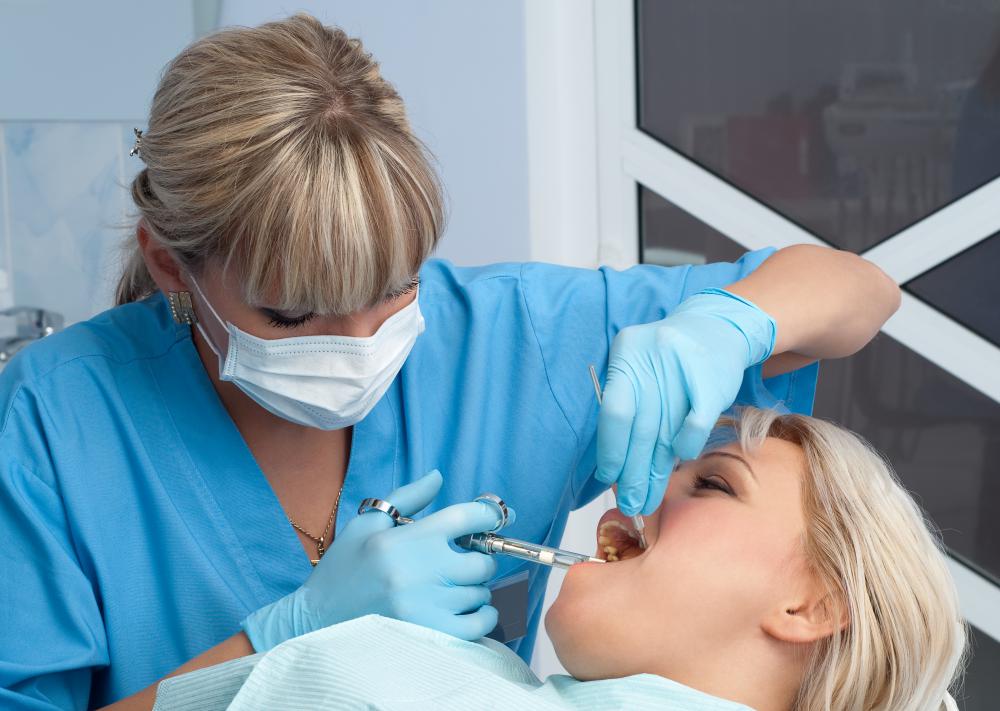
This dental professional may also administer local anesthesia. While some locations limit the types of anesthesia that may be administered by a hygienist, this appears to be changing as more support tasks are relegated from the dentist to the hygienist. This allows the dentist time to check on other patients and prepare for the procedure as the anesthesia is taking effect.

For many of the tasks that a dental hygienist is authorized to perform, there is no need for supervision by a dentist. In other situations, local regulations may require at least partial supervision. As more hygienists opt for higher degrees of certification, however, this is changing. One example is in the administration of a few specified types of fillings, which were once considered the province of the dentist only. Expanding the range of responsibilities that a hygienist may provide as part of the dentist office staff often means patients are seen and treated more quickly than in times past.
Malcolm Tatum
After many years in the teleconferencing industry, Michael decided to embrace his passion for trivia, research, and writing by becoming a full-time freelance writer. Since then, he has contributed articles to a variety of print and online publications, including PracticalAdultInsights, and his work has also appeared in poetry collections, devotional anthologies, and several newspapers. Malcolm’s other interests include collecting vinyl records, minor league baseball, and cycling.
Learn more...
Malcolm Tatum
After many years in the teleconferencing industry, Michael decided to embrace his passion for trivia, research, and writing by becoming a full-time freelance writer. Since then, he has contributed articles to a variety of print and online publications, including PracticalAdultInsights, and his work has also appeared in poetry collections, devotional anthologies, and several newspapers. Malcolm’s other interests include collecting vinyl records, minor league baseball, and cycling.
Learn more...AS FEATURED ON:
AS FEATURED ON:


-
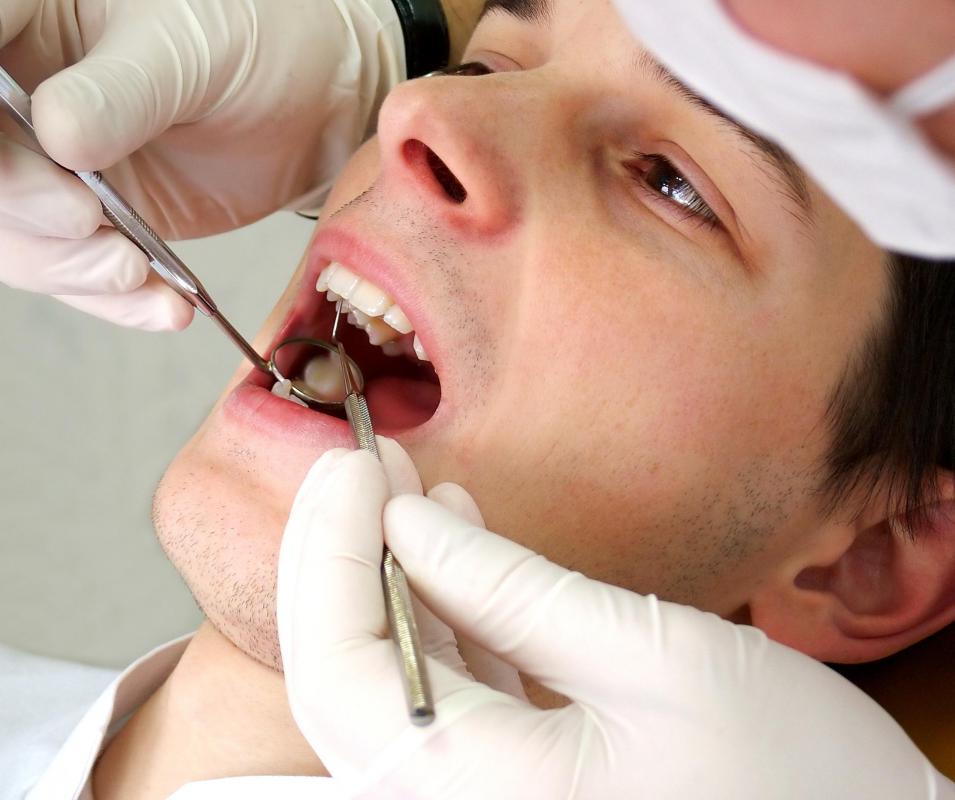
![A dental hygienist cleans a patient's teeth.]() By: Sandor KacsoA dental hygienist cleans a patient's teeth.
By: Sandor KacsoA dental hygienist cleans a patient's teeth. -
![A dental hygienist administering local anesthesia.]() By: starushA dental hygienist administering local anesthesia.
By: starushA dental hygienist administering local anesthesia. -
![Dental hygienists use several tools during a routine dental cleaning.]() By: Sebastian DudaDental hygienists use several tools during a routine dental cleaning.
By: Sebastian DudaDental hygienists use several tools during a routine dental cleaning. -
![Dental hygienists may be able to recommend types of toothpaste depending on a patient's tooth needs.]() By: sumire8Dental hygienists may be able to recommend types of toothpaste depending on a patient's tooth needs.
By: sumire8Dental hygienists may be able to recommend types of toothpaste depending on a patient's tooth needs.


Discussion Comments
My daughter going to school as an dental hygienist. There's a lot of studying, plus while in the military, she would clean patients'
teeth and do other procedures. She been doing this for a couple of years in the military, plus she's continued going to school. She will graduate in one year.
You have to be accepted in the program after you finish the class and they limit how many students they will take per year.
I think personally that a dental hygienist is pretty cool because they get people's mouths clean and healthy and they get a good pay. But after all, if people enjoy what they do for a living, you should never call it a job.
My mom has worked as a dental hygienist for almost 30 years and she loves it. She gets to work with different people all day long, many of whom she has known for years. Her work is interesting, and varied, and valuable to society. She makes a good salary and she has a comfortable work environment with paid benefits and time off.
When you think about it like that, being a dental hygienist sounds pretty great.
How do I pick the best dental hygienist schools? There are so many of them and I have heard so many horror stories of people who take out tons of loans and then get bad training and struggle to find jobs.
Is there an objective way to evaluate schools? There is so much marketing, it is hard to get a straight message.
Well I'm currently in school now for dental hygiene, and i heard that the state is supposed to be cutting all insurance so i just want to know if this is a waste of two years or should i follow up with the program.
Crispety-Wow- I did not know that the dental hygienist pay was so high.
I think that the dental hygienist career is really worthwhile and students in college that are unsure of what to do with their life should consider this field.
Having the ability to earn up to $75,000 a year eventually makes the dental hygienist income among one of the highest paying fields for trade school graduates.
Mutsy- Dental Hygienist can earn up to $75,000 a year and many work part time hours. The dental hygienist salary is high compared to the amount of schooling involved.
The career prospects for this job are excellent and the work is interesting. Many dental hygienists learn how to take x-rays, administer anestisia, and clean their patient’s teeth.
They usually work in a comfortable setting and typically only work about four and sometimes five days a week. Some dental hygienists work more.
A dental hygienist career is a great one that is very much in demand.
Dental hygienist jobs are abundant and the dental hygienist programs usually range from eighteen months to two years. Many community colleges and technical schools offer dental hygienist programs.
Many dental hygienist courses involve the study of dental pathology, dental hygiene, as well as all aspects of periodontal disease.
Post your comments