
At PracticalAdultInsights, we're committed to delivering accurate, trustworthy information. Our expert-authored content is rigorously fact-checked and sourced from credible authorities. Discover how we uphold the highest standards in providing you with reliable knowledge.
What does a Criminal Investigator do?
A criminal investigator is a law enforcement professional who attempts to solve crimes, identify and detain suspects, and prevent future instances of criminal activity. Professionals may work alone or in investigative teams to uncover facts about a case. An investigator may specialize in analyzing evidence and information from a crime scene, conducting interviews and searches, or performing surveillance. Depending on a person's specialty, the responsibilities and requirements of the job can range greatly.
Experts who specialize in crime scene investigation are often degree-holding laboratory technicians and technologists who work to uncover the details of a crime. Crime scene investigators may carefully examine a scene and collect evidence such as weapons, clothing samples, and fingerprints. Investigators frequently bring the evidence to a laboratory for intensive studies and experimentation. Among many tasks, they may determine ballistics information by performing firearm evaluations or confirm identities by extracting DNA from clothing samples. They write reports based on their findings and frequently appear in courts as expert witnesses.

Some criminal investigators engage in covert surveillance operations to expose criminal activity. Such investigators may install and monitor surveillance equipment or wear disguises to find out more about a suspicious person or organization. They may be required to follow suspects, carefully documenting their whereabouts and conversations. Investigators may also spend a large amount of time tracing phone calls and performing exhaustive background checks and Internet database searches.

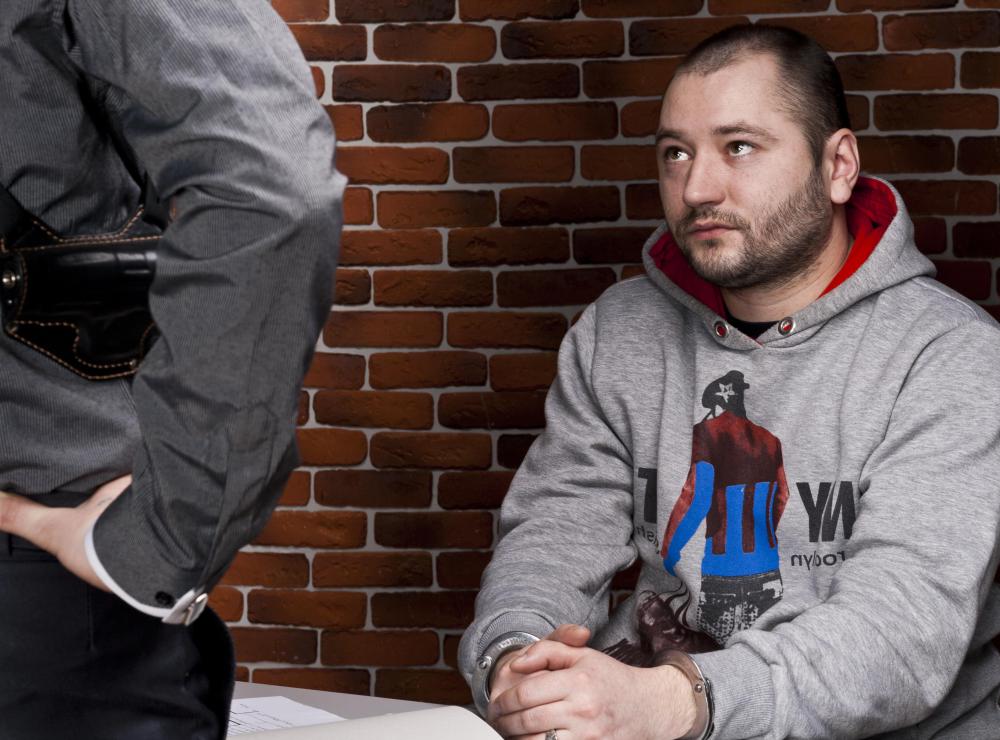
When a suspect is detained, a investigator often interrogates him or her to find out more facts about a case. Investigators may also interview witnesses and other people who may have relevant knowledge about the suspect or crime scene. After obtaining a search warrant, a team may explore a suspect's home, business, or property. Searches frequently reveal new pieces of evidence, such as stolen items, money, letters, and weapons, that confirm a suspect is involved with a crime.

To become a criminal investigator, a person must typically have at least a high school diploma or GED. Most police bureaus at local, state, and federal levels of government prefer to hire candidates with bachelor's degrees and experience in the field. Since many crime scene professionals perform laboratory research, they benefit from obtaining computer science, biology, and chemistry degrees. A degree in criminal justice or police science is helpful to other types of jobs. Those with previous law enforcement, security, or military experience generally have better chances of obtaining work in this profession.
AS FEATURED ON:
AS FEATURED ON:


-
![Criminal investigators gather evidence at crime scenes.]() By: ia_64Criminal investigators gather evidence at crime scenes.
By: ia_64Criminal investigators gather evidence at crime scenes. -
![A crime scene investigator examines a crime scene and gathers evidence.]() By: corepicsA crime scene investigator examines a crime scene and gathers evidence.
By: corepicsA crime scene investigator examines a crime scene and gathers evidence. -
![Laboratory technicians can analyze DNA samples and other criminal evidence.]() By: anyaivanovaLaboratory technicians can analyze DNA samples and other criminal evidence.
By: anyaivanovaLaboratory technicians can analyze DNA samples and other criminal evidence. -
![A criminal investigator is responsible for interrogating suspects.]() By: donserhioA criminal investigator is responsible for interrogating suspects.
By: donserhioA criminal investigator is responsible for interrogating suspects. -
![Officers usually keep on the lookout for murder witnesses during an investigation.]() By: ia_64Officers usually keep on the lookout for murder witnesses during an investigation.
By: ia_64Officers usually keep on the lookout for murder witnesses during an investigation. -
![A criminal investigator may be responsible for following someone's movements.]() By: endostockA criminal investigator may be responsible for following someone's movements.
By: endostockA criminal investigator may be responsible for following someone's movements.




Discussion Comments
I'm taking a criminal justice class currently and to all of you who say you want to do it because of what you saw on a TV show, it's way different in real life. There is a huge difference between the glamour of television and the horrors of real life situations. Just be careful and know what you are getting yourself into.
This is a great article. I am 14 years old and I watch "Criminal Minds" all day long. I love that show and I want to be an investigator. That's my dream.
I don't see anything here related to the physical requirements of the job. If you are interested in being a sworn law-enforcement investigative officer you need to be fit, able to control violent suspects, willing to engage in deadly force, train and qualify in firearms, and able to effect arrests of resisting subjects. The job is not like TV or movies. Talk to someone who does the job. Also, the federal government does have a maximum hiring age.
You are never too old to be an investigator. On the contrary, age and wisdom can be a valuable asset. The best attitude is to always continue learning and growing. I have wanted to be one since I was in 10th grade at 14 years old.
I have been a licensed PI since 2000. Great article and explanation of what the career field is like and requires. Not an easy path, but very rewarding and interesting. I've never been bored. Good luck all you future investigators. Respectfully, "The RightPI"
i love this article. I am fourteen and wondering what i would like to be when i grow up and after reading this article, I decided being a criminal investigator is what i want to do. -Brenda
In which colleges can I study criminal investigation?
I am a Criminal Investigator, and enjoy every minute of it, and this is a very good article explaining the nature of the job.
This is a very good article that explains what a criminal investigator does. Thank you for creating this website you really helped me.
i agree! this article give you enough information about this career and it is very helpful to someone who is still not sure which path to go for. thank you for providing me with the information i needed!
I am 12 years old and I love watching CSI and things like that and since watching I want to become an investigator really bad. It may have even been since I was about 10 years old since I wanted to be one.
I'm 44 years old and I'm thinking about going back to School to become a criminal investigator. Am I too old?
I'm seventeen and taking university courses. I've always wanted to become a criminal investigator or CSI. It's what I've wanted to do since I was ten!
This article gave me a general idea of what I need to do. Thank you!
I am 16. I am taking college courses now and i want to be a criminal investigator.
I am only 11 but i would love to be a investigator.
I'm 19 and I am going to become a criminal investigator! I really never wanted to until three years ago. I want to do this because of my brother. He didn't deserve what he got.
i am 15 and i love to watch criminal minds. that's when i knew i wanted to be a criminal investigator.
I'm only 14, but I have always wanted to be a criminal investigator and I honestly believe I'd be a pretty good one.
This is a great article!
This is one of the articles that gives enough information in becoming a criminal justice major.
Post your comments