
At PracticalAdultInsights, we're committed to delivering accurate, trustworthy information. Our expert-authored content is rigorously fact-checked and sourced from credible authorities. Discover how we uphold the highest standards in providing you with reliable knowledge.
What Does a Clergyman Do?
A clergyman is generally an ordained member of a religious order who is charged with aiding in the spiritual well-being of his congregation. Members of the clergy are trained in the various rituals of their particular religion or sect and are called on to perform these rites at particular functions or specific landmark events such as birth, coming-of-age, marriage and death. Members of the clergy often are asked to teach and spread the basic concepts of their religion to their congregation or the public. Many clergymen also are spiritual counselors who aid people with personal or social problems, and they offer encouragement to the ill and those experiencing hardship.
A clergyman in the Western tradition is normally required to undergo training that results in being ordained and grants him official recognition by the church to perform the rites and teach the precepts of the church. Most clergymen become ordained by attending seminary — a school specializing in the teachings of the church that founded it — and taking certain vows and completing rites specific to the religion or sect. In modern times, many clergy also earn degrees in psychology, mental health or counseling as part of the ordination process.

Once a clergyman is ordained, he is usually assigned to a specific congregation so he can attend to the needs of its members. In most Western religious traditions, clergymen perform the ceremonies and rites related to the spiritual life of the congregation. Depending on the denomination, some of these ceremonies and rites include baptism, the administration of sacraments, marriage, circumcision, confession and funerals or last rites.

One of the main responsibilities of a clergyman is to teach the doctrine of his church. This may come in the form of preaching from a pulpit, conducting study classes or overseeing programs that teach the doctrine to the congregation’s children, such as in the case of Catholic catechism classes. Many Western religions believe in spreading their teachings through proselytizing or evangelism. Clergymen often organize and lead the programs churches utilize to spread their teachings to others.

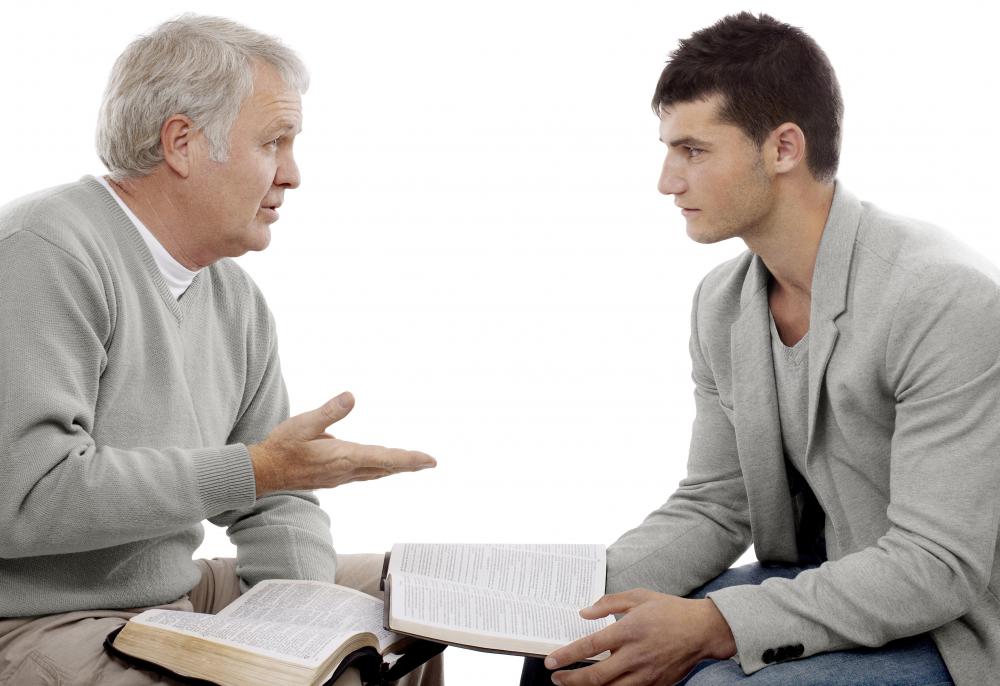
A clergyman also is often called on to deliver encouragement or aid to those suffering from an illness or hardship. Clergymen may minister at hospitals, homes for the aged, orphanages or prisons. In many religions, clergymen oversee efforts by the church to help provide for the material needs of the elderly or the poor. Aid from the clergy sometimes comes in the form of advice or counsel. Many clergymen meet with members of their congregation to help them make decisions, overcome problems or to offer relationship counseling for marriages or parents and children.
AS FEATURED ON:
AS FEATURED ON:


-
![In the Roman Catholic tradition, a priest converts bread and water into the body and blood of Christ as part of the sacrament of communion.]()
In the Roman Catholic tradition, a priest converts bread and water into the body and blood of Christ as part of the sacrament of communion. -
![Within most traditions, a new member of the clergy must be ordained by a senior clergy figure.]() By: Ryan BasilioWithin most traditions, a new member of the clergy must be ordained by a senior clergy figure.
By: Ryan BasilioWithin most traditions, a new member of the clergy must be ordained by a senior clergy figure. -
![In some instances, a deacon is a member of the clergy who has been ordained.]() By: biker3In some instances, a deacon is a member of the clergy who has been ordained.
By: biker3In some instances, a deacon is a member of the clergy who has been ordained. -
![A clergyman may offer religious counseling.]() By: georgemuresanA clergyman may offer religious counseling.
By: georgemuresanA clergyman may offer religious counseling. -
![A clergyman often is responsible for the ceremonies and rites of a congregation.]() By: James SteidlA clergyman often is responsible for the ceremonies and rites of a congregation.
By: James SteidlA clergyman often is responsible for the ceremonies and rites of a congregation. -
![A clergyman may perform wedding ceremonies.]() By: photographmdA clergyman may perform wedding ceremonies.
By: photographmdA clergyman may perform wedding ceremonies. -
![A clergyman might lead Bible study groups.]() By: Michael FlippoA clergyman might lead Bible study groups.
By: Michael FlippoA clergyman might lead Bible study groups. -
![A clergyman might offer couples counseling for struggling marriages.]() By: MartinanA clergyman might offer couples counseling for struggling marriages.
By: MartinanA clergyman might offer couples counseling for struggling marriages.




Discussion Comments
I belong to a very large church, and we have a senior pastor and several assistant pastors. Each one handles different needs of the church. One of the assistant pastors is a licensed marriage counselor, and another is involved with a local food bank. The senior pastor has to write sermons for three services on Sunday, plus teach Bible study on Wednesday nights. The assistant pastors also perform ceremonies like weddings and funerals if the senior pastor is committed to another project.
I once thought of becoming a clergyman myself, but I changed my mind after spending a year at a seminary. The people who really succeed in the ministry are much more focused on the well-being of others. I was still young and a little self-absorbed at the time. I still admire anyone who's willing to take on all the responsibilities of a clergyman regardless of the personal sacrifices.
I rarely use the word "clergyman" to describe my pastor, but I will say he's a member of the clergy. The way our church denomination operates, ordained ministers are assigned to churches during an annual conference. Sometimes the decision is based on the needs of a particular church, while other times it's more of a promotion or demotion for the ministers themselves. A promising young pastor might start out at a really small church and then get assigned to a larger congregation in a few years.
My pastor does a lot of things during the week. He is in charge of two churches, so he has to prepare sermons for both of them. He also visits people at the hospital, usually before or after surgeries. He has an office in the bigger church, so he sometimes counsels people there. The parsonage is right across the street, so he also invites people over for a meal and a prayer session. He does take some personal time off, but he is never out of communication.
Post your comments