
At SmartCapitalMind, we're committed to delivering accurate, trustworthy information. Our expert-authored content is rigorously fact-checked and sourced from credible authorities. Discover how we uphold the highest standards in providing you with reliable knowledge.
What do Grocery Stores do with Leftover Food?
 Mary McMahon
Mary McMahon
Mary McMahon
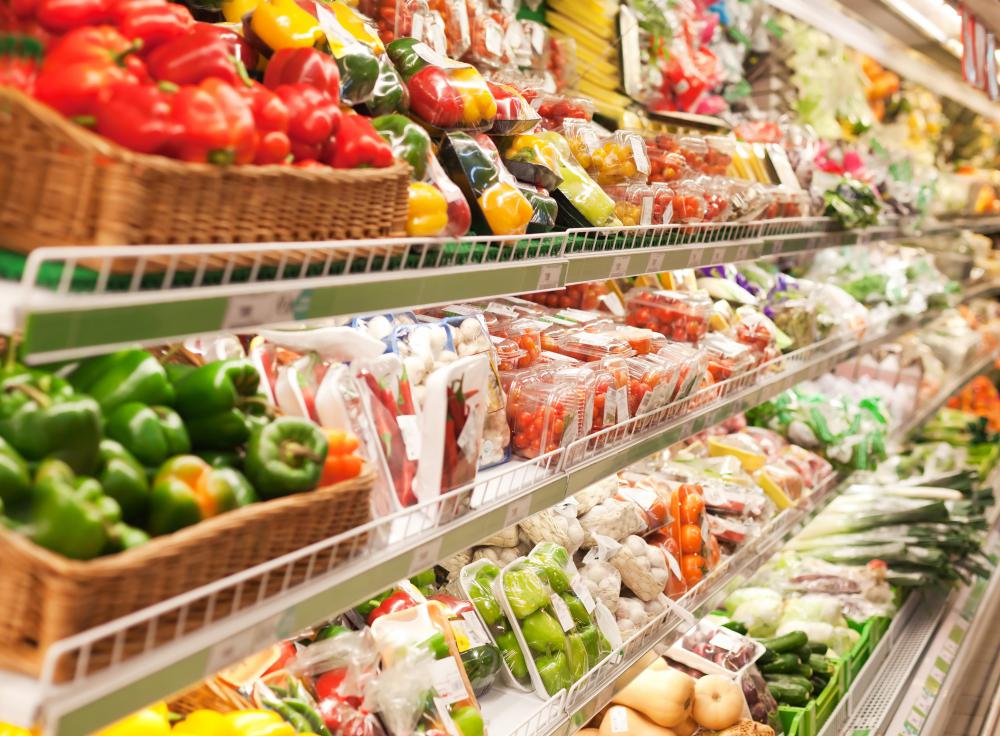
Grocery stores order large amounts of food, usually from centralized distributors. Packaged foods have expiration dates, and in most areas, the law prevents stores from selling expired foods. This is for consumer safety, to ensure that no one purchases food that has gone bad. Produce does not have an expiration date, but will begin to mold, rot, wilt, or look unsightly. As a general rule, grocery stores try to reduce the amount of leftover food that they end up with, since unsold food generates no money for the store. There are a number of techniques used to reduce expired food, and to dispose of it, but it is often donated, composted, or thrown out.
The stocking staff of a grocery store is also responsible for pulling expired or damaged foods from the shelves, and they keep an eye on upcoming expiration dates. Often, a grocery store will place food on sale before it expires, to encourage consumers to purchase it. Shoppers should be aware of this when purchasing sale food, and always check expiration dates. This may not be an issue for people who plan to use the food quickly, but for those who are purchasing sale food to eat later, this could be important.

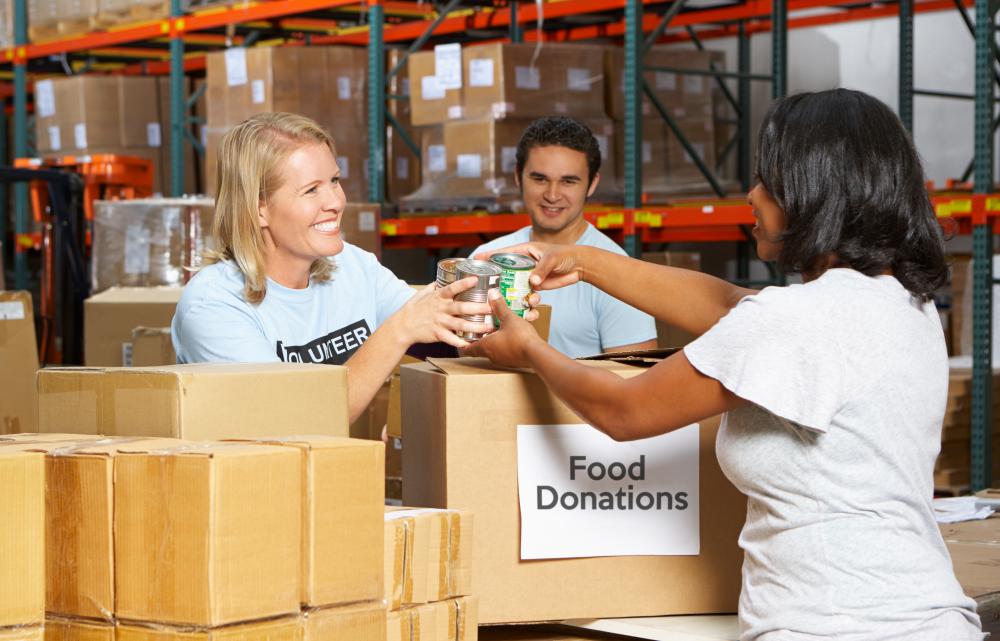
If a grocery store suspects that it is going to end up with leftover food, it may donate products that are about to expire to charities. Food banks and homes for the elderly both benefit from donations of food that is perfectly safe, but was purchased in excess. Generally, a grocery store donates leftovers that have at least two weeks before they expire to ensure that they will be used in time.

When it comes to produce, a grocery store may donate edible but unsalable produce to charity or a zoo. Zoo animals often benefit from donations of usually expensive food items that are unsalable for one reason or another. Some grocery stores may donate produce items to animal farms, or sell the excess cheaply to farmers to feed their stock. Many grocery stores also get rid of bread and dairy products this way.

If produce starts to go bad, a grocery store may attempt to compost it. Many grocery stores have access to separate greenwaste collection so that they can compost produce, bread, and some other products. The leftover food is tossed into a large dumpster, which is periodically emptied and taken to a composting facility. Other food is thrown out, sometimes in locked dumpsters to prevent liability issues related to dumpster diving.
Mary McMahon
Ever since she began contributing to the site several years ago, Mary has embraced the exciting challenge of being a SmartCapitalMind researcher and writer. Mary has a liberal arts degree from Goddard College and spends her free time reading, cooking, and exploring the great outdoors.
Learn more...
Mary McMahon
Ever since she began contributing to the site several years ago, Mary has embraced the exciting challenge of being a SmartCapitalMind researcher and writer. Mary has a liberal arts degree from Goddard College and spends her free time reading, cooking, and exploring the great outdoors.
Learn more...AS FEATURED ON:
AS FEATURED ON:









-
![A produce manager must regularly check fruits and vegetable for decay.]() By: Art AllianzA produce manager must regularly check fruits and vegetable for decay.
By: Art AllianzA produce manager must regularly check fruits and vegetable for decay. -
![Grocery stores often donate food to charitable organizations.]() By: Monkey BusinessGrocery stores often donate food to charitable organizations.
By: Monkey BusinessGrocery stores often donate food to charitable organizations. -
![Zoos frequently benefit from grocery store leftovers.]() By: kmiragayaZoos frequently benefit from grocery store leftovers.
By: kmiragayaZoos frequently benefit from grocery store leftovers. -
![Homes for the elderly are sometimes recipients of leftover grocery store food.]() By: Monkey BusinessHomes for the elderly are sometimes recipients of leftover grocery store food.
By: Monkey BusinessHomes for the elderly are sometimes recipients of leftover grocery store food. -
![Homeless shelters also benefit regularly from leftover grocery store food.]() By: wjarekHomeless shelters also benefit regularly from leftover grocery store food.
By: wjarekHomeless shelters also benefit regularly from leftover grocery store food. -
![Grocery stores may toss leftover food into locked dumpsters.]() By: Alexandr BlinovGrocery stores may toss leftover food into locked dumpsters.
By: Alexandr BlinovGrocery stores may toss leftover food into locked dumpsters. -
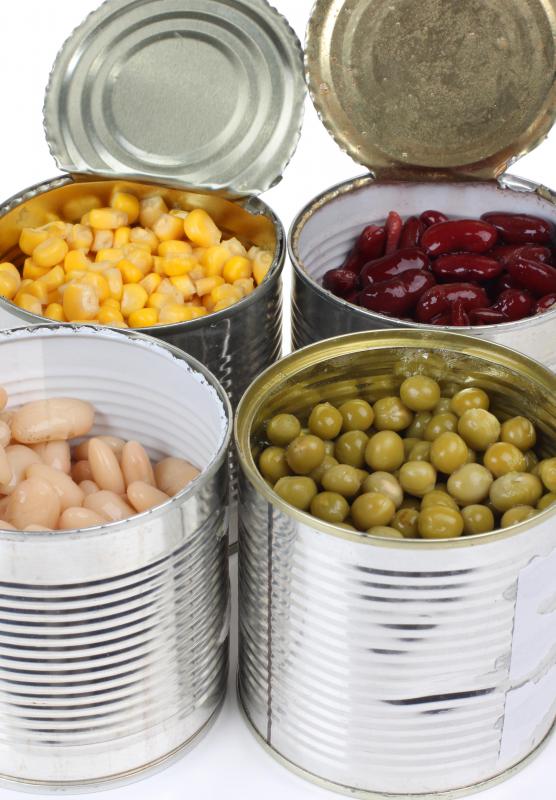
![Leftover canned goods are usually donated.]() By: Ðиколай ÐÑигоÑÑевLeftover canned goods are usually donated.
By: Ðиколай ÐÑигоÑÑевLeftover canned goods are usually donated.




Discussion Comments
I really don't understand why they started dating food to being with. Anyone with common sense knows when something is bad.
Can food last a lot longer than dated if not damaged? Like milk if stored in the bottom of the fridge stays colder, etc.
No one should go hungry in any country that throws food away. Some dumpsters don't need to be filled with food when it could have been given to those who can't make it to the end of the month, or have no money at all to purchase food they need.
Why it not mentioned that grocery stores throw away (dispose of) food that are leftovers? Is that true or a conspiracy?
They might donate it, but they get to write it all off at the marked up price, which is why they never drop prices. Even though their prices are too high, it is worth more to them to throw it out than to sell it for a decent price!
I'm glad that some grocery stores donate the food to places that need it. There is a store in my hometown that frequently gives leftover food to a homeless shelter, where it is cooked or consumed right away. It doesn't have time to spoil.
@kylee07drg – It's good that your grocery store puts all the sale items in one spot. That would make it easier to catch the expiration date.
My grocery store just puts all of the meat in one area. The ones marked with the orange stickers are the packages that are almost out of date. Unfortunately, I didn't notice this the first time I bought steak, since it was right in with the steak that had just been cut.
I intended to cook the steak three days later, so I put it in the refrigerator instead of the freezer. When the time came to cook it, I opened up the package, and my nose was met with the foul odor of spoiled meat.
It never even made it to the pan, which I guess is a good thing, because it probably would have given us all food poisoning. I do wish that this store would designate a special section for items that are about to expire, though, because it's too easy to make this mistake.
If you have a large family like I do, then you can't keep food around for very long. So, I don't have to worry when I buy food that is marked at a deep discount because it is about to expire. I will be using it right away, anyway.
Unlike most people, I go to the grocery store nearly every day. I buy what I need to make the meal that night, and it is usually gone by the next day.
It's great to be able to buy meat and bread this way. My family can go through a loaf of bread in one night if we are having buttered garlic bread or some form of toast, and we go through an entire package of chicken or beef in one meal. I save a lot by buying off the nearly expired rack!
I'm really curious about what liability issues could possibly arise from dumpster diving! Obviously, the store didn't put the food out so that people could jump into the trash and get it. How on earth could anyone sue the store because they hurt themselves while going through their trash?
Not true. Many food banks buy expired frozen juices, meats and boxed foods or recently expired perishable foods for sale to low income families. I often shop there and most of the food is fine. You just need to be knowledgeable about what you are looking for.
Anon142877: I really don't care if they get write offs. To me, it's better than just throwing it away. Anything that feeds people who need to be fed is OK with me.
I think it is a shame that grocery stores charge a ridiculous amount for food items and then if it doesn't sell, it's disposed of in the ways mentioned and the stores write it all off as a loss. It is wasteful and greedy on the heels of many families who struggle to survive.
I saw a video on this very subject you guys are currently discussing (dumpster diving). In short, the lady that was being interviewed was middle to upper middle class and had not paid for groceries in, literally, years. I, personally, think it's disgusting, but to each his own. Simple food is the best food to have around and it doesn't matter how you find it, as long as you don't get food poisoning, I suppose you're good.
@win199 - The truth is that this happens a lot more than you would think. While it might be great for people to have a few leftover recipes in their repertoire, that's just not a possibility with bulk orders from grocery stores. The trick is to really know and understand food and what it's worth after it expires. For example, many foods simply lose nutrients after their date rather than start "rotting."
@laluna - This is actually very true and very disgusting at the same time! There are various reasons why people would go dumpster diving, but I would be so cautious of the leftover or expired food's safety if you know what I mean.
I heard of people who are experts in their particular area and regularly check the dumpsters for edible products.
Some might do it out of need, while others do it because they can not see good food going to waste.
Post your comments