
At TheHealthBoard, we're committed to delivering accurate, trustworthy information. Our expert-authored content is rigorously fact-checked and sourced from credible authorities. Discover how we uphold the highest standards in providing you with reliable knowledge.
What do Elevated Platelets Indicate?
Elevated platelets usually indicate that a person or animal is suffering from either reactive thrombocytosis or essential thrombocythemia, two fairly serious blood conditions. When they’re caught early enough, though, both of these are usually pretty easy to treat. There are many different factors that control the platelet count in blood. A proper balance is an important part of overall health, and because of this doctors and other care providers usually monitor blood chemistry as part of routine patient check-ups. Tests can also be ordered if there’s some reason to suspect a platelet count problem.
Blood Test Basics

Health care providers typically use a test known as a complete blood count (CBC) to measure the number of red and white blood cells and platelets within a particular blood sample. Blood is a fairly complex substance that requires a pretty strict balance of elements to function properly. The number of platelets in a healthy patient ranges from 150,000 to 400,000 per microliter. When the results of a platelet count exceed this amount, the patient is considered to have elevated platelets.

Platelets, also known as thrombocytes, are the smallest component produced by the bone marrow, which is the tissue found inside the bones where all blood cells are produced. Platelets stick together through a process known as aggregation and form clots in order to stop bleeding. Having too few platelets can cause excessive bruising and bleeding, but having too many isn’t usually much better. A patient with too many platelets may form clots too easily within the veins and arteries. These can block blood flow, causing life-threatening problems that may include heart attack, stroke, or pulmonary embolism.
Reactive Thrombocytosis

Reactive thrombocytosis, also known as secondary thrombocytosis, is the most common cause of elevated platelets. This disorder occurs in response to other diseases or conditions. These may include chronic inflammatory conditions, acute infection, some anemias, cancer, and other blood disorders. In most cases, the effects of reactive thrombocytosis are mild and typically resolve when the underlying disease or condition is adequately treated. These patients generally have platelet counts of less than 1,000,000 per microliter.
Essential Thrombocythemia

A more serious cause is essential thrombocythemia (ET), also known as primary thrombocythemia. If no other precipitating condition can be found, doctors usually perform a bone marrow biopsy to look for evidence of ET. This is particularly true in patients with counts factoring well into the millions per microliter. Platelet aggregation studies to evaluate the ability of the platelets to clot are also typically ordered to identify any abnormalities.

ET is a disease that originates in the bone marrow and causes an overproduction of megakaryocytes, the large cells that break into the fragments that form platelets. The platelets produced by this faulty mechanism do not always function in a normal manner. Whereas the patient diagnosed with reactive thrombocytosis must watch for problems caused by excess clotting, elevated platelets in a patient with ET may cause abnormal clotting or bleeding. As a result, it’s really important for patients to receive the correct diagnosis in order to know what to watch for and when to be concerned.
Treatment Options
Once a physician has received all results of testing and has had a chance to evaluate and examine the patient, he or she will typically make a diagnosis and outline a possible treatment plan. A lot of what this plan entails will depend on the specific cause, as well as the person’s overall health and other preexisting conditions. In most cases, treatment for reactive thrombocytosis involves treating the underlying disease first, which can be complex or relatively simple depending on the circumstances. Once this condition is resolved or alleviated, platelet count will normally stabilize.
Treatment of ET is often a bit more streamlined, but can also be more unpredictable. It may consist of aspirin therapy and medications to reduce platelets, or other lifestyle changes and therapies designed to restore some degree of blood balance. ET is not usually curable, and the disease predisposes a small percentage of patients to develop acute leukemia and fibrosis of the bone marrow. Both of these are much more serious conditions that can be life threatening if not properly handled.
AS FEATURED ON:
AS FEATURED ON:


-
![Having too few platelets may cause excessive bruising.]() By: Kondor83Having too few platelets may cause excessive bruising.
By: Kondor83Having too few platelets may cause excessive bruising. -
![Elevated platelets in a person's blood work may indicate reactive thrombocytosis.]() By: Kasia BialasiewiczElevated platelets in a person's blood work may indicate reactive thrombocytosis.
By: Kasia BialasiewiczElevated platelets in a person's blood work may indicate reactive thrombocytosis. -
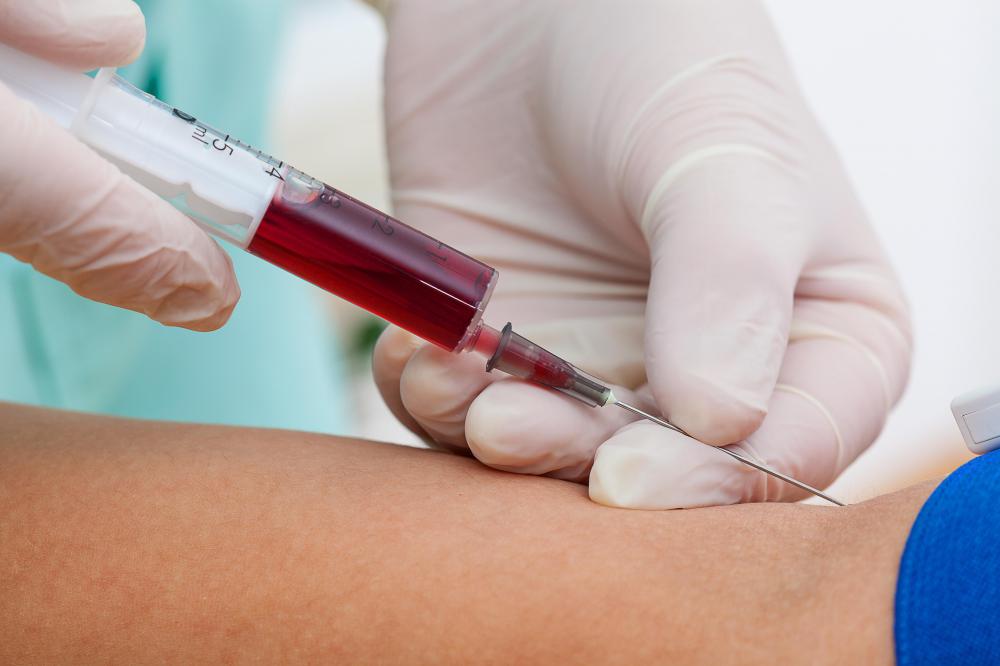
![Platelets and red and white blood cells are measured with a complete blood count.]() By: YoumikaPlatelets and red and white blood cells are measured with a complete blood count.
By: YoumikaPlatelets and red and white blood cells are measured with a complete blood count. -
![A complete blood count is used to measure the number of red and white blood cells and platelets within a particular blood sample.]() By: Goran BogicevicA complete blood count is used to measure the number of red and white blood cells and platelets within a particular blood sample.
By: Goran BogicevicA complete blood count is used to measure the number of red and white blood cells and platelets within a particular blood sample. -
![A bone marrow biopsy may be performed to determine if the sample is consistent with an ET diagnosis.]() By: luchschen_shutterA bone marrow biopsy may be performed to determine if the sample is consistent with an ET diagnosis.
By: luchschen_shutterA bone marrow biopsy may be performed to determine if the sample is consistent with an ET diagnosis.




Discussion Comments
I have a high platelet count and a high white blood cell count. What could be the cause?
My platelets were in the millions. What is going on with me?
Any thoughts on elevated platelets (695,000), elevated lymphocytes (59.9) in a hypothyroid 30 year old female (has had two children, and is otherwise healthy)?
Increased platelets are also seen after exercise or when recovering from illness or surgery, because of the associated inflammation.
Can a removed spleen due to trauma cause elevated platelets?
Do people ever have a high white blood cell count with a low blood platelet count?
If so, what are some of the possible causes?
Although a low platelet count is most often caused by the conditions listed above, it can be associated with a number of other conditions.
For example, liver disease can be one of the causes of low platelets, as is lupus.
Some rare causes of a low blood platelet count include dengue fever, mumps, malaria, non-Hodgkin's lymphoma, rubella, and toxic shock syndrome.
However, if you have a low blood platelet count without any other serious symptoms, it is not likely to be any of the above diseases, so don't worry too much about it -- just get your doctor to check it out, to be on the safe side.
@anon61604 -- Although it could be related, the two conditions are likely separate.
You might want to look into other low platelet count causes to see if you could have any of those -- that might give you a better idea of what's going on.
Best of luck.
I was hospitalized in Dec for viral pneumonia
and was in isolation for five days
I am home but still have a small amount of fluid
in my right lung. I was told that platelets are still slightly elevated and I go for another blood
and X-ray in early February.
Is this slight elevation in platelets related to pneumonia? Bon
Post your comments