
At TheHealthBoard, we're committed to delivering accurate, trustworthy information. Our expert-authored content is rigorously fact-checked and sourced from credible authorities. Discover how we uphold the highest standards in providing you with reliable knowledge.
What Causes Varicose Veins in the Feet?
Medical professionals aren't always sure what causes varicose veins in the feet. Most experts believe that varicose veins are caused by weak vein valves or weakness within blood vessel walls that create small clusters of blood. When they occur in the feet, they may be caused by phlebitis, malformed veins, or blood clots.
In most instances, it is not possible to completely get rid of varicose veins. Some people find that wearing support hose and elevating their legs regularly may help to reduce them. Some medical experts also believe that exercising and avoiding excess weight gain will help prevent swollen veins from forming.

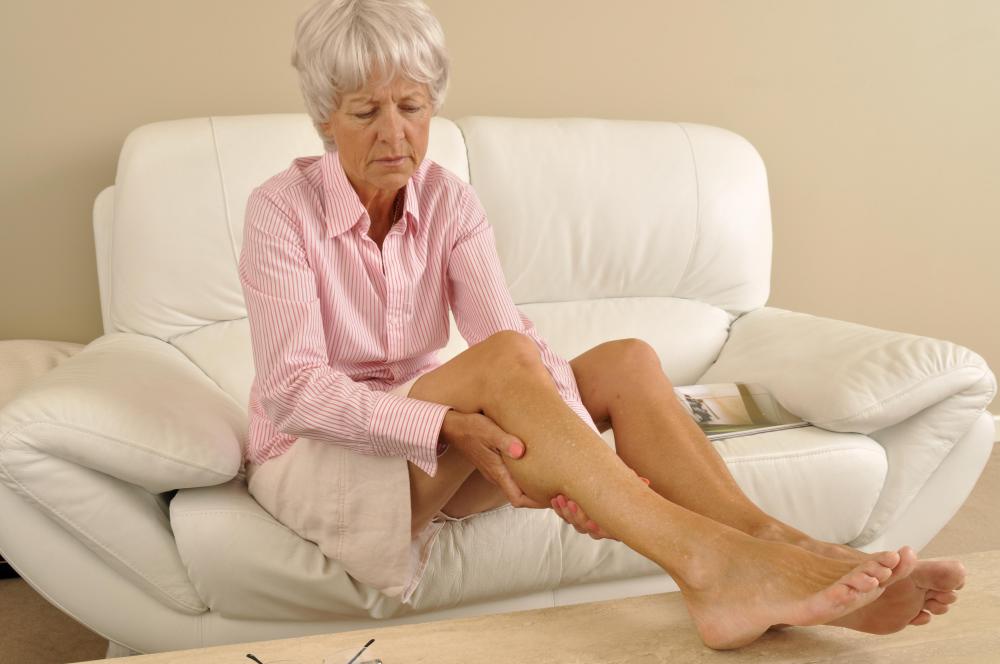
While many people do not experience any physical pain from varicose veins in the feet, others may experience itching, swelling, cramping, and fatigue. In extreme cases, blood clots and bleeding may occur. People who experience these side effects should visit a medical professional to diagnose and treat the condition.
Some people who suffer from varicose veins in the feet may undergo surgery in order to remove the damaged veins. This type of surgery is somewhat risky, and an operation of this sort can only be performed on select candidates. People who are interested in this treatment should speak with a heathcare professional about their surgical options to determine whether or not surgery is possible and how successful it is likely to be.

Most surgeons will not remove varicose veins unless a patient is under an immense amount of pain due to this condition. When a person does not have any physical pain, the problem is largely cosmetic. Although some people are very self-conscious about the appearance of varicose veins, surgery is usually treated as a last resort.
There is some evidence to suggest that varicose veins, including those in the feet, may be hereditary. Frequently, a patient's family history is the most important aspect of diagnosis and treatment. While this condition is not entirely caused by genetics, it can increase a person's chances of developing it.
AS FEATURED ON:
AS FEATURED ON:


-
![Some people find that elevating their legs regularly may help to reduce varicose veins.]() By: Renee JansoaSome people find that elevating their legs regularly may help to reduce varicose veins.
By: Renee JansoaSome people find that elevating their legs regularly may help to reduce varicose veins. -
![Varicose veins in the feet may occur more regularly in women than in men.]() By: britta60Varicose veins in the feet may occur more regularly in women than in men.
By: britta60Varicose veins in the feet may occur more regularly in women than in men. -
![Patients with varicose veins in the feet may experience fatigue and weakness.]() By: KBF MEDIAPatients with varicose veins in the feet may experience fatigue and weakness.
By: KBF MEDIAPatients with varicose veins in the feet may experience fatigue and weakness. -
![Some women may develop varicose veins during pregnancy.]() By: sframeSome women may develop varicose veins during pregnancy.
By: sframeSome women may develop varicose veins during pregnancy. -
![People with varicose veins in the feet may experience swelling.]() By: Ocskay BencePeople with varicose veins in the feet may experience swelling.
By: Ocskay BencePeople with varicose veins in the feet may experience swelling.




Discuss this Article
Post your comments