
At TheHealthBoard, we're committed to delivering accurate, trustworthy information. Our expert-authored content is rigorously fact-checked and sourced from credible authorities. Discover how we uphold the highest standards in providing you with reliable knowledge.
What Causes Tooth Sensitivity to Heat?
Tooth sensitivity to heat occurs when the structures that normally protect that tooth’s inner nerves become worn away, cracked, or otherwise fail to perform properly. Damage to these protective structures can result from tooth decay, from grinding the teeth or brushing them too hard, or from gum disease. Luckily, there are several treatment options which can reduce this sensitivity.
Every tooth has nerves inside of it. Normally, these nerves are protected by the enamel, or the hardened layer of tissue that coats the exterior of each tooth. The way in which the gums overlap each tooth also helps to keep the dental nerves insulated from the mouth. Sensitivity to heat occurs when the enamel or the gums become damaged, allowing the nerves they normally protect to become exposed. When the nerves are exposed in this way, contact with hot beverages or foods can cause them to register a sharp pain or to ache.

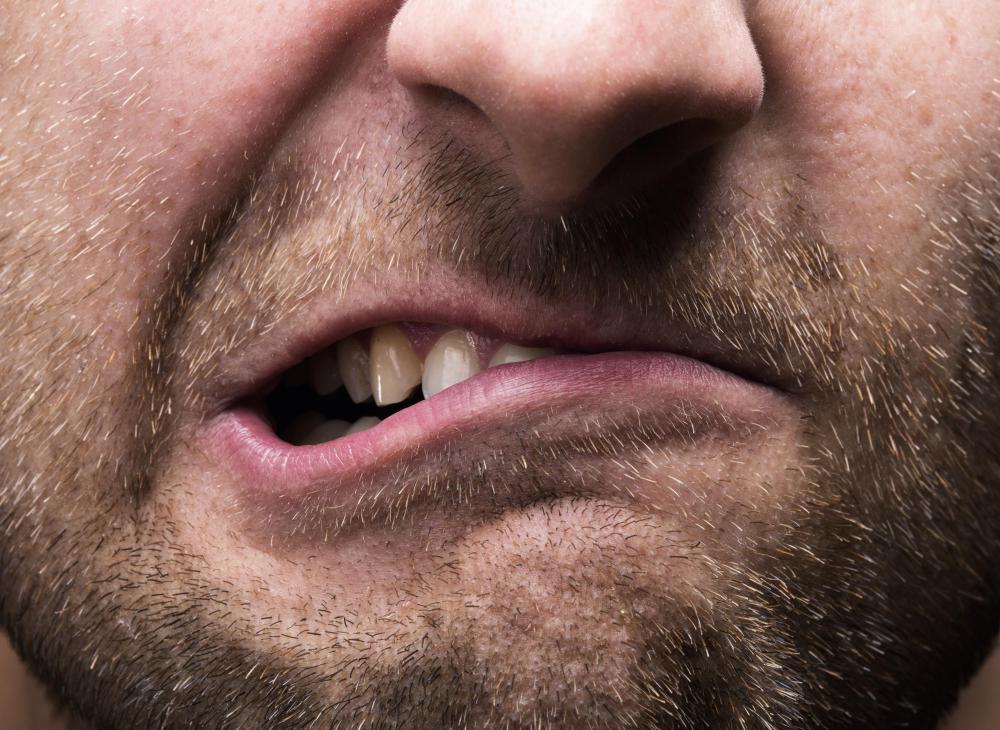
Worn or cracked enamel is often to blame for tooth sensitivity. Using too much pressure while brushing the teeth can cause wear to the enamel. Grinding or clenching the teeth can cause cracks that penetrate the tooth’s surface, creating a pathway to the nerves. Similarly, tooth decay can lead to cracks or holes in the tooth’s surface.
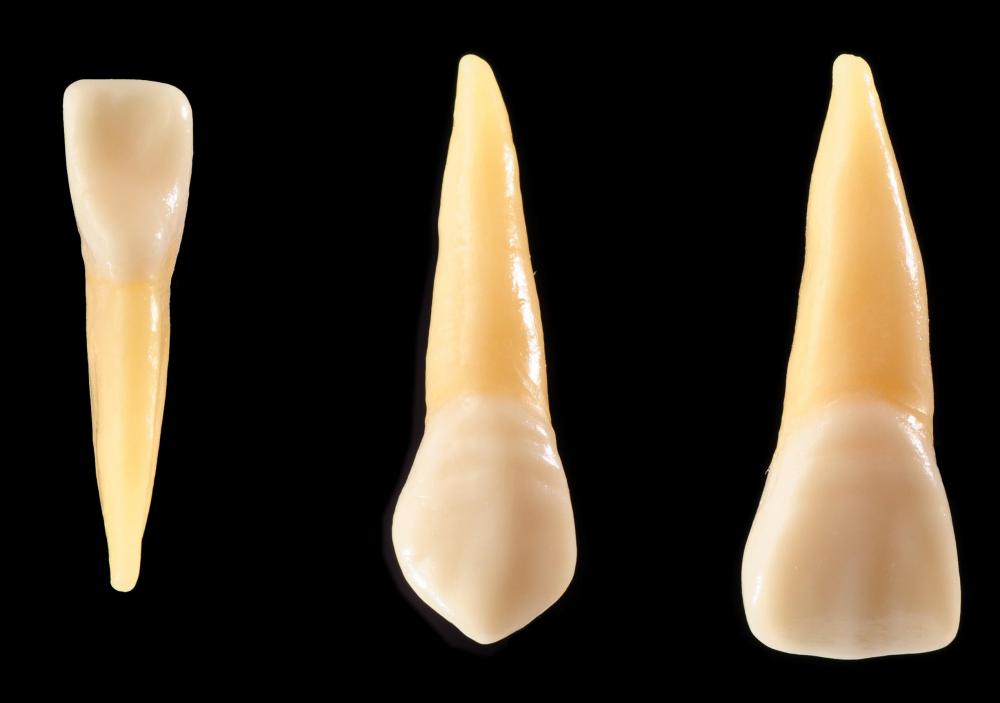
Sensitivity to heat can also occur when the gums fail to overlap the teeth properly, usually due to gum disease. Generally, only the visible areas of a tooth are covered with enamel, while its roots are covered with a thinner, more porous substance called dentin. The gums normally act as a barrier that insulates the teeth’s roots from the rest of the mouth. When gum disease causes the gums to recede, however, the dentin can become exposed. Hot foods and drinks that make contact with this exposed dentin can easily aggravate the nerves beneath it.

Luckily, it may be possible to reduce or even eliminate tooth sensitivity to heat. Many people find that a toothpaste formulated to combat tooth sensitivity is sufficient to ease dental discomfort. A dental treatment that restores damaged enamel can also be helpful. In cases of moderate to severe sensitivity, however, finding relief may be possible only with a filling, a restorative gum treatment, or a root canal.
AS FEATURED ON:
AS FEATURED ON:


-
![A cross section of a tooth.]() By: Andrea DantiA cross section of a tooth.
By: Andrea DantiA cross section of a tooth. -
![Tooth sensitivity may be increased by hot beverages.]() By: food pictures studioTooth sensitivity may be increased by hot beverages.
By: food pictures studioTooth sensitivity may be increased by hot beverages. -
![Cracked enamel, caused by teeth grinding, may cause tooth sensitivity to heat.]() By: Nomad_SoulCracked enamel, caused by teeth grinding, may cause tooth sensitivity to heat.
By: Nomad_SoulCracked enamel, caused by teeth grinding, may cause tooth sensitivity to heat. -
![Increased tooth sensitivity to heat is one possible symptom of a dental abscess.]() By: Eléonore HIncreased tooth sensitivity to heat is one possible symptom of a dental abscess.
By: Eléonore HIncreased tooth sensitivity to heat is one possible symptom of a dental abscess. -
![Damaged enamel can allow heat to quickly reach nerves inside the teeth, causing pain and sensitivity.]() By: Jeremys78Damaged enamel can allow heat to quickly reach nerves inside the teeth, causing pain and sensitivity.
By: Jeremys78Damaged enamel can allow heat to quickly reach nerves inside the teeth, causing pain and sensitivity. -
![A individual with bulimia may experience tooth sensitivity.]() By: Sylvie BouchardA individual with bulimia may experience tooth sensitivity.
By: Sylvie BouchardA individual with bulimia may experience tooth sensitivity. -
![Mouth guards are often used to prevent people from grinding their teeth.]() By: deeafMouth guards are often used to prevent people from grinding their teeth.
By: deeafMouth guards are often used to prevent people from grinding their teeth.





Discussion Comments
@JackWhack – I also struggle with tooth sensitivity to cold things. Strangely, I've never been sensitive to hot things, though.
I'm fairly sure that receding gums are the issue with me. I'm in my thirties, so I'm guessing that they are receding because of my age. I see a dentist every six months, and he's never mentioned any sort of gum disease.
The pain may be starting at the base where the gums expose my teeth, but it feels like it starts inside my teeth. My gums themselves don't ache, but the pain is intense inside my teeth.
I use a toothpaste made for people with teeth sensitivity. It works well for me. I use it at least twice a day.
Tooth sensitivity causes some people to eat and drink only lukewarm or room temperature foods. This is what I've been doing for about six months, because I can't stand the shooting pain that starts in my teeth and goes way under my gums.
I didn't know that there were treatments available that could restore enamel. I had always heard that once it's gone, it is gone for good. I'm going to look into this, because I miss hot soup and cold tea!
I had no idea that brushing too hard could make my teeth sensitive to heat! I believe that is the reason that I feel pain in my teeth whenever I drink anything that is either really hot or really cold.
It's really worse with cold things. I can't eat ice cream that has chunks of candy or nuts in it, because if I have to chew it, the pain will be horrible.
I think I should switch to a soft bristled toothbrush. I also need to slow down when I'm brushing, because I'm always in a hurry, and I know that makes me brush faster.
Post your comments