
At TheHealthBoard, we're committed to delivering accurate, trustworthy information. Our expert-authored content is rigorously fact-checked and sourced from credible authorities. Discover how we uphold the highest standards in providing you with reliable knowledge.
What Causes Tingling in the Legs?
Tingling in the legs, also called leg paresthesia, is caused by the way in which the brain interprets electrochemical impulses coming from this part of the body. The brain's strange reading of these signals may be caused by nothing more serious than that the leg has fallen asleep, although there are some far more serious causes. Various neurological and circulatory disorders, skin conditions, and hereditary illnesses can be at the root of this sensation.
Sometimes described as a pins-and-needles sensation, tingling in any part of the body can be a transient or chronic condition. Transient paresthesia is usually not a reason for concern, and it is most often experienced after a person put pressure on the body part, squeezing the nerve pathways. Commonly referred to as the area "falling asleep," the medical term for the condition is obdormition.

Transient tingling in the legs, which will last for a few seconds but not more than several minutes, may occur as a symptom of a panic attack, whiplash, or dehydration. Other conditions that can cause the sensation are hyperventilation, transient ischemic attacks, and seizures. Insufficient blood supply in the legs can also cause this problem.
Tingling that doesn’t go away after several minutes or that recurs often is referred to as chronic paresthesia. Causes can vary from fibromyalgia to an immune deficiency disorder, and it can also be a symptom of a neurological, heart, or hormone condition.

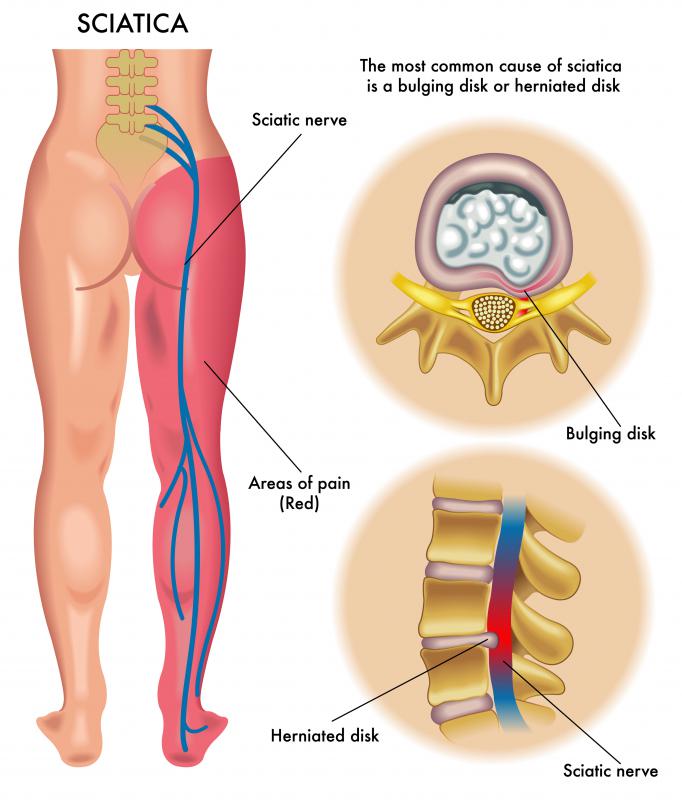
In determining the cause of chronic paresthesia, neurological testing may be ordered. Stroke, cerebral hemorrhage, or meningitis could be possible causes. Injuries from repetitive motion may also be to blame, along with tarsal tunnel syndrome or sciatica.
Leg paresthesia is a common symptom in elderly patients, and it is likely the result of poor circulation, which may be a sign of circulatory problems. Angina, atherosclerosis, and other circulatory disorders may have tingling as a symptom.

Skin conditions such as burns or frostbite can create a sensation of tingling legs as well. Chronic paresthesia can be caused be various infections, such as HIV or Lyme disease, or it can be a symptom of diabetes. Some psychiatric diseases and medications can also cause the sensation, as can alcoholism.
There are hereditary diseases that can also cause tingling in the legs. Charcot-Marie-Tooth disease affects the leg muscles, and Denny-Brown’s syndrome affects the nerve root. Porphyria, a group of inherited disorders, will also produce the symptom.
Why Do My Legs Tingle After Walking?
Walking is one of the most beneficial types of exercise. It improves cardiac health fitness and reduces stress on your joints compared to running. What do you do if your legs start tingling after your routine walk?

Tingling, numb limbs may require medical attention, but not always. If you're navigating rough terrain, your muscles enlarge to accommodate the extra blood flow. The process may allow you to walk further and exert more strength, but it can also compress your nerves and veins. Various injuries and conditions may also cause your legs to fall asleep.
Pinched Nerves

Your nerves extend from the brain to the spinal cord, delivering messages throughout your body. Some nerves have little protection from the body's tissues and may become compressed by bones, ligaments or tendons. Pinched nerves can result in scarring that permanently interferes with the nerve when left untreated.
If the tingling sensation runs down both sides, the issue is likely in your lower back. Arthritis, age and injury can cause compression on the lower spinal cord. The tingling may be accompanied by pain and worsens when standing but eases while sitting or bending forward.
Low Electrolytes
Electrolytes regulate your muscle and nerve function. They also repair damaged tissue and regulate your hydration. The following electrolytes are critical to your body:
- Potassium
- Sodium
- Calcium
- Magnesium

Walking and other forms of exercise change your body's fluid balance. You may notice the symptoms are worse in the summer because of dehydration. Electrolyte imbalances and dehydration change how your muscles contract, leading to numbness of the limbs.
Circulation Problems
Before you go for a walk, make sure your clothes are loose and your shoes are comfortable. Tight, restrictive shoes can cut off your circulation and lead to tingling in your legs and feet. Break in any new shoes before you take a stroll.
If you have poor circulation due to peripheral artery disease, your legs may feel numb, tingly and in extreme cases, you may experience aches and cramps in your muscles.
A Histamine Reaction

A histamine reaction can occur if your walk is a part of a workout. Most experience tingling and itching in their feet following exercise. Your body releases histamine to improve your circulation. Histamine helps your muscles combat fatigue and delivers oxygen to your muscles. While a histamine reaction has benefits because it prevents allergies, it can also cause your muscles to feel itchy and numb.
Why Are My Arms and Legs Tingling?
In mild cases, arms and legs tingle due to pressure on the nerves. For example, if you lay with your arm crooked under your neck and legs crossed, you will feel pins and needles in your limbs. Like most people, you know the best solution is to shake it out. However, severe, chronic and episodic tingling may be the result of a different condition.
Nerve Damage
Nerve damage occurs due to repetitive stress injuries, traumatic injuries, toxic exposures, systemic diseases and viral infections.
Never damage is also known as peripheral neuropathy. There are over 100 different types of peripheral neuropathy and some types can worsen over time and cause loss of mobility.
Systemic diseases like liver disease, connective tissue disorders, kidney disorders, hormonal imbalances and chronic inflammation also cause nerve damage. Likewise, if a patient has cancer or benign tumors, the growth can put pressure on the nerves.
When in an accident, your nerves can be crushed or compressed. Often, nerve compression occurs because of a herniated disk or dislocated bone.
Vitamin Deficiencies
Most of the U.S. population has a vitamin deficiency. Vitamin B6 is one of the necessary vitamins for healthy nerves. Tingling arms and legs can indicate a vitamin deficiency. However, if you have too much Vitamin B6 in your blood, it can have a similar effect.
Autoimmune Diseases
In some autoimmune diseases, your immune system attacks your nerves. The pins and needles may start in your feet legs and spread to the arms and hands. Common autoimmune diseases include lupus, rheumatoid arthritis and Guillain-Barre syndrome.
Does Diabetes Cause Tingling in Legs?
Numbness in the feet and legs associated with diabetes is called peripheral neuropathy. When your sugars are high for an extended period, the glucose injures your nerves. Most patients with nerve damage feel it in their legs and feet. However, some patients may also have tingling in their arms and hands. Diabetes patients account for 30% of all peripheral neuropathy cases.
If you have diabetic neuropathy, you may experience tingling, numbness, burning and pain in your legs and feet. Other less common areas to experience the sensation include the hands, arms, abdomen and back. The numbing can become permanent.
AS FEATURED ON:
AS FEATURED ON:


-
![Circulatory disorders may cause tingling in the legs.]() By: Ocskay BenceCirculatory disorders may cause tingling in the legs.
By: Ocskay BenceCirculatory disorders may cause tingling in the legs. -
![Alcoholism can cause tingling of the legs.]() By: kmiragayaAlcoholism can cause tingling of the legs.
By: kmiragayaAlcoholism can cause tingling of the legs. -
![Transient tingling in the legs may occur as a result of dehydration.]() By: DirimaTransient tingling in the legs may occur as a result of dehydration.
By: DirimaTransient tingling in the legs may occur as a result of dehydration. -
![A weak pulse is a sign of poor circulation, which may cause tingling in the legs.]() By: koszivuA weak pulse is a sign of poor circulation, which may cause tingling in the legs.
By: koszivuA weak pulse is a sign of poor circulation, which may cause tingling in the legs. -
![If the sciatic nerve becomes irritated, it can cause pain and numbness down the leg.]() By: rob3000If the sciatic nerve becomes irritated, it can cause pain and numbness down the leg.
By: rob3000If the sciatic nerve becomes irritated, it can cause pain and numbness down the leg. -
![Panic attacks may cause tingling leg pain.]() By: Astrid GastPanic attacks may cause tingling leg pain.
By: Astrid GastPanic attacks may cause tingling leg pain. -
![Leg paresthesia is a common symptom in elderly patients, and it is likely the result of poor circulation, which may be a sign of circulatory problems.]() By: Brett MulcahyLeg paresthesia is a common symptom in elderly patients, and it is likely the result of poor circulation, which may be a sign of circulatory problems.
By: Brett MulcahyLeg paresthesia is a common symptom in elderly patients, and it is likely the result of poor circulation, which may be a sign of circulatory problems.






Discussion Comments
I get tingling and numbness in my left leg sometimes because of a herniated disc in my back. Sometimes, when I do a wrong movement or lift something heavy, the hernia puts pressure on the nerves there and since it's the same nerves traveling down the legs, I have these symptoms.
If my back is okay, I don't experience this.
@ddljohn-- Diabetes runs in my family so I know that diabetes causes damage in the circulatory system. This can lead to symptoms like burning, pain and tingling sensations in legs and feet.
But you said that you were diagnosed a few years ago. These types of symptoms usually show up after many years of diabetes (such as 20 years) or it may show up sooner if the diabetes was not controlled with insulin and medications.
So if you truly developed diabetes only a few years ago and if you have kept it under control since then, it seems unlikely that diabetes would be the cause of the tingling. But I'm not a doctor, so please discuss this with your family doctor to make sure.
Also check your blood sugar frequently to make sure that it's not high.
I was diagnosed with diabetes a few years ago. Recently, I've started experiencing tingling in my legs and feet at night. I know that this is a sign of diabetes but why am I having it now?
Post your comments