
At WiseGEEK, we're committed to delivering accurate, trustworthy information. Our expert-authored content is rigorously fact-checked and sourced from credible authorities. Discover how we uphold the highest standards in providing you with reliable knowledge.
What Causes Swelling?
Swelling, also referred to as anasarca or edema, is a medical condition characterized by an excessive build up of fluid within the body’s tissues. This can cause a person to rapidly increase his or her weight in a short period of time, ranging from days to weeks. The most commonly affected areas of the body are the skin, organs, glands, breast, ankles, legs, and feet. Swelling may be generalized throughout the body or localized to a single area.
There are two basic types of swelling: pitting and nonpitting edema. Pitting edema leaves an indentation in the skin when the swollen area is pushed on for five seconds and then quickly removed. Nonpitting edema, on the other hand, does not leave a pit.

A certain amount of slight swelling is considered normal during warmer months. This is particularly true for people who walk or stand a lot throughout the day. In addition, a pregnant woman may experience some from the stress of carrying a child. In both cases, there is generally no cause for concern.
It is also possible for swelling to be caused by severe illness, particularly when it is generalized. This type is usually quite obvious and can easily be detected, even in individuals who are overweight. A person experiencing severe swelling should seek medical attention immediately, as it can indicate a serious progressive or chronic illness.

Some illnesses that can cause swelling include heart failure, chronic kidney disease, acute glomerulonephritis, nephritic syndrome, thyroid disease, and liver failure resulting from cirrhosis. Burns, both from fire and from the sun, can also cause this condition. Malnutrition, excessive salt intake, and too little albumin in the blood are other possible causes.

Swelling can also be caused by certain drugs, including antihypertensives, androgenic steroids, anabolic steroids, nonsteroidal anti-inflammatory drugs (NSAIDs), and calcium channel blockers. Corticosteroids can also cause swelling, as they encourage the retention of sodium.
AS FEATURED ON:
AS FEATURED ON:









-
![Excessive salt intake is one of the causes of swelling.]() By: Jiri HeraExcessive salt intake is one of the causes of swelling.
By: Jiri HeraExcessive salt intake is one of the causes of swelling. -
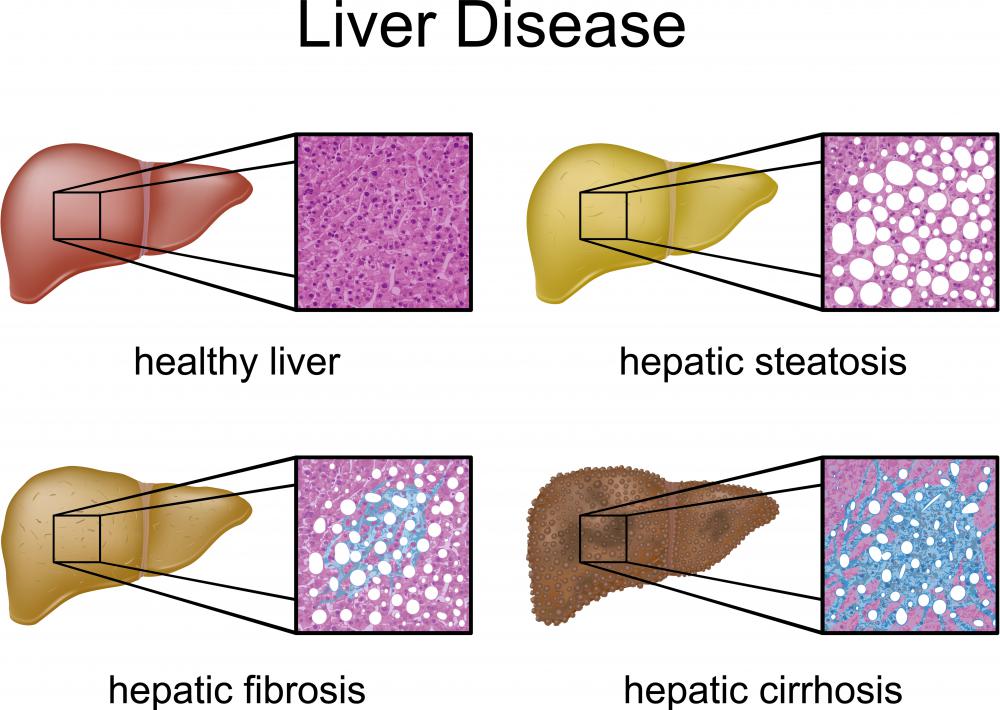
![People with liver disease, like cirrhosis, may be more likely to develop swelling and edema.]() By: peterjunaidyPeople with liver disease, like cirrhosis, may be more likely to develop swelling and edema.
By: peterjunaidyPeople with liver disease, like cirrhosis, may be more likely to develop swelling and edema. -
![Feet are among the most commonly affected areas of swelling.]() By: arztsamuiFeet are among the most commonly affected areas of swelling.
By: arztsamuiFeet are among the most commonly affected areas of swelling. -
![Pregnant women may experience swelling.]() By: Valeriy VelikovPregnant women may experience swelling.
By: Valeriy VelikovPregnant women may experience swelling. -
![Fluid retention in the hands may be caused by poor circulation.]() By: KalimFluid retention in the hands may be caused by poor circulation.
By: KalimFluid retention in the hands may be caused by poor circulation. -
![Glands are a common area for swelling.]() By: Adam GregorGlands are a common area for swelling.
By: Adam GregorGlands are a common area for swelling. -
![Malnutrition may cause swelling.]() By: TheFinalMiracleMalnutrition may cause swelling.
By: TheFinalMiracleMalnutrition may cause swelling.




Discussion Comments
I too, have swelling everywhere I have a joint. A nuclear body scan was done on me and it showed the inflammation in the joints. I also have suffered from chronic fatigue, fibromyalgia, chronic pain, panic attacks, depression, thyroid problems (underactive), migraine headaches, high blood pressure, high cholesterol, restless leg syndrome, acid reflux, and short term memory loss. I am developing agoraphobic tendencies as well. All of these symptoms are part of Fibomyalgia.
Research has proven that sometimes Lupus mimics fibromyalgia in the early stages. However, I have been diagnosed with fibromyalgia for about 19 years. I just turned 52. I tested positive for Lupus and then had an ANA and double strand DNA test to make sure of the results. I tested positive, but the doctors don't want to do anything about it. I know I have Lupus. I started testing positive about 2000.
I cannot go out in the sun for more than a few minutes before I blow up like a balloon, my fingers swell so bad I can hardly bend them, my feet and ankles swell with the least amount of weight on them, and everywhere I have a joint it swells.
I have since started taking B-12 and bioiIdentical hormones with meds for all my symptoms included in the cream. It has worked miracles so far with energy, pain, fatigue, and has helped my fibromyalgia too. I do highly recommend them to anyone. Have the doctor do bloodwork and send it to a compounding pharmacy to be made specifically for you. I can't tell you enough about the changes in me. I do still have the swelling, but I am going to talk to my druggist about maybe putting some meds in it for the edema.
In case you are wondering, I am a nurse. I previously was taking a lot of pain meds, until the doctor quit giving them to me. I didn't know what I was going to do because I am in pain 24/7. I was lucky to find that a compounding pharmacy could make me some cream filled with a lot of my meds and some that I could not take orally to get my comfort level bearable and now I can get by with minimal pain pills. You name it, I have taken it, or done it!
My thin, 53 year old sister has swelling in her stomach area. She looks like she is 10 months pregnant and has severe swelling in her legs and feet.
You cannot leave an indentation on her legs when you press on them. She doesn't have much of an appetite and she is losing weight everywhere else. The doctor sent her to the hospital and they drained 5 litres of fluid off to make her a little more comfortable. It is worse than ever.
The doctor says to wait until tests are back. This has been dragging on since the spring. She is taking diuretics and going to the bathroom often but is still extremely swollen. She is often having bowel movements as well. I'm afraid she will be dead before the doctors figures out her problems. She is a smoker and was a drinker due to stress. Can you help with a possible diagnosis?
I am a 65 year old male. I have been feeling this swelling under my ribs and down to my hip. My doctor could not feel anything and she sent me for a cat scan. I have not got the results back yet. But what could be swelling there? This is on my right side.
I have swelling all over for the past seven years. I even traveled to the Mayo clinic in Florida, where Dr. Pedro Malavet told me I am just fat and need to exercise more. Thanks for the diagnosis and no help, doctor. You certainly did not even try to look at my problem!
I mostly swell in the face, stomach area (I look like I'm nine months pregnant), and in my feet and hands. The doctor in the are where I live recently suggested it may be the meat that I eat and I should probably stop eating this, at least for now.
It maybe makes sense, since most foods are genetically modified and if the protein we eat is also modified, it may change (modify) our bodies also. Be also aware of genetically modified crops as wheat and corn and modified fish as salmon. Buy organic and try to eat the foods where you can find out where they came from. I will try the same, since nothing else work and tests did not show much either.
Xanax caused my body to swell three times its size. Twelve years later I tapered off them and voila! The swelling started going down. Everyone insisted I was fat. Nope.
I started swelling six years ago while pregnant and had great BP. I was induced because I was swollen and sore. After my son was born, I still had the swelling and packed on almost 100 pounds. They keep just telling me to take water pills but they don't help. It's mainly in my left leg and foot. Has anyone heard of this? Please if you have an idea let me know. I want to try for baby number two but I'm scared.
My five year old son had had swelling in one leg at a time since he was two. His IgE value is 1300 iu /ml. His micro immunoglobulin to creatinine ratio in urine is 25.4 mg/mg. What should I do for his proper treatment?
Yes, I've been tested for thyroid problems, but it seems to be OK. I haven't done the full panel, though, but my mum has thyroxin due to underactive thyroid and yes, she ached all over and put on weight like me, but didn't swell at all or retain fluid.
I've also been checked for all types of arthritis (which runs in our family) but that's clear too. I've had an ovarian scan, kidney scan, bladder scan, spleen scan and a bone marrow biopsy because of my low white blood cell count and aching legs and an ECG but still nothing. My doctor is going to now start me on a high dose of hormone replacement therapy and see what happens.
@anon247640: Has your doctor done a complete thyroid panel on you? I don't mean just your TSH, since that can be misleading, but a complete panel? I don't know if low thyroid can cause swelling, but it can cause fatigue and achy joints and a lot of other strange symptoms.
If your thyroid is low, fortunately, Synthroid is cheap and is effective, too.
I'm a 53 year old woman and have been swelling up all over for about seven years now. It used to be up and down, but is most of the time now.
I used to be fine when I got up, but would gradually get worse through out the day. Now I only get the odd morning where I'm not swollen and it's not long before I start. I have been prescribed water tablets and yes, whatever I drink goes straight through but I still swell up.
I realize I am now in menopause, which is not helping, but I really need to get sorted. I've always been slim size 8/10 but now I'm packing weight on. Not only do I look twice my size with the swelling, but have been struggling with exercise due to my limbs feeling like lead weights.
I still walk quite a lot but feel absolutely exhausted after and ache all over, and the more I do, the bigger I get. I used to cycle and swim two or three times a week, which I've had to stop.
I take an antihistamine every day due to allergies which I've tried to cut out, in case it was causing me to swell but find I can't. I get bad headaches and itchy swollen eyes without it. My doctor has done lots of blood tests on me and I have got to go on hormone replacement therapy. I've also got a really low White blood cell count which has been investigated but nothing has come to light yet.
Does anyone have any ideas what can be wrong with me please? I'm at my wits' end.
that is crazy. nobody has a solution! for the past year my left calf swells, my right one not so bad. i have been to hospital to be checked for varicose veins and everything seems OK. It's weird. I've seen on lots of blogs that people have the same problem but no idea what it is. I really need help. It's quite embarrassing!
I have swelling that starts in my arms and hands in the morning and as the day goes on the swelling goes to my legs and feet. Sometimes the swelling is so bad i can hardly even bend my knees to walk up stairs. I have been fighting this for about eight months now with all different kinds of tests and nothing. I have a kidney specialist and a high blood pressure specialist and still no answers. please help
i am 55 years old and have been taking a high amount of tylenol for pain and now i seem to have generalized edema. Can it be kidney failure?
i was very thin because i wanted to lose weight and when i stopped dieting and began eating all food, my body began to swell, my legs my feet my face and even my stomach. please help me. what caused this to happen and will i return back to my normal skinny self?
my friend is 35 years old and his left leg began swelling some three months back which increased with time and spread to the whole of his body. What could be the reason?
Exactly. What happens with your body when it swells? What gets flooded with fluids and what are the fluids?
but what actually is happening in the body when it swells? what biologically makes the area appear swelled?
I had pelvic surgery three years ago. Since my surgery I have had constant problems with pain and swelling in my right leg. Then to my back but only on the right side. I now have swelling in my left knee and thigh. I have had two mri tests which showed nothing. Please help.
To anoop: I had obstetric cholestasis where the hands and feet swell and itch when you're pregnant. It is due to the bile backing up in your system and going back into the bloodstream. It can clog the placenta and cause sudden oxygen deprivation.
They had to deliver as soon as they found out. The ob/gyn did a bile liver panel, which has to be sent off and takes about 10 days to get the results. There's also an increased chance I'll have it again if I get pregnant again. They scanned my gall bladder and found no abnormalities when I had my son.
Now, I'm having constant back pain and swelling/tightness in my hands when I drink even half of a beer or any other drink. I recently had my gall bladder scanned again and they found I have sludge. I wonder what is causing the swelling in my hands?
My face, hands, eyes, and neck swell all the time in the morning for at least five to six hours. I get really mad at this because I feel like I look like an inflated balloon. What could stop this swelling for me? Please help! Thanks.
My left leg is swelling daily. Two ultrasounds and a cat scan were taken and were negative for any abnormalities. What can it be? I am very stressed out and my doctor assumes that is the reason for it all, but why the swelling? My left calf swells up to double the size of the right calf.
i have swelling from my face to my feet.i have been to my kidney and heart doctor,both have ran blood test on me.My kidney doctor said everything checked out.Now I'm waiting on my heart doctor to let me know what my blood work shows.What else can cause this?
My father is 55 years old. 7 years ago my dad went threw liver problems because of jaundice & drinking of excessive amounts of alcohol, but then after a doctor consultation he stopped drinking. Now what problem we are facing is dry cough & swelling on legs. We consulted lots of doctors, but no results. So please can anybody suggest what should i do ? Please help??
A friend recently said that swelling is caused by fluids rushing to the injured area to advance healing and that even if the area is swollen if it doesn't hurt very much any more it's not helpful to take an anti-inflammatory, like ibuprofen. Is this true?
I had a serious motorbike accident 1 and a half years ago. Since then, if I sit at a computer or when I am at work (I am a teacher) my calves swell up considerably, every day. This does not happen at home, only at work or when sitting for long periods at the computer.
Could it be related to the accident or is it a different problem?
I am 28 years old female and there is a swelling problem in my entire body along with itching on my toes. my HB level is 7.2 only
please suggest me that which tests to be done to diagnose the problem.
I am 34 years old male and there is a swelling problem in my both legs but when i take rest in night this problem does not exist.
Docter advised me for the following tests.
blood test
urine test
and lower limb test
But all reports are normal.
please suggest me that which tests to be done to diagnose the problem.
Post your comments