
At TheHealthBoard, we're committed to delivering accurate, trustworthy information. Our expert-authored content is rigorously fact-checked and sourced from credible authorities. Discover how we uphold the highest standards in providing you with reliable knowledge.
What Causes Muscle Spasms?
 Mary McMahon
Mary McMahon
Mary McMahon
Muscle spasms and cramps occur when a muscle contracts involuntarily and painfully. There are a number of causes of spasms, ranging from nutritional deficiency to serious nervous system conditions. If you experience sharp, extremely painful muscle spasms in your neck or back, you should see a physician, as these can be symptoms of a ruptured or bulging disc in your spine. If left untreated, this could have extremely serious consequences.
The process of moving a muscle is actually quite complex, although you may not be aware of it. It involves sending a signal from the brain through the nervous system to the muscle in question. An ornate series of chemical reactions and communications will ultimately result in a contraction of the muscle, causing it to move. Millions of involuntary muscle movements keep your blood circulating and your lungs moving, even as you sleep. If this process is disrupted, the result can be a muscle spasm.

On the brain's end of the deal, spasms can be caused by neurological disorders or conditions such as strokes. Damage to the nervous system may also cause this condition; many toxins, for example, attack the nervous system. Metabolic disorders can also be responsible for spasms, by disrupting the metabolic communications which cause muscles to contract. In all of these cases, medical attention may be required to resolve the situation.

A deficiency in salts and electrolytes can also be responsible for muscle spasms. Dehydration is a common cause for deficiency, and more rarely you can disturb the balance of salts in your body through water intoxication. It is also possible to eat a diet which does not satisfy the needs of your body, especially if you exercise heavily, thus depleting the salts you need to control your muscles. Exercise can also contribute to this condition if you work out too hard, thereby exhausting your muscles.

Spasming muscles may feel tight and bulgy. They can also be extraordinarily painful, and the onset is generally rapid and unexpected. If you are lucky, your spasming muscle is merely a cramp, and you may be able to stretch the muscle to relieve the problem. In other instances, a spasming muscle becomes locked, and you may face a lengthy recovery. You can help reduce the likelihood of spasms by stretching, eating a healthy diet, and paying close attention to your general health and fitness levels.
Mary McMahon
Ever since she began contributing to the site several years ago, Mary has embraced the exciting challenge of being a TheHealthBoard researcher and writer. Mary has a liberal arts degree from Goddard College and spends her free time reading, cooking, and exploring the great outdoors.
Learn more...
Mary McMahon
Ever since she began contributing to the site several years ago, Mary has embraced the exciting challenge of being a TheHealthBoard researcher and writer. Mary has a liberal arts degree from Goddard College and spends her free time reading, cooking, and exploring the great outdoors.
Learn more...AS FEATURED ON:
AS FEATURED ON:


-
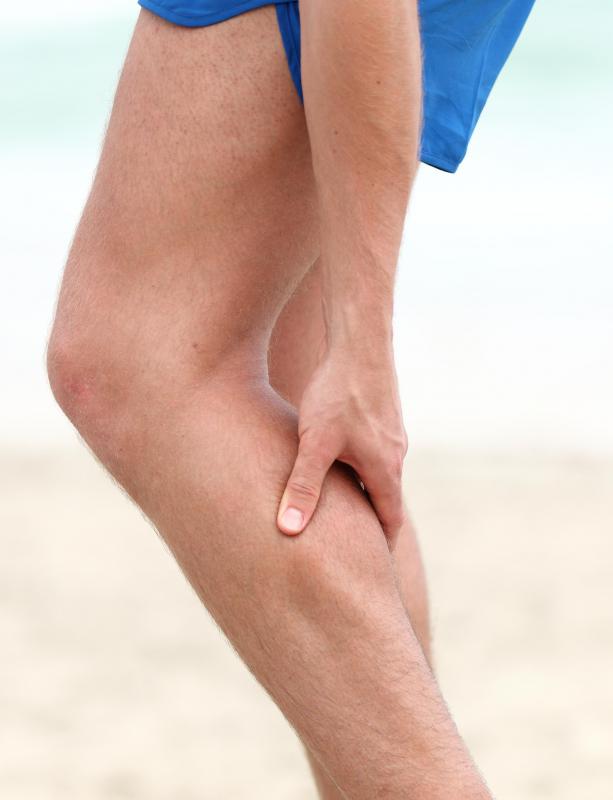
![A man with a muscle cramp.]() By: MaridavA man with a muscle cramp.
By: MaridavA man with a muscle cramp. -
![Severe back muscle spasms may be caused by weak abdominal muscles.]() By: BlueSkyImagesSevere back muscle spasms may be caused by weak abdominal muscles.
By: BlueSkyImagesSevere back muscle spasms may be caused by weak abdominal muscles. -
![Frequent muscle spasms may be a sign of an underlying medical condition.]() By: WavebreakmediaMicroFrequent muscle spasms may be a sign of an underlying medical condition.
By: WavebreakmediaMicroFrequent muscle spasms may be a sign of an underlying medical condition. -
![Muscle spasms may be caused by dehydration.]() By: Photographee.euMuscle spasms may be caused by dehydration.
By: Photographee.euMuscle spasms may be caused by dehydration. -
![Severe muscle spasms in the hand may make handling a toothbrush difficult.]() By: Photographee.euSevere muscle spasms in the hand may make handling a toothbrush difficult.
By: Photographee.euSevere muscle spasms in the hand may make handling a toothbrush difficult. -
![Injury when lifting a heavy object can cause muscle spasms.]() By: Photographee.euInjury when lifting a heavy object can cause muscle spasms.
By: Photographee.euInjury when lifting a heavy object can cause muscle spasms.




Discussion Comments
Posters 11, 110 and 122 are educated about our current health crisis in this country, but its a bit more complicated and sinister. Some of the readers’ belief systems will not allow them to listen or believe what I will say. There is a conspiracy to keep you sick and misinformed. The world is not as it seems (took me a while to see). Some people say I’m all doom and gloom but I’m only trying to shock your system into waking up. If there are dozens of multi billion and million dollar corporations out there able to sell you the cure (medicine that only treats the symptoms) and they do nothing to stop the underlying cause and keep selling you it over and over, and they where able to cause the sickness to begin with, would they sell you the sickness?
Big pharma is also the industry profiting from selling you their toxic poisons (sorry I mean foods and cosmetics). What if they could profit from selling you sickness and cure? And have the cover of the FDA, courts and big government in general (health care system). It’s a big circle. If you really care about your health, here are some questions. Why is there a patent on AIDS/HIV? Why is there a patent on HIV cure? Search the patents. Why are people being cured of cancer without being poisoned by chemotherapy? Why were the Nazis putting fluoride in the concentration camps’ and POWs' water supply? They were worried about their teeth even though they ripped out all the gold ones out.
Vaccines have mercury in them and if they don't they have that they contain aluminum now. And if you get sick from them, there are laws to protect them. Just to let you know in my rant I am twitching right now, if you thought I forgot about that for just a minute. GMOs and Roundup are killing us and the bees to pollinate the plants we eat. Russian passed laws to make it an act of domestic terrorism to sell or import GMOs. Also China and Russia, along with a dozen other countries burned and made illegal to import GMOs from the good old USA.
Wake up people. Educate yourselves. I can't tell you everything. Eat organic food, seek natural herbal remedies and don’t believe the junk you hear on CNN or in some magazine. The same people who own the media write the books that doctors are taught from and fund the med schools. They don’t teach doctors about a natural diet. You are what you eat!
Detox from the pesticides, parasites, candida, fluoride, aspartame, aluminum, lead, mercury and arsenic from your blood, brain, organs, intestines and colon. Then try not to put that junk back in!
Now the twinging, creepy crawlies, brain fog, headaches, low energy, dizzy spells. Yes I know. It happens to me, I'm 28 years old and in excellent health except I’m electromagnetically sensitive (EMS) or have electro smog. I lived in the woods without even cell service and used hardly any power and no WiFi. Then I moved to a development near a city and can pick up 30 WiFi signals and dozens of neighbors all using electronics.
Before I go any further, some of you, from what I read, may have some disease or be deficient in something but I think most of you suffer from EMS. It is admitted that a small percent of population may be electro sensitive, but now I believe it’s gotten to the point that most are affected with the constant attack of EMF on our bodies. Electromagnetic fields are everywhere today. Your cell phones, computers, LCD screens fluorescent lights, cordless house phones, radio… The worst microwaves now used by your electric meters and water meters. All your houses and offices are now more than ever radiating you like crazy.
All the symptoms above I have and freaked me out three months ago. Look up dirty electricity. A Canadian TV show called 16 by 9 did a series on it. Watch it all and then do more searches to inform yourself.
Smart meters are the ones making us have the muscle twinging mostly, I think. I have mine and my neighbors on my porch next to living room. My cell used to ring in my car and I swear it was in my pocket because my leg would vibrate. Now I don't put it in my pocket.
EMF waves make your red blood cells stick together, making it harder for them to travel through your capillaries, hence the headaches and dizziness. EMF also breaks down your brain blood barrier, which means the toxins in your blood can now be deposited in your brain matter. Please look it up if you think anything I said was a lie. Don't rely on your government to inform you because they won’t. Who would dare admit technology is making people sick? They would lose billions.
Remember we the people are 95 percent and they are 5 percent. We can take our country back. We are vibrations so resonate the emotions of peace and love. The world needs it!
I'm surprised no one has mentioned acupuncture. I had severe lower back pain with muscle spasms and as a last resort I went to a licensed acupuncturist. It helps tremendously and he's even gotten me off my blood pressure medicine (slowly, and I now exercise and eat right) and feel dramatically better.
I have a benign tumor on my spinal column and osteoarthritis in my lower lumbar from an injury that contributes to my problem, but he's been the only doctor who has relieved the symptoms.
I am not a doctor, but I had a muscle spasm so bad it tore a muscle. My doctors did not help and neither did the physiotherapist. So I took the situation into my own hands. I thinned my blood with one aspirin every two weeks to increase blood circulation.
I learned that too much calcium can build up in muscles and veins and can make you get stiff as you age. I learned that calcium is a neurotransmitter of some kind and can make your nerves very sensitive and can cause spasms if you have too much in your body. So the key for me was to balance calcium and magnesium.
I learned that cold temperatures and poor blood circulation can also cause spasms. I learned that if I drank too much milk it caused increased in spasms and hard muscle in my legs. So I balanced my calcium and magnesium. I learned that if my calf muscle was too stiff, so I increased magnesium and if my calf muscle was too floppy or soft and felt a little tired, I increased my calcium intake.
So drink water and take a little potassium to retain some water. Massage the area if you can to increase blood flow to your cells. This is how I balance my calcium and magnesium.
I do not take calcium pills or magnesium pills because they make me sick to my stomach and they do not work fast enough, so I use magnesium chloride, which is salt and magnesium and water. The magnesium chloride is dropped onto my skin and massaged in a little. Magnesium chloride water works in half an hour and does not make me sick to my stomach like magnesium tablets.
Go by the instructions on the bottle of magnesium chloride, but I find that three small drops works find for me but everyone is different, I guess. I also know that alcohol, caffeine and stress can deplete magnesium, so balance your magnesium and calcium. I was told that magnesium stays in your body for about 12 hours only.
I have noticed less constipation, no more arthritis, better sleep, calming down, no more stress, more energy, more flexible muscles, improved skin and no back pain. It cleared my mind and I am more alert but not tense. I am enjoying life, no more depression, etc., etc., etc.
If you can balance your magnesium, calcium, water and potassium, it’s like a miracle for your health.
Often it's a lack of potassium or magnesium. An easily absorbed form of magnesium is magnesium oil. It is quickly absorbed through the skin. Most people are lacking in magnesium. The spasms are made worse by caffeine and alcohol because they both deplete magnesium.
For several months, I suffered from extreme spasms in my hands and the main muscle in my leg also twitched the whole time, lifting my foot from the ground. It was so annoying. It came to a point that every muscle in my hand pulled into a spasm, and it moved the whole time, even at night. I was constantly aware of it.
I've tried a lot of things. When I drank a lot of water (1 liter) it helped for some time, then I took potassium and magnesium pills, which helped for a while, but it made me feel shaky, etc. I've almost lost it because that constant moving was driving me crazy.
Then I went to a doctor. He touched my neck, and found there was a muscle tied in a knot. It wasn't even painful, but he pressed on it, and the symptoms were better. Now I often do neck exercises and the symptoms are 99.9 percent better. Before that I was so worried I had a serious disease, but the devil is a liar.
I had an injury when I was 18 months old. I fell out of a crib. Then, at 27, I started getting muscle spasms in my spine and was being put on muscle relaxers and I would seldom wake up with pain in my neck. I had my third child at age 32 and was given an epidural and when I got home, I was in tears with pain where the epidural went out and was taken out. It then resolved itself and the pain was gone.
Then at 38 years old, I was doing some filing at work and I couldn't straighten my spine. I was sent to an orthopedist who injected me in the neck, mid-back and lumbar and at that time, I could swear I felt pain on the top of my head, but the next day it was gone. One year later, I fell off a bicycle and had a concussion. Three months later, I had surgery on my collarbone which had broken, and had a metal screw inserted. About a week later, I started to get headaches and from then on they continued for 15 years until now.
The worst thing was the doctor who operated on me decided to take out the screw that had been in my shoulder for nine years because I had pain at the site and now my shoulder fall is lower than my left side.
I have pain in the mid thoracic area because my arm is pulling at my thoracic and my neck. All the orthopedic doctors tell me they can't help me because re-breaking the bone would cause my arm to be worse than it is now. Also, I have a herniation at C3 in my neck, a degenerative disk at C8, a problem in the disk in my mid-thoracic, a problem where the epidural went in (sometimes it feels like my spine is going to break in half) and I have three herniations in my lumbar and now I'm starting to get numbness and pain down my leg and electrical shocks in my leg when I was sleeping (one night only).
My leg feels heavy at times and the pain in the sacroiliac joint is devastating sometimes. It takes weeks for this inflammation to clear up! I'm not sure if this started from my husband upsetting me because the next day, I started to have the spine spasms and then pain and complete weakness! I do have fibromyalgia as well, but don't really complain about little aches and pains. I also have pernicious anemia which doesn't help me either.
I've had lower back and/or neck spasms since age 16. They're the kind that immobilize me and keep me in bed for at least two complete days and then it's at least 10 days to feel/move normal again. It used to be about one every two months. Now it's about two or three a year. But I have found relief.
I got a TENS machine about five years ago; it's just a little device which delivers a current through some patches you stick to the affected area. It doesn't make them go completely away when I get them, but it makes them bearable and I can stand and move about, sit up, drive my car, etc. (instead of lying motionless in bed, fearing I might need to go to the bathroom).
The current or charge is light (you can take it up a notch, as much as you can take) and it stimulates the areas. It loosens the contracted muscle or nerve. It's a direct muscle or nerve relaxer without having to take meds. Drug-free relief!
You can get a basic one for about $20 and a good one for about $50. The difference is usually the types of settings (types of 'massage' or pattern the current delivers). They're available online. Avoid the cheaper $10 gadgets.
I'm 22 and had an accident two years ago. My leg broke near my hip, and now, even after two years, I'm not able to walk properly. I'm limping, even now. My therapist treated me for six months and said it's a muscle contraction and I should have an operation. Will I be able to walk properly again?
I have been having spasms in my left shoulder and neck for two years and now I am getting some headaches. I started to take a long walks and doing some yoga. Please tell me what should I do to get relief.
I was in a car accident at 23, and while I was writing down the info, I had spasms popping all over my body. I was in my prime so I overlooked it.
By 25, I was having charley horses in places I did not think had a muscle, plus the ones all over my body. It was in places like my fingers, neck, stomach, throat, face and toes. By age 29, the doctor said I had rheumatoid arthritis and I will have it for the rest of my life.
Now at 44 the pain has worsened. I have pain from head to toe, spasms and joint pain. My joints are now locking up and the chest pain is out of this world. Doctor no. 2 said I need to run 2 miles every day and doctor no. 3 said there's nothing wrong with me.
Now I'm suicidal, diagnosed as crazy and retarded. Wow. What are these doctors thinking?
I can't stress enough how much your diet, stress level and toxins have a part in your problems. By diet I mean the typical western diet full of processed, toxic foods, aspartame, sugar, dairy and yeast heavy.
Please look up the candida diet and your eyes will be opened. Stop eating crap, drinking soda, eating anything processed, with sugar, refined carbs or that has yeast. The only sugar you should be eating are berries as in straw, blue, and raspberries. Nothing with pesticides, or meat from mass produced "farms.”
Your bodies are toxic, and these are symptoms. Replace oil with extra virgin olive or coconut oil. You may get die off from toxins leaving your body. Look that up, too. Drink plenty of water and make sure you are getting plenty of vitamins and minerals, especially c, the b's, and d, along with calcium, magnesium and potassium. Go totally organic. Exercise (walk, yoga, Pilates, etc,) daily.
Many musculoskeletal problems stem from poor diet, opportunistic bacteria and fungus, bad posture and sleeping positions, and lack of core and hip strength.
See a naturopath, not a regular doc. Ask them about all of this. Research yourself. It is your body and most docs will just give you a pill that only masks the damage instead of fixing it at the core. This applies to all ages! Go to a specialist if applicable, but you will not heal your body unless you completely change your lifestyle. You will feel worse before you feel better due to toxins leaving your body but it is worth it.
Remember, this is your body. Don't blindly trust docs. Look it up and do your own research and ask God for help! Don't forget Him. He brought me here to you. God bless you all and good luck.
I want to know why muscle spasms happen when you're dehydrated?
I want to know what post 116 found out about her condition. That is me exactly and doctors never have an answer for me. I am so tired of living this way.
I am having spasms in my upper right neck and head. I am also swollen inside on the same side. Walking is difficult and I am disoriented. Help.
I get spasms in my neck and in the right side head and I get disoriented and my balance is off. I sweat and my stomach seems spastic also. This is very disabling. What is this?
I have had muscle spasms all over my body now for four years. I am 61 and on disability for COPD. I feel like I have tried everything.
I used to take quinine for a year and then the doctor took me off them, but they did help some. I have had all kinds of bloodwork and that's OK. I feel sorry for people who have this because it is bad pain. It makes you want to cry or hurt so bad you feel nauseated.
If I cough, I get one in my stomach and it feels like it ties it in a knot and leaves my stomach very sore.
If I work with my fingers, I will have to stop and lay my fingers flat on the table to get the cramp out. If I reach for something or stretch, I get them.
My legs and feet have been numb and tingling feeling for four years, too. I have an appointment with a neurologist next week and I'm hoping he might tell me something. I don't take any strong pain medicine, but I think I need something now because the cramps are more frequent.
I took my dog for a walk today and halfway to the park, my legs gave out on me -- literally. I got up took a few steps and it happened again! This is freaking me out, big time. I made it a block and fell down three more times. I had to crawl home. My legs just kept buckling under me. Does anybody have any idea what was going on? Please help.
I just turned 40 years old and my body is like a 60-year-old woman. When I go to bed at night I have these bad cramps, where it would throw me into tears. I'm not a small woman so that doesn't help any. I just want these cramps to stop!
my brother is facing a problem of pain in his leg and thigh. He was playing cricket, when suddenly his leg jerked and his whole weight came down on his right leg. he continued playing but after some time, the pain started. two months have passed but he has had no relief. He has had many treatments but no relief. The ultrasound reports are clear. Please advise us what to do now.
I came to this site hoping to find out what causes muscle spasms and found no answer. I've had minor muscle spasms forever, but over the last few weeks, they have increased. I'd like to know why.
I'm 16 and i have muscle spasms all the time. i don't work out as much as i should and i don't eat the right stuff, but i mean the ones i have hurt and most of them are in my legs, stomach, back and my feet and hands, well everywhere. I don't know if i should see my doc. my grandma said it's not really normal to have as many as i do for my age. So, any ideas?
These comments are general and also specifically for #86 and # 63. One of the critical factors in muscle function is the balance between the minerals magnesium and calcium. It is probable that the magnesium levels in the body are either deficient or malabsorbed. Muscle spasms, severe menstrual cramping, chronic potassium deficiency due to magnesium deficiency (Magnesium is the key factor) and neurological issues, including palsy,tremors, shaking and twitching are likely an imbalance of magnesium to calcium ratios and deficiencies of the Vitamin-B Complex, so crucial to the functioning of nerves.
Suggestion: Eat dark, green leafy vegetables, sea veggies, like seaweed, kelp, etc., take a Magnesium/Calcium formula, such as Rainbow Light with 1000mg of Mg to 250 Ca and a co-enzymated B-Complex. Make sure you are taking Vitamin D3 and take a dose of the Magnesium before bedtime for maximum absorption. Calms Forte (homeopathic) and Mag/Phos 6x(homeopathic for menstrual and other muscular spasmodic issues is often immediate relief. Example: Carpal Tunnel is a classic Mg/B6 deficiency.
Magnesium is so critical, that in post World War I Europe, Prussia was farmed differently in the north and south. In one area, all of the animals developed leukemia. When they replaced the magnesium in the agronomy techniques, all of the animals recovered. Magnesium is a major molecular difference between human blood and sea water.
You must balance the minerals and vitamins for the muscles and nerves to interact properly.
Stop the soft drinks and aspartame. It is a prove neurotoxin. Feed the body -- don't poison it. Tell big pharma to get a life and stop taking others.
Check out the magnesium websites and aspartame websites. Wash your own brain and live the life nature intended. Enjoy the joy.
my mum has pain in the back side of her head to her neck just before her period starts. what does that mean?
I'm 19 and I've been ill for six years and countless time have nearly died because of low potassium of 1.5 but i get really bad things like almost like temporary paralysis sometimes in my whole body or just in hands or just in hands and feet, etc., but sometimes when it's just in my hands i find holding an icy pole or ice on them helps.
I'm 13 and a half. Sometimes when I smile, my cheek muscles start to twitch. When I'm sometimes sitting, my legs or thighs muscle twitches. Even my hands start to shake sometimes. I'm worried! Help, please.
I am nineteen years old and have had chronic muscle spasms ever since i can remember. My father has had the same thing. I've seen doctors over the years and they have told me that dehydration and lack of magnesium and potassium levels are the key reasons for my my whole body seems to lock down, but i have taken the vitamins and drink plenty of water but just the act of cutting food, chewing food, unlocking my door, if done at certain times, i cannot relax the muscle in use. it is so painful! and very embarrassing when i can not even use my fork while on a date. I have lived with it all my life and i can't seem to find the definitive answer.
I am 38 and I have had neck and head spasms for the last 5 years. I have no clue what causes them. However, if you are looking for relief, I swear by Aspercream. If I get back spasms, I apply Aspercream to the area and within 20 minutes the spasms cease. Good luck everyone!
It seems I get uncontrollable shakes/muscle spasms particularly when I think about my shows/performances I've been in or that are coming up (I'm a comedian). It scares me a little because I can't ever keep my hands steady since I gave my first public speech in seventh grade 10 years ago. They don't shake madly, but they definitely don't hold still. Thoughts? Thanks in advance. -Anthony
Today since like 4 o'clock my left elbow/inside of my bicep has randomly been spazzing out, causing my hand to shake enormously. i have a really sore left shoulder and arm due to hitting volleyballs the other day when i haven't in a while, so my trainer gave me stretches to do today. Every time i pick something up the tremors get worse and out of control. i can barely drive, text, type, or hold anything without having to stop to make sure it doesn't fall out of my hand or i hurt someone or myself. what do i do?
this is for number 63: Listen to me. I know you said money is tight, but this clinic will tell you why your muscles are killing you and what to do about it. It's the Mayo Clinic. It isn't hard to get in. They only charge according to what you make. Just call them and tell them what the problem is.
I am a nurse and also I was a patient there and so was my mother and father. My father went to many doctors and got all kinds of diagnosis and went to the Mayo Clinic and on the third day they told him what was wrong. Please do this for yourself, your family and to be able to live a real life again.
There are clinics in Florida, Arizona and Minnesota. The main one is in Minnesota and the others are branches off of the one in Minnesota. All are excellent. Good luck.
This is for number 98.
If these are also accompanied by headaches then they could be the start of migraines.
When I first started to have them I saw flashing lights, then started to lose the vision in the corners of my eyes.
If this is the case there's not much you can do about it, however you doctor should be able to give you medication to help with the pain.
I'm 18 years old and so far haven't been able to
find any doctors to explain what brings them on, or how to make them stop. However, you could also try changing parts of your diet to see if they are being brought on as the result of an allergy.
If the flashes continue, I'd advise you to go and see your doctors again. I would also recommend visiting your optician to see if they can diagnose a solution. Hope that helps.
I am 17 years old and here and there i get bad spasms in my head. when i first had it i couldn't see anything i just kept seeing white flashes. i went to the hospital and the doctor said there's nothing to be worried about, but i keep having them lately and they are distracting me from doing things and I'm finding it hard to sleep. it always happens from my left hand side of my head and goes right down to my neck, i don't know whether i should take this further. Any help and advice?
is there a lower belly spasm?
NancyJuneBug: look up Myasenthia (MG). Some of what you are mentioning fits into this, but you know your body and triggers best so do some looking at several sites, preferably neuro, medical, and the professional sites first.
After I had my second child i had trouble sleeping, had yeast infections every month right before my period, and debilitating muscle spasms in my butt, lower back, and thighs.
After about three months of the muscle spasms, massages, MRIs, yoga, bananas, etc., I figured out (long story short) I was severely magnesium deficient. (and no, a doctor didn't figure this out).
I have to take Magnesium Malate every night before bed or they come back. Malate apparently helps the body absorb magnesium. The magnesium made the spasms go away within a couple of days altogether, although they were alleviated within a couple of hours. Within a few days I was sleeping better and the yeast infections stopped (I found out later among other things, magnesium helps regulate your body's PH). Hope this helps!
I just want to know if muscle spasms all over the body, very frequent (like 1 per minute) is an indication of epilepsy? They get worse with heat, when I lie down, and when I come in from the cold into a heated room.
I have suffered so many types of muscle spasms over 30 years. Stress is a major contributor. I now meditate daily. Dehydration causes them also, so I always drink 8 oz of purified water when any spasm even hints that it is starting up. It works wonders for night leg, foot and groin spasms.
I also use Vit D, potassium tablets and eat a diet high in green and red foods -- mostly lightly steamed. Green tea, four cups daily. I do a colon cleanse every six months (Arise and Shine). I study the Course in Miracles (ACIM can be found online).
I also subscribe to the Abraham-Hicks material online. It helps the mind, body and soul. Don't give up. Keep seeking higher selfhood and transformation. These are lessons to be learned in life.
I forgot to mention Richard Bartlett's book: Matrix Energetics. We can heal ourselves. Actually only oneself can heal oneself. Good luck! Drink water!
I'm 12 and about once or twice a week, i have muscle cramps or spasms on like the back of my calf. I don't want to go to my doctor if it's not necessary, but i really don't know what to do. Should i put some special cream on it or what? Please help me.
i had first pulled my back doing bent over rows. This, in turn, brought on a spasming leg which lasted for three weeks constantly. I thought i had damaged my leg.
Anyway, i was prescribed diazepam, which is a muscle relaxant with another drug called tramadol. And I had to top it up with ibuprofen. Now it is also possible and not unknown for the spasm to go on for even longer.
Possible causes: not warming up properly. I was using creatine and this is a known side effect.
Not resting for at least two days in between training days five or six days in a row.
This is for number 82.
I have exactly the same issues. It seems that when the limbs are extended (muscles contracted) to a certain point, the feedback to the brain goes into avalanche and cramps the muscle.
As you stretch to try to alleviate that muscle, others flare and I get other muscle cramps. I have tried muscle relaxers (helps a little), and my blood test show normal except for being slightly dehydrated (they said not enough to result in cramping).
Yesterday I drank insane amounts of water and had none last night. If this is any indication, maybe we are extremely sensitive to dehydration. This also could be a result of some renal problem where our bodies cannot process the water. I have been told that the following items can affect this: magnesium, calcium, potassium. You might try boosting them and keep a log of cause/effect. I feel for you; this is miserable.
I used to have so many physical problems, muscle spasms being just one of many. Our diets are severely lacking in the vitamins and minerals to keep us healthy. I added a few simple supplements and feel great now. Here is my regimen: Genesis Complex from Lifestar. This complex (it's a drink mix) is a lifesaver. A little magnesium before bed to help with sleep and muscle cramping. No added calcium. No corn in the diet (trust me on this one, I'm doing my PhD dissertation on the detriments of corn). And lastly, try one of the B-Complex drops from Health Superstore (there are two kinds). Be well, God bless. Dr.D
to post 83: I'm 12 also and have muscle spasms and twitches everywhere more than 20 times. it's scary too. if you work out too hard that can be a main cause. i skateboard on average of 8-10 hours a day which causes mine. i hope you find your problem.
I'm 15 and I've had them now for a year or two.
I've had them literally everywhere on my body between my toes to my head. I get them mostly on my legs, arms, feet and face. Lately they've become more vicious and regular. Today I've had my whole arm and shoulder and chest doing it, and it makes me incapable of using my arm properly.
i went to the doctor and she said it was simply my diet and stress, as when i was about in my early teens, i became ill and refused to eat. I take vitamin pills now plus magnesium oil which i have to rub on my legs and arms. The spasms are so annoying and normally leave me feeling tired.
Mycoplasma can cause muscle twitching and those with other symptoms such as sleep disturbances and fatigue should also get tested. Look it up. Lots of connections to neurological disease as well. Garth Nicolson is a leading researcher on this stealth pathogen. I have been diagnosed with mycoplasma for two years and can't get rid of it.
I am almost 35 years old. I recently found out that my hip problem was caused by my right leg being slightly shorter than my left. I wear a heal lift in my shoe to help with this. (when I wear shoes).
Within the last few weeks my leg has started to get worse. My muscle just above my knee has started to twitch and jump and almost feels like it is vibrating. I wouldn't say its "painful" but it is not comfortable by any means.
My knees have always given me troubles. Also they tend to lock in place and have to be forcefully straightened which is very painful. The last time I had x-rays the doctors said that there is nothing wrong with my leg. I know that my diet isn't the greatest and I am working on that but I would really like to know what is going on for sure.
Do I need to start taking vitamins? My job depends on my leg strength so any help you could give would be greatly appreciated. thanks --Fitzy
This is to entry 82. I also have recently been diagnosed with fibromyalgia. In my case, the fibromyalgia was a label given after three years of hospital visits, blood tests, and an inability to work.
This year I developed on-going spasms in my eyes, and muscles. Thankfully the spasms reduced when my doc put me onto anti-seizure medication. I do have to say that personally I am fed up with being put on medications without the docs really knowing what it is they are treating.
However, within a week on being on this medication the joint pain associated with the fibromyalgia reduced dramatically. I have to take the medication three times a day, and when it wears off my eyes start up.
Having read your post- maybe spasms are part of the fibromyalgia?
I'm having these weird muscle spasms in my thigh. I haven't had any leg injuries latelY and its freaking me out. This has never happened to me. There is no cramps just muscle spasms that you can actually see when you look at it. I'm 12. I know I'm too young to be looking this stuff up but it's scaring me. could someone help me?
I was wondering if anyone has muscle cramping throughout there body? If i stretch i get muscle cramps, if i go to tie my shoes i get them in my chest, they are in my hands when i stretch, feet back neck. I have no idea what is going on. I do have fibromyalgia but i have taken blood tests for different things and everything always comes back normal. they are your "normal blood tests." anyone with any answers. would love to hear from you.
i have been getting feet spasms for over two months now. did anyone think that being overweight might be bringing this on? I will try losing weight and see if it helps.
I can relate to any of you who are talking about severe muscle cramps/spasms. I have been getting them for about two years now. I get them under my rib cage under both sides of my breasts. I am now getting them under my chin. No matter what I do, they will not go away.
I had one so bad while on the river in a canoe that I had to get out of the boat and stretch the muscle, but then I would go right back into the spasms the minute I sat back down.
Someone told me to drink pickle juice or eat pickles. I am tired of having these. They are very painful and will not go away. Sneezing can sometimes throw me into a spasm. Please help.
I have severe muscle spasms and when i have them, my nerves send little shock waves up to my areas. It is very painful and it feels as if my legs are on fire and then it shoots up.
When this happens, my legs go out on me and i cannot walk. the only problem is that it has been inconsistent. I don't know what to do. The only thing that works is the muscle spasms medication but i don't want to be on that for the rest of my life. i need help and my doctors don't have answers to why it happens. If anyone has thoughts, please share them.
I have seizures of the muscles when the temperature drops. I haven't been well for a year but If I walk through the fridge section of a supermarket it triggers the spasm and I am disabled until I start to get warm. can anyone advise me what this is?
we have a family member who is in a coma and has had a heart attack and now has brain swelling and now he's having muscle spasms, if anyone can help me and answer how this can resolve, this would be great. thanks so much.
My name is Sonia and I'm 30 years old and I've been having muscle spasms for the past three years. They go up my back down and my legs and butt. when i sometimes walk, i can't move for like 30 seconds or so. i can relate to all problems.
I'm really trying to find out to get rid of this problem, because trying to go places and play with my kids is not helping the problem. I am trying to see if any or all have any pinched nerves somewhere. It has to do with the nervous system that's making us have spasms. don't give up. do a lot of research on the symptoms we're all going through.
I am 21 years old and recently developed "twitching" throughout my entire body. It started in march when I stopped birth control (two years on yaz then two months on Loestrin 24e).
I've been to the ER four times, with extensive blood work all clean except a recent vitamin D test that showed I am deficient. Taking 50,000 I.U. per week for three months. Had a upper-GI series for stomach pains with biopsy (clear) and a EKG for ALS which also came out negative. Would this twitching come from a hormone imbalance after stopping birth control? All my symptoms happened a month after i stopped; anxiety, heart palpitations, headaches, twitching, tingling and numbness on certain areas. What about candida?
Could it also cause this? I need help!
I'm from the uk, and have been suffering from excruciating back spasms. I'm seeing a doctor and specialists, and I'm 24 and feel so lonely. i get down about it and can't help but think about it every day.
I can't do anything like i used to. Every movement has to be carefully thought through, and when the spasms come, it's just the worst pain imaginable.
After 30-45 mins of the spasms taking over, i then can't walk for weeks. can anyone else relate? if so please reply. I really am keen to speak to other people who can relate to my situation. Thank you. -- C
I have recently suffered from a stress fracture in L5, and have torn a muscle in my leg. I get major pain when I have muscle spasms and they last for one to three hours with no stopping. It's almost like there is a person pulling on my leg and back while I sit icing, heating, or even massaging my leg or back.
I am going to physical therapy but that doesn't help with anything. I am getting professional massages every other day to see if they will help, but those have caused no difference or even sometimes more pain.
I have a very balanced diet and take two vitamins a day. I will exercise, but not too hard or too long and I stay very hyderated. I just don't understand what's happening!
anon88532: the thing in your eye is known as a trapped nerve. the rest, i believe, is a cool down of over exercising and can wear you out too.
I have muscle spasms as well. I think these are due to vitamin deficiencies as I have had them for three years. I have gotten them everywhere, from my hand to my arm to my calves. They don't hurt but they are very annoying! I'm 16, by the way.
i have muscle spasms on my legs,arms, back and face. It's been a year now! i think it all started when i went to the gym, and went in to the steam room. has anyone had muscle spasms caused by this? or caused by sweating too much?
I have been having muscle spasms in my shoulder and stomach area for a little over two months. what can I do to make them stop?
My name is Alex and I'm 15. This is my first muscle cramp ever and it's from overworking out. I'm really worried because of my age and all I have read a about the seriousness of muscle spasms. I'm about to go to bed. How long should I wait before I go see a doctor? today it started. I'm hoping I can rest it out.
I have been having annoying muscle twitches/spasms in my stomach for two days now. I can actually see my stomach jumping. It doesn't hurt but it makes me feel uneasy and takes my appetite away.
I have no idea what brought this on. It feels like a fluttering butterfly is trapped in my upper stomach (diaphragm area)! I also am having chest pains and more gas than usual. I tried the heating pad but it didn't really do anything.
So, I took a vitamin just now and am trying to increase my fluids to see if that helps. Argh!
Ms.804 I have multiple sclerosis and i have spasms regularly. Having ms, you experience many different types of spasms. I have been hospitalized for spasms and it is not good at all. It has gotten to the point i take muscle relaxers three times daily and i walk around feeling tired just because my spasms have gotten that bad.
Fibromyalgia - It is worth looking at Reverse Therapy and Mickel Therapy online. Both claim to have found the root cause of fibromyalgia and Chronic Fatigue Syndrome. Having had C.F.S for eight years, five of them bed-bound, Mickel Therapy had the answers. (Reverse Therapy works on the same principles). I am now completely well. I also know at least a dozen plus people who have also found it to be the answer to their nightmare.
I'm 29. I had spasms in back, neck, shoulder, hand, twitching eyes, shivering hands and in legs. My spasms in my legs are regular when they start. it's been months but it's regular. multivitamins helped me a lot with the extra b12 capsule, and calcium with vitamin d. A banana in the morning (should not be taken post evening -- same applies with curd, okra, brinjal, rice) all these things are cold in nature and cause problems with the air part of body and hence with nerves and muscles also.
Your multivitamin and multimineral must contain zinc, manganese,magnesium and phosphorus along with sodium and potassium. Whenever you do hard work or sweat a lot, then make a lime water with two pinches of salt and lime squeezed in a glass of normal water (not cold; lukewarm is OK.)
Besides this, don't start going to gym and doing the weight work until and unless you feel that your body is OK and you can go to the gym now. Do the normal stretching and walking exercises.
Most important is to provide enough oxygen to your nerves and muscles so do the breathing exercises (yoga asanas and pranayama are better to do). Eat a regular and balanced diet. Eating more may not help but eating better will.
Besides this all mentioned above, another important thing is sleep. Sleep for at least seven hours (9-10 is still OK.). If you kick while sleeping, sleep alone.
Most of the problem, like my problem of toe pain and leg pain will go by yoga and the rest will by a good daily routine. Always sleep at night. Keeping yourself awake at night causes many problems including sinus and migraine.
I had chronic sinusitis, chronic asthmatic bronchitis and I think that the main cause was not sleeping at night. Yoga helped me along with Ayurvedic medicines. I read all the postings here and thought of sharing what I experienced and researched till date.
Good luck and a happy life to all.
My name is Bobbi and I'm 25. I suffer from what I would say are severe muscle spasms. They mostly happen in my calf muscles, usually when I'm asleep. It feels like the muscle suddenly pulls and twists and it's agonizing.
Over the years, I have worked out that it happens when I stretch my legs out straight. When it does happen i wake up screaming. they used to only last about two minutes at the most, but now they last up to 15 minutes and the pain is unbearable.
I've had them for as long as i can remember. Nowadays when they happen, i curl up in a ball screaming in pain, begging it to stop., i have to push myself to breathe and try to stay calm.
I'm terrified to sleep with my legs out straight. i suffer from insomnia because of this, and I'm lucky if i get five hours sleep a night. i have even put a pillow at the end of the bed so that i don't straighten them in my sleep.
after it stops i can barely move and usually can't walk on that leg for about three days and then spend another week or two limping. it also happens in my feet.
I was told exercise and correct stretching would help, so i joined the gym. after about six months i was worse than ever. I pulled the muscle in my left leg and ended up with a 10cm long blood clot in my left calf. I then spent over nine months on meds that made me incredibly ill.
I have terrible circulation. I'm always cold (except when i was on the drugs for the blood clot) and I suffer from terrible migraines and tunnel vision and even temporary blindness which only seems to correct itself after I have slept for more than an hour. I also suffer from intense period pain. I used to spend days in bed crying. now I'm on the depo provera injection which seems to help, for now. Even having sex is painful, so much so that I gave it up over five years ago now. which also resulted in me giving up dating altogether.
I have seen many doctors and been to the a&e way too many times and they always say the same: 'you just had a bad muscle cramp, have a warm bath, you will be fine' or 'the migraines are a result of the trauma you suffered as a child, they will eventually go away, it's all in your head' or 'maybe you should eat more fruit and exercise more, if that doesn't work, then maybe you should see someone else'.
I am a solo mum. I'm tired and I'm scared to live life. I want to be out with my daughter playing and running and being silly. I have very little money and cannot afford to keep seeing doctors. i just don't know what to do anymore. i feel like I'm going crazy. i even started seeing a therapist who told me I'm completely sane and that she doesn't know what she can do to help. and my daughter is now six and seems to be getting minor cramps in her legs too. this is my own personal living hell and i would wish it on no one, and yet no one seems to even acknowledge that something is wrong.
the last thing i want is for my daughter to have to grow up with the same problems. i just don't know what to do anymore. i need help.
i have muscle spasms in my hands, legs and feet. i have to jump out of bed several times at night. heat seems to help. when i am driving, i have to pull to the side of the road and get out of my car. it's very frustrating.
my name is kayla and my mother has been having serious muscle spasms and it's been going on for five days! why is this happening and what is the cause of this?
I am 13 and way to young to search on this type of stuff and I'm healthy but lately I have been having muscle spasms all week this week. I joined athletics at my school and we just stopped last week and all and this week I've been having muscle spasms and i don't know why. They're all in my arms and sometimes left eye. please help. thanks
a few months ago i started getting twitches all over my body. they don't hurt just annoy. i have bulimia. could this have anything to do with it?
my mom usually experiences leg and arm cramps during sleep. what would be the cause of this and what about its treatment? thank you very much
OK, so I am 16. Young to be researching this stuff. But, lately I have been having a lot of muscle spasms on my left eye brow and my right eye lid. And sometimes in my arm. It is annoying, but it doesn't hurt. It is just annoying and other people can see it. It's weird. Haha.
I have been playing tennis a lot lately and working out. So I thought that that may have been a reason, but then my mom said that maybe my body was lacking something -- potassium maybe? Anyone who can help, it would be great. Thanks!
I've had eye spasms for two months now. Top and bottom right eye and now getting cheek and lips and tongue, legs, hands, stomach, temple, back, basically all over spasms but the worst are in my eye.
These spasms come all day, every day, and don't hurt but annoy the heck out of me. The eye twitch goes non stop all day while the body twitch last for a few seconds and jumps from body part to body part throughout the entire day.
I've already had an MRI and EEG and both were good. Next is the EMG. I'm not stressed and don't drink much coffee or take any meds. The doctor has had me try magnesium and calcium and the spasms have not ceased.
The eye spasms are making me crazy and I can't concentrate. I want to get Botox to help these spasms but I want to of course know what's causing them first.
Might I also add that in the past two months I also experienced a tingling sensation in my left arm as well as a warm sensation on the top of my left foot and bad chest pains that hurt most when I lie on my back. I've woke up crying because of the pain.
Doc said my heart is fine and gave me anti-inflammatories. Has anyone ever heard of this happening to anyone else? Help!
I too, have muscle spasms all over my body. I am only 20 years old and am getting spasms everywhere: in my head, my arms, legs, back, my face, and in my stomach! They are not painful but annoying!
Since I rarely had a spasm but only here or there on occasion, I am concerned as to why I am getting them! I have been extremely stressed lately. I don't know if that would have anything to do with it or not, but they are non-stop now!
I'm 33 and have lost weight recently from simply not eating very much. Now i have shaky hands and random muscle spasms. Should I just eat more. Help!
I would like to know if anyone has experienced a pain such as this - it feels like a charley horse that begins in the back and flows through into the chest. It might be described as a severe muscle spasm lasting just a few seconds, but it is so painful and frightening I think I'm having a heart attack. When it occurs, I cannot take deep breaths.
Please, anyone out there experiencing this type pain, let me know what you have been told. My sister also experiences the same type of pain; as we age, the pain becomes more severe. I have frequented the ER numerous times, only to be told it was probably just a spasm. It is a horrific pain. Thank you!
I have had muscle spasms all over my body. they wake me up a lot of the time and are very painful. However, sometimes my husband has seen me asleep and having the same muscle spasms and I'm not even aware I'm having them.
I recently passed out while we were driving down the road and spent two days in the hospital doing all sorts of test. MRI, CT scan, etc. -- they discharged me with flexeril and no answers as to why I passed out or the muscle spasms I'm experiencing.
This has really messed my life up. My husband has to sleep in fear because I've had these spasms in my legs and have kicked him several times. I feel like everyone else. Except, so far, no doctor will give me anything for pain. I would gladly take them if they would help me get some rest.
I feel for everyone that has posted here and I know how they feel. God be with us all.
I have constantly been experiencing cramps on the upper part of my thighs and back.
At first, the muscle spasm will begin on one side of my leg and move to the other side of the leg until it just remains only on my lower back. I'm only 22 years old.
I have never had kids nor do I do intense labor. I have gone to the doctor to get an x-ray of my spine and everything came up negative. I'm wondering what I have so if anyone has experienced this or knows anything about such symptoms, I would appreciate an answer to this pain.
@ Post 44, anon73484;
If you believe you are lacking Vitamin D, then here's an interesting bit of biology for you.
There is a way that humans actually act like plants. Just as the sun triggers photosynthesis in plants, the sun also triggers our production of Vitamin D in the skin.
Milk isn't always the solution, since lactose intolerance comes with age (Humans are only supposed to be nursing for so long, thus why our bodies become intolerant to milk).
Obviously, too much sun exposure risks skin cancer, but too much of anything is bad for you.
Dear 39: It sounds like you may have a pinched nerve. I had the same thing and the burning sensation is what a pinched nerve can feel like. I have had two pinched nerves so I know the feeling. There is some times surgery that can help you it helped me, thank God. It is a constant feeling and at times can become worse than others.
Also the twitches and muscle spasms can come from a pinched nerve I am told because signals from a nerve that is pinched to the muscle can cause them to move because that signal is some how effected by the nerve being pinched.
Also if you have a pinched nerve it is usually high up that the effected area. Like if you have elbow pain it could be coming from your neck as mine was. It even effected my shoulder.
41: I have muscle spasms in the left side of my forehead. It came while I was going through two stressful situations. What did you do for them?
I thought i was the only one with this problem. the cramping is so severe, it can be on the top of my leg and can bring me to the floor for at least three minutes. Not sure what is going on.
I also have severe cramping in my hands and toes and the bottom of my feet, and it hurts for days after the spasms. i guess my next stop will be to see a neuro doctor. Good luck to all who are suffering from these types of symptoms.
So for the past year or so i have been having this problem where if i get up after sitting down for a bit i get loss of control in my left arm and left leg. My muscles feel like they get tight in those areas and bend as if the muscle was pulling really tight. it is somewhat painful because it is pulling really hard, harder then i would do in any other normal situation.
what do you think is causing this?
i have a few previous injuries that i have been curious if they could be causing this.
I had severe welders flash in my left eye that i think has left a bit of sight damage but i haven't had it checked out to know for sure.(this happened about two years ago.)
i also ripped the left side of my neck muscles in a football accident when i was 13 or so, and this was about nine years ago.
I have been suffering from back and stomach muscle spasms for about two years now. They started after I had my son 2 1/2 years ago.
I woke up from a dead sleep and I thought I was going to die. I called the ambulance and went to the ER. They gave me some pain meds and a cat scan. They did not know what was wrong and I was scared to death. I had never had any back problems or an accident that would cause this pain.
A month went by with nothing. Then another one came. I was so upset. I decided to go to a back doctor and he did a few more tests on my back. Nothing came up. I had no problems with my back and he did not have an answer he prescribed me a large bottle of vicodin and sent me on my way.
I am not one to take pills but these muscle spasms are horrible. They are worse than labor pain and last for 20 - 30 minutes at a time. I am so frustrated. I started to track the spasms and they came when I was on my period or very close to it.
A year later I became pregnant with my second child. I had at least two spasms a month during my period time up until I got pregnant. I did not have one spasm the entire time I was pregnant. What are the odds?
I thought I finally got rid of them. But, to my dismay, two months after having my second child they started again like clockwork. I don't want to live my life on pills and I have gotten no answers from any doctors.
After doing some research on the internet I think I might have an vitamin d deficiency. I think that maybe the pregnancies have caused my body to become deficient. Maybe the spasms stopped during my pregnancy because I was on a high dose pregnancy vitamin.
I don't know the answer but I do know that I cannot live like this. These spasms give no warning and I am on the floor screaming. I hope that this is the answer. If anyone has some insight I would appreciate it. Help!
I get muscle cramps in my legs, feet and stomach.
I sure would like to know what to do to stop them. it is every night and sometimes the next day. the muscles in my legs are so sore I hardly can walk.
I take flexeril, but it don't seem to help.
as of now I am experiencing spasm on my shoulder and right hand. it is almost a month now and I keep drinking my medicine but there is no improvement.
irene
Has anyone had a muscle spasm in their forehead
on one side? Please let me know. Thank you. sIS
anon67775: When I saw the neurologist, he did do tests for MS and Parkinsons. I have had a few MRI's of the brain and so far, the only thing showing are migraine lesions. (i do get migraines quite often).
Since I originally posted my symptoms, the muscle twitches and spasms have reduced. The doctor thinks I was under a lot of stress. (which I was at the time). I possibly might have Essential Tremor. Have you had any MRI's or CT scans?
To anon66437 and angelfan55: I identify with both of your posts. You've both described my symptoms to a T.
I am currently being evaluated for MS since I have had two episodes/incidents where I developed painful or difficulty walking and weak legs.
The neurologist does not feel my twitches/muscles spasms and other weird sensations (like hot/fire sensations and buzzing sensations) fit the MS profile.
I was just wondering if either of you have been tested for multiple sclerosis or if a doctor has mentioned this as a possibility?
In October 09 I had a bout of neuralgia in my face, very painful. After being put on Tegretol this was resolved. Just as I would be falling asleep I would feel as though I was about to go unconscious and my anxiety levels went through the roof.
I then noticed my periods were becoming very heavy and bleeding lasting 14 days. My cycle was only 24 days long, and I wondered was I becoming menopausal. One month ago I had a severe migraine and during the headache I began to have a deep dragging ache in my underarm.
The headache left but the ache continued and then I began to have twitching in my upper arms, lower legs, back and sides. Along with this was a sensation of freezing cold on my lower leg like someone had poured cold water on me.I had a sensation of trembling or vibration in my abdomen and my thigh felt as though someone was lightly touching me.
My hip jerked out quite suddenly as would my upper arm. There was a strong sensation of buzzing or tingling in my hip area. My vision became blurred and I began stumbling when walking.
My Doctor thinks it is caused by my nervous system being overloaded because of stress and has put me on Lyrica 75mg twice a day along with Xanax 0.05 twice a day. It has definitely helped to control all of the above symptoms but if I miss the tablets for even one day all of the symptoms return immediately.
He is going to up the dose of Lyrica to see will it help as so far the twitching returns after eight hours. I am 42 years old and this is a new one for me. I had never heard of anything like this before.
I have not had any MRI or any scans. All my blood tests returned as normal and I am not menopausal. My cycle lasted 36 days this time and bleeding stopped after seven days. I bent down the other day and the neuralgia returned in my face. I am sick of the whole thing. I am constantly exhausted on these tablets as within 30 to 40 minutes after taking them I want to sleep but without them it is so much worse.
My life is severely affected by this as I have had unexplained exhaustion and upper arm weakness and neck pain for years. There seems to be no real answers to any of these problems and that's just the way it is. Anon 9868
Jewle13: I have pseudotumor cerebri, I was first diagnosed in 1989 and finally in the year 200 after I lost my vision and suffered from terrible headaches I had a shunt put in.
I've had everything you described, from the forgetfulness to the pain to everything like you are falling apart.
Since the shunt my life is better than ever. I have had no problems with the shunt (lumbar shunt) and am glad that I had it put in. You need to see a neurosurgeon if your pressure gets to the point where it is too high. You will start to lose your field of vision. I did, and luckily since the shunt I got my vision back and my memory. You should look into the shunt further.
I have had spasms for eight months now. My neck to my head, my back and the left side below my rib cage. The doctor said it was muscle spasms. I had a virus he said hit my central nervous system and I was on blood pressure meds. No more meds for blood pressure.
I know how everyone feels. I used to cry daily, thinking I was dying and I am only 42 years old. The only thing that has worked is muscle relaxers. I have to take them for two weeks but they seem to help.
whenever i lie down my whole body spasms like crazy. It started six months ago. Sometimes i find it funny to watch my body jump around. I have no pain at all. I have had three spinal surgeries in four years, so I'm guessing that is why it's happening, but I'm going to try the vitamin D thing and add more salt to my food (i don't use much salt) and see what happens.
Anon62680: I am not a medical professional in any way, but as to why your cervical spasms are present around the time of your period, I do have a couple of ideas. The same mechanism that causes menstrual cramps may be causing your spasms. It could also be a hormonal issue, so you might want to have that checked out. Talk with your NP about these possibilities. May not be anything to it, but then again, it might help.
i'm 25. i have been diagnosed with cervical spasms for five years now. nothing from what i remember brought them on. i just woke up one day in the worst pain that i had ever experienced. the pain was not in my neck though -- it was in my right shoulder, so in the beginning i would tell the doctor i was seeing back then that my shoulder hurt so bad. Nothing that i took: ibuprofen, tylenol, motrin, advil worked. i tried everything -- even bought a few vicodin from a friend. Nothing worked.
The doctor prescribed me naprosyn. it didn't work either. i went back a week later and told him. he said to me, "well you're so young i don't see anything really wrong with you." i asked him if he could give or try a different medication on me. he said "no, you need to make what i gave you work." i left crying so hard, i never went back there ever again.
Shortly after that i met with this nurse practitioner. She was awesome, a god send, she did x rays and diagnosed me with the spasms. i felt relieved that i really did have something wrong with me and was not hallucinating things, so now i know what i have she prescribed me neurontin, ibuprofen, vicodin. the combination seemed to work for a little bit, but now my symptoms have come back with a vengeance! now i have the spasms about two weeks out of the month, right around when i start my period.
i can no longer take ibuprofen because i had gastric bypass surgery eight months ago. i have read a few of the posts saying take more vitamin D so I'll try that. But my question here is: why do my spasms come like two days before i start my period and last about a week after I'm off my period? And i mean every month it happens this way. My NP is confused to why it's happening like that also. So does anybody know or know someone with the same or kind of the same problem with there spasms?
Now we can treat our severe muscle spasms with medical marijuana legally in NJ! In about six months, the DHSS (department of health and human services) is required to set up the proper registration, caregiver/patient, and dispensary systems.
There is no known medical treatment for cramps. I have cylindrical spirals myopathy. I cramp 24/7.
My cramps are caused by electrical activity.
But if you have fibromyalgia I know the cure and it's so simple. Take 5,000 IU'S of vitamin D every day and you will feel like a new person. Nobody except surfers get enough D. You will be shocked.
For those diagnosed with Pseudo Tumor Cybrei, I know that losing weight can eradicate it. I was told, as well as, read that.
I prayed for all in regards to spiritual and physical intervention, in Lord Jesus, and I will try to remember you all regularly.
Know that God loves you and your suffering is on my heart. Take care. If I find any more info I will post. Lynn
I read many of the posted responses and I am so carried away about the result of muscle spasms. I am overwhelmed and now wondering what should I do. I have seen many doctors, have had surgery on my back and neck from a car accident. I don't like the pills for pain. The pills for spasm, they help for a few hours while I am asleep, and then i awake with spasms. I take pills for sleeping and watch my fluid intake and salt levels. Nothing works. Reading all the responses I feel like why exhaust myself any further for now. I don't need to be depressed, because I have my school work, homework daily. I am glad I did research for information. I will continue to read it. maybe there is some help for the muscle spasm.
i think you all have a parasite. The "spasms" are the parasite actually in your muscles. Get a good parsite cleanse, lots of herbs (garlic, cloves) and a "zapper" and don't give up.
angelfan55: I have the same type of conditions. The neuro doc put me on carbamazepine to control the spasms but no luck yet. Suspects spinal stenosis but will rule out after MRI. Best of luck to you.
kim loves JC - See a rheumatologist for your Fibromyalgia. I was diagnosed 6 years ago and have come to a treatment regimen that manages the disease. Therapeutic massage also helps and is in no way a luxury, but part of your treatment. And I have tried everything under the sun. Until there is a huge breakthrough with FMS (and there is a great deal of research occurring), management is all that is possible these days.
I have muscle spasms in my neck, making it seem like I have hiccups for three years and the doctor said because I have a calcium deficiency, but drinking milk every day doesn't seem to be helping. What can I do to stop it?
i found this website very useful because my husband needs help on his illness and this website gave me hope when i was desperate to understand the situation and move forward. so yes the website is good.
I have muscle spasms in my chest and back when there is a constant flow of air blowing on me. A few years ago I had to bring a fan to work because the room we worked in was very hot in the summer time and nobody seemed to care. I also had a box fan in my living room because we live in Arizona and the fan would keep my air conditioning bill down. I did not know it at the time but the constant air on my chest was causing the spasms. I went to the emergency room because I thought I might be having a heart attack. They did a stress test and I passed with flying colors. They sent me home and suggested I follow up with my doctor. I made an appointment with my doctor and she blew me off. I have tried several times to discuss it with her and she does not take me seriously. How I found out what was causing it was, I told my mom about the symptoms and she told me that her and my aunt have the same problem. I repositioned my fan at work to only blow on my legs and bought an oscillating fan for my living room and the spasms stopped. Since then we have moved to another building and I am now in a cubicle with three other people. One of them has a constant fan blowing and no matter how he positions it, it causes my back to spasm. I have asked him to turn it off but he gets so hot that he just will not budge. Male menopause??? What I need is a way to prevent the spasms without pain medications. I work in front of a computer all day and pay bills for a large company and I need to be focused on my work, not on the pain in my chest and my back. I do not want to take anything for the pain. I need a way to prevent it. If anyone can help, I would really appreciate it.
thank you for all your comments. I have taken each one seriously. i have suffered with bad muscles for 9 years now so am very fed up and have tried everything, but I am still going to try some of the methods told on here. it can't do any harm. I am so unhappy. sometimes it gets me down and I don't want to get depressed again over it. I have been for scans on various parts and they say it's muscle spasms. i take tons of tabs which isn't good as they can be addictive as I have found out. so to read all these posts am going to try a few things. thanks to you all. will let you know. thank you
Well my Grandma had a serious muscle spasm right when she went to sleep for the night. We called an ambulance and had to go to the hospital. I prayed to Jehovah for his help. The reason why she had a muscle spasm is because she had been sitting on the couch all day because she is too weak to be moving around and she also has a serious heart condition.
i had muscle spasms in my back because i overstretched in my ballet class and also i made it worse by carrying a shoulder bag which makes you lean to one side. this can cause curvature in the spin
To Angefan55 -- I have not seen a neurologist. My family doctor does not feel I need to see one. I need a referral in order to go to a specialist.
A pharmacy tech told me to try iron tablets and to increase my potassium intake. To me the iron tablets only make my body fell warm instead of always cold to the touch. The potassium makes me have headaches after eating such foods as bananas.
A doctor years ago told me I have "tremors" and that is normal for people who have a cooler body temperature than most. (I feel it was his way of saying "I don't know what is the matter with you.")
When I look back, I have been this way since my teens. People have always asked if I am nervous around them. When I say no. They ask then why am I shaking. The only thing that has slowed it a little is using my asthma inhaler (Advair 250/50). But they start again as it wears off.
I am beginning to think maybe it is a circulation issue. Even though I am told by doctors that I have good circulation. I will let you know if I find anything that helps or a doctor who has seen this before.
to nsh322 -- I have the exact same situation. For most of my life my hands have been shaky. Same thing with holding a glass. My hands get real shaky if I have to use them *a lot* or have to carry heavy stuff.
I get a lot of muscle cramps in my feet, but usually only at night. My arms and legs always get little twitches which is pretty much daily. I am in the same boat as far as the exercise goes.
The last bloodwork I had done showed I had a very slight vitamin B deficiency. I tried to take some supplements but i did not notice any difference.
It is extremely frustrating and depressing to have to walk on egg shells because of my shakiness. I went to a neurologist and so far the only thing he came up with is that I might have Essential Tremor. Other than that...do not know what else to do! Let me know if you get any feedback. Have you seen a Neurologist yet?
I am 32 and have various symptoms for more than five years. My hands shake constantly, more when I don’t think about stopping them. To hold a glass steady has always been difficult for me. I rarely hold a glass in my hand longer than it takes to take a drink.
Friends and family members notice my hands shake and usually ask if I know I am shaking. It is difficult to explain that I am not doing it on purpose, that my body naturally does this. I sometimes have the sensation that I have been shocked of an instant before my entire body has a muscle spasm. It makes me feel completely exhausted after it happens.
I have started over the last two years having muscle spasms (twitches, flutters) in various areas of my body. Sometimes they make my arm or leg jerk suddenly. I get extremely painful muscle cramps (spasm) in the arches of my feet. It ends with a severe cramp in my calf muscle.
My large toes have a numb sensation that worsens with each leg cramp. The cramps last from 30 seconds to 30 minutes. The worst is at night. I have been woken from sleep with muscle spasms in the arch of my feet.
I have spoken to my family doctor who recommends exercising more. His method of treatment has not reduced the spasms. In fact, the exercise makes them occur more often.
I am not sure what is wrong with my body. I do not know if I am lacking any vitamins or nutrients. I have had blood work and I am always told all my levels are normal. Has anyone had these type of symptoms? Do you have any suggestions for the muscle spasms?
For most of my life I have been shaky. The past couple years my hands have got worse. I went to a neurologist and had some blood work, clinical tests, and 2 mri's done. No sign of MS or Parkinson's.
Lately I have had many muscle twitches in my legs, hands, and arms. Now I am starting to feel weird quivering around my eyes and nose, and my lips sometimes twitch too. I also get these weird little head thumps on the top of my head or forehead. Nothing hurts or really interferes with my work, but it does interfere with my sleep. I know stress can play a big part, but I am not really that worried about anything right now. Does anybody else suffer from weird little symptoms like this too?
I have Neurofibromatosis, and have been having terrible headaches. I went to my neurologist and he said it is because I am having muscle spasms in my neck and shoulders. Could having neurofibromatosis be the cause of my getting the muscle spasms in my neck and shoulders?
Hi everyone. I'm 14, and I know I'm only very young to be looking up this stuff. But, It's been going on for a few weeks now. I've been getting muscle spasms in my feet, legs, and arms. Mostly, my leg or foot "jumps". What could be the main causes?
I've seen around on sites that some causes could be Anxiety, Decreased Potassium levels? This could possibly be me since I haven't eaten a banana in a while. And I am fairly stressed all the time. Any tips or comments on how to stop this twitching?
a muscle spasm could be a result of calcium/iron or iodine deficiency
Have any of you considered alternative treatments such as acupuncture, chinese medicine, or cleansing? Natural medicine believes that neurological problems can be caused by toxins created by viruses and yeast (candida). I think they have proof of this as well. Natural medicine also has many different types of cleansing programs that you can use to purge your liver and cells, for example, of these toxins. I have had, what I call, a neurological twitch, since I was in high school, that I no longer have as of a year ago- I'm 32. However I have done many more things than cleanse. I have started taking multivitamins (mineral and vitamin deficiency can also cause problems) and I have been taking many measures to correct ulcerative colitis, anemia from UC, intestinal probiotic imbalance. I have introduced digestive enzymes into my diet, which also help to cleanse your cells. I have done the gallbladder/ liver flush several times. It is important to cleanse several times if you suspect toxins in your body. The toxins come out in layers. Heavy metals also affect your nervous system and alt medicine has discovered ways to remove/chelate these as well. I have had more muscle spasms lately than I have had in the past that I am trying to address those. I may try taking an herbal detox blend for a few weeks, hot bath with epsom salts, colon cleansing- to name a few. I am a firm believer in this approach. It's harmless with guidance so why not risk it and go for it? I have had SO many improvements in my health since I started taking action. Heart palpitations have gone away, no more hemorrhoids, no more night sweats, no more fatigue, no more yeast infection... These treatments are amazing and I urge to to try them. They have changed the lives of many. Including mine. Even if you do have a virus that you can't get rid of, you can lessen it's effect on you.
I would like to speak to inpain247. I was diagnosed with Pseudotumor cerebri in July. My pressure was past 70 and they removed 20cc's of fluid. I went two months with no problems, and the pressure is rising again and I am losing vision. I have not had a shunt put in as of yet, however, i was found to be allergic to the only medication that works at preventing this, so they have warned me that this is a possibility. I would like you to know that I have had severe muscle cramps in my back for years now. I have gone to doctors and have been put on muscle relaxers and pain killers as I wake up throughout the night in excruciating pain. I do not take the medications as I do not agree with that type of pain therapy. I have also been suffering from severe cramps in my calves and feet. My hands and toes have recently began to tingle and become numb along with my lip quivering and becoming numb. I am completely dumbfounded and I have also had numerous other medical issues arise since I began experiencing the symptoms of PTC. My white blood cell count is and has been high, i have gained almost 20 pounds in which I cannot loose even with exercising five days a week for two months now. I have stomach issues, a weakened immune system in which i had to take steroids, numerous sinus and upper respiratory illnesses, as well as the inability to think as sharply as I had been able to previously. I feel as though my body is falling apart ever since the symptoms of PTC began. I was the healthiest person up to about two years ago and then everything has been falling apart. I would like to communicate with you as I feel there is more to this diagnoses than the doctors in my area have any idea about. Do you know if there is anywhere that there is research being done?? The best thing we can do with this diagnoses is to educate ourselves!!
about a year ago i was diagnosed with pseudo tumor cerebral. i now have a shunt in place and i am legally blind. in the past year i have noticed other health issues that had never been a concern before. i had a cardiologist tell me i need to consider the option of a pacemaker. recently i have been suffering from what seems to be a severe muscle spasm that never releases on the left side of my back, it feels like there is a large rock in the center of my left side of my back. this "spasm" has also been known to cause paralysis on the left side and below my hips...both legs....i get shooting pains almost like bolts of electricity through my body and at times the inside of my body feels like its on fire. i have been going to dr after dr for this and had several mri's done...they currently have me on backlofen, a medicine for ms patients but have no sure diagnoses....i have asked several drs and really just want to know if all of this could be related to the large amounts of pressure that was put on my brain last year.....my spinal pressure was over 60ml/s and normal range is 10-15ml/s...if someone might know the answers to these questions or can point me in the right direction it would be greatly appreciated.
I am having muscle spasm in my feet, legs, and back. The doctors did many test on me to see what is causing my problems. My eyes went to the left and didn't want to move. One eye is working now but I have double vision. The right side of my throat is now weak. It all started with a spasm and pain in my head and then it started in my feet. The spasm would go all the way up to my throat and head when it started. At first the doctors thought it was a stroke. After many tests they could not find anything wrong and decided it was a virus. I can't sleep very well. I am miserable. They claim things will improve as the nerves repair. It has been over three months and I have only had small improvement. Nancy
I got rid of a lot of body spasms and pains by taking a course with Dr. Howard Schubiner. He has a website but I will let you google it. I don't want people to feel like im just advertising. Also you can read any of Dr. John Sarno's book about TMS. You will be surprised at what you read. It saved my life! If you don't do the online coursey ouat least owe it to yourself to go to the library and get one of Sarnos books
Yes i am agree with anon17327, same feeling but without pain, -- Mahesh
I have muscle spasms in my back, arms, legs and now my face is twitching. I get this funny feeling in my head as though Im having a spasm there too. sometimes my temples jump, just like when your eyelid jumps. the chiropractor says i have sublux in my neck, but im tired of the pain and headaches. since all this has happen i don't feel like myself.
I'm a 42 year old woman diagnosed several years ago with fibromyalgia. Since I've had doctors tell me they aren't sure I have fibro, yet have given me no answers as to what I might have. I do have muscle pain all the time, sleep difficulties that, again, the doctors have no answers for except to give me sleeping pills (which still leave me with little sleep each night). I have Restless Leg Syndrome as well. I have pains which I'm told fibro does not address. I have severe muscle spasms in many different places. Sometimes they are in the front of my neck (sometimes making me feel like I'm being choked), in the arch of my feet, in my big toe, in my abdomen (which will paralyze me briefly - the pain is so severe), in my pelvic area, in my calves, knees, shins, thighs, back and back of neck and shoulders. Sexual activity is extremely painful. No doctor seems to know why or even who else to send me to. I also have what I call muscle jumpers, they're more severe than a "twitch" I will actually see the muscle leap under my skin multiple times. I've found nothing to relieve these, they just stop after a few minutes. The jumpers can happen in my arms, my legs or my eyes, cheeks or mouth. I take so many medications its ridiculous, still, most of my symptoms continue. It takes everything I have to complete my work day. I just wish I had answers so I could move forward with productive treatment.
My son is a long haul truck driver. He said the other day, after loading a truck when it was very hot, that afterwards, his hands and the muscles in his legs, had severe cramping in them. His hands actually locked up for a while. Is this normal?
I went to the ER with totally out of control leg and arm movements. It was like I was a puppet on strings. When I tried to stand up, it was like the strings were cut. I am a back patient with several herniated disks. Could this be what caused this. Note: I am seeing a neurologist about this and not asking for medical advice.
Muscle spasms can be caused by stress too: just ask anyone who's ever gotten those awful eye twitches that come from stress or not enough sleep! They just won't stop and are so annoying!
Post your comments