
At TheHealthBoard, we're committed to delivering accurate, trustworthy information. Our expert-authored content is rigorously fact-checked and sourced from credible authorities. Discover how we uphold the highest standards in providing you with reliable knowledge.
What Causes Muscle Cramps?
 Tricia Christensen
Tricia Christensen
Tricia Christensen
Scientists do not know for sure what causes muscle cramps, but they have several theories. These include overuse of the muscle, poor electrolyte levels, dehydration and medical conditions. Studies have produced puzzling results, leaving the issue up for continued speculation. Medical professionals still make recommendations based on the theories, however, such as using electrolyte drinks and exercising for shorter periods.
Fatigue

The first theory about what causes cramps is that the muscle is extremely fatigued. Nerve signals control both relaxation and contraction of the tissue. Some scientists believe that, during exercise or other activity, these signals get out of balance. The muscle doesn’t get enough signals to stop contracting, or it gets too many signals telling it to tighten up and engage — that is, the part of the neuromuscular system that relates to contraction is hypersensitive. A puzzle to this theory, however, is that, despite the hypersensitivity of the neuromuscular system, only the muscle that is being overworked is affected, with others remaining in their normal states of relaxation or contraction.

The major problem with this type of cramping is that rest is really the only remedy, which means that a person can’t continue his exercise or activity. This can create a bad or inconvenient situation in some cases, such as if a person is hiking alone and can’t get back to camp without help. For an athlete in the middle of a competition, it can spell the end of participation, eliminating the chances of progressing or winning.
Poor Electrolyte Levels
Electrolytes are dissolved minerals in the body that have an electrical charge. They play a role in getting nerve signals through the body and keeping the right amount of fluids present. These minerals are also involved in muscular contraction.

As a person exercises, the body produces sweat as a way to cool itself. Moisture travels out of the body through the skin, taking some electrolytes with it. Sodium helps the body retain the water necessary for the muscles to function properly. If a person loses too much sodium as he sweats, increasing the intake of plain water isn’t very helpful because the body can’t keep it in the fluid compartments of the body, including those in muscles. He excretes it through additional sweating or increased urination instead.
Fixing this is fairly simple: the individual simply needs to drink something that has electrolytes in it. This will quickly stop the cramping, and in many cases, it allows a person to continue his activities as he normally would.

A consideration with this theory is that different people have very different body makeups. One person may sweat a lot during exercise, while another does not. In the same way, some people lose more sodium during exercise than others. This means that certain individuals might experience electrolyte-based cramps more than others. Trainers, athletes and others involved in sports need to be mindful of this because it means that it is not reasonable to expect all athletes to get through particular events or exercises without cramping problems.
Dehydration

Some experts think that dehydration is the main reason why muscle cramps happen. When a person isn’t getting enough water, his body tries to keep it where it is most important, such as the brain or heart, in order to keep basic physiological functions going. The lack of fluids in and around the muscles, according to these professionals, is what causes the nerves to become hypersensitive and initiate a cramp.

In the past, trainers used to withhold water from athletes until they had performed to expectations. This created a vicious cycle, because without the water, athletes were more prone to cramp and be temporarily unable to continue. Professionals now are more aware of the role hydration plays in muscular activity, so most athletic organizations severely reprimand trainers and other individuals who do not allow athletes to have access to fluids.
Medical Conditions
Certain medical conditions can be the source of cramping. A good example is narrowed blood vessels, which can happen due to conditions such as plaque buildup and heart disease. The narrowed vessels prevent enough blood and oxygen from getting to the muscle, preventing it from relaxing and contracting properly. Medications that medical professionals prescribe to patients sometimes cause intense contractions, as well.
Problems
Even though medical experts have some ideas about what might cause muscle cramps, nothing is conclusive yet. Studies have demonstrated, for example, that they have occurred in people who were well hydrated and who did not have poor electrolyte levels. Experts are continuing to research the issue, but the condition remains largely a mystery. It might be that all of the theories are correct to some degree rather than one being completely right or wrong.
Prevention and Treatment Recommendations
With the precise causes of cramps still under investigation, it is not completely clear what the best prevention method or treatment for the condition is. Despite this, given the theories, professionals usually recommend the use of electrolyte drinks, or adopting a diet that includes an adequate supply of both water and salt. They also recommend that people who are prone to cramps exercise for shorter periods or at a lower intensity.
Tricia Christensen
Tricia has a Literature degree from Sonoma State University and has been a frequent TheHealthBoard contributor for many years. She is especially passionate about reading and writing, although her other interests include medicine, art, film, history, politics, ethics, and religion. Tricia lives in Northern California and is currently working on her first novel.
Learn more...
Tricia Christensen
Tricia has a Literature degree from Sonoma State University and has been a frequent TheHealthBoard contributor for many years. She is especially passionate about reading and writing, although her other interests include medicine, art, film, history, politics, ethics, and religion. Tricia lives in Northern California and is currently working on her first novel.
Learn more...AS FEATURED ON:
AS FEATURED ON:


-
![Sport drinks contain electrolytes that help replenish the body with water and salt.]() By: travis manleySport drinks contain electrolytes that help replenish the body with water and salt.
By: travis manleySport drinks contain electrolytes that help replenish the body with water and salt. -
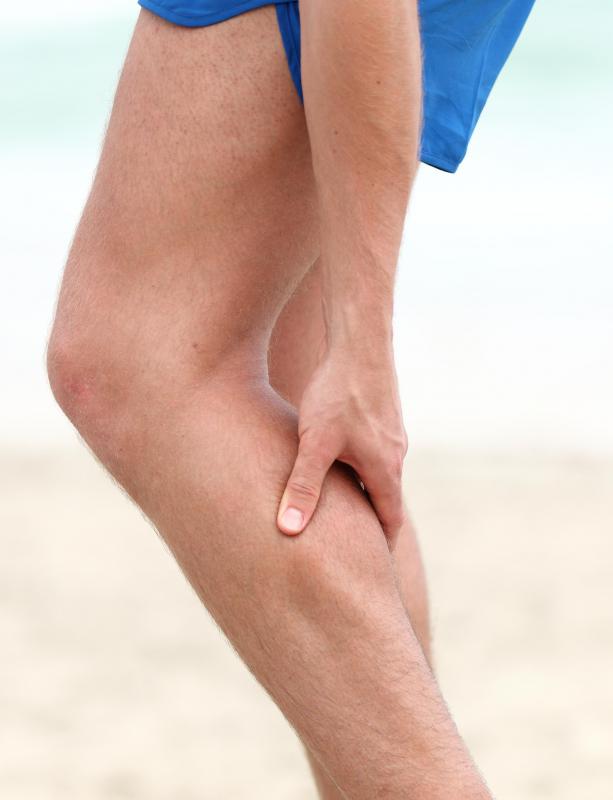
![A man with a leg cramp.]() By: MaridavA man with a leg cramp.
By: MaridavA man with a leg cramp. -
![Stay hydrated to prevent muscle cramps.]() By: studiovespaStay hydrated to prevent muscle cramps.
By: studiovespaStay hydrated to prevent muscle cramps. -
![Drinking plenty of water prevents muscle cramps.]() By: Barbara PhebyDrinking plenty of water prevents muscle cramps.
By: Barbara PhebyDrinking plenty of water prevents muscle cramps. -
![Low levels of electrolytes or fluid can cause cramps during long-distance runs.]() By: MaridavLow levels of electrolytes or fluid can cause cramps during long-distance runs.
By: MaridavLow levels of electrolytes or fluid can cause cramps during long-distance runs. -
![Cramps may be exercise induced.]() By: Tyler OlsonCramps may be exercise induced.
By: Tyler OlsonCramps may be exercise induced.





Discussion Comments
I was reading all of the comments and suggestions about cramping of the calf and arches of the feet. Well, I was diagnosed with bureges disease -- the narrowing of the arteries of all of your extremities -- and I'm having lots of problems with the muscles cramping in my calves and feet. It gets really severe when I'm on them for a short time and it is very painful and has a been damper on my life.
I have tried everything under the sun to get rid of them and nothing seems to help at all. Some people have suggested drinking a little pickle juice before bed or when having the cramps. I haven't tried that yet it sounds pretty mouth puckering. I would love some feedback.
@JessicaLynn - As wonderful as ice cream before bed is, I think it's probably a better idea to just take a calcium supplement instead of trying to get your calcium from eating dairy. If you take a supplement, you'll know exactly how much calcium you're getting.
Plus, women are supposed to take calcium supplements to prevent osteoporosis anyway. So taking a calcium supplement can help with muscle cramping as well as well as bone health.
I had no idea a serving of dairy before bed could help get rid of cramps! Now I don't feel so bad about that bowl of ice cream I ate last night before going to bed. I think I'm also going to make sure to eat some extra dairy products when I have my period next also.
@strawCake - That's a good idea. Heat also helps muscle cramps a lot. So if you don't want to go on the pill, consider getting some of those stick on heating patches from the drugstore. You can put one on your abdomen under your clothes, and it should help you get through the day a little easier.
@orangey03 - Getting severe cramps during your period can be horrible. Believe me, I know from personal experience! And it's especially rough when you try regular muscle cramps treatment, and it doesn't work.
You might consider going to visit your doctor and maybe going on birth control pills. I used to get severe cramps, so my doctor recommended that I start taking birth control pills. Since you don't really get a real period when you're on the pill, you probably won't get horrible cramps either. I know my cramps are totally gone since I went on the pill.
In the past I was not very good at taking the time to do stretching exercises before working out. I learned my lesson the hard way, and now make sure and take the time.
As I got older I would get muscle pain cramps if I started working an area that had not been warmed up. It is amazing how a few minutes of stretching can prevent those muscle cramps.
Now when I am tempted to skip the stretching exercises, I just remember the pain of the muscle cramps and take the time to do them.
@orange03-- Abdominal cramps during your period are the worst. I get these almost every month, and have to rely on over-the-counter pain relievers to get me through.
At least I know what is causing them and that they aren't really serious, but it can sure make a few days out of the month pretty miserable.
If my husband isn't faithful about taking a calcium supplement on a regular basis, he will get leg muscle cramps. He never has any warning and they can happen any time of the day or night.
Thankfully they only last for a short period of time, but the pain can be pretty intense during that time. This is a reminder for him that he hasn't been taking his calcium.
I take calcium every day more as a way to prevent osteoporosis than anything else. I never get any muscle cramps though, so maybe it is helping with that and I don't even realize it.
When I was a kid I used to get horrible muscle cramps at night in both of my legs. These cramps never bothered me during the day.
We never figured out what caused these cramps. They must have been growing pains because eventually I outgrew them. I haven't had a muscle cramp in my legs for a long time now, so don't think it was any kind of nutrition deficiency.
I get severe muscle cramps during my period. They are usually in my lower abdomen, and they make it really hard for me to function normally.
It's hard to sit up straight at my desk at work when I'm having these cramps. They generally last for the first two days of my period, and I have to take medication to relieve cramps and bloating. It helps, but it doesn't totally get rid of them.
I sometimes get thigh muscle cramps right after a workout. This happens most often when I have gone about a month without doing a particular workout and I start doing it again.
I went on a long bike ride last week, and I hadn't ridden a bike for months. The muscles in my legs just were not used to this type of strain.
As soon as I got back home and got off the bike, my thighs seized up. I could hardly walk, because they became so stiff so suddenly. I put a heating pad on them, and this helped loosen them up.
@Perdido – Muscle cramps in the legs are really awful. As bad as they are, I think that muscle cramps in the feet are even worse.
I used to wear uncomfortable shoes to work just to look nice. I think this is what caused my foot and toe cramps.
The foot cramps would occur in the middle of my arch and shoot all the way through to the top of my foot. They were debilitating. All I could do was wait them out, because I could not walk while having them.
With the toe cramps, I could actually see my toes bending uncontrollably at a weird angle. It is scary to know that a part of your body is beyond your control.
I used to get these horrible calf muscle cramps in the middle of the night. They would wake me up, and nothing that I could do would stop the pain. Massaging the area seemed to make it worse, and straightening it out was also painful.
I had heard that getting enough potassium could stave off muscle cramps. So, I started eating a banana every day for breakfast.
That actually helped! I haven't woken up with a leg cramp since.
I also keep pineapple in my refrigerator, because it is an excellent source of potassium. If I run out of bananas, I have another option.
Go see your doctor.
I appreciate all of the information in leg cramps. I have them quite frequently and the most severe is in my thigh-always the left side where I have a lot of leg swelling. The pain is so bad I am screaming and it last for at least 5-10 minutes. I am on potassium and drink a lot of water. I have also started to get them in the upper part of my body under my breasts only on the left side again and I also had a bad one in my right side. Any help on why I am getting those? I need help! (I am 57)
Post your comments