
At TheHealthBoard, we're committed to delivering accurate, trustworthy information. Our expert-authored content is rigorously fact-checked and sourced from credible authorities. Discover how we uphold the highest standards in providing you with reliable knowledge.
What Causes Leg Inflammation?
Leg inflammation can be a troubling or even painful symptom affecting one or both legs. There are many potential causes of inflammation in the legs, including standing for long periods of time or traumatic injury. Some medical conditions, such as heart disease or kidney failure, may also lead to leg inflammation. Chronic swelling of one or both legs should be reported to a doctor for further evaluation.
Maintaining a sitting or standing position for prolonged periods of time frequently cause inflammation in the legs. This may affect one or both legs, depending on how the weight is distributed while holding these positions. It is often helpful to walk around or stretch the legs every hour or so in order to prevent swelling related to this cause.

Traumatic injury is a potential cause of leg swelling. This may be due to muscle or nerve damage in the affected leg. Rest and the use of ice packs may help to relieve these symptoms, although a doctor should be consulted in order to rule out any severe damage.
There are several medical conditions that may have leg inflammation as a symptom. Some medical conditions that may cause trapped fluid in the legs, leading to inflammation, include heart disease, kidney failure, or even pregnancy. Some prescription medications, especially those designed to treat high blood pressure, diabetes, or depression, may lead to trapped fluid and leg inflammation.

Immune system disorders or disturbances may sometimes lead to leg inflammation. Some of these conditions include lupus, arthritis, or bursitis. Immune responses to infections, fractures, or torn muscles or tendons may also lead to swelling of the legs.
In most cases, leg inflammation is not a sign of a serious medical condition. If the swelling is sudden or dramatic or if it is accompanied by other serious symptoms, a doctor should be consulted immediately. Accompanying symptoms such as chest pain, difficulty breathing, or confusion should be treated as a medical emergency.

As long as there are no serious underlying medical conditions present, there are a few things that can be done at home to help alleviate some of the swelling. Over-the-counter pain relievers such as aspirin or ibuprofen may help to reduce inflammation as well as relieve any pain or discomfort that may be associated with the swelling. Placing a pillow underneath the legs while lying down may help to alleviate fluid buildup, which could lead to inflammation.
AS FEATURED ON:
AS FEATURED ON:


-
![Standing for long periods of time may cause leg inflammation.]() By: Iaroslava ZubenkoStanding for long periods of time may cause leg inflammation.
By: Iaroslava ZubenkoStanding for long periods of time may cause leg inflammation. -
![Injury may cause leg inflammation.]() By: highwaystarzInjury may cause leg inflammation.
By: highwaystarzInjury may cause leg inflammation. -
![Ice packs may help relieve leg inflammation.]() By: RidoIce packs may help relieve leg inflammation.
By: RidoIce packs may help relieve leg inflammation. -
![Pregnancy may cause leg inflammation.]() By: doble.dPregnancy may cause leg inflammation.
By: doble.dPregnancy may cause leg inflammation. -
![Certain medications may cause leg inflammation.]() By: Chepko DanilCertain medications may cause leg inflammation.
By: Chepko DanilCertain medications may cause leg inflammation. -
![Chronic leg swelling should be reported to a doctor.]() By: Ocskay BenceChronic leg swelling should be reported to a doctor.
By: Ocskay BenceChronic leg swelling should be reported to a doctor. -
![A doctor should be consulted immediately for persistent or worsening leg inflammation.]() By: ShakzuA doctor should be consulted immediately for persistent or worsening leg inflammation.
By: ShakzuA doctor should be consulted immediately for persistent or worsening leg inflammation. -
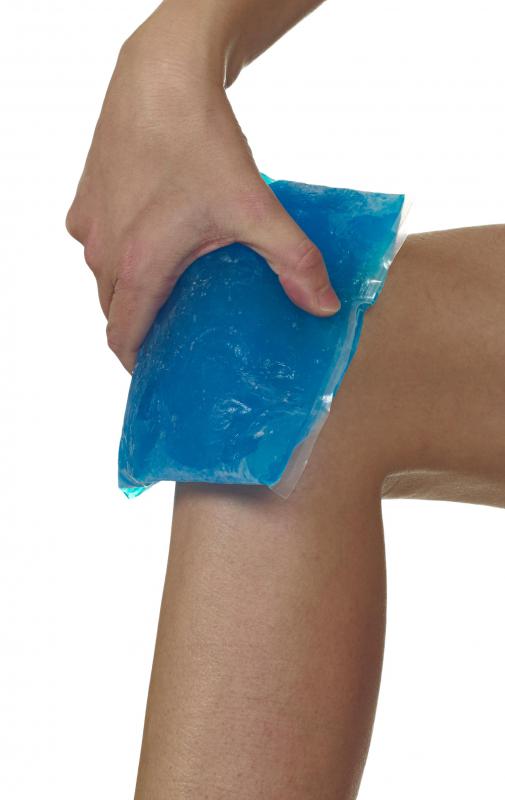
![Doctors typically recommend applying an ice pack to the knee after an injury to the tendons, muscles or cartilage.]() By: LovrencgDoctors typically recommend applying an ice pack to the knee after an injury to the tendons, muscles or cartilage.
By: LovrencgDoctors typically recommend applying an ice pack to the knee after an injury to the tendons, muscles or cartilage.







Discussion Comments
My legs itch near the ankle area. I have less than moderate pain in legs radiating to hip area. Help.
There are many causes of leg inflammation that can result in leg pain. The causes are most likely minor, but it is always a good idea to see a doctor to rule out anything serious. More than likely, you will just need to adjust your physical activities, or get off your feet and get some rest.
Post your comments