
At WiseGEEK, we're committed to delivering accurate, trustworthy information. Our expert-authored content is rigorously fact-checked and sourced from credible authorities. Discover how we uphold the highest standards in providing you with reliable knowledge.
What Causes Graves' Disease?
 Tricia Christensen
Tricia Christensen
Tricia Christensen
Graves disease is an autoimmune disorder that is more common in middle-aged women than in any other group of people. The symptoms of this condition are caused by hyperthyroidism or overactive thyroid gland, which produces more thyroid hormones than the body can handle. It is not known how the thyroid gland becomes overactive, however. So the exact cause of Graves disease cannot be pinpointed.
When hyperthyroidism is present, as in Graves disease, several symptoms occur. This condition is usually diagnosed by testing the blood to evaluate levels of thyroid hormones, but is also diagnosed by the appearance of one of the following three symptoms: bulging eyes, goiter, which results in significant swelling of the neck, or swelling over the shins. Those with Graves disease will have at least one of these symptoms and may have several.

Other symptoms may be present as well. The heart rate may be fast, or those affected may feel palpitations. People may feel exceptionally nervous or shaky, and may have an increased appetite. Weight loss and sleep difficulties are both common as the metabolism speeds up in response to the extra amounts of thyroid hormones.
Frequently using medications to reduce thyroid hormone may control Graves disease. When medications alone fail, physicians consider removing the thyroid. This may involve an initial surgery, called a thyroidectomy, and then radiation to kill off the remaining thyroid cells. Radiation is usually avoided in women in their childbearing years who wish to have more children, as this may have an adverse affect on fertility.

Treatment, however, is unavoidable even if women are in their childbearing years, since the condition can be passed from pregnant women to their unborn children. Reducing thyroid production is essential to eliminating complications of the disease. Usually pregnant women take medication to reduce their thyroid hormones count.
When Graves disease has caused bulging eyes, this condition can be treated cosmetically by opening up the sinuses to allow the eyes to drop back into their natural position. Even after excess thyroid hormones are eliminated, protuberant eyes may still be present. Eye care is especially important for those with this condition, since the pressure on the eyes can cause double vision. As well, those with Graves disease may have problems with extreme dry eye, and are more prone to eye injuries from dust.

Graves disease has one extremely serious complication to which all affected must be alerted. On some occasions, the thyroid levels become so high that they result in what is called a thyroid storm. A thyroid storm is marked by sudden and total confusion, high fever, and can result in coma without treatment. If a person feels their symptoms quickly worsen, this is a medical emergency, and the affected should call emergency services immediately.
In many cases this condition can be well controlled by surgery, medications or both. Research to further understand the cause may help improve treatment in the future.
Tricia Christensen
Tricia has a Literature degree from Sonoma State University and has been a frequent WiseGEEK contributor for many years. She is especially passionate about reading and writing, although her other interests include medicine, art, film, history, politics, ethics, and religion. Tricia lives in Northern California and is currently working on her first novel.
Learn more...
Tricia Christensen
Tricia has a Literature degree from Sonoma State University and has been a frequent WiseGEEK contributor for many years. She is especially passionate about reading and writing, although her other interests include medicine, art, film, history, politics, ethics, and religion. Tricia lives in Northern California and is currently working on her first novel.
Learn more...AS FEATURED ON:
AS FEATURED ON:









-
![Swelling in the shins is common in patients with Graves disease.]() By: mykeyrunaSwelling in the shins is common in patients with Graves disease.
By: mykeyrunaSwelling in the shins is common in patients with Graves disease. -
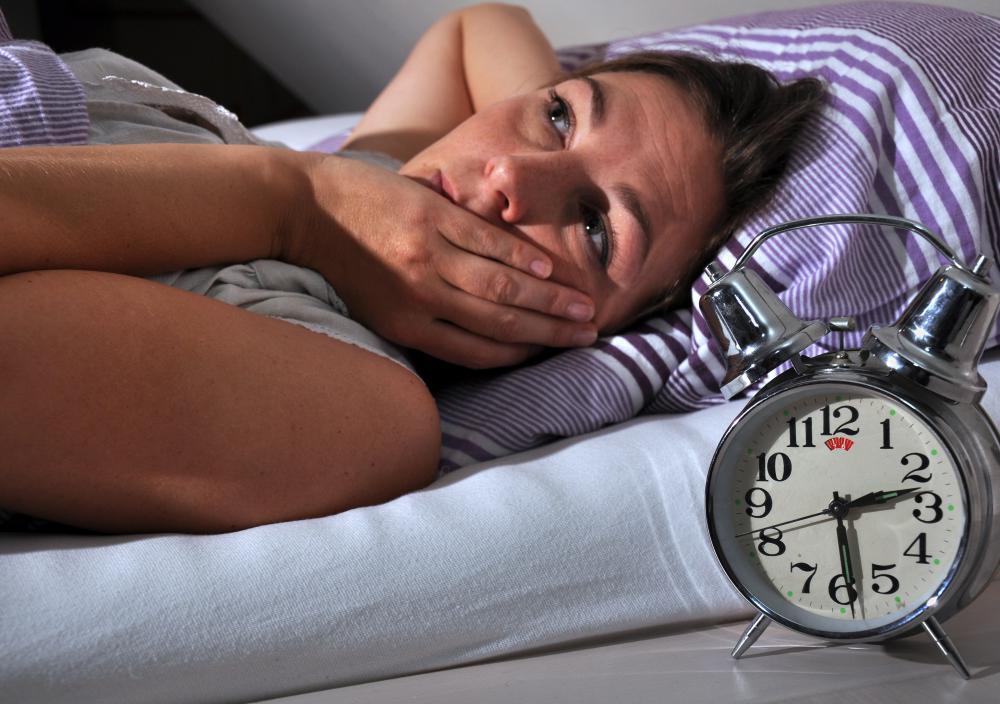
![People suffering with Graves disease may have trouble sleeping.]() By: Dan RacePeople suffering with Graves disease may have trouble sleeping.
By: Dan RacePeople suffering with Graves disease may have trouble sleeping. -
![Graves' disease is an autoimmune disorder that is most common in middle-aged women.]() By: Karin & Uwe AnnasGraves' disease is an autoimmune disorder that is most common in middle-aged women.
By: Karin & Uwe AnnasGraves' disease is an autoimmune disorder that is most common in middle-aged women. -
![Some patients with Graves disease may lapse into coma.]() By: Claudio's PicsSome patients with Graves disease may lapse into coma.
By: Claudio's PicsSome patients with Graves disease may lapse into coma. -
![Graves' disease can be passed on from pregnant women to their unborn children.]() By: AllianceGraves' disease can be passed on from pregnant women to their unborn children.
By: AllianceGraves' disease can be passed on from pregnant women to their unborn children. -
![An overactive thyroid gland causes the symptoms of Graves' disease.]() By: nerthuzAn overactive thyroid gland causes the symptoms of Graves' disease.
By: nerthuzAn overactive thyroid gland causes the symptoms of Graves' disease.




Discussion Comments
I was 19 when I was diagnosed with Graves. Bulging eyes, neck, no sleep, hyperactivity etc etc. Medication did not control it so I had RAI. That was 42 years ago and it made all the difference. I've been taking replacement hormone my whole adult life, and it is easy to manage the levels. Regular blood tests and dosage modification are not hard. I would do it all over again, as it improved my life many-fold.
I was diagnosed with Graves Disease in 2011 I took Methimazole (sp?) for eight months and my thyroid levels steadily decreased. I switched to a better diet of whole foods with very little processed food and no more artificial sweeteners. I have been on no medication for over 3 years and have no symptoms except for slightly dry eyes (but I wear contact lenses). I have blood work done once a year and my thyroid levels continue to be perfect. I have no explanation but am very thankful.
I was diagnosed in November when I lost over 50 pounds and a lot of my hair. I did the radiation iodine and I stay mad, sad, cry, and just have a hard time falling asleep even with ambien. I have always had way too much energy that I was so hyper and I still do, but I focus it in the wrong ways now.
My husband doesn't believe I have Graves because I can still do so much and stay up so late. I don't know how to explain to him what a terrible life this is for me or make him believe I'm really sick just because I don't stay in bed all the time anymore.
It takes me about three hours to get up and get going with the muscle aches and just feel so bad, but I do feel good at night. I have tried to go to sleep earlier and get up earlier and it just doesn't work. How can I explain this to my husband? He brought up a divorce tonight and doesn't believe me so I'm desperate! I love him more than anything and was always emotional, but I want my life back.
I have Graves Disease. I swallowed the radioactive iodine pill about seven years ago. It took several months for my TSH levels to return to normal range. Before RAI, I slept and napped constantly, had palpitations, lost a lot of hair, had some skin issues and my benign essential tremor was aggravated making me appear like my head was nodding yes all day long. All of these issues went away over several months after RAI. I feel fine. Graves Disease doesn't go away but RAI helped me to live with it.
For those of you looking for an herbal treatment, bugleweed suppresses thyroid function. I took it and went into remission. Be sure to take it under the supervision of a health care professional, although I'll warn you that it might be easier to get it through the help of a nutritionist or alternative care practitioner.
I am a 21-year-old female. I have Graves disease. I found out because i had a bulge in my neck. And it was uncomfortable to swallow. I have all the symptoms, from brittle fingernails that break all the time to my hair falling out. I'm mad, sad and crying for no reason all the time. The littlest thing sets me off. I lost 10 pounds and I have insomnia. I stay up until like 4 every morning. I can never sleep and am always tired. My endo wants me to do the RDI, but now that i have read all this, I am very scared.
I was on methimazole, which I was allergic to, then he put me on propylthiouracil 50 ml, which I was also allergic to. Talk about being in that 5 percent. I just don't want to do the RDI and die. Do these symptoms ever really go away?
I was never diagnosed until after a wreck, which totaled my car and also hurt my back and neck. Is there a link between physical trauma and graves disease?
I was just diagnosed with graves disease. But it's too late for me. My thyroid levels are double what they should be and I had a breakdown where I did not sleep or eat or drink much fluid for one month. Now I am brain damaged and can't stop shaking, my hair is falling out and I have lost everything.
I saw a doctor 11 years ago and he said not to worry about cysts on my thyroid. So I just forgot about it, but after years of stress and crazy behavior, I had a breakdown. Why would you send a person out of your surgery if they have cysts on their thyroid?
I have lost it all, my poor kids. My fault, even though my stress was a real response to huge stress factors in my life for many years. I look like a monster and have no control over anything, not even the constant shaking that won't stop for five months and can't sleep at all. This is slowly killing me.
What can I do? My poor kids. They need me well, but all they want to do is lock me up, call me crazy and give me horrible drugs that have severe side effects. It's over for me. No miracles here!
I received my RAI today here en Canada, I'm 34 years old. No regrets about this decision. I was put on tapazole 18 months ago, with terrible side effects and I was in the emergency because of the serious side effects. I was without medication for almost a year, and my thyroid levels went up to sky. The doses I received today was small, about 290 Mbq. It was just water, no side effects until now. Our body needs help.
I cannot live with the Tapazole forever, knowing it's hurting my liver and the horrible side effects. I'm helping my body with exercise and a healthy diet. Don't lose hope! There is always hope.
I am 47 years old, and just found out I have Grave's disease this morning. I am an avid runner and do a lot of marathons and when my doctor told me that I couldn't do any running because it would stress out my heart, I felt sick and depressed. Running is my only way to de-stress and now I can't. She gave me two options: the radiation or the Pill. I don't know what to do.
I am 40 years old and have been fighting with graves disease for about seven years now. I refuse to have RAI and every month when I need to get my prescription refilled, I have to hear about how I should have it done.
I won't do it because the first time I was treated with methimazole, the doctor was ignorant and overmedicated me into a hypothyroid turmoil. It was a million times worse than my graves disease, even at its worst. The thought of my life being permanently in the hands of ignorant doctors like that makes me so mad!
I hope someone out there somewhere is working on a new treatment for this disease, because so far, all of the options suck.
I was diagnosed with graves disease today. i lost 50 pounds in five weeks, from 205 to 153. I'm always tired and sleepy, have dry, watery eyes, out of breath when taking a shower or climbing stairs. I've lost so much strength it's ridiculous. I'm now on methimazole propranolol, and some iodine called lugol.
I just found out i have graves. It really scares me. I don't know how i got this. I'm thinking maybe from whiplash from car accident and stress from insurance companies.
I knew something was wrong when my heart was beating so fast. I work out and i try to keep healthy. I keep asking what have i done wrong. I just got married a year ago this july. I'm 37. I was put on meds, and after eight months the specialist took me off them and said my thyroid normalized. I want to so much have a baby, and I'm so scared. This really hurts. I'm so scared. No one to really talk to about this. I feel like my life is over. Anyone have advice for me and baby etc.? Thank you.
I am 19 years old and was just diagnosed with hyperthyroidism. I am on methimazole and it has been about a week. When will i start to feel side effects if anything? Does everyone gain weight or get side effects? Or is the only reason people gain weight is because increased appetite?
I am a 32 year old female who was diagnosed with Graves back in 2003. I took Neomercazole for a few years and discussed RAI with the docs but refused to do it. In 2006, I was in remission and went off all drugs, went back to feeling normal (except for the eyes). I had blood tests done every six months and all came back dead normal until yesterday when suddenly I am now nearly 50 times over the correct blood result.
I'd got my blood tested cause I wasn't sleeping, lethargic but hyper, lost 8kg, hair's falling out, and my eyes are ridiculously sore and dry. Guess it's back with a vengeance!
What amazes me it that articles on the internet makes it sound like you've just caught a common cold. I'm currently 19, and I was diagnosed with Graves Disease at fifteen. Before I was put onto medication I was constantly sick, kept having black out sessions and kept losing weight (some due to throwing up, but after I got past that hurdle I was still losing weight).
It subsided this year in January, however I do have a chance of it coming back stronger if I get overly stressed about something. If that's the case then I would be having radioactive treatment.
Seriously, don't let the articles on the net trick you into thinking it's nothing, but also don't let the comments scar you. Just take treatment step by step and you'll great through in the end.
How come the official literature about Graves disease makes it sound like no big deal, easily treatable and you go back to a normal life?
I was sick for years, but I was determined not to have radiation therapy. Finally, I couldn't stand the roller coaster ride of going on and off of anti-thyroid meds and took the radiation. The doctors put you through hell, making you go off and on medication, and not putting you on Synthroid until you're hypothyroid.
I have gained weight since then, and am tired and weak. My eyes swell, and even my neck swells. When I am premenstrual I still get heart palpitations. I tried to lose the weight, but after six weeks of hard exercise and diet, I only lost two pounds.
It's been several years since I took the radiation. My doctor says my thyroid hormone levels are "perfect". I don't know what the solution is, but it bothers me that the medical establishment tries to minimize the problems. I know several people who recovered from cancer faster and more fully than I have recovered from Graves.
If this gets to someone then I have done a great deed. I am a 29 year old female and had the radioactive iodine in June. Don't do it.
I was on the Methimazole and that worked the best for me. But the doctors talked me into the radioactive iodine and it was the worst thing I did.
Things only got worse from there. My mind has not been right. I am mean, sleep all the time, am sick all the time and my hair, well that falls out every day!
After you do the radioactive iodine, there's no taking it back. Think about it and research it.
I have grave's disease and was just diagnosed today. I suspected it as soon as I got my blood work of increased hormone levels. I have all the symptoms of heart palpitations, nervousness, weight loss, fatigue, double vision.
I am really sick and will see an endocrinologist to discuss treatment options. My nuclear medicine doctor discussed RAI and I'm not sure if that is the only option. Please advise. I am only 31 and thinking of having another child someday.
I have graves disease for two years. I have lost a lot of weight, from 150 lbs to 118. When will I start to gain my weight back? I am on medication and get blood work every two weeks. I am so sick and weak I cannot not work. all I want to do is sleep. This I would not wish on anyone. I had radiation treatment but it did not kill the gland. Help!
I had graves disease, and I took a radioactive Iodine pill. Now I have to take Synthroid internally, although my eyesight has gotten worse. is that normal? I am 48 years of age.
I got diagnosed with Graves disease in March. i was pregnant but lost the baby. I am currently on Methimazole and 300 grams of an OTC supplement i take -- it's acetyl carnitine with lipoic acid. The methimazole is supposed to help the thyroid decrease the hormone production and i take the carnitine supplement because it helps cell avoid absorbing the extra thyroid hormone.
I didn't tell my Doc i was supplementing with the carnitine, but she noticed a dramatic change in my blood tests. Which wasn't happening when i was on methimazole or ptu alone. I won't try RAI, honestly to me that's a last resort. The doctor was so fast in telling me that RAI was the only solution for me. I won't do RAI nor get my thyroid gland out.
I will find what is causing the thyroid to be overactive and i will get remission. By the way, for those of us who suffer with Graves disease, try relaxing exercises. It seems that extra stress and the way we cope with it may be directly hurting our thyroid. Also try to eat an allergen free diet for life. It will get rid of the body swelling and help all your systems.
I have graves disease and I realized it after one of my eyes appeared to be bigger than the other one. I am on medication now and I am hoping that my eye will get better soon.
Please, anybody out there considering radiation as a treatment for graves disease, read this. That is the worst thing you could possibly do.
I was a little anxious with hyperthyroid but it was nothing I couldn't handle. Now I am so not myself. I have depression with panic attacks that are so bad I want to just die. I don't know if I will ever get better.
Doctors will tell you that it's my "hormones" but this is a testimony so please read carefully. I was fine before. I am not fine now.
I can't believe they do this to people. Lots of people told me horror stories about the RAI but I didn't listen. I thought it wouldn't happen to me. So please don't do the RAI.
i am 22 years old and i have hyperthyroidism. It's weird because i am actually gaining weight. I feel a lot of pressure in my neck at times. It's very embarrassing to show my neck so I wear polos and shirts that cover my neck.
I'm taking medication now and the swelling is going down but still a little visible. my thing for the readers is if you see a little bulge in your neck and your heart is racing get treated right away.
I'm seventeen and I have graves disease. I was scared because I started to lose weight for no apperent reason, can't sleep at all (become total insomiac). however i don't have an increased appetite, but i have a slight bulge in my neck.
I had cancer in 1985 and radiation which was suppose to have killed the thyroid gland and have been on Synthroid since 1986 after I had hypothyroid symptoms. Cancer was not my thyroid, but in my gland in my neck which was squamous cell. I started to lose weight, can't sleep, fingernails peeling and breaking, hair breaking off, eye problems. Had medication lowered three times and am now off of it and waiting for next blood work results. I am down from size 14/16 pants to 7/8.
i have graves diease and i didn't know until my heart started racing very fast. i thought i was having a heart attack. i lost 14 lbs and i was always tired. it really scared me to lose that much weight at one time because i am a small trim female.
Post your comments