
At TheHealthBoard, we're committed to delivering accurate, trustworthy information. Our expert-authored content is rigorously fact-checked and sourced from credible authorities. Discover how we uphold the highest standards in providing you with reliable knowledge.
What Causes Fever Blisters on Lips?
Fever blisters on the lips can be brought on by a variety of external sources, but the underlying cause is the herpes simplex virus (HSV-1). This virus is most readily spread when fever blisters are present, but may be transmitted even if a person is asymptomatic. While the root cause is contracting HSV-1 from a carrier, external sources like sun damage, stress, or physical trauma can cause the virus to reactivate.
HSV-1 typically goes dormant after the symptoms of the initial infection have subsided. When it reactivates, for whatever reason, it can cause fever blisters on lips. Fever blisters and similar lesions, like canker sores, can also form inside the mouth, on the soft palate, or even in the esophagus. The most common location, though, is the edge of the lips where they meet the skin of the face.
One common cause of fever blisters is damage from the ultraviolet (UV) radiation of the sun. This can be mitigated by wearing sunblock on the lips when outdoors, so that the radiation isn't able to cause the virus to reactivate. Other trauma to the lips can also trigger outbreaks of blisters, so simply avoiding cuts or contusions can help.
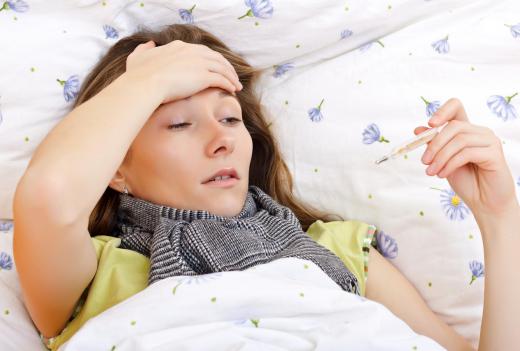
Though fever blisters, also known as cold sores, aren't an actual symptom of a cold, the HSV-1 virus is often reactivated by a suppressed immune system. This means that individuals may be more likely to get them during or after a cold, flu, or other illness.

HSV-1 can also be reactivated by a high level of stress, and like fever blisters brought on by illness, this may be difficult to avoid. While there is no cure for the virus, and therefore no cure for fever blisters on the lips, there are ways to manage both the outbreaks and HSV-1 itself. There are vaccines that may make it more difficult to contract HSV-1, and there are antiviral medications available that can help reduce the likelihood of outbreaks.

While they may be similar in appearance, canker sores are a form of mouth ulcer and aren't caused by a virus. The root cause of these sores is unknown, though they can be brought on by many of the same things as fever blisters, such as trauma, stress, or a suppressed immune system. A medical professional can perform tests to determine whether the HSV-1 virus is present, though the testing generally must be done after the outbreak subsides.
AS FEATURED ON:
AS FEATURED ON:


-
![As the name implies, a fever blister can trigger a mild fever.]() By: Ocskay BenceAs the name implies, a fever blister can trigger a mild fever.
By: Ocskay BenceAs the name implies, a fever blister can trigger a mild fever. -
![Fever blisters are caused by a common virus, herpes simplex 1.]() By: Marco2811Fever blisters are caused by a common virus, herpes simplex 1.
By: Marco2811Fever blisters are caused by a common virus, herpes simplex 1. -
![An infection can cause lips to swell and develop blisters.]() By: alex83chAn infection can cause lips to swell and develop blisters.
By: alex83chAn infection can cause lips to swell and develop blisters. -
![Over-the-counter ointments can be applied directly to a fever blister to promote quick healing.]() By: markcarperOver-the-counter ointments can be applied directly to a fever blister to promote quick healing.
By: markcarperOver-the-counter ointments can be applied directly to a fever blister to promote quick healing. -
![Applying certain types of mouthwash directly to a fever blister may promote faster healing of the lesion.]() By: theartofphotoApplying certain types of mouthwash directly to a fever blister may promote faster healing of the lesion.
By: theartofphotoApplying certain types of mouthwash directly to a fever blister may promote faster healing of the lesion. -
![Fever blisters are more likely to occur during or after a cold or flu.]() By: Steve CarrollFever blisters are more likely to occur during or after a cold or flu.
By: Steve CarrollFever blisters are more likely to occur during or after a cold or flu. -
![Medications may be helpful in reducing the likelihood of fever blisters.]() By: milosducatiMedications may be helpful in reducing the likelihood of fever blisters.
By: milosducatiMedications may be helpful in reducing the likelihood of fever blisters. -
![Trauma to the mouth may lead to the development of canker sores.]() By: Scott GriesselTrauma to the mouth may lead to the development of canker sores.
By: Scott GriesselTrauma to the mouth may lead to the development of canker sores.







Discussion Comments
@fify-- I'm exactly the opposite. I get fever blisters on my lips when I'm out in the sun or when I have a fever.
This is why I have to use lip balm with SPF and UV protection. When I get sick, I have to keep an eye on my temperature and take fever reducers if I get a fever. Otherwise, I will get a fever blister immediately.
I'm not sure if this is a cure or fever blister treatment but I've heard great things about lysine supplements. Apparently, this supplement helps prevent fever blisters. I'm planning on buying a bottle, you might want to look into it if you get blisters often.
@fify-- Your immune system might be getting weaker in winter because of illness. Cold also causes lips to become dry and crack. A fever blister often pops up where the crack is.
There is no cure for fever blisters but you can keep your immune system strong by eating fruits and vegetables with lots of vitamins. You should keep your lips moisturized at all times to prevent cracks. There are also cold sore & fever blister ointments sold at the pharmacy that quicken healing. I personally use one too, it works well.
Why do I only get fever blisters in winter? I've never had them in the summer, they always pop up when the weather is cold.
How do I get rid of fever blisters altogether?
Post your comments