
At TheHealthBoard, we're committed to delivering accurate, trustworthy information. Our expert-authored content is rigorously fact-checked and sourced from credible authorities. Discover how we uphold the highest standards in providing you with reliable knowledge.
What Causes a Peanut Allergy?
 Mary McMahon
Mary McMahon
Mary McMahon
An allergy to peanuts is one of the most serious allergies, and is estimated to be involved in as many as 80% of fatal or near fatal allergic reactions every year. In the United States alone, 1.5 million people have a peanut allergy, and this rate is climbing, as it is in other First World countries. The exact cause of the allergy is unknown, although the biological process that creates an allergic reaction is well understood. No matter what causes it, a peanut allergy can be fatal to the sufferer, people should be respectful of those who say they are allergic to peanuts and try to be conscientious around them; sometimes even being touched by someone who has handled peanuts will stimulate a reaction.
Like other allergies, a peanut allergy is an abnormal immune system response. The body decides that the proteins peanuts contain pose an immunological threat, and it generates Immunoglobulin E (IgE), an antibody, to fight peanuts the next time they appear in the body. Sometimes it takes multiple exposures to peanuts to develop IgE. When someone with this kind of allergy eats peanuts, it triggers the formation of histamines in the body to fight the peanuts, causing an allergic reaction.

With a mild peanut allergy, sometimes differentiated as intolerance, consumption of peanuts can be accompanied by intestinal distress and heart burn. In the case of a serious allergy, the victim may develop hives, skin rashes, difficulty breathing, accelerated heart rate, and in an extreme case, anaphylaxis, which is a state of unconsciousness that can rapidly lead to coma. The patient must be immediately treated with epinephrine to suppress the immune system response, which is why many people with severe allergies carry allergy kits.

Studies have shown that young children are more likely to develop allergies to peanuts than adults. If a child is not exposed to peanuts before the age of four, it is highly probable that he or she will not develop an allergy. In some instances, children have also grown out of allergies to peanuts, although this should be determined by a medical professional. Family history is a major risk factor; children of parents who are allergic to peanuts are often allergic as well.

If someone suspects a peanut allergy, allergy testing can be conducted to confirm it. Patients can undergo skin testing, which directly embeds proteins under the skin, causing a rash if the person is allergic. A blood test can also be used to look for IgE in the blood.
The growing incidence of allergy to peanuts in First World countries has led doctors to suspect that humans may be altering their immune systems by eradicating diseases and keeping their environments too clean. The absence of threats in the immune system's natural environment may lead it to do strange things, like develop adverse reactions to ordinary foods. In addition, the heavy use of peanut products in foods may be contributing to the problem. It is hard to avoid exposing young children to peanut products, which are found nearly everywhere — in oils, most processed foods, skin care products, and in some plastics, among many other products.
Mary McMahon
Ever since she began contributing to the site several years ago, Mary has embraced the exciting challenge of being a TheHealthBoard researcher and writer. Mary has a liberal arts degree from Goddard College and spends her free time reading, cooking, and exploring the great outdoors.
Learn more...
Mary McMahon
Ever since she began contributing to the site several years ago, Mary has embraced the exciting challenge of being a TheHealthBoard researcher and writer. Mary has a liberal arts degree from Goddard College and spends her free time reading, cooking, and exploring the great outdoors.
Learn more...AS FEATURED ON:
AS FEATURED ON:


-
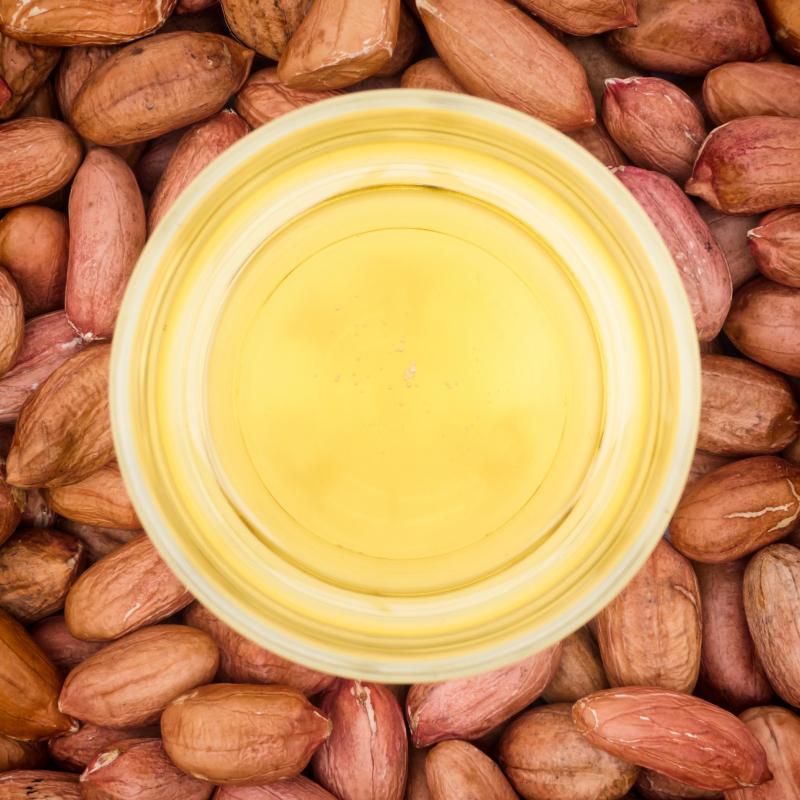
![Skin care products can contain peanut ingredients.]() By: picsfiveSkin care products can contain peanut ingredients.
By: picsfiveSkin care products can contain peanut ingredients. -
![A skin allergy test can be done to determine if a patient is allergic to peanuts.]() By: Alexander RathsA skin allergy test can be done to determine if a patient is allergic to peanuts.
By: Alexander RathsA skin allergy test can be done to determine if a patient is allergic to peanuts. -
![Hives can appear as an allergic reaction to peanuts.]() By: Jürgen FälchleHives can appear as an allergic reaction to peanuts.
By: Jürgen FälchleHives can appear as an allergic reaction to peanuts. -
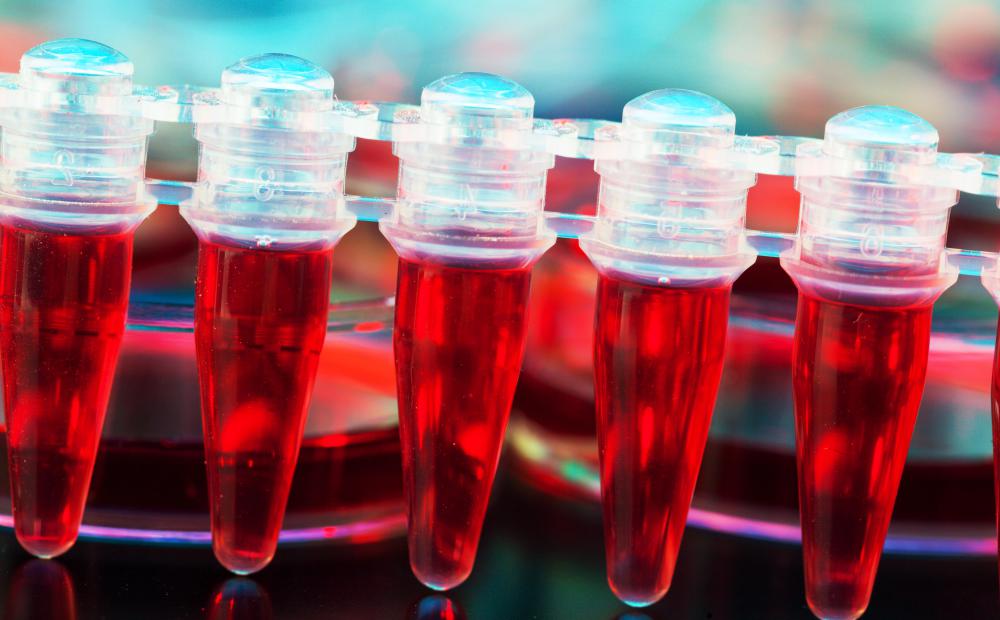
![A blood test can reveal a peanut via IgE in the blood.]() By: luchshenA blood test can reveal a peanut via IgE in the blood.
By: luchshenA blood test can reveal a peanut via IgE in the blood. -
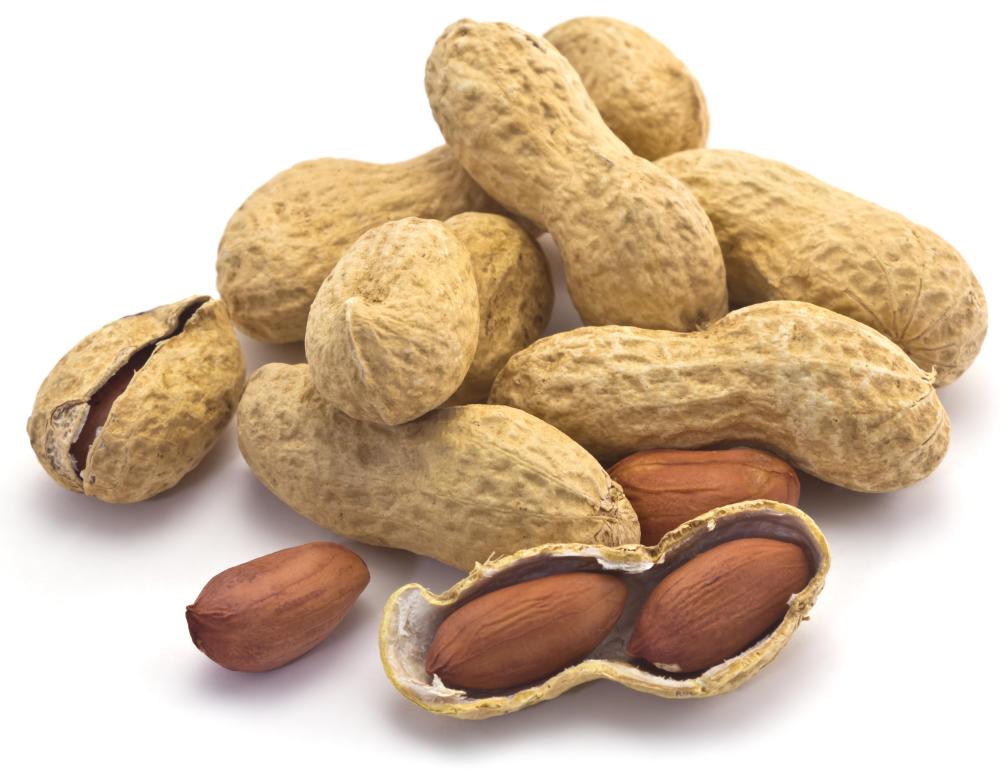
![An allergy to peanuts can be life-threatening, so avoid peanuts in all forms when cooking for or in the vicinity of anyone with sensitivities.]() By: WimLAn allergy to peanuts can be life-threatening, so avoid peanuts in all forms when cooking for or in the vicinity of anyone with sensitivities.
By: WimLAn allergy to peanuts can be life-threatening, so avoid peanuts in all forms when cooking for or in the vicinity of anyone with sensitivities. -
![In the United States, an estimated 1.5 million people are allergic to peanuts.]() By: pilotl39In the United States, an estimated 1.5 million people are allergic to peanuts.
By: pilotl39In the United States, an estimated 1.5 million people are allergic to peanuts.


Discussion Comments
What I am actually wondering about, is this: when I was a kid, everybody ate peanut butter. We didn't have those Lunch Mates and other food preserved and packaged with the same shelf life as Twinkies.
So, since this was a commonly eaten product, and in all the years I was going to school, and not one kid ever got sick and died because someone took a peanut butter sandwich to school, what actually happened? Did peanuts become so toxic, kids so frail, or moms so "trendy"?
I used "trendy" because in one case I know, this mother was actually proud of her son’s allergies! “Jonathan has peanut allergies, and he is allergic to pork, and he is allergic to ...blah blah blah.” Looking at the kid, he is pale as a ghost and thin as a post.
So, if these allergies were nonexistent 40 years ago, and since nobody died because Sally ate peanut butter on her toast that morning and didn't go through a decontamination chamber, what is the real cause of these allergies? Have peanuts changed in the past 40 years after being unchanged for tens of thousands of years before that?
I have peanut allergies and its no joke. I went to the ER they took me right in and boy, what a trip. I love peanuts and I am so afraid.
They say roasted peanuts cause more allergic reactions.
Out of curiosity, I just read an article about vaccines using peanut oils in them and the opinion posed seems to make sense. In different countries, vaccine manufacturers use oils from different foods in their vaccines and the population tends to have a higher rate of allergies to those specific foods.
The idea seems to make sense because a vaccine is used to build immunities to disease, and could very well lead to an immune reaction (allergic reaction) from the oils later in life.
Now before you all call me an anti-vaccine advocate, let me tell you that I've been vaccinated and have vaccinated my child, and we have no food allergies. The article also states that the incidence of allergies doubled when vaccines started to be batched together. So yes, food allergies are being caused by something other than vaccines, but perhaps vaccines are giving that cause more opportunity to do harm.
I'm thinking it might be worthwhile to do some testing with vaccines using different oils. Wouldn't it be lovely if vaccines could prevent disease and allergies? Just a thought.
Can people who are allergic to peanuts eat sesame seeds?
Here are my thoughts on the peanut allergies.
I grew up in the late 60s and 70s. I taught preschool in the mid 80s. This allergy was never talked about (even in the 80s). I would make peanut butter and jelly sandwiches when we would go on a field trip (in case someone forgot their lunch). Peanut butter used to be in glass jars. Now most of it is in plastic jars. I don't know the exact time when the change was made but I think it has something to do with the peanut butter in the plastic jars. We are not hearing about the BPA free plastic etc.
I think it is a combination of the BPA in the plastic and the peanut butter ingredients. I also believe that they are processing foods differently now, with more toxins, etc., and that is what is giving us these behavior issues, ADHD, allergies, autism etc. Thanks for listening. --Linda
Peanut shells can cause anaphylactic reactions, yes. My six year old nearly died from touching one. I wouldn't risk it.
For anyone who thinks that skipping childhood immunisations is a good idea: you are making the likelihood of children getting sicker higher. Just because a disease like polio doesn't happen as often anymore does not mean it won't happen and it's therefore pointless to immunize your kids. There are plenty of resources that will tell you that this is how diseases start to spread.
With world travel so commonplace, this is how third-world diseases and thought-to-be-eradicated diseases come to affect our children and cause a greater risk for everyone. Immunisation is not proven to cause allergies. It is much safer to immunize your child than to go without.
I think the cause of so many more allergies in the new generation of children has more to do with chemical tampering and genetically modified foods than anything else.
My niece has a peanut allergy at less than one year old. It must be a contact allergy since she had never eaten peanuts. She had not been given any of her vaccines. Obviously vaccines did not cause the allergy!
I am 34 years old and have ate peanuts and peanut butter all my life. I never had an allergic reaction until last month. The doctor said it is common but I would like to know how I could develop an allergy to peanuts at 34 years old?
I do believe that there is something going on with the immunizations today. I definitely find it interesting that there are more peanut allergies (and more allergies in general) today, and more immunizations given today.
I've done so much research on immunizations and have decided not to immunize our child.
Through the research I've done, it makes sense to me that immunizations could be the cause of so many allergies. We're not giving our children's immune systems a chance to build up.
Interesting reading #8 because my two children, ages four and two, also have peanut allergies. I did eat peanut butter and I did have both of my children immunized. The second child we missed a dose of them around six months and just did the 12 months. He is less allergic. Don't know if it's a coincidence.
My husband is also allergic to cats and dogs and my first is allergic to cats and dogs. We are hoping they grow out of them by age six but will try to get in a study if they don't.
So sick of hearing anti-vaccination lobbyists blaming it for everything under the sun. Let's see how you feel when your child dies of a preventable disease like children in third world countries who aren't lucky enough to be vaccinated do. This is a discussion about peanut allergies, and as the article states, the exact cause is unknown.
I am wondering whether or not a child can develop an allergy to peanuts even though they have been eating peanuts for two years? Also if this is this case, does swelling occur on their hands and knees followed by with a rash? My child is four years old.
We feed our squirrels raw peanuts, and have had a query raised about the toxicity of the peanut shells. Do the shells alone pose an allergy problem, particularly to young children?
Can a peanut allergy be passed to baby through breast milk? I have friend whose first child was bottle-fed and the next three babies were breast fed and have severe peanut allergies like their mother. Anyone know this answer?
I am allergic to peanuts and the rest of the legume family too, just like you #13. I wonder: did they have vaccination programs when you were a child? Were you vaccinated? I was vaccinated but my brother was not. He is not allergic to anything.
I was reading an article online about that and it does make some kind of sense. The immune system goes on 'high alert' the next time it encounters that substance.
#1: I think burnt peanut shells should theoretically be fine. The allergen is the protein in the nut transported in the oil, but highly unlikely to be transported in smoke from the shell.
Immunizations! I am the mother to a peanut allergic child, age four, and i have witnessed two anaphylactic episodes and i have never been so frightened.
Some time ago i was talking to a specialist who was studying peanut allergies and desensitization using mice. I asked, how do you give a mouse a peanut allergy? Answer: We inject them with poison as babies and for some reason it creates a severe allergy. Hmm. Isn't that what i did when i had my child vaccinated at one and three days, then at eight weeks?? (australian immunisation program).
Might i add i recently heard that Australia is now leading the allergy epidemic? I won't be vaccinating again, much to the disgust of our government.
Re: Peanut Allergies: Must respectfully disagree with #6, and dispel the 'genetics' theory, as well as increased immunization as the culprit.
I am 51 years old and have had peanut allergies for my entire life - actually have several food allergies to all nuts - legumes and tree, peas, and (don't laugh) fresh water fish, but can eat all manner of ocean fish and seafood, fruits and vegetables.
True, I was the only child in school who had to bring every treat home for screening by my mother. I have never eaten a chocolate from a box without breaking it open first, and I read the ingredients on everything before I buy it!
I can have a minor reaction from an open box of peanut butter cookies in a small room and let's not even get into peanuts on airplanes!
I have never received a good answer from a doctor or pharmacist on why me and why this combination, when there is no history of any allergies of any kind in my family. My brother has no allergies and two of my three children do not have allergies, nor do my four grandchildren.
There is a jar of peanut butter in my house, and they always had peanut butter in my parents house.
There are rules, if you will, about how it is eaten: Paper Plates, plastic knives and you must throw everything away and wash any surface (counters, etc.) with paper towels and soap. If you are going to kiss me, you must brush your teeth first!
I dine in restaurants frequently and am not afraid to ask about anything on the menu if it looks good but I'm not sure what might be in it, particularly in Chinese and Italian restaurants.
I simply and quietly say 'No Thank You' to foods I am not sure about, donuts sitting next to nut covered treats in a box, or unknown cookies combined on a plate.
I do think that there is too much emphasis on removing any exposure whatsoever on the mere chance that an individual - child or adult - could have an adverse reaction. I believe that if a person is not willing to learn how to care for themselves it is not my responsibility to do so and, it is not anyone else's job to take care of me.
It is my responsibility to avoid that which is harmful to me; to be aware and watchful and to take care of myself - but I am not going to live my life in a bubble.
I thank my mother for teaching me how to live with my specific combination of allergies, with an emphasis on live. I suspect that the panic button getting pushed to the extent that it is has more to do with our litigious society than it does with the allergy itself.
I do believe that our bodies can be 'trained' to handle minor, incidental exposures with minimal impact. For instance, by controlling my breathing and urge to panic I have eliminated the need to medicate for those exposures that do not involve actually ingesting a food. I immediately wash hands, face - avoid rubbing, scratching the area or touching any other area especially around my eyes; remove myself from the immediate proximity as best I can (I go to the rest room on an airplane).
I find I have more minor reactions if my immune system is low, if I'm getting sick, have been sick, am overly tired or stressed. So I work at staying healthy and when that's not possible I work at minimizing accidental exposures.
In answer to the questions posed by respondents #3, 6 and 10: "Yes" (#3), peanut allergens can be airborne to the next room (and could potentially sicken or even kill your child). "Yes" (#6), I agree with you about additives, but seriously doubt that MSGs the culprit, because the symptoms of MSG sensitivity are different. My guesses would be genetic modifications, using snippets from some other plant's or animal's DNA, which would enhance peanut productivity, but might've allowed some stray molds to have formed, along the way.
And "Yes"(#10), you can develop life-threatening allergies at almost any age, even if you used to eat the very same -- or rather, what appear to be the very same things you always used to eat, and "Yes" (#11), I have firsthand experience at this, as follows!
I'm in my late 40's. About a decade ago, after eating peanut butter and jelly sandwiches all my life, I began feeling an itchy "tingling" sensation in my palate after eating one. The next morning, my chin and cheek broke out in an itchy rash, like poison ivy. I didn't put the two together until a few months later, when I made and ate another such sandwich and suddenly spiked a high fever, violently vomited all over the room and had to call 911 for what turned out to be my first-ever case of asthma!
Then, about two years ago, while I was at a seminar with a friend who's an R.N., someone a few tables over opened a can of peanuts and, before I could even smell the damned things, I went into anaphylactic shock and had to be raced to the hospital, where I was informed that I'd just come within about 90 seconds of death!
Ever since then, I've had to protect myself from peanut exposure as if it were a WMD, because, to my system, it is one! This includes dosing myself with antihistamines and an asthma inhaler before heading into sporting arenas and convention centers, carrying a pair of Epi-pens with me, everywhere I go, and even wearing a dual-canister respirator to those events where I know that roasted peanut vendors will be hawking their wares.
A few weeks ago, at a convention, I finally hung a sign around my neck that read: "Relax: It's A Peanut Allergy!" and just let everyone who stared at me figure it all out.
Granted, it's not the most enjoyable way to live a life, and I can certainly imagine some more attractive ways creating a memorable first impression, but I'll tell you this much: it sure as hell beats standing by, helplessly, as my body goes cold and begins shivering uncontrollably, skin turns from pink to gray, nails and lips turn icy cold and bluish-gray, and BP drops from 120/80 to 64/48, as it did on that terrifying day! Beats it by a lifetime!
can peanut allergies travel through the air?
Can someone who's been eating peanuts and peanut products all his life suddenly develop an allergy to it, say in his 40s?
I think it's the vaccines. Kids have way too many vaccines before their immune system can handle it. Then when their immune system overreacts, we ask why? Don't let the drug dealers (doctors) ruin your child's health!
I hope they figure out what causes peanut allergies some time in my lifetime. I'm 44 and I have two children, ages 9 and 7. Both have peanut allergies. Neither my husband nor I have any other food allergies.
My husband does have allergies to cats and dogs. I found out that my oldest had a peanut allergy when he was about a year and three months old. After that, we removed peanut butter from the house. Because of this, there wasn't much opportunity for me to eat peanut butter during my second pregnancy, so I don't think it has much to do with what the mom eats while pregnant.
I kind of wonder if it is related to all of the immunizations that are required these days. It seems like it's a lot more than what was required when I was a child. But there must be some kind of genetic reason, too -- after all, without a genetic reason, it would be pretty unusual for one family to be two for two in terms of having children with peanut allergies!
Yes i agree with the top comment. I am very suspicious as to why I grew up in a time when every kid in school ate peanut butter and jelly sandwiches and nobody ever heard of this dangerous allergy. Today so many of us now have children with these allergies. Is it because it was in our systems while pregnant and the fetus was exposed to it? That is what I have wondered. I was eating a lot of peanut butter in my third trimester, and that child has a severe peanut allergy. I gave him his first taste at one year old, according to the childcare books back then. He had a severe reaction. Allergists back then said they would suggest waiting til the child was three. I think there must be something different about the peanut butter -- period!
My husband and I grew up eating peanut butter with no problems and I never heard of anyone having a problem. My kids all ate peanut butter sandwiches growing up in the late 60's and early 70's and so did their friends. This peanut allergy is something that must have developed in the 90's and has now grown significantly. I suspect that the manufacturers of peanuts & peanut butter have added something to the ingredients that was not there before the recent peanut allergy problems that have developed. Could it be MSG?? I would be interested to know the answer to this problem as it affects so many children and adults now.
anon24348 - You are absolutely right about not seeing this information anywhere. Don't forget that in the 'modern' society, science and drugs are the answer to everything. Simple living is actually the key to overall health and longevity.
Additionally, your reference to the genetics scares a lot of people because then one would have to accept that Darwin was right!
Don't you think genetics has everything to do with the increase in allergies. In the old days people with allergies died of the allergy before they were able to have kids and pass the bad gene down. now we treat the problem and the gene gets passed down. I never see this mentioned in any disorder, ie. the increased incidence of diabetes.
if somebody is eating peanuts in a different room, but within the same house, of a child under 3, could that be harmful to the child?
Has anyone heard of those dogs that detect peanuts and peanut oils and that kids are getting and using to go places like a blind person uses their seeing eye dogs?
RE: Peanut allergies...
Can allergic reactions come from smoke from burnt peanut SHELLS...as might be casually tossed into barbecues, fireplaces, and campfires?
Or, is the allergen destroyed by burning?
Post your comments