
At TheHealthBoard, we're committed to delivering accurate, trustworthy information. Our expert-authored content is rigorously fact-checked and sourced from credible authorities. Discover how we uphold the highest standards in providing you with reliable knowledge.
What can Stroke Victims do to Speed Their Recovery?
Stroke victims can develop many different problems, typically tied to the area of the brain that is affected by the stroke. A patient may experience paralysis to one side of the body, problems feeling pain and other sensations, difficulty talking or understanding what others are saying, problems with thinking or reasoning skills, and emotional volatility. Regardless of what type of disabilities result, there are several things that the patient and his or her family can do to speed recovery. Beginning rehabilitation as soon as possible in a facility that has a lot of experience treating patients who have suffered strokes is important, as is the support of family and friends.
Time is of the essence, and the earlier that rehabilitation begins, the better a stroke victim’s outcome. For best results, hospitals begin rehabilitation as soon as the patient’s medical condition stabilizes, often within 48 hours of the event.

Other factors that will speed a patient's recovery is the cooperation and support of family and friends. In fact, many medical professionals believe that a supportive group of people surrounding the patient is the most important factor in the person recovering as much as possible from a stroke. While it would be nice if everyone with a supportive family could expect to fully recover from a stroke, this is only one component of healing. The degree of damage to the brain can have an effect on the amount of lasting damaging from the stroke.

The experience of the rehabilitation team is also important. The patient may not have much control over the level of damage suffered during a stroke, but the variables that he or she can control will have a great effect on the speed of recovery. Stroke victims should be treated in a hospital that is equipped to handle early rehabilitation. If the hospital is not set up for this rehabilitation, the patient's family should request a transfer as soon as his or her condition has stabilized.

A hospital staff that has experience working with stroke victims will begin implementing occupational and physical therapy right away. This may be as simple as encouraging the patient to change positions in bed, but it is very important to the rehabilitation process. The longer that a patient has to wait to begin rehabilitation, the more difficult the progress will be.

Stroke rehabilitation is not easy, and up to 40% of patients will suffer long-term impairment of a moderate to severe level. During the beginning of the rehabilitation process, improvement happens rapidly and it is easy to stay motivated. After the majority of improvements occur, however, the job becomes much more difficult.
Results at this point may become much less apparent, and it is tempting for many stroke patients to believe that they have made as much progress as possible at this point and drop their rehabilitation. It is important for them not to give up, however, and while improvements happen more slowly at this point, they still occur. Patients who remain faithful to their physical and occupational therapy may continue to see improvements for years after a stroke.
AS FEATURED ON:
AS FEATURED ON:


-
![Rehab is a very important step in helping to speed the recovery of stroke victims.]() By: gwimagesRehab is a very important step in helping to speed the recovery of stroke victims.
By: gwimagesRehab is a very important step in helping to speed the recovery of stroke victims. -
![Family support will often help to speed along recovery for stroke victims.]() By: Monkey BusinessFamily support will often help to speed along recovery for stroke victims.
By: Monkey BusinessFamily support will often help to speed along recovery for stroke victims. -
![The human brain, including blood vessels that can be involved in a stroke.]() By: adimasThe human brain, including blood vessels that can be involved in a stroke.
By: adimasThe human brain, including blood vessels that can be involved in a stroke. -
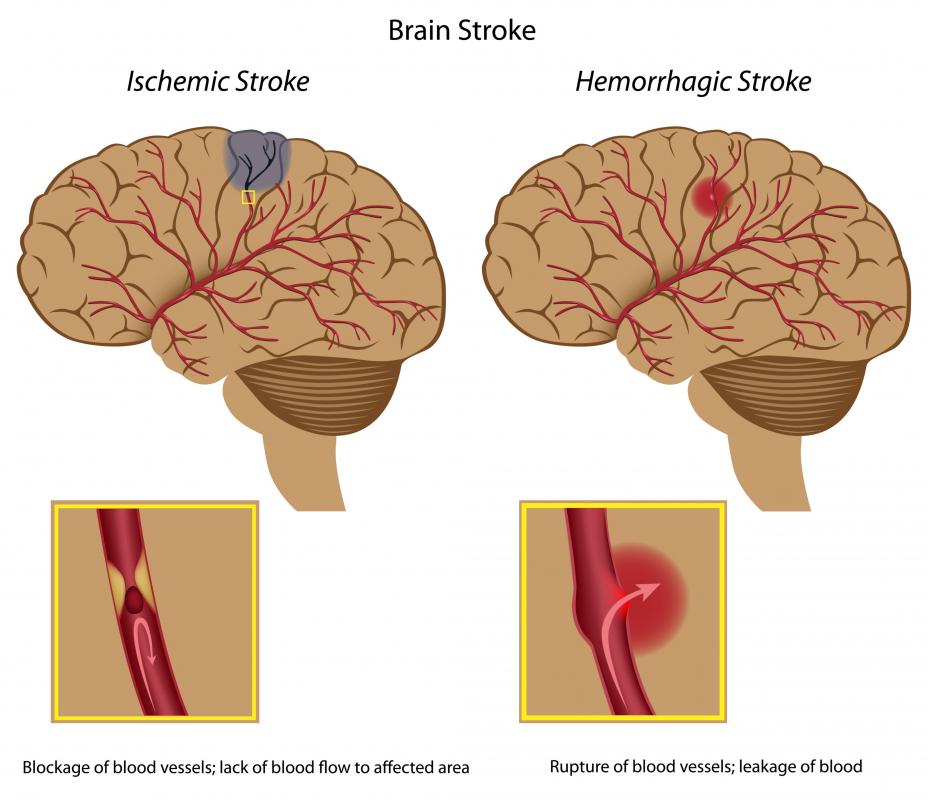
![A diagram of an ischemic stroke and a hemorrhagic stroke.]() By: AlilaA diagram of an ischemic stroke and a hemorrhagic stroke.
By: AlilaA diagram of an ischemic stroke and a hemorrhagic stroke. -
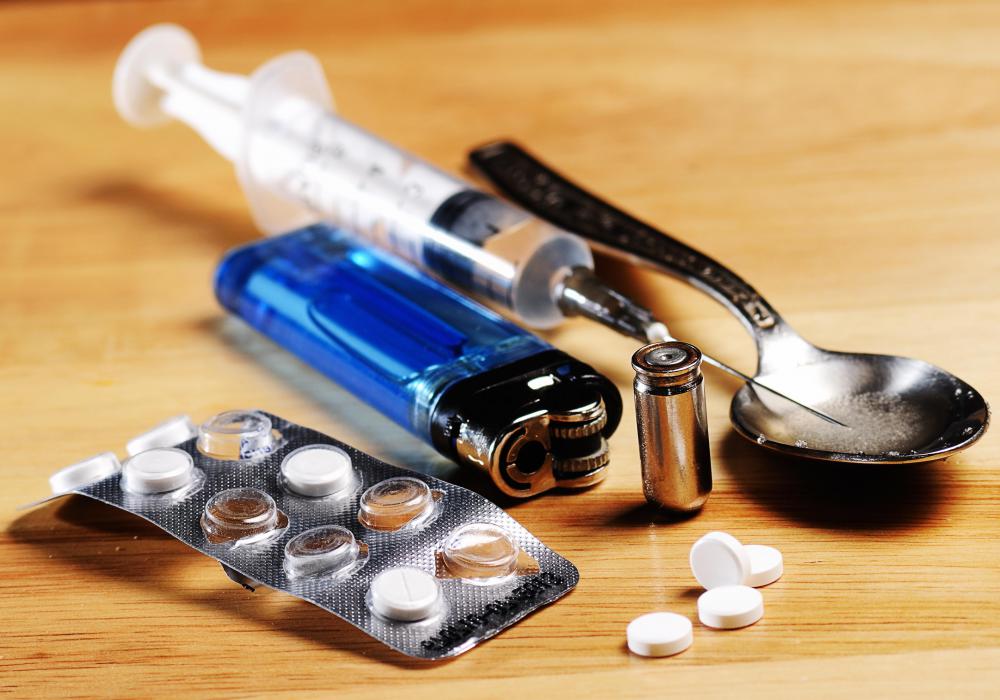
![Using illicit drugs can increase an individual's risk of stroke.]() By: aaabbcUsing illicit drugs can increase an individual's risk of stroke.
By: aaabbcUsing illicit drugs can increase an individual's risk of stroke. -
![Individuals who have experienced a stroke may experience loss of muscle control necessary to perform ordinary tasks, such as teeth brushing.]() By: Photographee.euIndividuals who have experienced a stroke may experience loss of muscle control necessary to perform ordinary tasks, such as teeth brushing.
By: Photographee.euIndividuals who have experienced a stroke may experience loss of muscle control necessary to perform ordinary tasks, such as teeth brushing. -
![A stroke can sometimes result in facial paralysis.]() By: sergmarA stroke can sometimes result in facial paralysis.
By: sergmarA stroke can sometimes result in facial paralysis.




Discussion Comments
So true. My mother worked 2 jobs and continues to try her hardest with physical therapy. Always up, dressed and ready to do her best to work during physical therapy. The place where she is at is saying something about a plateau and I know what that means. Her insurance is running out. She is improving every day and needs more time, but I don't think she will get it. Nice way to pay someone back who worked her entire life.
What can stroke victims do to relieve boredom? My Son in law had a stroke, and is receiving therapy, but he is bored out of his mind. He claims he doesn't like to read. What can I suggest to keep him from getting bored?
It's very easy to say start rehab asap, but when insurance inhibits that as well as being placed in a crappy convalescent hospital that poses more of a danger than anything else, it's not always an option. My hubby had his stroke two and a half months ago. He has been home for two weeks and insurance is making everything a living hell. Why should I have to get yet another OK to get him rehab? Isn't it obvious? He was in the hospital for two months, four of those weeks in ICU and five of them in a coma.
I am constantly worried and scared for him. His pain is intense in his left shoulder and hip, he can't walk and he is bored out of his mind. I noticed drug addicts get better treatment than stroke victims, who did not do this to themselves. Stroke victims are cast aside, just like every other mentally challenged person in this country.
Why is this? Do drug addicts have a better rate of entering society and pose less of a burden? They either get straight and do well or end up dead or end up in prison where we still pay for them. However, the stroke victim gets nothing but an apology. What's wrong with this picture?
What can you do to keep from losing your home if you have a stroke?
My father in law had a stroke three months ago and I noticed that his speech, mobility, hand strength have been affected and he doesn't want to take any medication. What can we do? --Patty
My mom just had her second stroke. The first one was on the left side of her brain. The second one is on the right side of the brain with blood clots. She is some sort of talking with slurred talking. I don't know if she will talk again like she did with the first stroke.
My mother had a stroke and she is actually doing okay. The only problem is that she has almost lost her left field of vision. She still is able to speak fluently.
The only dramatic difference other than the lost of vision is her speech patterns as in using simple words (such as slang instead of an entire word) and she repeats her self sometimes and has trouble with short term memory. I know that there is always a possibility that there could be other complications however the fact that she has suffered minimal damage compared to others and should recover.
She also has high blood pressure and congestive heart failure and her heart was working at 20 percent. Now it's almost normal, which is between 65 percent- 79 percent, so she is about 69 percent now and its getting better.
I am more worried about her heart than her brain but I know that there still is residual damage that is affecting her day to day activity. She has remembered a lot of things from her past.
She even told me that when she was in her 20s a palm reader told her that she would have a major illness in her 40s but would live through it.
My Grandma just had a stroke and it does feel helpless, as you can't really do anything, but let the treatment she is having help her.
It is not skilled nursing that I would like for my husband, but therapy. It seems that all they say is that is all. you have to keep asking for therapy and make sure the insurance will pay. The word "plateau" is wrong; they can keep learning and trying to do things on their own.
I know. My husband had a stroke about 18 months ago and he still tries to do things for himself. It is a long journey and people don't know about stroke until it strikes somebody in their family.
its easy to encourage continued therapy, but what do you do when insurance runs out and you have no options? Drug addicts get better treatment options than stroke victims with their 120 days of skilled nursing.
Post your comments